Independent borehole inspection starts with a review question, not a presumption that earlier work was defective. The owner needs an evidence-based assessment with clear boundaries and declared relationships. First, explain the concern. Then ask the proposed reviewer what it can investigate and which conclusions would require other professional evidence.
Explore Masterpiece Hydro-Solutions borehole inspection services and enquire about a clearly defined review assessment. Ask about the provider’s role and relevant prior involvement. Do not assume that an enquiry establishes a particular independence status, available appointment or technical conclusion before the scope is agreed.
Define independent borehole inspection questions
Describe the decision you need to make. You may want to understand visible condition, review an unclear report or identify what further testing would help. Also, state whether the concern involves water delivery, a proposed repair or incomplete handover information. Different questions need different evidence.
Next, separate direct observations from interpretations already offered by others. A caretaker’s record of reduced flow is not the same as a contractor’s suggestion about the cause. Share both, but identify their source. The reviewer should not treat an unverified explanation as an established finding.
Independent borehole inspection should answer the agreed question rather than become a broad promise to certify the entire asset. Ask which matters fall outside the review, including performance, quality or specialist structural conclusions. Clear exclusions help the owner arrange the right additional assessment.
Check independent borehole inspection relationships
Ask whether the proposed reviewer participated in design, drilling, installation or previous remedial work. Also, ask whether it may supply the recommended repair. These questions help you understand the commercial relationships around the review. They do not automatically establish a legal conflict or disqualify a provider.
Next, agree how the provider will record relevant involvement in its proposal or report. The owner can then judge whether that arrangement suits the purpose of the review. If a separate stakeholder requires a particular form of independence, confirm its actual criteria before commissioning.
Also, identify the individual or team responsible for the assessment and reporting. Do not infer credentials from a service name. Ask the provider to explain the relevant experience and scope it accepts, without assuming a particular qualification or certification exists.
Give the reviewer the same evidence set
Gather available construction records, earlier reports and relevant correspondence. Also, provide the original complaint or question in its existing form. A review becomes harder to interpret when the assessor sees only selected material that supports one preferred explanation.
Next, identify missing records and uncertain dates. Do not recreate details from memory as though they were original measurements. A clear gap gives the reviewer a question to address. An unmarked guess can distort the assessment and the owner’s later decision.
Ask the provider to list the information it used and note material limitations. This creates a traceable basis for the review. It also helps another professional understand whether a different conclusion arose from different evidence, a different scope or a genuine interpretive disagreement.
Understand the camera’s evidential role
Camera evidence can help assess visible conditions within accessible, viewable sections of a borehole. The US Geological Survey’s explanation of well-camera inspection describes its use in identifying internal changes that may affect groundwater observations. That does not make every camera visit a complete integrity certificate.
Ask the reviewer to distinguish what the footage shows from what it suggests. Also, identify sections that the camera could not assess. Poor visibility or limited access should remain explicit. A report should not turn an unobserved section into a statement that no problem exists there.
Independent borehole inspection needs the right evidence for the conclusion. Video alone does not establish sustainable yield, drinking-water quality or a complete structural assessment. Ask which follow-up tests would address a question that the visible record cannot settle.
Compare review questions and evidence
Use the following table to agree the review’s boundaries. It supports a discussion with qualified professionals rather than prescribing an inspection method or deciding contractual responsibility.
| Owner’s question | Evidence to discuss | Conclusion to avoid assuming |
|---|---|---|
| What is visible inside the borehole? | Traceable footage and observation notes | Complete knowledge of unviewed sections |
| Why has delivery changed? | Operating history and appropriate further assessment | A camera image proves the sole cause |
| Does the earlier report support its recommendation? | Original scope, records and reasoning | A different opinion automatically proves misconduct |
| Should proposed remedial work proceed? | Findings, uncertainty and defined options | Inspection guarantees successful recovery |
| Is the water suitable for use? | Appropriate laboratory analysis and intended use | Clear footage proves potability |
| Who owes a contractual remedy? | Relevant contractual and professional advice | A condition report alone decides legal responsibility |
Next, mark any question outside the proposed scope. The owner can then commission a targeted additional service instead of expecting the reviewer to answer everything from one visit.
Agree how evidence will remain accessible
Ask which recordings, still images and written findings the provider will supply. Also, identify how the files connect to the actual borehole and visit date. A useful review needs a traceable record, not only an oral explanation at the site.
Next, clarify who may receive the material and how the owner will retain it. If several parties need to review the findings, agree the format and communication route. Do not assume that every person involved automatically receives the complete record.
Also, ask how the provider handles corrections or later clarification. The issued report should retain a clear identity. A revised document needs an understandable status so the owner does not circulate an informal edited copy as the final professional conclusion.
Consider a disagreement over deposits
Consider an educational scenario where one supplier recommends rehabilitation after viewing a deposit-like feature. The owner wants another assessment before authorising work. No actual site or finding is implied. The second reviewer needs the footage, original recommendation and relevant operating records.
First, the reviewer explains whether the visible evidence supports the description and what remains uncertain. Next, it identifies whether further performance or quality evidence would affect the decision. The owner can then compare reasons rather than choose the most confident-sounding opinion.
This scenario shows independent borehole inspection as a structured review. The assessment may support, qualify or question an earlier recommendation. It should explain why, while avoiding an unsupported leap from a visible feature to a guaranteed cause or contractual fault.
Plan site work through qualified personnel
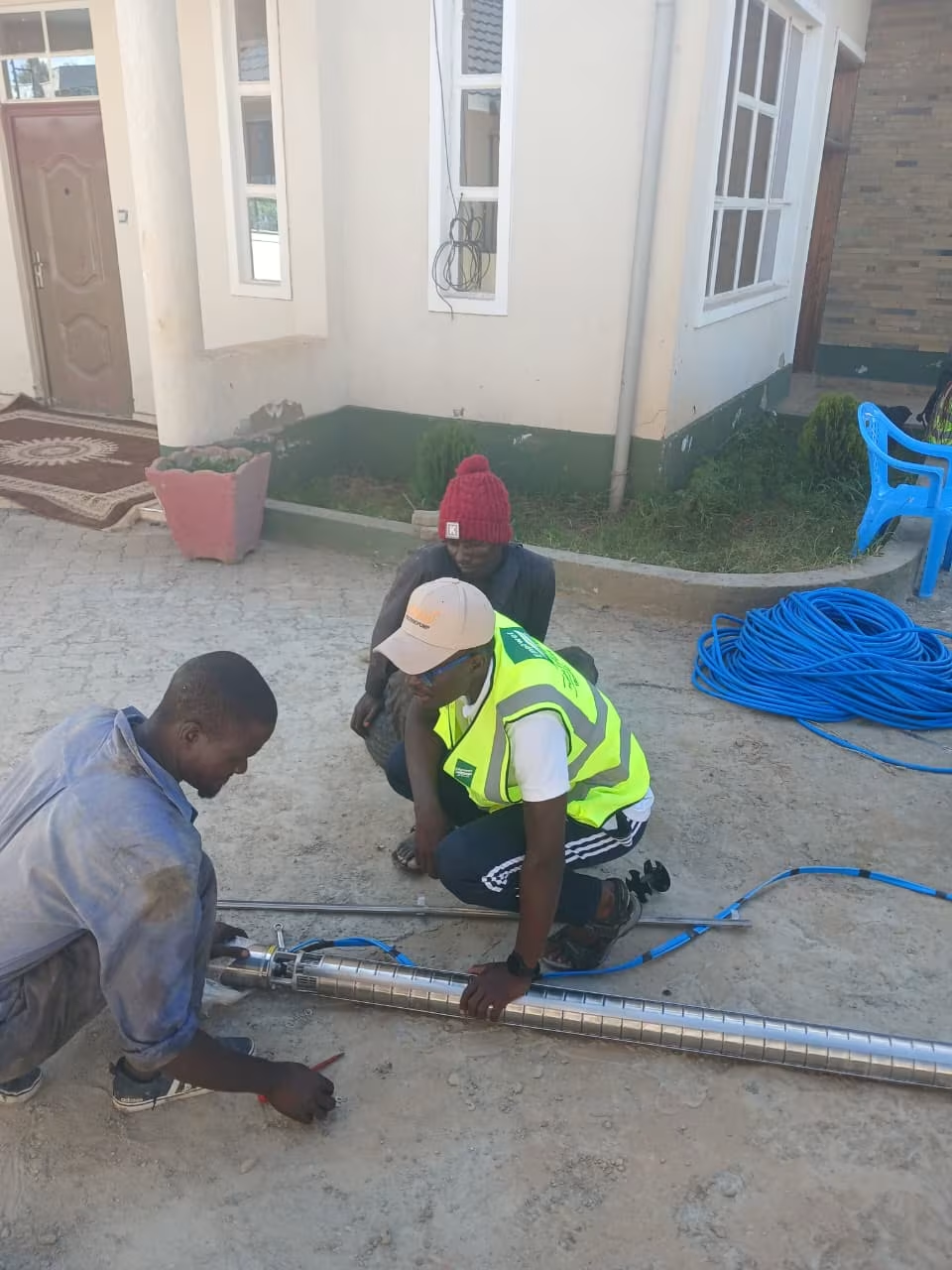
Tell the reviewer what equipment remains installed and which site activities affect access. Any required retrieval, electrical isolation or other technical preparation needs an appropriate professional scope. Owners should not attempt those tasks simply to prepare for an inspection.
Next, agree who coordinates the existing operator and inspection team. The provider should identify practical requirements and limitations before the visit where possible. Also, clarify how the team will respond if it cannot complete the proposed observation safely or usefully.
Plan water continuity separately. An inspection may interrupt the site’s normal arrangement, depending on the assessed scope. Explain essential demand and available reserve. Do not assume the reviewer includes temporary supply or guarantees that the borehole will return to service within an unverified period.
Accept independent borehole inspection outputs
Compare the final material with the agreed review question and deliverable schedule. Check site identity, accessible evidence and the distinction between observation and interpretation. Also, ask the author to explain limitations in language that supports the owner’s actual decision.
Next, identify recommendations and their evidence basis. A report can recommend further investigation rather than immediate repair. The owner should understand what each next step would establish. A useful assessment does not need to pretend uncertainty has disappeared.
Independent borehole inspection should leave clear follow-up responsibilities. Ask which clarification support the provider includes and which additional work requires another scope. Keep the review, supporting files and correspondence together so later decisions remain connected to the original evidence.
Keep authority and technical questions distinct
If the review concerns completion or permission records, consult the Water Resources Authority’s permitting guidance and confirm current requirements directly. Ask who will provide relevant information. A condition review does not replace an authority decision or settle every administrative question.
If remedial work appears appropriate, consider borehole rehabilitation assessment as a separate decision. The provider should explain how the findings support a proposed remedy and what evidence would measure its result. A review quotation does not automatically include the repair.
Also, keep commercial and technical conclusions separate. A report may describe condition and evidence without deciding liability. If that issue matters, seek the relevant professional advice using the actual records. Do not treat an inspection label as a substitute for that assessment.
Questions about an independent condition review
Does independent mean the reviewer cannot offer repairs?
Ask the provider to declare its role and any remedial interest. Then assess whether the arrangement suits your purpose or a stakeholder’s confirmed criteria. Do not assume a universal legal definition from the service label. Clear scope, disclosure and evidence access help you evaluate the review.
Will a second opinion always contradict the first?
No. It may support the earlier view, identify missing evidence or explain a different interpretation. Ask the reviewer to connect its conclusion to the material assessed. A useful review improves the reasoning behind the next decision rather than promise a particular answer.
Can footage alone prove why the borehole underperforms?
Not necessarily. Visible condition can inform investigation, while performance and other evidence may address different causes. Ask which findings are direct observations and which remain possible explanations. The reviewer should identify appropriate follow-up rather than present every visible feature as the complete diagnosis.
What should I send before requesting the service?
Provide the review question, site details and available earlier records. Also, identify the installed equipment and any relevant relationships with previous suppliers. Mark unknowns honestly. The provider can then explain a suitable scope, practical dependencies and the evidence it expects to produce.
Does the report guarantee successful rehabilitation?
No. An inspection can inform a remedial decision without guaranteeing recovery. Ask the provider to explain the uncertainty and proposed outcome measures. A later rehabilitation scope should identify its own commitments and checks. Keep the evidence-based recommendation separate from an unsupported promise of restored yield.
Request a review with an explicit question
Gather the existing records and describe the decision you need to make. Then enquire about an inspection review from Masterpiece Hydro-Solutions. Ask for declared involvement, clear evidence boundaries and usable outputs. Those details help you evaluate the findings without assuming a particular conclusion in advance.