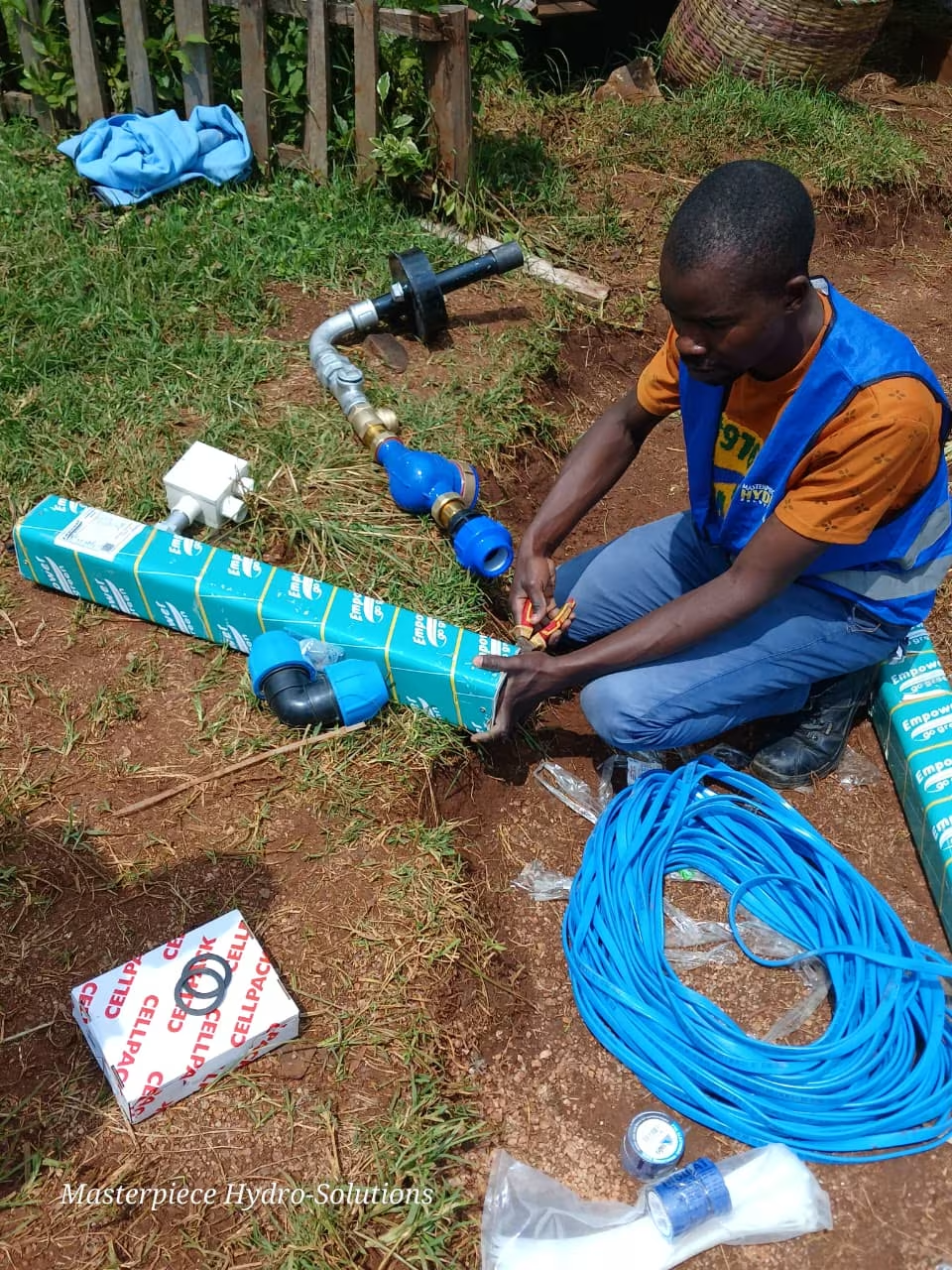
Irrigation borehole equipping should connect measured source evidence to the field’s actual water-service requirement. A powerful pump does not prove that the borehole can support the irrigation plan. First, define the required flow, pressure and operating pattern. Then ask qualified practitioners to assess a suitable source-to-field arrangement.
Explore Masterpiece Hydro-Solutions borehole equipping services and request an irrigation pumping assessment. Share test-pumping records, the field layout and the irrigation designer’s requirements. Explain planned expansion separately so the proposal does not mistake future ambition for evidence of available groundwater.
Start with the field-service brief
Identify the irrigated areas and the intended irrigation arrangement. Also, state which parts may operate together. The pumping provider needs a clear field duty, not merely the total farm area. A qualified irrigation designer should establish the relevant service requirement for the proposed system.
Next, distinguish existing irrigation from a new or expanded scheme. Share the actual records where available and label estimated future needs. The equipment proposal should identify the demand basis it uses. An assumed crop plan should not become an unexplained fixed production promise.
Also, describe competing water uses. Livestock, domestic demand or another activity may draw from the same source. The operating brief needs those commitments. Treating irrigation as the borehole’s only use can overstate the water available to the field.
Base irrigation borehole equipping on source tests
Provide the relevant test-pumping report and water-level information. Ask the practitioner to explain the abstraction basis and any uncertainty. Aquifer yield, pump capacity and irrigation demand remain separate. A proposed motor cannot establish sustainable groundwater production simply because it can move more water.
Next, distinguish drilled depth from pumping water level and pump setting depth. These measurements inform different decisions. The provider should identify the records used for its assessment. Do not allow an easily available borehole depth to replace the level information needed for the duty.
Irrigation borehole equipping should respect the assessed source capability. If the irrigation brief exceeds that basis, ask for a revised planning decision. More panels, a larger pump or a different control setting cannot create the groundwater needed to support an unresolved shortfall.
Keep flow, pressure and daily volume distinct
A field system may require a particular operating flow and pressure while it runs. The farm also needs a daily or seasonal water volume. These are related but different requirements. Ask the designer to explain both so the pumping proposal does not answer only one question.
The Grundfos guide to pump selection explains the relationship between required flow and head. For irrigation, the practitioner must assess pumping lift, delivery elevation, route losses and the required outlet service together. A motor rating alone does not describe that duty.
Also, a peak flow observation does not establish daily production. Actual operating time and changing conditions affect delivered volume. The provider should identify which figures represent measurements and which remain assumptions. This matters when the proposed irrigation schedule depends on variable solar pumping.
Compare irrigation borehole equipping arrangements
Ask the provider to compare appropriate arrangements against the same field-service brief. The following table identifies planning questions rather than prescribing a universal solution. Qualified practitioners must assess the actual hydraulic and operating requirements.
| Arrangement to assess | Main question | Boundary to examine |
|---|---|---|
| Direct borehole-to-field supply | Can the source and pump serve the required field duty together? | Source limits and changing operating demand |
| Borehole filling storage | Can assessed production replenish useful irrigation storage? | Storage does not create additional source yield |
| Storage with separate field delivery | What assessed downstream duty serves irrigation? | Responsibility for both pumping stages |
| Phased irrigation operation | Which service periods and zones form part of the brief? | The operating plan still needs a valid daily water balance |
| Retained existing equipment | Does it remain suitable for the proposed duty? | Condition and compatibility require assessment |
Next, request an explanation of why the preferred option suits the source and field. A package description should not replace evidence about the required service.
Describe the route between borehole and field
Provide a current layout showing the source, proposed storage and irrigation destinations. Also, identify relevant elevation information and known route constraints. A distant field at a different level may create a different duty from a nearby outlet. The practitioner should assess the actual arrangement.
Next, identify which provider owns each section. The borehole contractor and irrigation installer may work under separate scopes. Ask who coordinates the required field pressure, flow and delivery interface. An unowned connection can leave both parties claiming completion while the field service remains unresolved.
Also, explain planned route changes before equipment selection. The pump proposal should match the current design brief. If the farm later adds pipework or changes destinations, request professional review rather than assume the original selection covers every extension.
Plan for variable operating periods
Tell the provider which power sources the site has and how irrigation timing relates to them. Solar pumping varies through the day and season. Other arrangements also need a clear operating plan. The required field service cannot rest on an assumed uninterrupted period that the design does not support.
Next, identify demand that can move between periods and demand that cannot. The qualified designer should evaluate the irrigation implications. The owner should not alter a field schedule or protection settings simply to force the pumping arrangement to match an optimistic daily volume.
Irrigation borehole equipping needs an explicit link between operating assumptions and useful delivered water. If storage supports that link, ask how reserve and replenishment work. A full tank at the start of a period does not prove the system can sustain repeated deficits.
Consider a new-field-zone scenario
Consider an educational example where a farm adds a new irrigation zone with a different service requirement. No actual project or performance result is implied. The existing borehole currently supplies an established use, but its equipment selection did not address the proposed additional zone.
First, the owner shares source records and the irrigation designer’s revised duty. Next, the practitioners compare the proposed operation with available production and retained equipment. Their findings may support a coordinated change, phased demand or further assessment. The owner does not simply purchase a larger motor.
This scenario shows why irrigation borehole equipping must address both ends of the system. Source capability and field duty need to fit the same operating plan. A change that appears small on the farm layout can still require a meaningful professional review.
Review irrigation borehole equipping control needs
Ask how the proposed arrangement coordinates the pump, relevant storage and irrigation demand. Also, identify the protection functions and fault-reporting responsibilities. Qualified personnel should determine the technical solution. The owner needs a clear description of normal behaviour and the response to interruptions.
Next, distinguish a field request for water from permission for the source to continue pumping. The operating plan must respect source and equipment limits. A protective stop may interrupt irrigation, so the project should explain the remaining service risk rather than promise automatic continuity.
Irrigation borehole equipping should also identify who can approve later changes. If another contractor modifies the field system, ask for review of the pumping implications. Keep the original brief and revised decisions together so service personnel can understand the actual arrangement.
Keep quality and allocation questions visible
Water quantity does not establish suitability for the intended irrigation use. Appropriate laboratory analysis and qualified advice guide quality-related decisions. Also, do not assume clear water suits every crop or equipment arrangement. Ask which evidence the project needs before committing to an unassessed quality assumption.
For authority matters, consult the Water Resources Authority’s water-use allocation guidance and confirm current requirements directly for the proposed activity. Identify who coordinates relevant information and records. An equipment proposal does not itself establish permission to abstract the intended volume.
Also, distinguish current intended use from later expansion. If the farm changes its activity or proposed abstraction, ask the relevant professionals and authority what needs review. Avoid assuming that an earlier report or correspondence automatically covers every future irrigation plan.
Accept the equipment against the agreed field interface
Agree the commissioning questions before ordering. Ask the contractor to explain how it will demonstrate the required delivery at the relevant interface. A reading at the borehole outlet may not establish the service available at the field. The report should identify location and operating conditions.
Next, request records of the installed equipment, completed checks and any approved changes. Qualified personnel must manage technical procedures and safe working. Owners should receive understandable outcomes without performing pressure tests, electrical work or equipment adjustments.
Finally, distinguish observed performance from future production estimates. One demonstration cannot guarantee every irrigation day or seasonal source condition. The handover should explain limitations, useful monitoring records and the contact route if operation changes. Clear evidence supports better field decisions after installation.
Questions about equipping an irrigation borehole
Can I choose a pump from the farm’s acreage?
Acreage provides context, but it does not define the complete pumping duty. The irrigation designer must establish relevant flow, pressure and timing requirements. The borehole provider also needs source evidence and the delivery route. Ask for a coordinated assessment rather than a universal pump size per area.
Will more panels solve a water-production shortage?
Not if the unresolved limit is sustainable groundwater availability. The source, pump and power arrangement answer different questions. Ask the practitioner to identify the actual constraint. Additional power equipment should follow an assessed need rather than act as an assumed cure for every shortfall.
Does storage remove the need for source assessment?
No. Storage can change timing, but the source must still replenish the water used. Ask for a clear production-and-demand basis. A persistent deficit will eventually affect the reserve. The project should explain that limitation instead of treating a large tank as proof of sufficient groundwater.
Should the borehole supplier design every field zone?
The contract should identify the appropriate professional responsibilities. Some projects involve separate borehole and irrigation specialists. Ask who supplies the field duty and who confirms the interface. Clear coordination matters more than assuming every supplier automatically covers the whole source-to-crop system.
What information should accompany my enquiry?
Send test-pumping records, the current field layout and the intended irrigation service. Also, describe existing water commitments, available power and planned expansion. Label assumptions honestly. The provider can then identify the required assessment and propose equipment scope based on the actual source and field brief.
Request equipment scope tied to irrigation evidence
Gather source information and the irrigation designer’s required duty. Then request an irrigation equipping assessment from Masterpiece Hydro-Solutions. Ask for a clear operating plan, defined field interface and evidence-based acceptance. Those details connect the equipment purchase to useful irrigation service while keeping source limits visible.