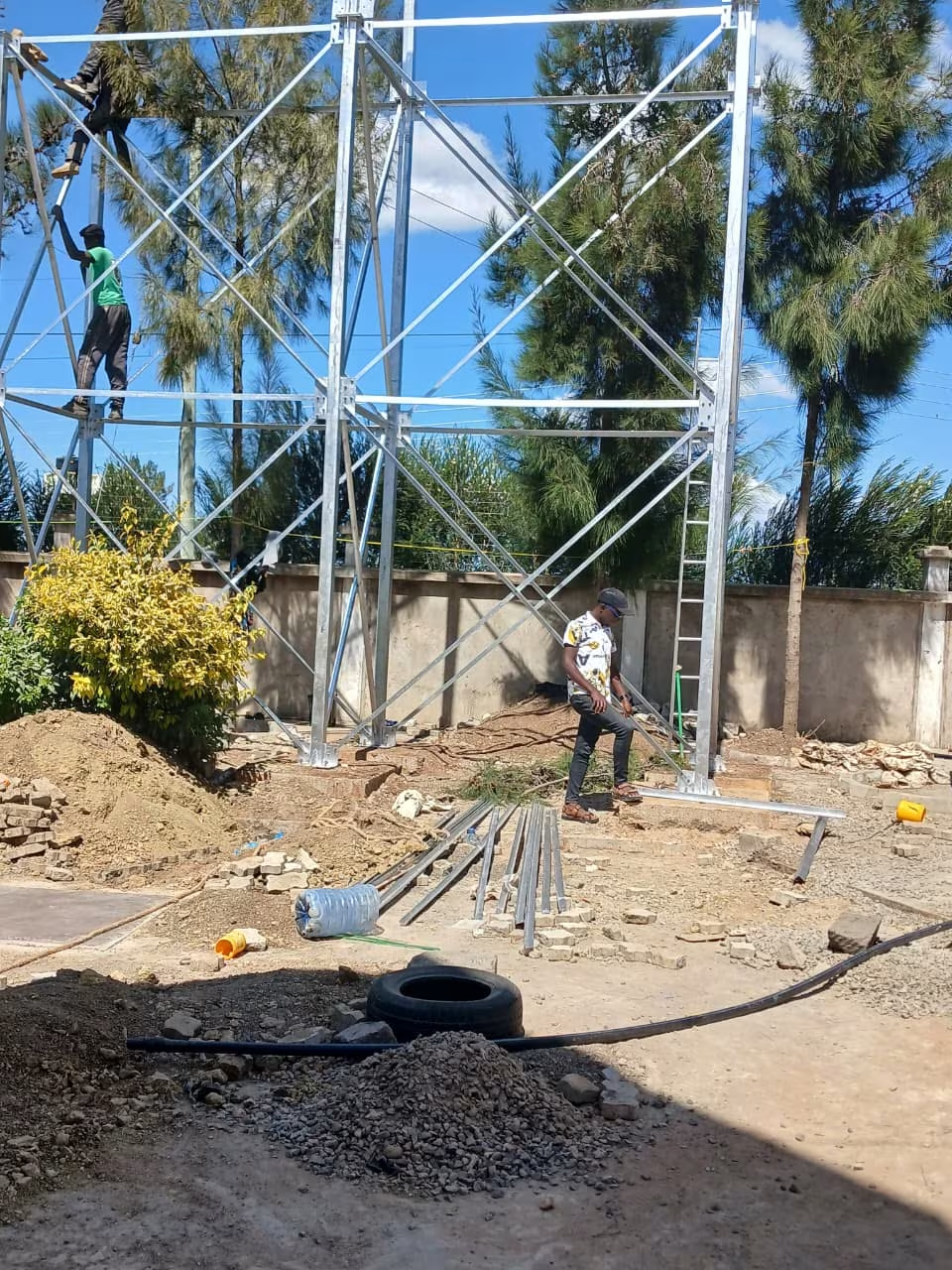
A Naivasha equipping delivery boundary should identify exactly where the proposed borehole system must supply water. One tank destination can require different assessment from another. Therefore, define the destination before comparing pump packages. Ask Masterpiece Hydro-Solutions to confirm whether an appropriate assessment is available for your specific location and intended service.
For the wider location enquiry, use the Nakuru county project page. See borehole equipping for the technical service and request a source-and-delivery assessment. This guide focuses on comparing delivery assumptions, without claiming local yields, equipment results or confirmed service timing.
Start the Naivasha equipping delivery boundary at the outlet
First, state whether the proposed pump should fill storage or provide another delivery service. Those purposes need different assessment questions. Also, identify the physical destination clearly on a layout. A quotation saying water supply may leave the owner and supplier imagining different endpoints.
Next, distinguish the borehole delivery stage from the distribution after storage. Water reaching a tank does not automatically establish the desired pressure at every outlet. Ask which part the proposal addresses. The supplier should identify excluded networks or further equipment without implying complete property coverage.
Also, record whether the destination exists now or remains a future option. A tank in a draft plan should not appear as an established installation point. Label the assumption. The designer needs to know which reference requires confirmation before the equipment commitment becomes final.
Describe alternative destinations separately
An owner may be considering a nearby tank and a more elevated future store. Do not combine them into one vague delivery requirement. Ask the assessor how each option affects the duty and scope. The comparison should identify the information it needs for each alternative.
Next, state whether the project expects simultaneous service, alternating destinations or a later expansion. These are different briefs. The owner should not prescribe a switching method or pipe arrangement. Qualified personnel must assess the suitable design and explain it at buyer level.
Also, identify what matters most to the service decision. Essential use, flexible demand and future expansion can create different priorities. The designer needs that context without a promise that every option is achievable. Source evidence still limits what the system can sustainably support.
Compare the Naivasha equipping delivery boundary options
| Decision area | Current destination | Alternative destination |
|---|---|---|
| Location status | Record what exists and its reliable reference | Label proposed or uncertain positions |
| Elevation evidence | Provide available measured information | Ask what further assessment is necessary |
| Delivery route | Describe the known connection boundary | Identify unassessed route assumptions |
| Demand | State current uses and timing | Separate future or additional requirements |
| Source evidence | Use relevant testing and water levels | Do not assume another destination increases capacity |
| Proposal scope | Identify included work and commissioning | Request a separately explained option |
Use the table to compare questions rather than calculate a design yourself. Ask qualified personnel which measurements matter. A visually short route can still require technical assessment. Likewise, a more distant destination cannot be judged from distance alone without elevation and duty context.
Keep source records and delivery records together
Provide construction information, test-pumping results and measured water levels where available. Drilled depth, pumping water level and pump setting are different quantities. Ask which figures the assessment uses. A destination sketch cannot replace the source evidence required for selection.
Next, distinguish measured findings from owner estimates. A tank-filling observation may help describe service without establishing sustainable yield. Also, retain the original reports rather than only copied figures. The designer needs the relevant conditions and limitations that accompany them.
The Naivasha equipping delivery boundary should remain traceable within that file. If the tank changes location after the first estimate, tell the assessor. A source report can remain the same while the delivery duty changes. The equipment proposal should reflect the current combined brief.
Ask how flow and head support the proposal
The Grundfos selection learning resource explains required flow, head and the duty point. Ask the designer to connect those principles with each destination. A motor rating alone cannot demonstrate that one package suits both options.
Total dynamic head considers pumping lift, delivery elevation, friction and required outlet pressure. Therefore, drilled depth does not answer the whole question. Request consistent reference levels and an explanation of the route assumptions. Qualified personnel should obtain and interpret the necessary measurements.
Also, distinguish pump capacity, source yield and demand. A larger pump cannot create groundwater the source cannot sustainably provide. If an option exceeds the available evidence, ask what further assessment or revised brief is necessary. Do not treat equipment size as a substitute for source capacity.
A scenario with a changed tank plan
Imagine an owner requests equipping for a Naivasha site using an existing storage destination. Later, the owner proposes a different tank near a future building. The owner expects the first package price to remain valid because the borehole has not changed. However, the delivery requirement now needs review.
First, the owner identifies the new destination and what remains provisional. Next, qualified personnel assess the changed duty and scope. The supplier can then explain whether the proposal changes and why. The owner compares clear options rather than assume unchanged equipment will satisfy both.
The Naivasha equipping delivery boundary has made the decision more explicit without predicting a real site’s result. The example is hypothetical. It shows why a water source and its destination need one current brief. A fixed borehole location does not make every delivery arrangement equivalent.
Identify retained equipment and interfaces
Tell the provider which tanks, pipes, power equipment or controls already exist. Provide reliable records where available. The proposal should state what it intends to retain and what requires assessment. Existing equipment is not automatically suitable merely because it previously operated.
Next, clarify who is responsible for interfaces outside the equipping scope. Another contractor may handle distribution or building work. Ask how the parties will coordinate the boundary. A gap between scopes can leave the owner with water at the wrong point and no agreed next task.
Also, keep technical work with qualified personnel. Owners should not alter wiring, control settings or pressure arrangements to test a destination. The useful buyer role is to define the service and provide records. The designer must assess the appropriate solution for the actual conditions.
Ask for destination-specific commissioning evidence
Before acceptance, ask which checks demonstrate the agreed delivery service. The evidence should relate to the destination and operating conditions used in the design. A brief demonstration at another outlet may not answer the accepted brief. Request an understandable commissioning record.
Next, identify any untested alternative as an unresolved matter. Do not treat one successful tank-filling observation as proof of every future destination. If expansion forms part of the plan, ask what later review it needs. The handover should preserve the proposal’s actual limits.
The Naivasha equipping delivery boundary should also appear in the final documentation. Retain the accepted layout, equipment identification and commissioning information together. A future assessor can then understand which service the installation originally addressed. That is more useful than a general note that the pump works.
Confirm availability, power and authority questions
Ask about your exact location, proposed scope and available assessment resources. Do not infer a service date or response commitment from the county page. Provide safe access photographs where relevant. The actual provider response should identify what it can assess or offer.
If solar power forms part of the option, see borehole solarisation and ask for an appropriate assessment. Solar output varies through the day and season. The delivery brief should not depend on invented operating hours or a guaranteed daily production claim.
The WRA permitting guidance distinguishes construction authorisation from the subsequent water permit. Ask WRA about current requirements for the actual project and any changed proposal. Equipment selection or a revised tank plan does not replace authority confirmation.
Questions about the Naivasha equipping delivery boundary
Can one pump serve every possible tank?
No universal answer applies without the source and delivery assessment. Different destinations can require different duty or scope considerations. Explain the intended operating arrangement and priorities. Qualified personnel should identify what the available evidence supports before equipment selection.
Does a short pipe route mean low head?
Distance alone cannot establish total dynamic head. Pumping lift, delivery elevation, friction and required pressure also matter. Ask for the assessment’s reference levels and assumptions. Do not select a pump from a visual estimate of how close the tank appears.
Can I move the tank after receiving a quote?
Tell the provider before relying on the original proposal. Ask how the change affects duty, installation scope and commissioning. A quotation may use a specific destination assumption. The relevant professionals should review the current brief rather than leave an outdated endpoint in the file.
Does tank filling prove drinking suitability?
No delivery demonstration establishes the required quality evidence. Clear water is not necessarily potable. Ask which laboratory analysis fits the intended use and what professional interpretation follows. Keep quality decisions separate from pump duty and storage capacity.
What should I send with the enquiry?
Provide the source report, water-level records and actual delivery options. Include existing equipment details and label future destinations clearly. Also, state your priorities and missing information. The provider can then confirm availability and explain the appropriate assessment scope.
Request a proposal for a defined destination
A useful Naivasha equipping delivery boundary connects the source with the actual service endpoint. It keeps alternatives, assumptions and excluded interfaces visible. Gather the source file and destination information before comparing packages. Then request a qualified assessment that explains each option and its limits.
Send Masterpiece Hydro-Solutions your Naivasha equipping enquiry. Include the test results, current tank location and any alternative plan. Ask for site availability confirmation and a clear proposal tied to the intended delivery boundary.