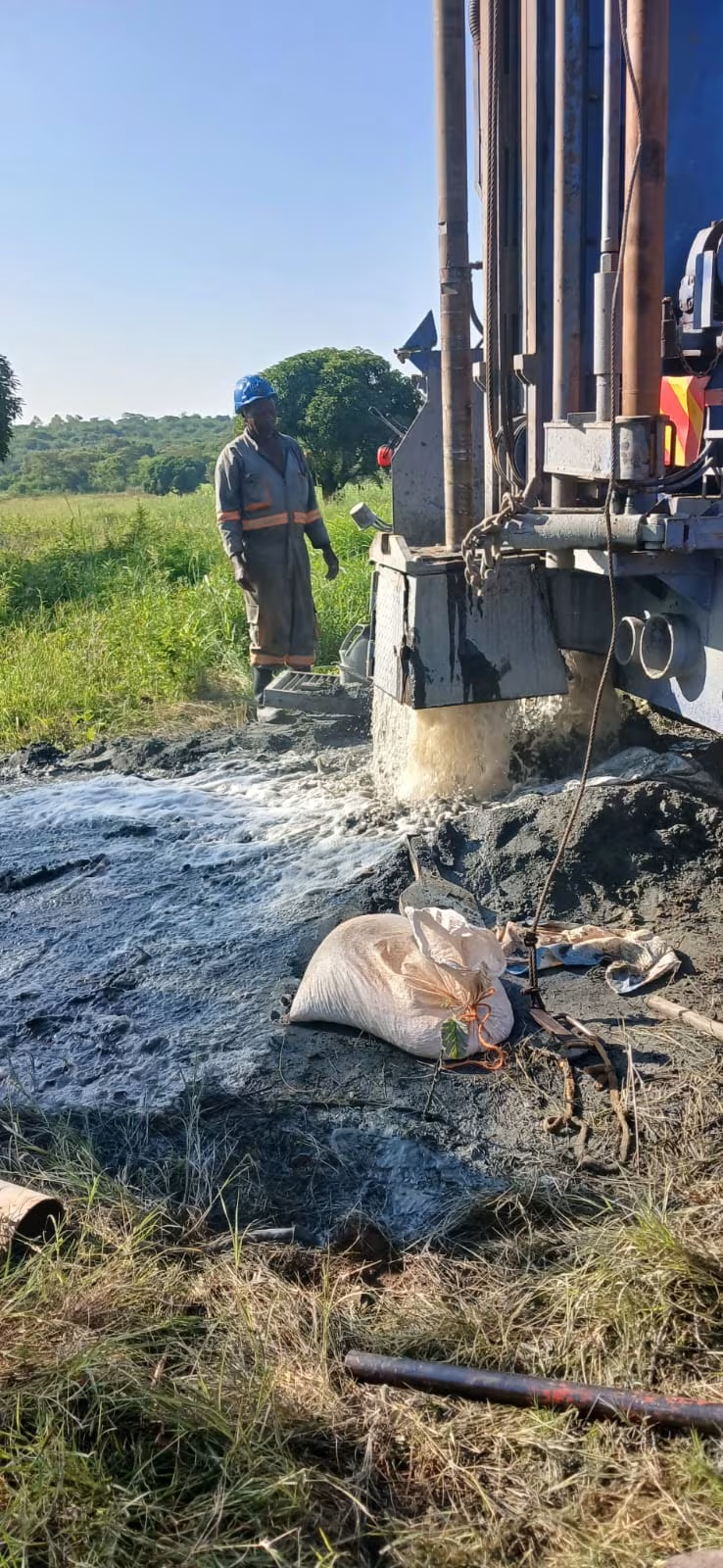
Owner supplied drilling inputs can create a budget and readiness gap when a quotation expects the client to provide site services. A low contractor total may exclude a commitment that the owner has not arranged. Ask the provider to define the required service, its planning basis and who confirms readiness before accepting the offer as complete.
Explore Masterpiece Hydro-Solutions borehole drilling services and request a project-specific enquiry with clear owner provisions. Confirm the available scope for the site. Share the current proposal and relevant site information so the provider can identify what it expects the owner to arrange.
Translate the exclusion into a defined service
A phrase such as client to provide site inputs can be too broad for purchasing or scheduling. Ask what the contractor actually requires for its proposed operation. The answer should identify a service or supply commitment in terms the owner can take to an appropriate provider, while technical details remain under qualified direction.
Do not assume that a nearby resource is suitable or available. Existing water, utilities or site arrangements may not meet the contractor’s assessed need. Ask the qualified team what it must verify and what information it requires from the owner. This guide gives no connection, pressure, electrical or handling instructions.
Also ask whether the provision is mandatory for the quoted arrangement or one option the parties can price differently. The owner may want the drilling provider to quote a coordinated alternative where available. Confirm that capability directly rather than assume it from the existence of a drilling service page.
Define owner supplied drilling inputs before comparing totals
List the named excluded items beside the contractor’s price. For each, identify whether an actual owner arrangement exists and what remains unconfirmed. Do not treat an exclusion as zero cost simply because it is absent from the supplier’s total.
Ask for the quantity or service basis the contractor can professionally provide for procurement planning. It should explain whether the requirement is a confirmed commitment, an estimate or conditional on later findings. Do not convert a provisional planning quantity into a guaranteed maximum without the provider’s explicit basis.
Where another supplier is involved, give it the qualified requirement through the authorised route. Ask for its actual offer and limitations. The owner should not invent a utility tariff, transport price or consumption allowance from an unrelated project to fill the budget.
Map the supply interface
| Interface question | Who should clarify it? | Useful outcome |
|---|---|---|
| What service is required? | Qualified drilling provider | Defined requirement for the proposed operation |
| Who supplies it? | Owner and appointed relevant provider | Accepted supply commitment rather than an assumption |
| What is the planning quantity basis? | Qualified drilling provider with stated limitations | Usable purchasing brief and disclosed uncertainty |
| Who confirms readiness? | Appointed qualified parties under the project arrangement | Clear confirmation route before attendance |
| What if requirements change? | Authorised owner and relevant contractors | Defined proposal and approval process |
The owner coordinates the commitments without becoming the technical designer. Ask the contractors to communicate professional requirements clearly enough for the appropriate providers to assess them. A buyer should not have to improvise hazardous arrangements to bridge an incomplete quotation.
Keep availability separate from suitability
An owner may be able to obtain a service while its suitability remains unconfirmed. Ask the drilling provider which professional checks belong in its scope and what it needs from another qualified practitioner. A verbal assurance that something exists at the site does not answer every technical question.
Similarly, a technically suitable proposal may not be available when the contractor plans to attend. Confirm the actual supply commitment and dependencies. Avoid describing readiness as complete while a separate provider has not accepted the required task.
If the interface cannot be resolved from existing information, request a defined assessment. Ask what it will establish, which provider performs it and its actual charge basis. Do not accept an unlimited investigation hidden inside a small administrative readiness item.
Use owner supplied drilling inputs to build a complete budget
Keep contractor charges and owner-provided services as separate lines with their actual sources. Include a clear status for each: quoted, accepted or still unknown. This gives the owner an honest project view without presenting a precise total that omits unresolved commitments.
Clarify tax treatment directly with the relevant providers. Ask whether delivery, coordination or another associated service is included in each actual offer. Do not assume every supplier prices the same boundary or that a service at the site has no continuing charge.
Where the contractor offers an alternative inclusive arrangement, compare equivalent scope. A higher contractor total may shift an existing owner task into its offer. That is a responsibility change to understand, not automatic evidence that one proposal is more expensive for the complete project.
Check current project and source questions independently
The Water Resources Authority permitting guidance distinguishes application, construction authorisation and subsequent permitting. Ask the appropriate authority or qualified adviser what current project requirements apply. Arranging an owner-provided input does not establish that every condition for the works is satisfied.
Do not confuse operational inputs with the eventual water-supply outcome. Providing a site service for drilling does not prove the borehole’s yield, the final pump duty or water quality. Those questions remain subject to the relevant professional evidence.
If an input raises a separate permission or professional suitability issue, identify it explicitly. Do not invent an exemption or assume the drilling provider’s appointment answers another supplier’s requirements. Assign the clarification to the appropriate qualified party.
An existing site service proves insufficiently defined
Consider a hypothetical owner whose quotation excludes a particular operational input because the client says it is available. Before the planned attendance, the drilling provider asks for confirmation of the actual service arrangement. The owner discovers that its existing supplier never agreed to support the proposed operation.
The useful response is to obtain the qualified requirement and a defined supplier commitment. Ask whether the drilling provider’s planning assumptions change while that task remains open. Do not direct unsafe temporary connections or promise the crew an unverified arrangement to preserve the date.
Then compare actual options. The owner might obtain a suitable separate supply proposal or ask whether the contractor can quote an available coordinated arrangement. Record the selected responsibility and price basis. A new agreed service should be visible in the budget rather than appear later as an unexplained extra.
Record changes during delivery
If the contractor identifies a different requirement, ask for the qualified explanation and commercial consequence through the agreed route. Keep the original planning basis so the owner can understand what changed. Do not assume every additional quantity proves an error or that an estimate authorised unlimited expenditure.
Also record who approves an additional supply commitment. A site contact may coordinate delivery without authority to accept a new cost. Give the relevant providers the current approval route and ask them to confirm material changes before relying on an informal conversation.
Where an interruption occurs, preserve the event evidence separately from any charge claim. Actual terms and circumstances determine the commercial discussion. This article creates no standard waiting charge, automatic penalty or guarantee that an owner-provided arrangement will avoid all delays.
Close owner supplied drilling inputs with an accounted commitment
At closeout, reconcile the actual supplier documents with the agreed owner provisions. Identify unused allowances, credits or remaining obligations only where the actual terms and evidence support them. Keep the contractor’s final scope separate from the owner’s separate purchase history.
Retain the relevant service and readiness records with the project file. They explain the delivery arrangement and any approved changes. Future procurement teams can then understand the original exclusions without assuming every quoted drilling total covered the same owner responsibilities.
Questions about client-provided site services
Does an excluded item mean the contractor has no role in defining it?
Ask the provider what requirement its proposed operation assumes and what assessment it offers. The owner needs a usable procurement brief. Excluding supply does not explain every technical and coordination boundary, so clarify those roles explicitly before relying on the quotation.
Can the owner estimate quantities from another borehole project?
Use the qualified provider’s project-specific planning basis and disclose its limitations. Another job may have different conditions and scope. Do not present a borrowed quantity as a confirmed requirement or maximum merely because it provides a convenient budget number.
Should the input cost be added to the drilling quote?
For a complete planning comparison, show the actual separate commitment alongside the contractor’s offer. Keep sources and statuses visible. Do not modify the supplier’s quotation or imply it included a service that the owner has purchased separately.
What if the contractor can arrange the input instead?
Request its actual revised scope, availability and price basis. Compare that offer with the owner’s separate arrangement on equivalent terms. Do not assume the service is available or included until the provider confirms it for the project.
Can an owner make temporary technical arrangements itself?
Do not improvise hazardous electrical, pressure, lifting or other technical arrangements. Ask appropriately qualified practitioners to assess and provide what the operation needs. The owner’s role is to commission clear services and coordinate authorised decisions.
What should happen if the requirement remains unknown?
Keep the uncertainty in the budget and programme, then ask what defined assessment would resolve it. Avoid approving a supposedly complete fixed plan while a material owner provision has no accepted supplier or qualified requirement behind it.
For owner supplied drilling inputs, define the excluded service before treating the project price as complete. Request a drilling enquiry with clear owner provisions and confirm the qualified requirement, supply responsibility and actual cost basis before attendance.