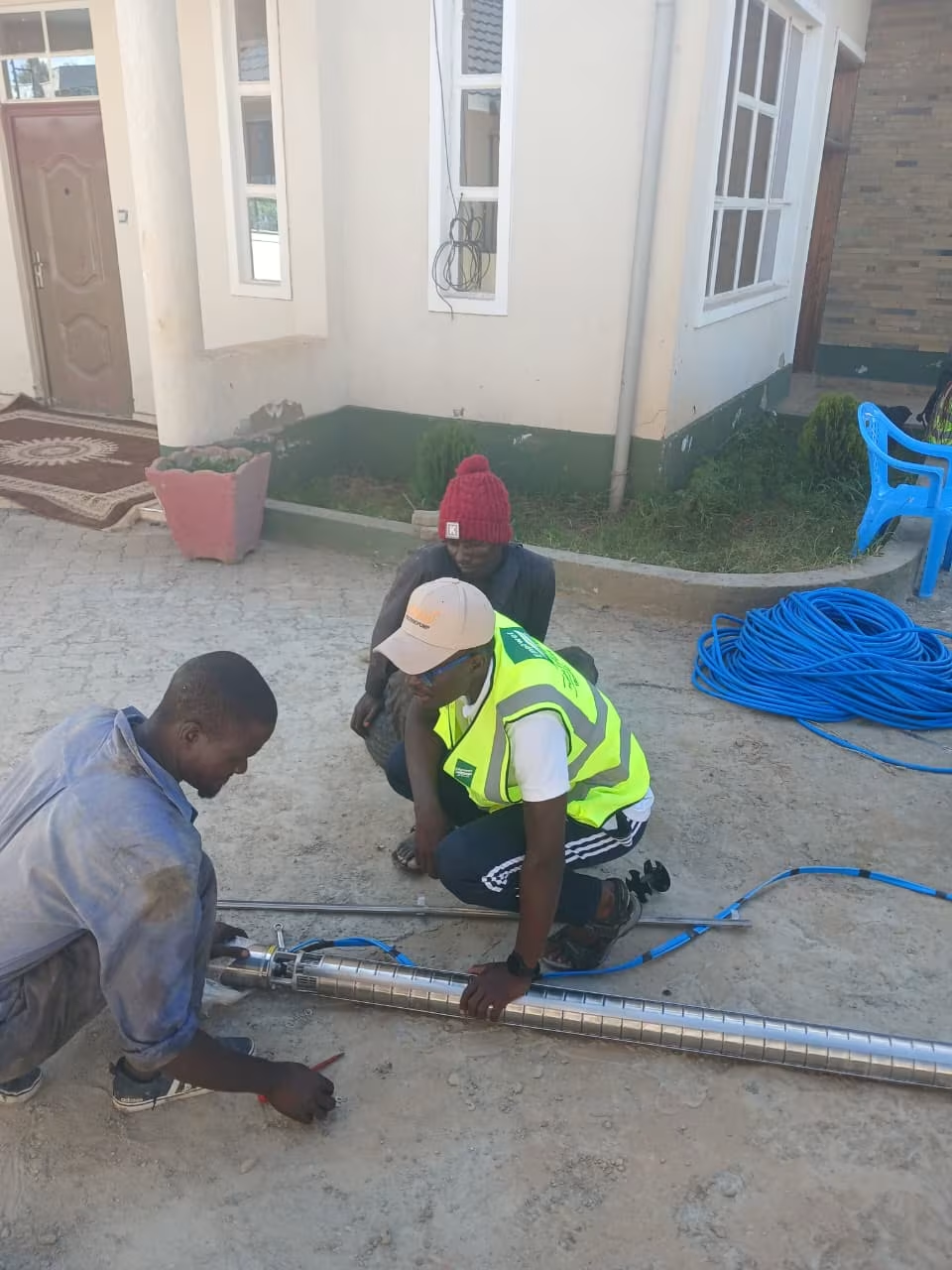
Poultry farm borehole supply needs a brief based on the actual flock operation and drinking-system requirements. A borehole cannot promise continuity merely because a pump runs during handover. First, define essential use, operating peaks and reserve responsibilities. Then ask qualified practitioners whether source evidence and the proposed arrangement support that brief.
Explore Masterpiece Hydro-Solutions borehole equipping services and enquire about an assessed poultry-farm supply scope. Confirm whether the proposed service fits your site. Share available source records and the drinking-equipment supplier’s requirements before requesting an equipment package.
Describe the flock operation accurately
Identify the houses currently operating and their production stages. Also, explain planned flock changes and unused capacity. The water brief should distinguish present recorded use from future assumptions. A building’s maximum intended occupancy does not automatically describe the farm’s actual operating demand.
Next, ask the farm’s appropriate animal-care advisers how the operational plan should inform the water brief. FAO’s poultry-management overview places water within the wider requirements of birds at different life stages. It does not provide a universal borehole specification for every flock.
Also, identify who confirms the farm’s demand assumptions. The pumping installer needs a clear service requirement rather than responsibility for inventing animal-management standards. Keep the relevant advisers and equipment supplier involved when the operating plan changes.
Build poultry farm borehole supply from records
Collect available water-use logs and identify what they cover. For example, a source meter may include drinking, cleaning and staff facilities together. Ask whether those categories need separation before the provider interprets a total as drinking demand.
Next, describe the period associated with each record. A quiet interval between flocks may not represent normal occupied-house use. Likewise, a brief busy period should not become an unqualified daily average. Label the context so the assessor can use the information appropriately.
Poultry farm borehole supply planning should keep uncertainty visible. If no useful records exist, ask what measurement or demand assessment would improve the brief. Do not insert a precise per-bird figure without a suitable verified basis for the actual operation.
Separate drinking service from cleaning peaks
Describe the required service at the drinking-system interface and obtain the supplier’s relevant duty information. Also, identify other uses that may occur at the same time. The project needs to understand simultaneous requirements rather than assume the daily total explains every operating condition.
Next, explain cleaning or turnaround periods as a separate planning category. The appropriate farm specialists should determine procedures and requirements. The pumping provider should assess the water-service implications without recommending unassessed chemicals or changing the farm’s care practices.
Also, distinguish water reaching a storage tank from water available at the intended equipment interface. Their flow and pressure requirements may differ. Identify who owns the downstream assessment so the borehole package does not end before the essential farm service begins.
Check the groundwater and pumping evidence
Share relevant test-pumping results and water-level records. Ask the practitioner to explain the abstraction basis and any limitations. Source yield, pump capacity and farm demand describe different things. A larger motor cannot establish sustainable production that the available evidence does not support.
The Grundfos guide to pump selection explains why required flow and head belong together. The assessment should consider the actual pumping level, delivery elevation, route losses and required outlet service. Drilled depth alone cannot provide the complete duty.
Next, identify which installation information remains unknown. The provider should explain what it can assess now and what needs confirmation. A quotation based on invisible assumptions gives the farm a weak basis for planning a dependable water service.
Compare poultry farm borehole supply responsibilities
Use the following table to assign the main interfaces. It does not prescribe a husbandry standard or technical design. The relevant professionals should establish requirements for the particular farm.
| Planning area | Evidence or decision needed | Responsibility to identify |
|---|---|---|
| Flock operation | Current stages and planned changes | Farm management and appropriate advisers |
| Drinking-system duty | Required service at the agreed interface | Equipment specialist and pumping provider |
| Source production | Relevant test evidence and operating limits | Qualified groundwater practitioner |
| Water suitability | Appropriate laboratory analysis and interpretation | Relevant quality and animal-care specialists |
| Reserve and interruption response | Essential demand and practical continuity plan | Owner and assessed system provider |
| Fault reporting | Normal indications and escalation route | Named farm operator and service contact |
Next, resolve any unowned interface before ordering equipment. Each supplier completing its own delivery does not automatically establish a coordinated farm water system.
Give quality decisions a defined owner
Clear groundwater is not evidence of suitability for the intended poultry use. Ask the relevant specialists which laboratory analysis and interpretation the farm needs. The pumping contractor should identify whether its scope includes any quality-related service rather than imply that installation establishes suitability.
FAO’s discussion of livestock and poultry water quality treats suitability as a distinct assessment. Use that principle to ask for advice relevant to your source and operation. Do not select treatment or dosing from a general procurement guide.
Poultry farm borehole supply should also identify who reviews quality concerns after handover. The source, storage and distribution arrangement need a practical management responsibility. A favourable result at one stage should not become an unsupported assurance about every future operating condition.
Plan reserve around an actual interruption
Describe the interruption the farm needs to manage. Power loss, pump repair and inadequate source production create different questions. Ask the provider what the proposed reserve or backup arrangement addresses. Do not assume a backup power source solves every water shortage.
Next, identify usable storage rather than rely solely on the tank’s label capacity. The practitioner should explain operating levels and reserve assumptions. Farm management should confirm essential demand and its timing. A tank needs an assessed replenishment plan as well as stored volume.
Also, decide who monitors the arrangement and contacts the service provider. The operator needs understandable indications and reporting instructions. Leave electrical changes, equipment retrieval and protective settings to qualified personnel. Continuity planning should not depend on bypassing safeguards.
Use a staggered-flock scenario
Consider an educational example where a farm changes from one occupied house to several houses at different production stages. No actual farm or water result is implied. Earlier records may no longer describe the combined demand and timing.
First, farm management prepares the revised operating brief with its relevant advisers. Next, the drinking-system specialist confirms the required interface. The pumping provider then compares that brief with source evidence, useful storage and existing equipment. The owner does not assume the earlier installation supports every new pattern.
This example shows why poultry farm borehole supply needs review when operations change. A source can remain functional while the water-service requirement grows. The correct next decision follows the revised brief and measured evidence, rather than an automatic equipment upgrade.
Review poultry farm borehole supply quotations
Ask the proposal to distinguish assessment, equipment, storage interfaces and commissioning. Also, identify which existing items the provider expects to retain. If another supplier owns the drinking equipment, the quotation should state the service boundary and coordination responsibility.
Next, request clear exclusions and provisional decisions. The contractor should explain what findings could change the scope and who may approve additional work. Ask about tax treatment and offered warranty terms without assuming a guarantee of animal performance or uninterrupted supply.
Poultry farm borehole supply needs an acceptance plan at the agreed interface. Qualified personnel should perform appropriate technical checks and record relevant conditions. Owners should receive understandable evidence rather than carry out electrical or pressure work themselves.
Also, discuss periods when only part of the farm operates. A reserve plan and monitoring arrangement should remain understandable between occupied-house cycles. Ask who checks the water system during those periods and who authorises any later change. The equipment provider should record the operating assumptions, while farm management retains responsibility for its staffing and care arrangements.
Next, identify the handover information needed by an incoming operator. A clear site diagram and contact list can explain the assessed supply boundary. They also help the operator report whether a concern begins at the source, storage or drinking-system interface, without attempting a technical diagnosis.
Questions about poultry-farm groundwater planning
Can I select a borehole pump using bird numbers alone?
Numbers provide context, but the project also needs operating stages, measured use and the drinking-system duty. The source and delivery route require separate assessment. Ask the relevant farm specialists to confirm demand assumptions, then obtain a pumping proposal tied to that defined brief.
Does an operating borehole remove the need for reserve?
Ask the provider to assess the interruption risks and the farm’s essential demand. An operating source can still face power or equipment interruption. The owner needs a practical continuity decision. Reserve capacity and replenishment assumptions should remain explicit rather than follow a universal tank-size rule.
Who should interpret the water analysis?
Use qualified advice relevant to the intended poultry operation. The assessment should explain suitability and any further work needed. Do not infer that a pump supplier automatically accepts this responsibility. Clear scope prevents a completed installation from becoming an unsupported water-quality assurance.
What should the caretaker receive at handover?
Provide normal-operation information, relevant indications and a clear reporting route. Also, retain equipment references and commissioning records with the owner. The caretaker should know which tasks require professional support. The farm’s care and continuity plans should identify who makes decisions when supply changes.
Enquire with the farm operating brief
Gather current-use records, flock plans and drinking-system requirements. Then enquire about a poultry-farm supply assessment with Masterpiece Hydro-Solutions. Confirm the site-specific service scope and availability. Ask for clear source assumptions, interfaces and responsibilities before committing to the proposed water arrangement.