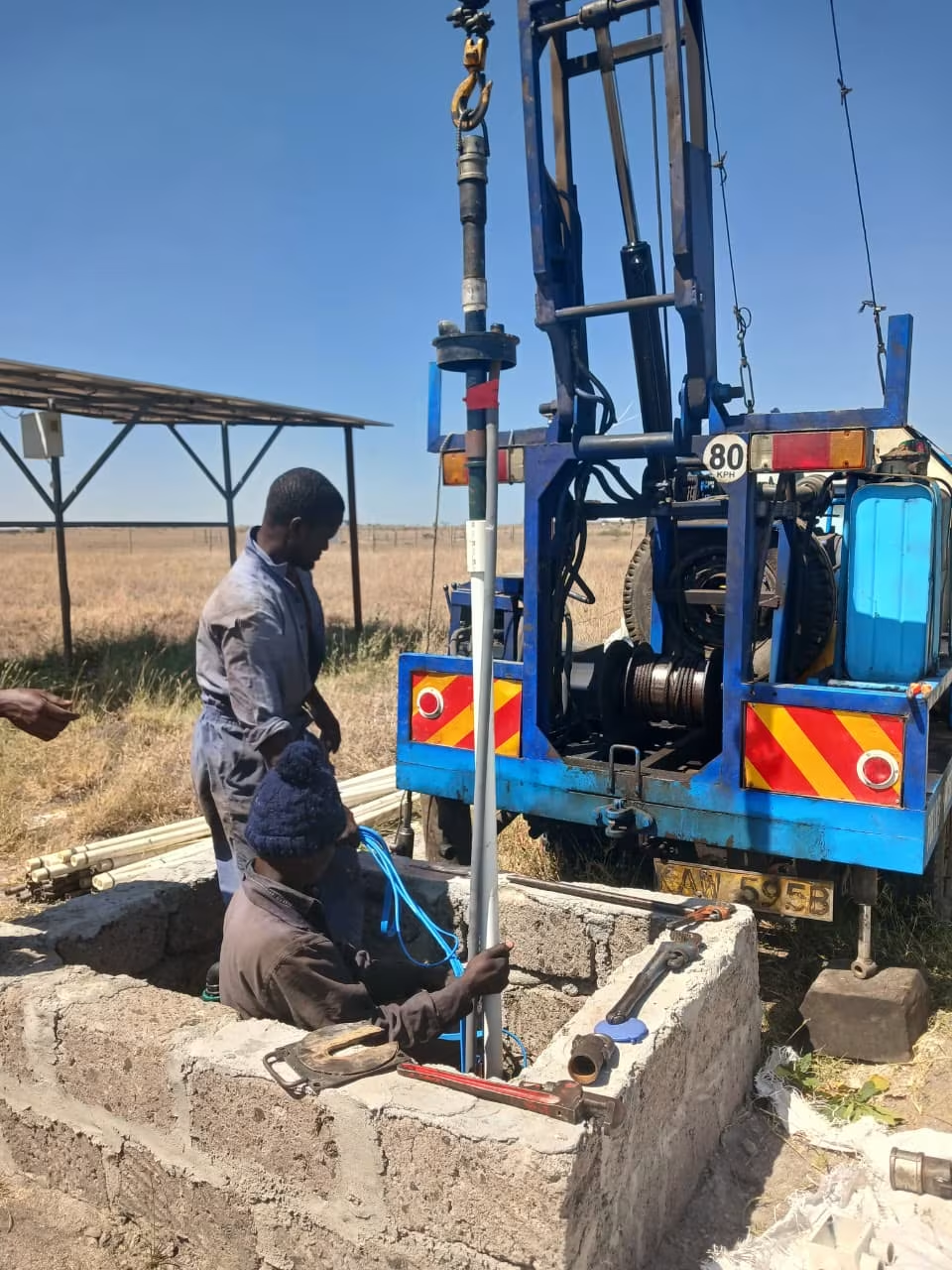
Pump warranty and commissioning records connect the supplied equipment with its documented starting condition. They help buyers understand what the installer checked and how to raise later concerns. However, commissioning and warranty cover answer different questions. Therefore, review the proposed tests alongside the written warranty terms before accepting an equipping offer.
Masterpiece Hydro-Solutions offers borehole equipping. To discuss handover evidence, request an equipping assessment with commissioning and warranty questions. Include the source report, intended delivery duty and existing proposal. Ask for the actual applicable documents rather than assuming every pump carries identical cover.
Separate pump warranty and commissioning questions
First, commissioning asks whether the installed arrangement demonstrates the agreed operating behaviour. Warranty terms describe the proposed cover, conditions and claim process. A successful demonstration does not explain every warranty exclusion. Likewise, a warranty document does not prove that the system suits the source or delivery duty.
Next, identify the parties behind each commitment. Equipment supply, installation work and later support may involve different responsibilities. Ask who provides which written terms and who receives an initial concern. Do not assume a familiar brand name makes every other project obligation unnecessary.
Also, distinguish a commercial warranty question from statutory or contractual rights. This article does not determine those rights. Actual obligations depend on the documents, current requirements and circumstances. Seek appropriate advice if the proposed wording or a later dispute has significant consequences.
Start with the agreed duty and source evidence
A commissioning plan needs a clear description of the intended operating arrangement. Ask where the system delivers water and which flow and head requirements informed selection. Also, provide measured water levels and the test-pumping report. Otherwise, a demonstration may show operation without addressing the actual brief.
The Grundfos selection learning resource explains the importance of required flow, head and the duty point. Use that principle to question the proposal. It does not establish warranty cover or endorse a particular product for your source.
Next, ask how the qualified team records the relevant commissioning conditions. An isolated flow observation may lack context if nobody records the operating arrangement. The buyer should receive an understandable record. Do not attempt electrical measurements, pressure testing or control adjustments yourself.
Compare pump warranty and commissioning records
| Record | Buyer question | Reason it matters |
|---|---|---|
| Equipment identity | Which model and identifying details were supplied? | Connects documents to the actual installation |
| Accepted duty | What service did the proposal promise? | Defines the commissioning discussion |
| Commissioning report | Which checks and conditions did the team record? | Provides a starting reference for later assessment |
| Warranty wording | Who provides cover and under which conditions? | Clarifies the proposed claim pathway |
| Exclusions | Which events or costs fall outside stated cover? | Exposes assumptions before acceptance |
| Support process | Who should receive a fault report? | Helps the owner provide useful evidence |
Ask for missing documents before describing the package as fully covered. Also, keep different commitments separately labelled. A supplier’s installation promise may differ from a manufacturer’s equipment terms. The exact documents matter more than a general statement that the pump has a warranty.
Ask what the warranty actually includes
Request the written duration, start point and applicable product conditions. Also, ask who decides whether a reported concern falls within the stated cover. Do not assume the purchase date, installation date and commissioning date mean the same thing under every document.
Next, distinguish parts, labour, movement and removal-related costs in the proposed terms. Some documents may address these items differently. Ask what the offered cover says rather than accepting an informal promise that everything is included. Do not infer a universal industry rule from one supplier’s arrangement.
Also, ask how replacement, repair or further assessment would proceed if a concern arises. A warranty enquiry does not establish that replacement will occur immediately or without investigation. Request the actual process without inventing response times. Keep the explanation with the written terms.
Make commissioning a documented handover
Agree which checks and deliverables form part of the quoted work. The qualified team should explain how those checks relate to the accepted duty. Also, request a record of outstanding items rather than treating every observed concern as already resolved. Clear handover evidence supports the next decision.
Next, identify the recipient who can understand and retain the information. A caretaker may observe normal operation, while an owner authorises support work. The handover should clarify those roles. It should not encourage unqualified staff to investigate electrical faults or retrieve a pump.
Pump warranty and commissioning records should also show the installation version being handed over. Later equipment substitutions or revised controls need their own documentation. If the arrangement changes before acceptance, ask the team to update the relevant records rather than leave the original package description unchanged.
A scenario with a later reduction in delivery
Imagine an owner reports reduced tank filling after an equipping project. The owner assumes the pump has failed and expects immediate warranty replacement. However, the current symptom does not identify the cause. The supplier needs the original duty, commissioning record and recent operating observations to assess the concern.
First, the owner supplies the equipment identity and a clear description of the change. Next, qualified personnel decide which inspection or measurements are appropriate. The assessment can then distinguish equipment concerns from source, power or delivery issues. It should not diagnose the cause from the owner’s label alone.
The applicable documents and findings inform the warranty discussion separately. This example does not determine cover or liability. It shows why pump warranty and commissioning evidence matters: a documented starting point helps explain what changed without promising a particular remedy.
Understand exclusions without trying to defeat them
Read exclusions before acceptance and ask for a plain-language explanation. If a term refers to operating conditions, ask how the proposed design addresses them. The buyer needs to understand the arrangement, not improvise settings to satisfy an unclear clause. Qualified personnel should handle technical configuration.
Also, ask what routine owner records the supplier recommends. These may help describe normal operation and later concerns. However, do not invent maintenance duties or claim intervals that the actual documents do not state. Retain the applicable product and installation information for reference.
If a proposed exclusion appears inconsistent with another promise, request clarification in writing. Avoid assuming a sales explanation changes the document’s legal effect. Where significant obligations remain unclear, seek suitable advice using the exact terms. A general guide cannot resolve that conflict for every buyer.
Report concerns with useful observations
- Identify the site and equipment using the handover records.
- Describe the observed change without assuming its cause.
- State when the concern began and whether use changed.
- Provide relevant operating records already available to the owner.
- Include safe photographs of visible indications where appropriate.
- Attach the accepted scope and applicable warranty documents.
- Ask the supplier what professional assessment it proposes next.
- Keep subsequent instructions and findings with the original file.
Do not open electrical enclosures, alter controls or attempt lifting to create evidence. A clear symptom description is enough to begin a support enquiry. Qualified personnel should decide the safe assessment method. The owner can then consider any proposed scope and commercial implications.
Keep quality and approval questions separate
A commissioned pump can move water without establishing drinking suitability. Therefore, ask which laboratory analysis fits the intended use. The warranty document cannot replace that evidence. Likewise, a water-quality concern does not by itself identify an equipment defect or establish a claim outcome.
The WRA permitting guidance distinguishes construction authorisation from the later water permit. Ask WRA about current requirements relevant to your project. Pump warranty and commissioning paperwork does not replace authority confirmation or automatically authorise abstraction.
If source condition concerns require another assessment, discuss the appropriate scope first. For a relevant visual enquiry, see borehole inspection. A camera can support certain observations, while quantity and quality questions may need other evidence.
Questions about pump warranty and commissioning
Does commissioning guarantee that the pump will never fail?
No demonstration can promise that outcome. Commissioning records document the agreed checks and starting arrangement. Warranty terms address their stated cover and conditions separately. Keep both records so later concerns can receive an evidence-based assessment rather than an assumed guarantee.
Does every pump carry the same warranty?
Do not assume identical cover. Request the actual documents for the supplied equipment and installation work. Ask who provides each commitment and what costs or conditions it addresses. Duration alone cannot explain the complete warranty arrangement or the process for a claim.
Should removal costs appear in the warranty discussion?
Yes, ask how the proposed terms treat removal, assessment, labour and return visits. Their treatment may differ from parts cover. Do not infer that every related cost is included. Any actual obligation requires the documents and circumstances rather than a general assumption.
What if reduced flow appears after handover?
Describe the change and provide the available records to the supplier. Qualified personnel should assess the cause before anyone assumes a failed pump. Source, power and delivery conditions can require separate investigation. The findings and applicable terms then inform the support discussion.
What should I receive before final acceptance?
Request the agreed commissioning report, equipment identification, applicable warranty documents and support contacts. Also, list unresolved items and the proposed next step. Compare the handover with the accepted scope. Seek clarification before acknowledging an unexplained statement that everything is complete.
Request a clear handover and cover explanation
Useful pump warranty and commissioning information explains the equipment, checks and proposed support pathway. It preserves the starting evidence without confusing warranty cover with system performance. Ask these questions while reviewing the proposal. Then keep the final documents together for future assessment.
Send Masterpiece Hydro-Solutions your equipping and handover enquiry. Include the source report and intended delivery duty. Request an itemised scope that identifies commissioning records, warranty information and the process for raising later concerns.