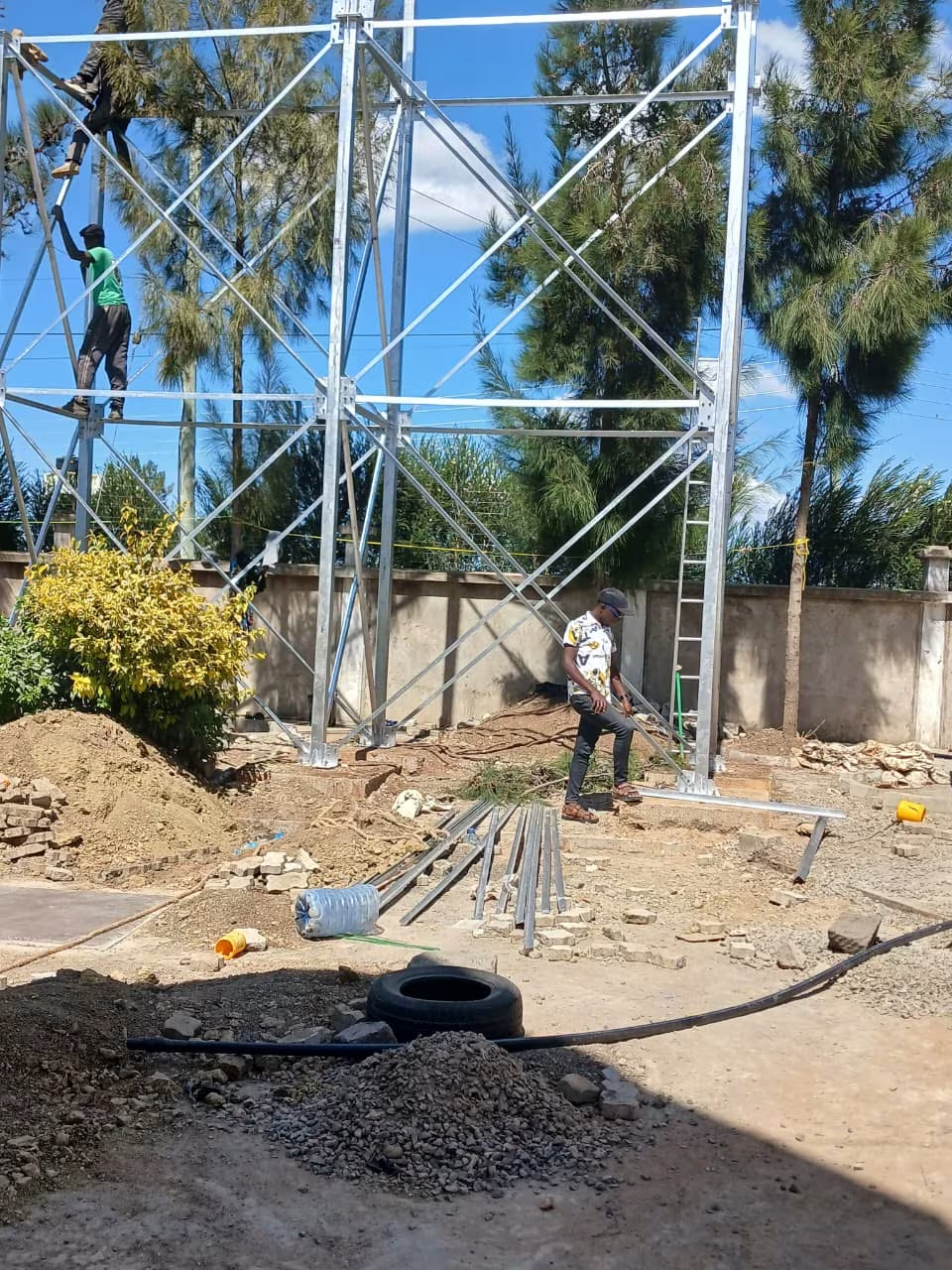
Replacement borehole pump installation should begin with evidence about the problem and the current water requirement. Ordering an identical unit may be convenient, but it can preserve an unresolved mismatch or fault. First, separate observed symptoms from confirmed findings. Then ask a qualified assessor which equipment needs repair, replacement or further investigation.
Explore Masterpiece Hydro-Solutions borehole equipping and request an assessed replacement scope. This guide explains purchasing and handover decisions. Qualified personnel should handle diagnosis, electrical work and equipment retrieval; owners need clear evidence and responsibilities rather than instructions for technical handling.
Start replacement borehole pump installation with the symptom record
Describe what changed and when. Useful observations include a slower tank refill, an interruption, an unusual indicator or repeated protection stops. Also, identify whether the problem appeared suddenly or followed another change. Keep the account factual. A failed water supply does not by itself prove that the submerged pump needs replacement.
Next, collect the last known operating baseline and relevant service records. Note changes in demand, tank destination, power arrangements or pipe route. These facts can help the assessor distinguish a new equipment fault from a changed duty. Avoid bypassing controls or repeatedly forcing operation to test an owner’s theory.
Ask what the diagnosis actually confirms
The assessor should distinguish confirmed findings, plausible causes and unresolved questions. Ask what evidence supports the proposed work. Also, identify whether controls, supply conditions, retained components or source behaviour need separate assessment. A replacement quote should not quietly transform a symptom description into a completed diagnosis.
If the evidence points towards a source-condition question, discuss borehole inspection as a possible assessment route. That discussion does not guarantee a particular finding or increased yield. The next task should address the identified uncertainty rather than become an automatic order for unrelated work.
Recheck duty before replacement borehole pump installation
Ask whether the original water requirement still applies. A new building, larger herd or moved tank may have changed the brief. Also, check the relevance of old source measurements. The original pump model records a past selection; it does not prove that an identical purchase remains suitable for the present project.
Flow and total dynamic head need consideration together. The Grundfos selection resource explains that relationship. Distinguish pumping water level from drilled and setting depths. The assessed duty should account for delivery elevation, pipe losses and required outlet pressure as relevant to the actual destination.
Compare repair and replacement boundaries clearly
Ask which options the findings support and which remain provisional. Repair may require an assessment before the provider can confirm feasibility. Replacement also needs a complete scope, including any retained components. Compare the options against the current duty and acceptance needs rather than assume that the simplest purchase offers the best outcome.
| Decision area | Evidence to request | Question for the owner |
|---|---|---|
| Fault cause | Findings and remaining uncertainty | Does the proposed work address the identified problem? |
| Repair option | Assessed feasibility and defined scope | What can the provider confirm before commitment? |
| Replacement option | Selected duty and named equipment | Does the new unit suit today’s requirement? |
| Retained components | Condition and compatibility assessment | Which assumptions need verification? |
| Old equipment | Identity, findings and agreed disposition | Who retains evidence and authorises disposal? |
| Acceptance | Measured delivery and operating record | How will the owner assess the restored arrangement? |
Assess what remains around the new pump
A new unit may connect to existing controls, pipework and other equipment. Ask the responsible professionals how they will assess the condition and suitability of retained items. Also, clarify who takes responsibility for the combination. A warranty limited to the new component should not become an implied assurance about every older part.
Replacement borehole pump installation should identify these interfaces before purchase. If the contractor proposes retaining an item without inspection, ask what evidence supports that choice. Conversely, replacing everything needs a reason. A transparent retain-or-replace schedule helps the owner understand the project without dictating specialist inspection or electrical methods.
Work through an illustrative changed-demand case
Consider an educational site whose original requirement was nine cubic metres daily. A later activity increases the assumed need to 15 cubic metres, or 15,000 litres. If an assessed average delivery equals three cubic metres per hour, the daily operating requirement changes from three hours to five. These figures are arbitrary planning assumptions.
The arithmetic does not establish available source water, electrical suitability or actual delivery at the required head. However, it shows why the owner should disclose changed use before ordering an identical replacement. The old system may have met the earlier requirement while the current brief needs another assessed arrangement.
Replacement borehole pump installation must therefore address both the fault and today’s water balance. A larger replacement cannot create groundwater. If the source supports less than the assumed demand, the owner needs a separate response to that shortfall rather than expect equipment capacity to settle it.
Agree equipment handling and old-part records
Qualified personnel should assess retrieval and installation requirements. The owner should provide access and keep others outside the work area. Also, ask how the contractor will record the identity and observed condition of removed equipment. Those records can support warranty discussions and later understanding of the replacement decision.
Before work, agree who keeps the old unit and how any disposal decision needs authorisation. Do not assume it becomes the contractor’s property or that the owner must retain every item indefinitely. The practical requirement is a clear agreement and sufficient evidence before components leave the project record.
Plan temporary continuity without inventing a repair time
Describe essential water uses and the usable reserve available during work. Ask the provider to explain the proposed programme and its dependencies. However, avoid converting an early estimate into a guaranteed restoration time. Diagnosis, equipment availability or site findings may affect the sequence.
If the owner needs a temporary supply arrangement, define it separately and assess quality for intended uses. Replacement borehole pump installation should identify the handover between temporary and restored supply. Also, nominate the person who issues service updates so users do not receive conflicting promises during an interruption.
Accept replacement borehole pump installation against a fresh baseline
Agree the commissioning destination and evidence before work starts. Request measured delivery, relevant water-level information, operating conditions and supplied equipment identities. Next, compare those findings with the current duty basis. A successful restart is useful evidence, but it should not replace an understandable record of the restored arrangement.
Also, ask qualified personnel to demonstrate relevant control behaviour and explain protection indicators. Record outstanding questions and their owners. The new baseline can support later assessment if performance changes. It should identify what the team observed rather than imply an unlimited guarantee about every season, source condition or future demand.
Clarify warranties without assuming fault coverage
Ask how the provider will assess any existing warranty and what records it needs. Do not assume that age alone proves coverage or exclusion. Also, obtain written terms for the new equipment and work. Identify who handles the first report when several supplied or retained components could affect performance.
Keep diagnosis records, invoices, equipment identities and commissioning evidence together. Water quality remains a separate question; a replacement pump does not establish potability. The operator needs normal indicators and an escalation route. Qualified personnel should assess technical faults rather than expect the owner to alter wiring or defeat protection.
Questions owners ask during an interruption
Should we order the same model immediately?
First, confirm the cause and current duty. An identical unit may suit the assessed requirement, but the model label alone cannot prove that. Also, tell the assessor about changed demand or delivery arrangements. Replacement borehole pump installation should follow evidence rather than urgency alone.
Does a tripping control prove the pump has failed?
No single symptom establishes that conclusion. Record the indicator and operating circumstances, then request qualified assessment. Other parts of the arrangement may require investigation. Avoid bypassing the control or forcing repeated operation, because the owner needs a reliable diagnosis before choosing equipment.
Can older controls stay with the new unit?
Possibly, if their condition and compatibility support the assessed combination. Ask who will verify that and how the warranty boundary works. A working indicator or familiar enclosure does not establish suitability. The replacement scope should state what remains provisional until inspection.
What if the new unit delivers less than expected?
Compare the actual conditions with the agreed duty and commissioning record. Report the measured difference through the support route. Source behaviour, changed routes or equipment issues may need assessment. Avoid assuming one cause or adjusting controls without the responsible qualified person’s guidance.
What should accompany an urgent enquiry?
Send location, model details, symptoms, service history and available source records. Include present demand, tank destination and reserve concerns. Finally, name the site contact. Mark unknowns clearly so the provider can define the necessary assessment rather than promise a replacement from incomplete information.
Request a replacement decision with evidence
Bring fault observations, current demand and available records into one discussion. Ask for confirmed findings, retained-component decisions and a measurable acceptance plan. Also, agree what happens to removed equipment. These steps make replacement borehole pump installation an accountable project rather than an unsupported repeat purchase.
Request a replacement assessment from Masterpiece Hydro-Solutions. Explain the observed change and ask which checks precede equipment confirmation. A useful proposal addresses the identified problem, today’s water duty and the records needed to manage the restored system.