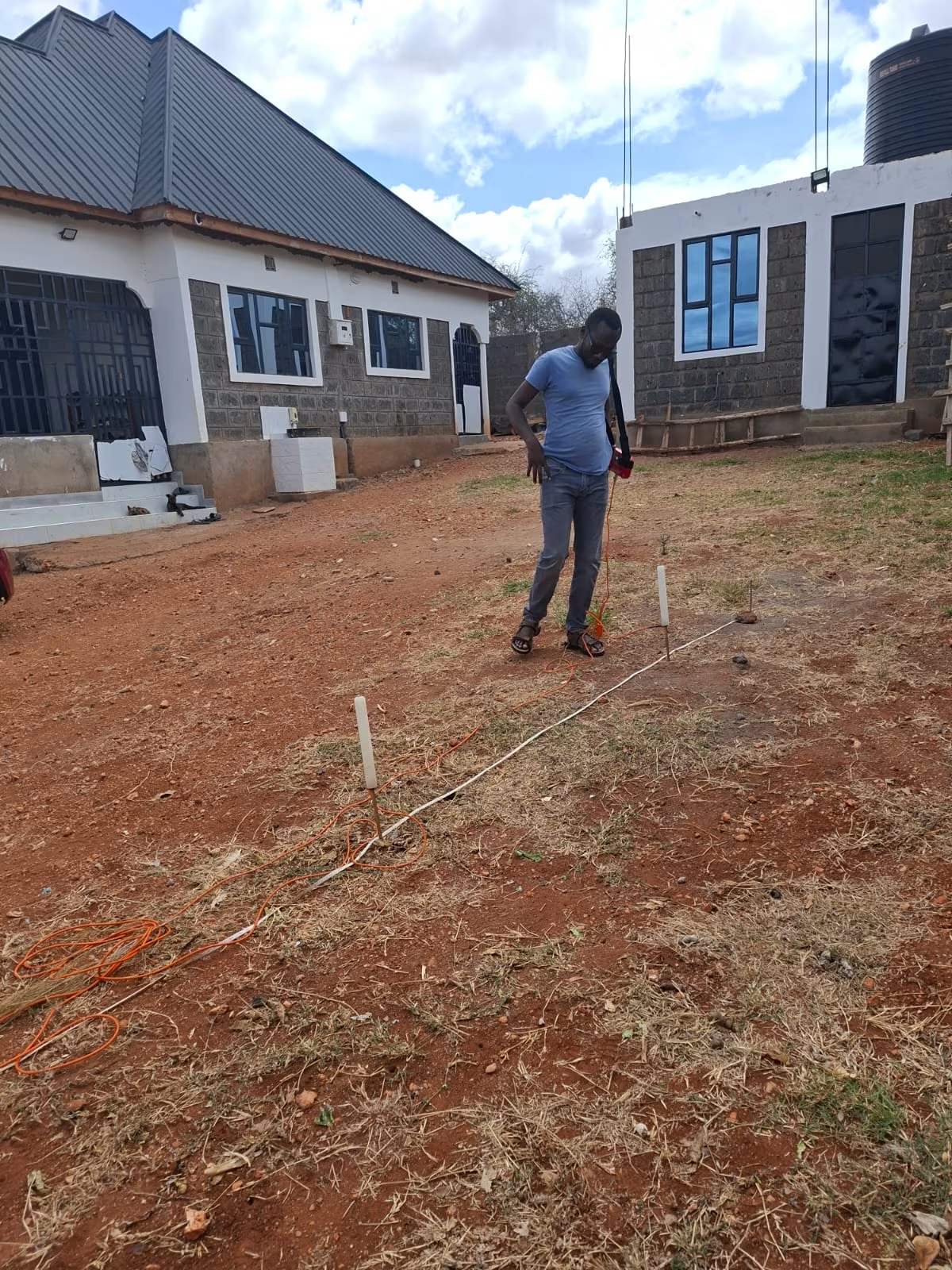
A school groundwater survey should support a clear decision about the campus water project. It should not promise drinking-water quality or a particular borehole yield before the relevant evidence exists. First, explain the school’s term-time needs, present supplies and planned changes. Then agree what the assessment can reasonably establish.
Explore Masterpiece Hydro-Solutions hydrogeological survey services and request a school-specific groundwater assessment. Share the location, campus layout and available records. Identify the person coordinating the project so the provider can discuss evidence, access and responsibilities with the appropriate representative.
Identify the school water decision
Start with the problem the school wants to solve. A proposed source may supplement an unreliable supply, support a planned boarding facility or serve an expanding campus. These objectives need different planning assumptions. State the actual purpose rather than asking for a borehole without describing its intended role.
Next, distinguish the immediate need from the long-term ambition. A committee may only need enough evidence to decide whether further investigation deserves funding. Another project may already have a defined next stage. The survey proposal should match the decision the school can make now.
Also, record who approves the scope and who can authorise changes. A bursar, headteacher and governing committee may participate in different ways. Clear responsibilities help the provider receive consistent information without treating every conversation as authority to alter the project.
Build a school groundwater survey demand brief
Describe the activities that use water during a normal term. These may include sanitation, kitchens, cleaning, boarding and staff accommodation where relevant. Also, identify activities outside the ordinary timetable. The project needs the school’s actual pattern rather than a universal assumption about pupil numbers.
Share consumption or delivery records if available, with their dates and basis. If figures remain estimates, label them. A holiday-period observation may not represent term-time demand. Likewise, a future classroom block does not create present measured consumption simply because it appears in the development plan.
A school groundwater survey should connect to that demand brief without selecting equipment prematurely. Tell the assessor which uses matter most during a shortage. Later source evidence and duty assessment will inform the pumping arrangement; a survey cannot establish those specifications by itself.
Describe existing supply and storage
List the sources currently serving the campus and explain their roles. Also, identify known interruption patterns. A proposed borehole may act as a supplement rather than the school’s sole supply. The assessor needs that context when discussing the wider project’s objectives and uncertainties.
Next, show existing tanks and water destinations on the plan. Storage can affect the later service arrangement, but it cannot create groundwater. Do not assume that a larger tank or a new borehole automatically solves every shortage. The issue may involve production, delivery or the timing of demand.
If the school already has a borehole with changed performance, say so. An assessment of an existing source may differ from surveying for a new one. The provider should explain which service addresses the problem before the school commits funds to an unsuitable investigation.
Prepare the campus for professional assessment
Provide a current layout showing buildings, planned works and known services. Also, describe access arrangements and the areas available for investigation. A school site can change substantially as new facilities appear. The assessor should not work from an obsolete plan without knowing its limits.
Ask the provider how it will coordinate the visit with school management. Qualified personnel should manage fieldwork and determine safe working requirements. The school should identify an appropriate staff contact and agreed access arrangements. Pupils should not participate in specialist investigation tasks or operate equipment.
Also, distinguish survey access from later drilling access. The survey team reaching a location does not prove that machinery can work there. Ask the provider to identify practical questions that a later contractor must assess before the school commits to construction arrangements.
Use a school groundwater survey decision table
A governing team can use the following structure to separate decisions and evidence. The table does not prescribe technical methods or universal water quantities. It helps the school ask the right question at each stage.
| School decision | Information to gather | What the survey cannot settle alone |
|---|---|---|
| Whether to investigate groundwater | Supply problems and the proposed source’s role | A guaranteed future water service |
| Which demand brief to use | Term-time records and expansion assumptions | Exact future consumption without supporting evidence |
| Which campus areas to assess | Current layout, services and access | Every later machinery requirement |
| Whether to progress to drilling | Survey recommendation and stated uncertainty | Measured sustainable yield |
| Whether water suits an intended use | Appropriate later laboratory evidence | Drinking-water quality from a subsurface interpretation |
| Which equipment to purchase | Source testing and required duty | A final pump selection from the survey alone |
Next, assign responsibility for the information the school must provide. This keeps committee discussion connected to evidence rather than assumptions about what a survey guarantees.
Keep water quality outside unsupported promises
A hydrogeological assessment does not certify that future water will suit drinking, food preparation or any other intended use. Appropriate laboratory analysis and qualified interpretation guide those later decisions. Also, clear water does not establish potability. Make these limits explicit in the project discussion.
Ask who will arrange the relevant quality evidence if the project progresses. Then clarify whether interpretation and any further treatment assessment need separate scopes. A general survey quotation should not imply that it includes a complete treatment solution before the water has been assessed.
The school groundwater survey can still support planning while leaving quality unresolved. The useful report identifies what it knows and what must come later. That allows the governing team to fund the next appropriate evidence step without presenting a promising recommendation as a finished supply.
Review a boarding-expansion scenario
Consider an educational example involving a day school planning a boarding facility. No actual school or survey result is implied. The current consumption records describe a different operating pattern from the proposed future campus. The project therefore needs to keep present evidence and expansion assumptions separate.
First, the school shares existing records and the planned facilities. Next, the assessor defines the survey brief around the proposed source’s role. If the project later reaches drilling and testing, those findings inform the available production. The school then reviews the expansion supply plan against evidence.
This scenario shows why a school groundwater survey should form part of staged planning. It can guide investigation, but it cannot promise the additional demand will fit a future borehole. The school must retain a clear decision point before committing to unsupported water-service claims.
Read school groundwater survey recommendations critically
Ask the report to identify the investigation area, evidence and recommendations clearly. Also, check the site plan and project brief it references. The school should understand where the assessor worked and how the findings relate to the current campus.
Next, examine limitations as well as conclusions. Restricted access or incomplete records may affect the next decision. Ask the author to explain their significance. A limitation should not disappear merely because a committee wants a simple approval message.
A school groundwater survey should state what later drilling and testing would need to establish. The report may recommend a next step without guaranteeing the result. Ask for that distinction in accessible language so non-specialist committee members can evaluate the proposal fairly.
Coordinate permissions and supporting records
Use the Water Resources Authority’s permitting guidance and confirm current site-specific requirements directly. Ask which supporting information the proposed activity needs and who will coordinate it. A report does not itself grant permission to construct or abstract groundwater.
Also, identify which assistance the survey provider includes. Report preparation and application coordination may have different boundaries. The school should know what it must supply and who responds to technical clarification. Do not assume that a service quotation guarantees an authority’s decision.
Keep the issued report, correspondence and later revisions in an accessible project file. Staff and committee membership may change during delivery. Clear records help the next representative understand the evidence, commitments and unresolved questions without starting the planning conversation again.
Plan the next investment gate
If the assessment supports progressing, discuss borehole drilling services through a defined subsequent scope. Ask which records the contractor will supply and how later testing will inform decisions. A survey recommendation should not become an automatic instruction to buy an entire equipment package.
Also, retain clarity about storage, power and distribution. A usable school water service involves more than the drilled source. The provider should explain which later specialists and assessments the project needs. Keep these categories visible when the governing team considers funding.
Finally, ask what finding would prompt the school to pause or revise its plan. A staged project needs an alternative decision if evidence disappoints. This protects planning clarity without demanding that a survey remove every uncertainty before the school can take a sensible next step.
Questions about school survey planning
Can the survey promise safe drinking water?
No. It does not replace appropriate laboratory analysis and qualified interpretation for the intended use. Ask the provider to explain that boundary to the governing team. Also, identify the later quality-assessment responsibility. A promising subsurface recommendation and clear-looking water cannot serve as drinking-water evidence.
Should we use pupil numbers as the complete brief?
Pupil numbers provide context, but the project also needs actual activities and timing. Boarding, kitchens and staff accommodation may affect the pattern. Share available consumption records and label future assumptions. The provider can then explain what further demand assessment would help later equipment and supply decisions.
Must the visit occur during a school holiday?
The school and qualified provider should agree suitable arrangements for the proposed work. Explain the timetable, access constraints and relevant site activity. The contractor must manage its specialist tasks, while the school coordinates its own responsibilities. Do not infer a universal scheduling rule from another institution’s project.
Does a recommendation mean the school should buy a pump?
Not yet on that evidence alone. Suitable equipment selection needs source testing and the required duty. Ask the provider to identify those later decisions. A survey can justify further investigation while leaving the final production, pump and power arrangement unresolved.
What should the committee receive after the survey?
Request the agreed report, clear site references and an explanation of the recommendation and limits. Also, identify the next evidence step and any outstanding questions. The governing team should understand what the assessment supports now, rather than receive only a technical document with no decision context.
Request an assessment the school can use
Gather the campus plan, current supply records and term-time brief. Then request a school groundwater assessment from Masterpiece Hydro-Solutions. Ask for clear scope, accessible findings and separate quality and yield limits. Those details give the governing team a practical basis for planning the next water-project decision.