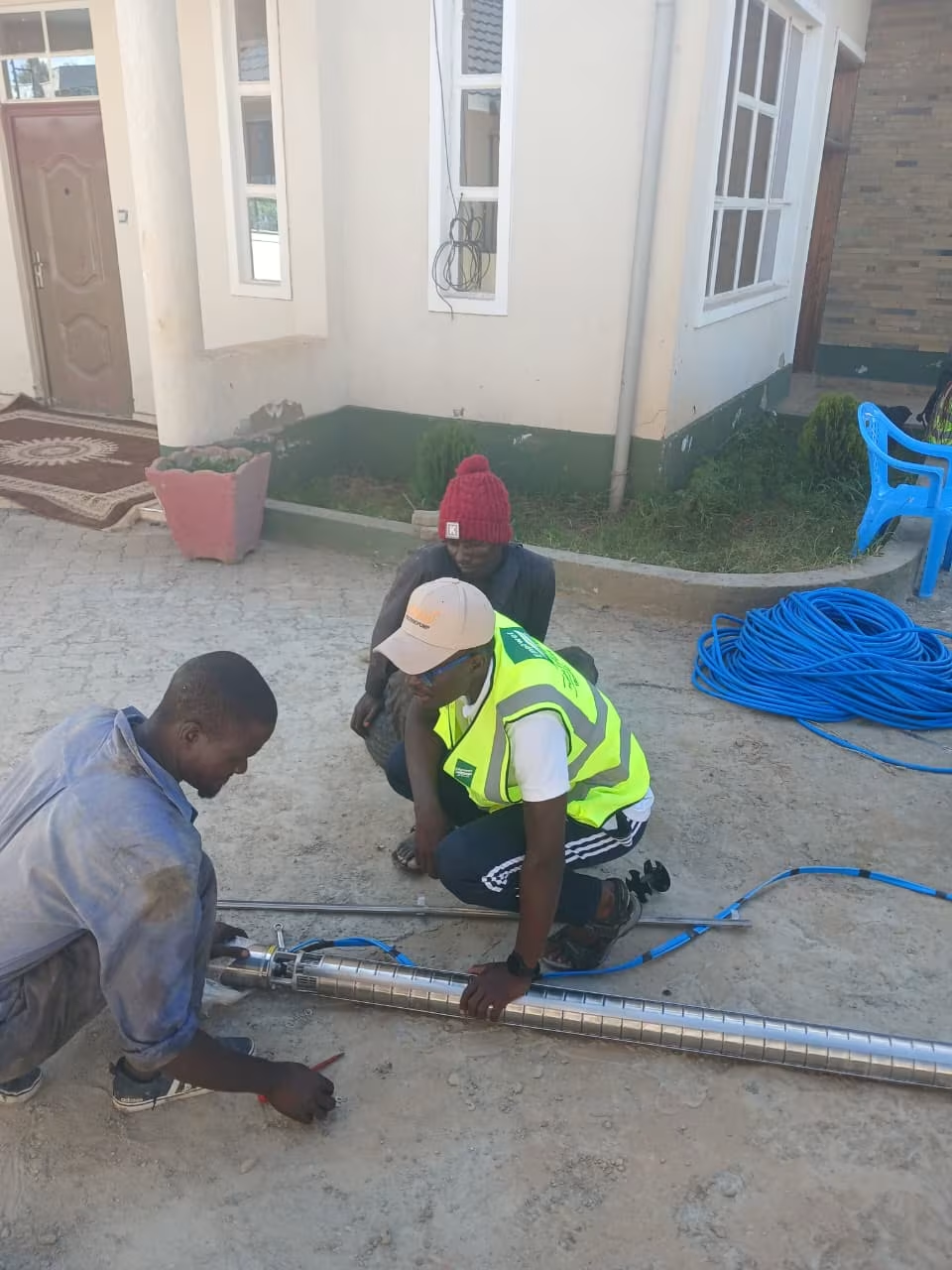
Single phase borehole pumps should match the actual water requirement and an assessed electrical supply. The presence of household electricity does not identify a suitable pump or establish installation readiness. First, describe the source and tank duty. Then ask qualified personnel to explain which complete equipment arrangement the available supply can support.
Explore Masterpiece Hydro-Solutions borehole equipping and request a site-specific equipment assessment. This guide helps owners compare proposals and operating needs. It provides no wiring, component-sizing or protection-setting directions; qualified personnel should assess and perform the electrical work.
Start with single phase borehole pumps and the household brief
List the users and activities that will draw from the source. These may include ordinary household needs, staff accommodation or other property uses. Also, distinguish current consumption from future buildings or irrigation plans. A familiar power supply category does not establish how much water the site needs each day.
Where records exist, provide measured consumption and storage observations. If you only have an estimate, identify it clearly. The assessor needs to understand daily volume and important busy periods. That distinction can reveal whether the project mainly needs steady source production, more usable storage or another assessed supply arrangement.
Check what the existing electrical connection actually establishes
Tell the provider what supply information you hold and where the proposed installation will connect. Qualified personnel should verify the relevant conditions and suitability for the equipment. Also, identify any separate electrical work the proposal assumes. A working house connection is useful background, but it cannot replace that site-specific assessment.
Ask who takes responsibility for confirming the supply and compatible controls. The owner should receive an understandable scope and relevant records. Single phase borehole pumps should not become a shopping decision based only on what a neighbour installed. Their site, duty and assessed equipment arrangement may differ from yours.
Define the tank duty before comparing models
Explain where water must arrive and how the route reaches that destination. Required flow and total dynamic head matter together. The Grundfos selection resource explains that relationship. A model’s maximum flow figure cannot show what it will deliver at the assessed head for your storage tank.
Keep drilled depth, pumping water level and pump setting depth distinct. Total dynamic head considers pumping lift, delivery elevation, pipe losses and required outlet pressure. Also, tell the assessor about multiple tank destinations. Moving delivery from a lower tank to an elevated one may alter the requirement even though household demand stays unchanged.
Compare single phase borehole pumps against real options
If a proposed arrangement does not fit the assessed need, ask the provider to explain alternatives. That may involve revising the operating brief or assessing another supply arrangement. However, no universal recommendation applies. Compare options through their source, duty and compatibility evidence rather than assume one motor category always offers the easiest answer.
| Owner question | Evidence needed | What it prevents |
|---|---|---|
| What daily volume must reach storage? | Demand basis and operating timetable | Choosing a model from an unexplained power rating |
| Can the source support the proposed rate? | Relevant test and water-level records | Confusing pump capacity with available groundwater |
| Does the electrical supply suit the equipment? | Qualified site-specific assessment | Assuming household electricity proves compatibility |
| What tank destination does the design cover? | Selected flow and head | Using a maximum catalogue flow as a site promise |
| How does the arrangement handle interruptions? | Usable storage and assessed continuity plan | Counting the same volume as routine water and reserve |
| How will the owner accept the work? | Commissioning measurements and control explanation | Judging completion from the motor starting alone |
Keep available source water separate from convenience
A pump that suits the electrical arrangement still needs to respect the source assessment. Ask how test-pumping evidence supports the proposed operating rate. Also, identify any gap between available production and intended use. More motor capacity cannot create groundwater or guarantee enough supply for a later expansion.
Single phase borehole pumps therefore need the same source discipline as other equipment. If records are missing, the provider should explain what further assessment is necessary. An owner who wants a quick purchase should still understand which assumptions remain uncertain before final selection becomes an installation commitment.
Use a small-property example carefully
Consider an educational property requiring six cubic metres daily, equal to 6,000 litres. Assume assessed average delivery reaches 1.5 cubic metres per hour. Producing the ordinary volume would require four operating hours. These figures are arbitrary planning assumptions, not recommended household allowances, source yields or a selection for a particular power supply.
Now suppose another activity adds three cubic metres daily. The total becomes nine cubic metres, requiring six operating hours at that assumed flow. The owner should disclose that change before buying equipment. The electrical connection alone cannot show whether the source, controls and actual delivery duty support the expanded requirement.
The example shows why single phase borehole pumps need a complete brief. A familiar model may suit one assessed arrangement and fail to address another. Ask the provider to explain the chosen flow, available operating opportunities and source basis rather than convert the arithmetic into a universal model recommendation.
Use storage to address timing rather than create water
Compare the time when the source can operate with the time users need water. Storage may bridge that mismatch if its usable volume and refill pattern suit the property. Also, identify the essential reserve separately. A large nominal tank does not automatically establish enough usable water after the busiest household period.
If production falls below daily use continuously, additional storage only delays the shortage. Ask how the project will close that deficit. Options need assessment and may include changed demand or supplementary supply. Do not assume selecting a different motor category solves a water-balance problem the source evidence has already identified.
Describe control behaviour in everyday terms
Tell the assessor whether the project fills one tank and how the owner expects operation to work. Ask how the proposed arrangement responds to tank level and insufficient source water. Qualified personnel should design and demonstrate suitable controls. The owner needs normal indicators and a clear response when protection interrupts pumping.
Also, identify who receives fault reports and which observations are useful. Single phase borehole pumps still require accountable technical support. Owners should not bypass a control, change wiring or copy component advice from another installation. Repeated protection stops deserve qualified assessment instead of attempts to force normal operation.
Check single phase borehole pumps through commissioning evidence
Before installation, agree the tank destination and acceptance record. Request measured delivery, operating conditions and equipment identities. Next, compare the observations with the selected duty. A successful start can show that something operates, but it cannot establish the complete daily supply or every future operating condition.
Ask qualified personnel to demonstrate the agreed controls and explain protection indicators. Retain any outstanding action or changed assumption in writing. The handover should give the operator a useful baseline. Later concerns become easier to assess when the owner can compare current observations with recorded commissioning conditions.
Assess existing equipment before assuming retention
A property may already have controls, pipework or an older pump arrangement. Ask what condition and compatibility checks the provider needs before retaining components. Also, clarify the warranty boundary for the complete combination. A working indicator or familiar equipment enclosure does not establish suitability for a newly selected unit.
If source condition needs investigation, discuss borehole inspection as an assessment option. Keep that question distinct from electrical suitability and hydraulic selection. Water quality also needs appropriate analysis for intended use; a replacement or first pump does not establish drinking-water safety.
Questions household owners commonly ask
Does an ordinary house connection guarantee compatibility?
No. Qualified personnel need to assess the relevant supply and proposed equipment combination. Also, define the water duty first. Single phase borehole pumps require a complete site assessment rather than an assumption based on electricity available elsewhere on the property.
Can we buy the same model as a neighbour?
The neighbour’s installation does not establish your duty, source yield or supply suitability. Provide your own records and destination details. Ask the provider to justify the selection. Similar-looking properties can still have different pumping water levels, routes and daily requirements.
Will a larger motor fill the tank faster?
Only an assessed selection can explain useful delivery at the actual head. The source must also support the proposed abstraction. A larger rating alone cannot establish a suitable improvement. Compare measured need and the selected duty instead of choosing solely for perceived power.
What if we need more water next year?
Present that expansion as a separate scenario now and request reassessment when plans become clear. Demand, duty or supply work may change. Single phase borehole pumps should serve a defined brief, with later stages assessed rather than promised through an unexplained spare-capacity allowance.
What information should accompany an enquiry?
Send source reports, daily demand, tank details and existing equipment information. Include available electrical records and any interruption concerns. Finally, name the site contact. Mark missing facts clearly so the provider can identify the qualified checks required before final equipment confirmation.
Request a property-specific equipment decision
Connect demand, source evidence and tank duty with a qualified supply assessment. Agree controls, retained-component checks and commissioning records. Finally, identify operating limits and support contacts. These steps help owners compare single phase borehole pumps through their actual needs rather than a familiar household label.
Request a borehole equipment assessment from Masterpiece Hydro-Solutions. Share the available records before selecting a model. Ask for a clear duty basis and complete proposed arrangement so the owner can understand what the installation will demonstrate and what uncertainty remains.