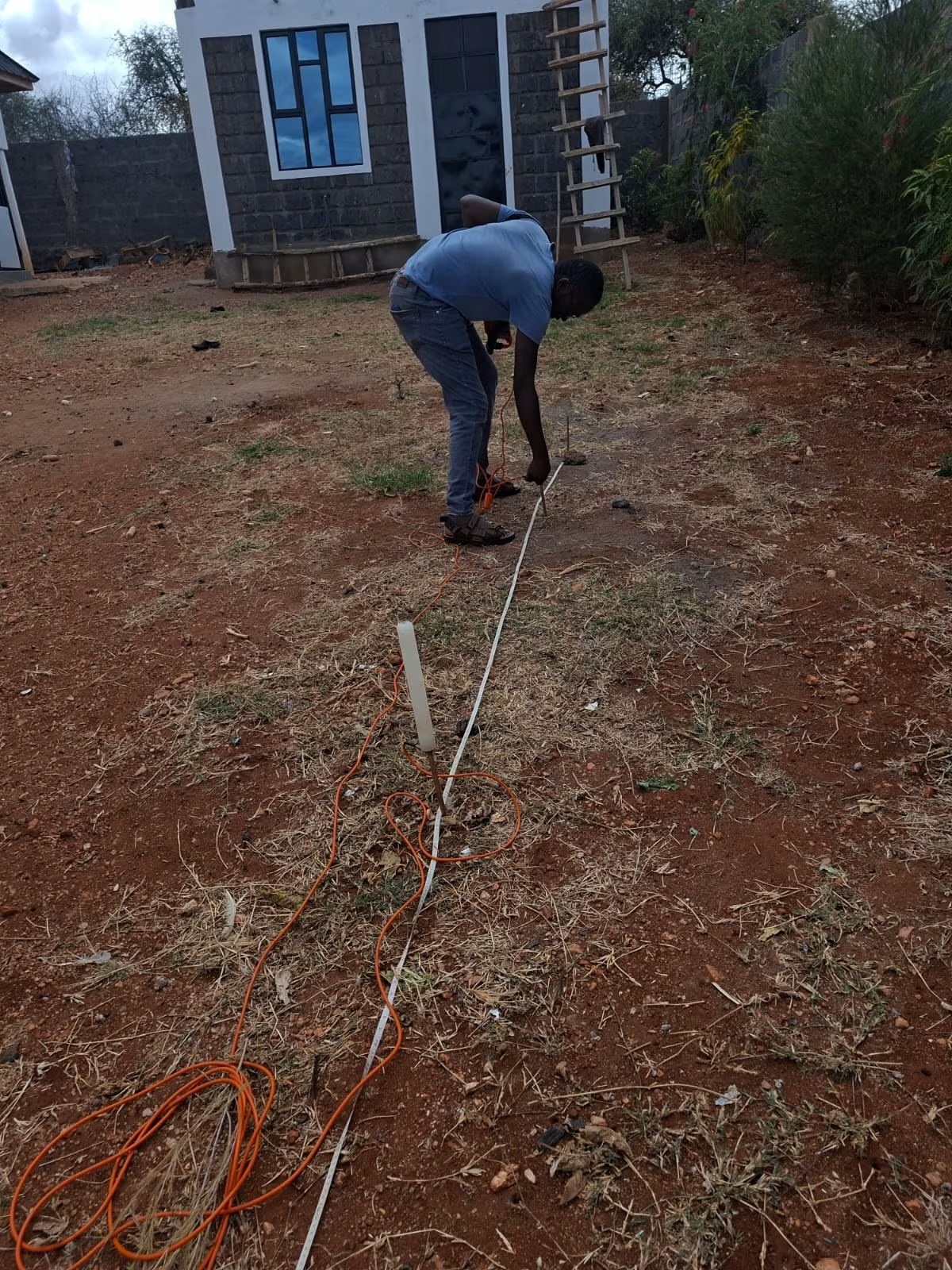
A small plot borehole survey needs an accurate picture of the space the assessor can investigate and the project the owner hopes to build. Limited space does not automatically establish either suitability or failure. First, identify the constraints. Then ask a qualified professional what the available evidence can reasonably support.
Explore Masterpiece Hydro-Solutions hydrogeological survey services and request a site-specific assessment for your plot. Send a current layout, location and access photographs. Explain planned construction as well as existing features, so the provider can assess the actual project rather than an assumed open site.
Define the plot you actually control
Start with a clear property plan and identify the area available for the proposed investigation. Also, distinguish your plot from neighbouring or shared land. An assessor should not assume it can extend work outside the area for which access has been arranged.
If boundaries remain uncertain, tell the provider. A groundwater survey does not settle a boundary dispute. The owner should arrange the relevant professional clarification and share the outcome. This keeps a technical recommendation from depending on an access assumption that the project cannot fulfil.
Next, identify the people who coordinate entry and decisions. A tenant, owner and managing agent may hold different information. Give the survey team a clear contact route, while ensuring that the available layout accurately reflects the property and proposed work.
Brief a small plot borehole survey with current plans
Share existing buildings, hard surfaces and known services. Also, provide any proposed extension or revised layout. The assessor needs to understand which areas will remain accessible when the project progresses. A vacant corner today may form part of tomorrow’s building footprint.
Ask the provider how these features affect the proposed investigation. Do not select the method or tell the team to work around an unknown service. Qualified personnel should assess practical requirements. The owner’s role is to provide accurate records and identify uncertainty.
A small plot borehole survey should state the plan version it uses. If you change the layout during the process, tell the assessor before accepting the recommendation. This helps prevent a technically reasoned proposal from becoming impractical because the site brief changed silently.
Separate survey access from drilling access
A team may gain access for an assessment without establishing that a drilling rig can later work there. These are separate practical questions. Therefore, ask the provider to distinguish survey arrangements from the later machinery assessment. Do not infer rig suitability from a successful site visit.
Next, describe the full route from the road to the working area. Known gates, turns and overhead or ground constraints can prompt useful questions. However, photographs cannot establish every access condition. A contractor must determine what it needs to assess before committing to mobilisation.
Also, consider whether later maintenance access forms part of the planning brief. A construction arrangement should not rely on assumptions about permanent access that the owner intends to remove. Ask the qualified team how the proposed project and future layout interact.
Review small plot borehole survey coverage
Ask the assessor to describe where it can investigate and where it cannot. A constrained investigation may leave parts of the site outside its coverage. The report should make that visible, rather than imply that its findings describe every area equally.
Also, ask how the constraints affect confidence in the recommendation. The useful answer concerns your decision: what can the evidence support, and what remains unresolved? A smaller investigation does not become comprehensive simply because the final report contains detailed-looking graphics.
Small plot borehole survey findings should remain tied to their actual coverage. If the professional recommends further assessment, ask what question it would answer. This helps you evaluate the next step without assuming that either more measurements or immediate drilling is always appropriate.
Build a practical constraint schedule
The following table helps an owner organise information for the assessor. It does not prescribe clearances, setbacks or construction positions. The qualified team and relevant authorities must address those project-specific questions.
| Constraint to describe | Information to share | Assessment question |
|---|---|---|
| Property boundary | Current plan and known uncertainty | Which area can the investigation legitimately cover? |
| Buildings and planned works | Existing and proposed layout versions | Will the recommendation remain practical? |
| Known services | Available records and service contacts | What specialist coordination does the work need? |
| Access route | Current photographs and honest descriptions | What needs a separate machinery review? |
| Shared areas | Access arrangements and responsible parties | Which assumptions depend on another party? |
| Water-service objective | Intended use and available demand evidence | Does the proposed source fit the wider project? |
Next, mark every unknown explicitly. An incomplete service record or uncertain boundary is information the assessor needs, rather than a reason to invent an answer.
Keep authority requirements site-specific
Consult the Water Resources Authority’s water-use allocation guidance and ask WRA about current requirements for the proposal. Do not borrow a setback, fee or approval assumption from an unrelated property. A small site needs the same clarity about the applicable process as any other project.
Ask the survey provider which report and coordination services its proposal includes. Also, identify what remains the owner’s responsibility. A recommendation does not grant permission, and application assistance does not guarantee an authority’s decision. Keep those boundaries visible when planning the project programme.
If another specialist or authority must review a constraint, identify that dependency early. The owner can then arrange the right conversation before committing to later work. Do not treat a general survey quotation as a promise that every site-planning question has been resolved.
Use neighbouring records in a small plot borehole survey
Tell the assessor about relevant neighbouring borehole information that you may properly share. Include its source and any uncertainty. Such information can offer context, but it does not prove the same geology, yield or quality within your plot. The professional should explain how it informs the assessment.
Also, disclose known nearby activities or site features relevant to the project brief. Do not make your own contamination diagnosis from their presence. Instead, ask the qualified team which questions need further assessment. A survey should distinguish observations from conclusions and later evidence needs.
Small plot borehole survey work should never imply that limited available space cancels uncertainty. If the preferred area remains problematic, ask for a reasoned explanation of the options. An honest recommendation may include further review or a decision not to proceed on the current basis.
Use a revised-extension scenario
Consider an educational example involving a homeowner planning an extension. The original enquiry shows an open yard, but the revised building plan occupies part of it. No actual survey or project is implied. The change affects the brief that the assessor needs to understand.
First, the homeowner sends both plan versions and explains which one applies. Next, the assessor reviews the investigation and any recommendation against the current layout. The later drilling provider separately assesses machinery access. The owner does not assume that a point on the earlier plan remains suitable.
This scenario shows how a small plot borehole survey depends on coordinated planning. A location needs more than interpreted groundwater potential. The project must also address practical access, applicable requirements and the final layout, through the appropriate professional assessments.
Check the report before choosing a next step
Ask the report to identify the assessed area and any recommended point clearly. Also, check the stated limitations and site-plan reference. If you cannot connect the recommendation to the property, request clarification from the author before another contractor relies on it.
Next, ask what the evidence supports now and what later work must establish. A pre-drilling assessment cannot guarantee yield or water quality. The recommendation should explain those boundaries while still giving the owner a practical next decision.
If drilling appears appropriate, explore borehole drilling assessment under a separate agreed scope. Share the survey and current layout with the contractor. A consistent information pack helps prevent assumptions from changing as the project moves between providers.
Plan the water system beyond the plot position
Identify where water would go if later evidence supports the source. Tanks, power and delivery routes can involve their own constraints. Tell the assessor about the wider objective without asking the survey to finalise every equipment choice. Later source testing and duty assessment guide that stage.
Also, distinguish water availability from suitability for use. Clear water does not establish drinking-water quality. Appropriate laboratory analysis and intended use determine the next assessment. A small plot borehole survey cannot replace that later evidence or promise that no treatment will be needed.
Finally, keep an alternative supply plan in the discussion. If the current site brief remains unsuitable or uncertain, the owner still needs a water-service decision. Ask which evidence would justify proceeding and which finding would prompt a different project route.
Questions about surveys on constrained plots
Is my plot automatically too small for a borehole?
A general article cannot decide that from plot size alone. Request a site-specific assessment of evidence, layout, access and applicable requirements. The qualified team should explain its conclusions and limits. Do not assume that either a small area or a nearby borehole proves your project will succeed or fail.
Can the survey team work beyond my boundary?
Do not assume access to land you do not control. Explain the property boundaries and any agreed access arrangements before the visit. The provider should define the investigation area and any dependencies. If uncertainty remains, arrange the appropriate clarification rather than directing work outside the agreed area.
Does survey access prove that a rig can enter?
No. The later machinery needs a separate practical assessment. Share access information with the drilling provider and ask what it must verify. Also, identify future layout changes. A survey team’s ability to visit does not establish that the drilling and later maintenance arrangements will suit the site.
Can I move the recommended point to fit my plans?
Ask the responsible professional to review the change. Moving the point independently may disconnect the proposal from the investigation and its interpretation. Share the revised layout and reason for the request. The assessor should explain whether clarification, further work or a different recommendation is appropriate.
What should I send with the first enquiry?
Provide the location, current plan, access photographs and intended water use. Also, identify known services, proposed construction and unresolved boundary information. Mark unknowns honestly. The provider can then explain a useful survey scope and the constraints it needs to assess before recommending the next project step.
Request an assessment grounded in the real layout
Gather your current plans and a clear list of constraints. Then request a small-site groundwater assessment from Masterpiece Hydro-Solutions. Ask for defined coverage, honest limitations and a recommendation linked to the actual plot. Those details help you decide whether further investment has an adequate evidence base.