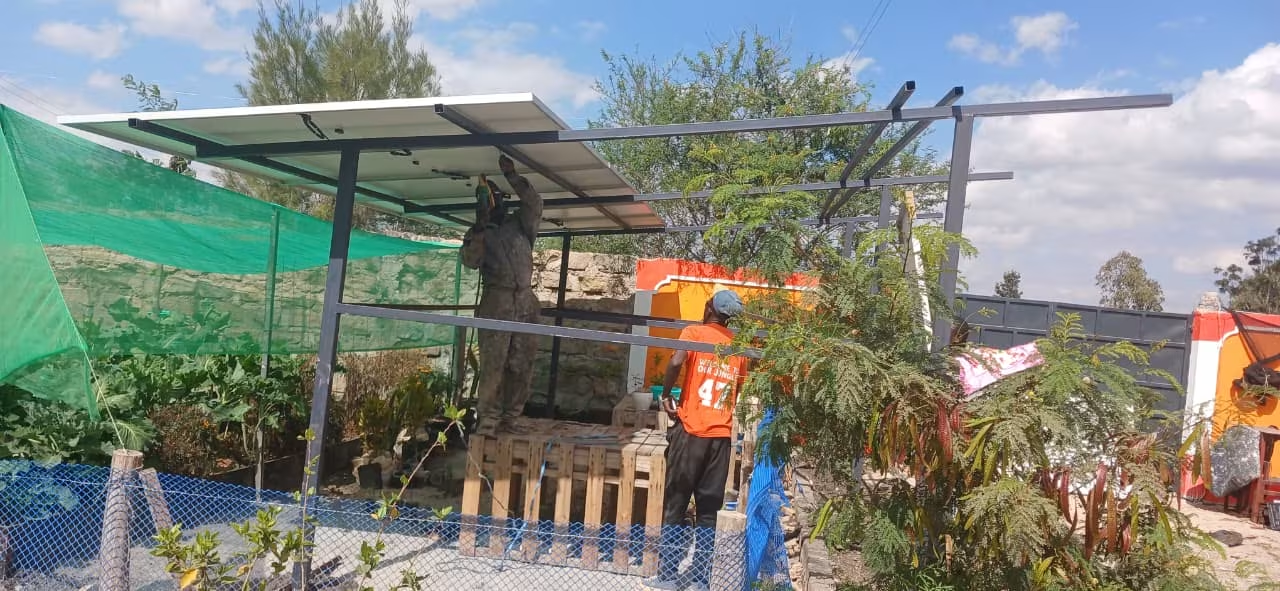
Solar array relocation approval matters when an owner changes the agreed panel location after accepting an installation proposal. A different place may look like a small preference on a drawing. Yet the existing design, delivery plan and price may depend on the original position. Ask qualified practitioners to assess the change before treating the old commitment as unchanged.
Explore Masterpiece Hydro-Solutions borehole solarisation services and enquire about assessment of your proposed location change. Confirm the available scope for your site. Share the accepted proposal, original location and reason for moving it so the enquiry starts with the difference that needs review.
Explain what the owner wants to change
Identify the original agreed position and the proposed alternative on a clear site reference. A description such as further away can mean different things to the owner, installer and mounting contractor. Ask the relevant parties to use the same marked plan or agreed reference when discussing the request.
Also record the reason. The owner may want to preserve future access, accommodate another development or avoid a conflict discovered after the quotation. That reason helps the assessor ask useful questions. It does not establish that the new location is technically suitable or that the existing materials remain adequate.
Keep the request separate from an instruction to proceed. A message asking whether a move is possible should not become an assumed authorisation to alter the installation. State who can approve the revised scope and what evidence that person needs before making the decision.
Use solar array relocation approval to reopen affected assumptions
The qualified assessment should identify which assumptions depend on location. Ask about the proposed mounting arrangement, connection route, site access and relationship with other works. These are questions for competent practitioners. Owners should not select cable sizes, foundations or electrical arrangements from a generic online example.
Ask whether the earlier assessment remains applicable and where further work is needed. A contractor may be able to reuse part of its earlier evaluation. Another part may require a fresh site review or input from a separate discipline. Record that distinction so the owner understands what the revised proposal actually covers.
Maintain the original water-supply brief during this discussion. Moving the panels does not increase borehole yield or reduce water demand. If the change also alters the production assumptions, request an explicit explanation. Keep the proposed installation arrangement and the underlying source evidence visible as separate matters.
Ask for a change comparison with consequences
| Agreed item | Relocation question | Decision evidence |
|---|---|---|
| Installation position | Which precise new area is under review? | Shared site reference showing both locations |
| Supporting works | Who assesses and provides the revised arrangement? | Qualified scope and responsibility confirmation |
| Connection route | Does the new position change the assessed route? | Revised professional assessment and item schedule |
| Ordered equipment | Which items remain suitable or need review? | Identified retained, changed and uncertain items |
| Programme | Which activities now depend on another approval? | Revised sequence with named decision owners |
A useful comparison links each consequence to the owner’s request. Avoid an unexplained new total with no account of what changed. Equally, do not demand that a qualified provider certify the original arrangement for a location it has not assessed. The owner needs an understandable basis for accepting or declining the change.
Check the production claim without making promises
The World Bank guide Solar Pumping: The Basics treats solar resource, water demand, source conditions and pumping head as design inputs. Its planning approach supports asking which inputs need review after a location change. It does not predict the production of an unassessed site.
Likewise, Grundfos pump selection guidance considers flow, head, source and power supply together. Retain those distinctions when reviewing the revised proposal. An unchanged pump label does not prove that every operating assumption remains the same.
Ask the assessor to state whether its earlier forecast still applies, needs revision or awaits information. Keep a forecast labelled as a forecast. A brief observation after installation cannot guarantee every future day’s delivery, and neither a forecast nor a panel location establishes water quality.
Review solar array relocation approval against actual costs
Request a dated revised quotation or variation proposal. It should identify the assessed additions, deletions and retained items. Ask whether the earlier price still stands for unaffected work. Clarify tax treatment and any third-party charges directly rather than assuming they are included in a changed total.
Where equipment has already been ordered, ask about its actual status. Some items may remain usable, while others may require supplier confirmation or a different arrangement. Do not invent a universal cancellation fee or assume that all materials can be returned. Use the relevant supplier’s written position.
Keep assessment charges separate from the price of executing the relocation. The owner may reasonably commission an assessment and then decline the move. Agree the assessment output and charge basis before it begins, including whether any amount is credited against later work under the actual proposal.
Coordinate the people who depend on the position
The installer may not be the only party affected. A mounting contractor, property manager or another site contractor may be working from the original plan. Identify who needs the approved revision and ask them to confirm the consequence for their own scope. Avoid relying on a verbal message passed through several people.
Also distinguish approval of a drawing from readiness to perform the work. A changed position can be accepted in principle while access, supporting works or another dependency remains unresolved. Record those conditions without describing the site as ready merely because the owner has chosen a new location.
Ask the lead parties to explain which activity should wait for a decision. The owner should not direct hazardous electrical, lifting or structural work. Its role is to approve the revised brief, coordinate authorised access and ensure that the appointed qualified providers know the current agreement.
A future building creates a late location request
Consider a hypothetical owner who approves a solar proposal, then learns that the selected array area conflicts with a planned building. Equipment has been ordered but installation has not begun. The owner suggests a different part of the plot and asks the contractor to keep the same completion date and price.
The useful decision is whether to assess the alternative before making that commitment. The contractor should explain what it can confirm from existing information and what needs review. The owner can then compare retaining the original location, approving a defined revision or delaying a decision while the development brief becomes clearer.
Record the selected option and its conditions. If the owner approves relocation, identify the superseded plan so nobody continues using it. If the owner pauses, record what happens to ordered items and scheduled activities under the actual agreement. Clear records help prevent an unresolved preference becoming disputed completed work.
Complete solar array relocation approval with one current brief
The final record should show the accepted position, qualified assessment basis, revised scope and commercial terms. Include who approved it and which earlier document it replaces. Keep the original record as history rather than silently altering it to suggest that the new position was always agreed.
After completion, request handover evidence that identifies the installed arrangement and any agreed limitations. Where the final work differs from the approved revision, ask for an explanation. A future service provider needs to understand the installation it will assess, not just the first proposal the owner received.
Questions about changing an agreed location
Can the owner request a move after signing?
The owner can raise a request and ask for its implications. Whether the price, programme or other terms change depends on the actual agreement and assessed work. Obtain a clear proposal before authorising the change. Do not assume that a preferred location automatically falls within the original scope.
Does a short move always cost less than a longer move?
Distance alone does not describe the work. Access, supporting arrangements, existing commitments and qualified design findings can affect the proposal. Compare the actual itemised consequences rather than applying an invented rate per metre or a rule based only on the apparent size of the move.
Should we buy extra materials before the assessment?
Ask the appointed qualified provider to confirm the revised requirements first. Purchasing from an unverified assumption can create another suitability question. If the owner will supply any items, identify them explicitly and agree how the installer will assess their acceptance within the revised installation scope.
What if different contractors use different plans?
Pause the document ambiguity and identify the approved current reference through the authorised project contacts. Ask each affected provider to confirm receipt and scope implications. Preserve previous versions as history. This is a coordination step, not a reason for the owner to direct technical alterations itself.
Can the new position guarantee better output?
No generic location claim can establish that result. Ask for the qualified assessment, stated assumptions and proposed acceptance evidence. Source limits, pumping duty and demand still matter. A location change should be evaluated against the actual installation rather than sold as a guarantee of water availability.
For solar array relocation approval, provide the original agreement and the exact change you want assessed. Request a defined review of the proposed relocation and confirm the available assessment scope before committing to revised work, price or completion expectations.