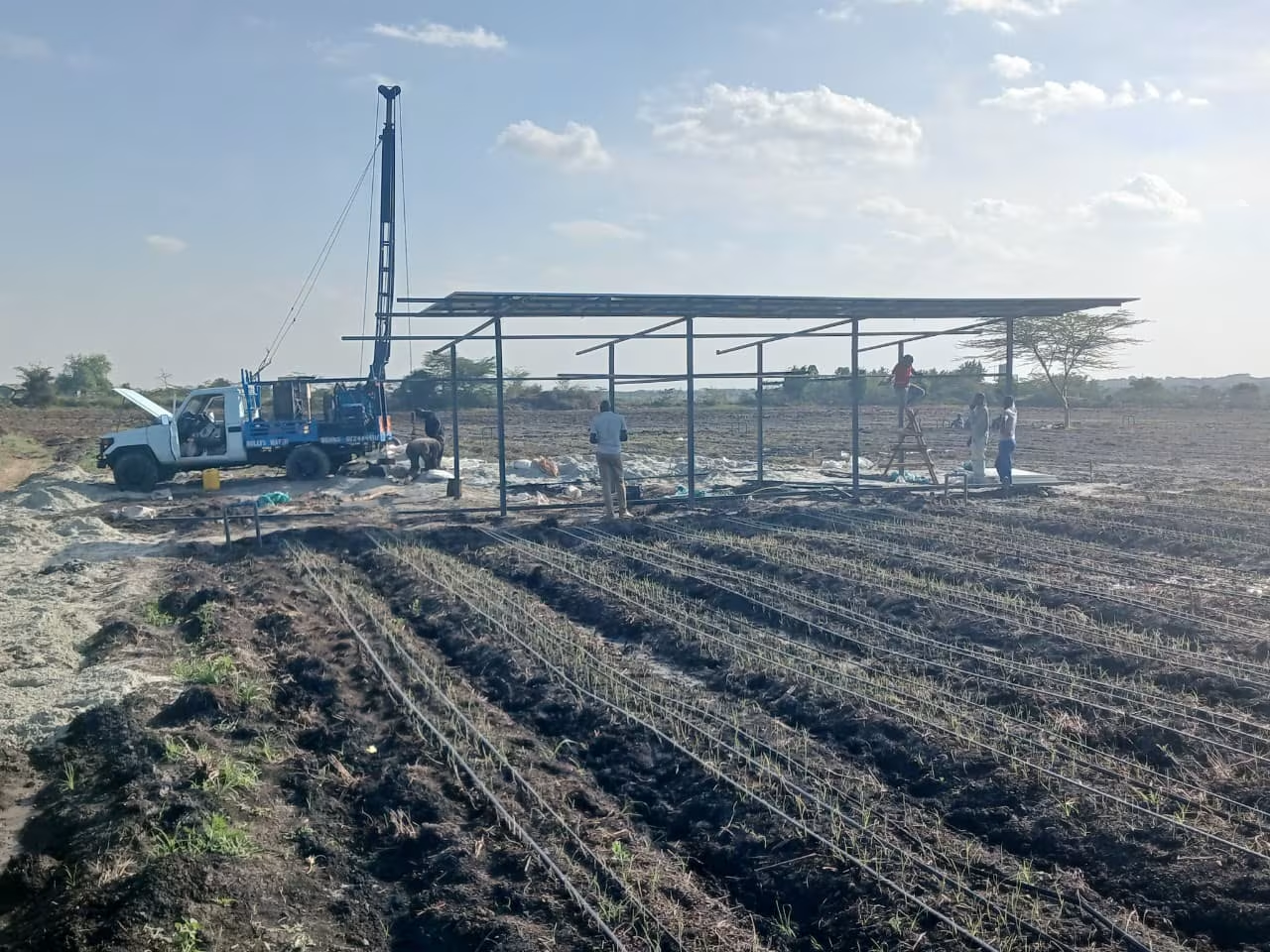
Solar duty responsibility handoff needs a clear process when one assessor defines the pumping requirement and another company installs the system. A report can supply important evidence without answering every installation question. Ask the installer to state what it adopts, what it questions and what remains uncertain before the owner approves equipment.
Explore Masterpiece Hydro-Solutions borehole solarisation services and request an enquiry based on your existing duty assessment. Confirm the available review and installation scope. Send the full report and its attachments so the provider can assess the actual evidence rather than a headline pump size copied into a message.
Give each party the same complete brief
The owner should identify the intended water destination, demand pattern and operating priorities. The assessor may have worked to an earlier requirement or a limited question. Ask which version of the owner’s brief its report addresses. A technically detailed report can still answer the wrong procurement question if the intended use changed afterwards.
Provide the installer with the report’s date, site reference, assumptions and limitations. Include supporting records that the assessor actually supplied. Do not remove qualifications to make the brief look more definite. Those qualifications help the installer identify which inputs it can use and where it needs clarification.
Also identify the authorised contacts. Technical questions should reach the report’s author or an appropriate qualified representative rather than pass through several summaries. The owner can coordinate that exchange without directing electrical design, equipment lifting or other hazardous work.
Map solar duty responsibility handoff by input
A duty brief draws on several kinds of information. Some inputs may be measured, some supplied by the owner and others assumed for planning. Ask the assessor to label these differences. The installer can then explain whether each input is sufficient for the commitment it is being asked to make.
| Input | Origin to identify | Handoff question |
|---|---|---|
| Water requirement | Owner’s records or stated future brief | Is the intended amount and timing still current? |
| Source evidence | Identified assessment or test record | What does the evidence support and what remains limited? |
| Pumping duty | Qualified assessment and stated assumptions | Which flow and head conditions guide selection? |
| Power arrangement | Existing installation information and proposed supply | Which retained interfaces need qualified confirmation? |
| Acceptance evidence | Agreed procurement scope | What will demonstrate the installed work under stated conditions? |
This is a responsibility conversation rather than an attempt to make every party repeat all work. A qualified installer may rely on suitable external evidence while still identifying its own assessment boundary. The owner needs that boundary written clearly enough to understand the resulting proposal.
Preserve flow, head and source distinctions
The Grundfos lesson on pump selection considers source, flow, head, power and controls together. This supports asking for a complete duty basis. A power rating alone does not explain whether a selected pump suits the required operating conditions.
Keep source yield separate from the pump’s potential delivery. Selecting equipment capable of a particular flow does not establish that the borehole can sustain that rate. Likewise, an owner’s desired daily volume is a requirement to assess, rather than evidence that the source will provide it.
Solar production also depends on the stated design assumptions. The World Bank solar pumping guide discusses the relationship among demand, source conditions, head, solar resource and storage. Use that context to ask questions, not to calculate a guaranteed output from a generic example.
Record the installer’s response to the external report
Ask the installer to respond before equipment approval. It might accept certain inputs, request a missing record or explain why its proposal uses a different assumption. A statement that it has received the report is not the same as explaining how the report informed its equipment selection and scope.
Where it proposes a change, ask for the reason and consequence. The owner should understand whether the change responds to newer information, an interpretation difference or a revised requirement. Avoid treating a different selected model as proof that one party must be wrong. Compare the duty and evidence behind each recommendation.
Keep commercial implications visible. Additional assessment, changed equipment or a different commissioning commitment may affect the actual quotation. Request a dated proposal and clarify inclusions, exclusions and tax treatment. Do not assume that clarification work is always free or that every question requires a complete paid redesign.
Use solar duty responsibility handoff to resolve a disputed assumption
Consider a hypothetical assessor whose report uses the owner’s stated water requirement and an identified source record. Later, the installer learns that the intended destination has changed. The owner asks it to retain the original price because the assessor has already supplied a pump recommendation.
The deciding question is whether the original duty still represents the proposed installation. Ask the qualified parties to identify the changed input and whether it affects their conclusions. The installer should not silently adopt a known mismatch, and the owner should not assume that the assessor evaluated information it never received.
Preserve the original report and add the dated clarification or revision. If the assessor updates its recommendation, identify the new basis. If the installer takes responsibility for a separate review, state its scope. The final procurement record should show which evidence supports the accepted commitment.
Settle acceptance evidence before installation
Ask what the installer will record at completion and how that relates to the agreed duty. The answer should identify the intended observations, relevant conditions and reporting output within its actual scope. Avoid a vague promise that the system will work without defining what the buyer will receive as evidence.
Distinguish installation acceptance from a long-term source guarantee. An observation under stated conditions can support a finding about that attendance. It does not establish every future season’s availability or water quality. Those matters require their own evidence and appropriate assessment.
Where the owner wants independent witnessing or review, agree that role beforehand. Clarify who attends, what information is shared and what the reviewer will conclude. A late request for a different form of certification may exceed the scope that either the assessor or installer originally accepted.
Keep the owner approval specific
The owner should approve a defined proposal rather than a conversation containing several competing assumptions. Identify the adopted report version, agreed clarifications, selected scope and remaining conditions. Record who has authority to approve changes if later site information creates another question.
Do not turn the owner’s signature into a substitute for qualified advice. Approval confirms the buyer’s commercial decision within the stated information. It does not make an unqualified owner responsible for deciding technical suitability. Ask each practitioner to state its professional contribution and limitations clearly.
Keep unresolved matters visible where work proceeds conditionally. For example, an outstanding interface assessment should have a named responsible party and a decision point. Do not allow it to disappear between an assessor’s completed report and an installer’s equipment order.
Close solar duty responsibility handoff with a traceable file
At handover, retain the original assessment, subsequent clarifications and final installation records together. A future provider should be able to distinguish the design basis from the observed completion evidence. Include approved departures so the installed equipment can be understood without reconstructing every old email.
Also record any operating requirement that changed during the project. If a later owner requests more water, the file should show what the existing system was assessed to do. That helps frame a new qualified review without implying that the original providers promised an unlimited capacity increase.
Questions about separate assessment and installation contracts
Does a duty report transfer all responsibility to its author?
No simple statement answers that for every arrangement. Review the actual scopes and ask each party what evidence and decisions it accepts. A technical report should not be treated as a universal release for everyone who later supplies equipment. Seek appropriate advice if a contractual responsibility dispute remains unresolved.
Must the installer repeat the entire assessment?
Not automatically. Ask which external records are suitable for its scope and which gaps require additional work. Repeating useful evidence without a reason can waste resources, while relying on an unexplained assumption can weaken the procurement decision. The proposed review should identify the question it will resolve.
What if the assessor recommends one model and the installer another?
Compare the duty basis, product suitability and stated scope rather than choosing by model name alone. Ask both parties to explain the material difference. A qualified review can identify whether the proposals address the same requirement or whether one uses changed inputs that the other has not considered.
Can the owner forward only the report summary?
Provide the full relevant report and attachments through an authorised channel. A summary may omit limitations, measurement conditions or assumptions needed for selection. If the file contains unrelated sensitive material, arrange an appropriate disclosure with the parties rather than silently removing technical qualifications.
What happens if the demand changes after equipment approval?
Raise a formal change request with the current brief and ask for the technical and commercial consequences. Keep the original approved requirement visible. More demand does not establish more source yield or pump capacity, and an unchanged equipment order does not prove that the revised requirement is achievable.
For solar duty responsibility handoff, share the complete assessment and ask how the installer will use it. Request a defined enquiry around the existing report and unresolved inputs before approving equipment or assuming that a separate contract covers every remaining decision.