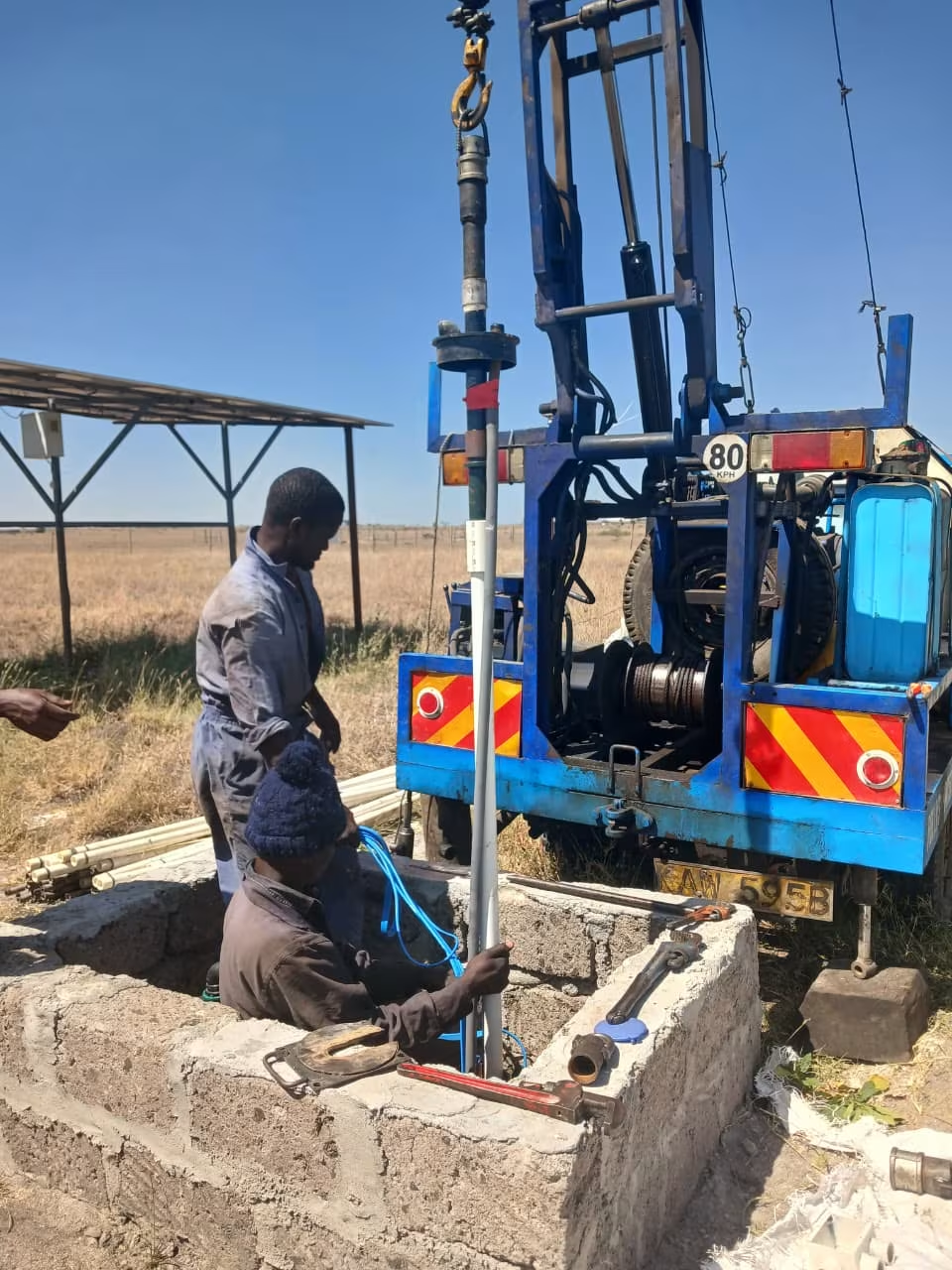
Stuck pump camera inspection needs a clear evidence question before anyone promises retrieval. The owner should preserve the equipment history and ask qualified personnel to assess access and practical limits. First, describe what happened and what remains unknown. Then agree whether usable footage could inform the next professional decision without claiming that a camera will free the pump.
Explore Masterpiece Hydro-Solutions borehole inspection and request a stuck-pump assessment. This guide covers evidence, scope and owner responsibilities. Qualified personnel should assess and undertake all retrieval, lifting and electrical work; it provides no instructions for attempting those tasks.
Start stuck pump camera inspection with the event record
Record when the difficulty arose and which qualified team was carrying out the work. Ask for the factual sequence and available equipment notes. Also, distinguish witnessed events from assumptions. A short account saying the pump will not move may leave important questions about the installation and attempted work unanswered.
Next, gather records of earlier equipment changes and known modifications. Include model identities and previous installation or service reports. The assessor should understand which components may be present and how certain that information is. Do not fill missing history with a confident recollection that could misdirect the investigation.
Clarify the immediate site and supply responsibilities
Nominate the person who coordinates site access and communication with the qualified team. The owner should keep others outside the agreed work area and avoid further personal attempts to move equipment. Also, ask the responsible professionals how they will manage the technical situation while the assessment scope remains under discussion.
Describe essential water uses and available stored supply. If users need a temporary arrangement, assess that separately, including quality for intended use. Stuck pump camera inspection cannot promise a restoration date before the technical team understands the situation. Clear service updates help users plan without relying on unsupported retrieval assurances.
Define what the camera question would change
Ask the provider which uncertainty visual evidence could address. The US EPA camera overview identifies visual logging as useful in investigations involving lost objects. The proposed scope should explain its own purpose and limits for the actual stuck-equipment situation.
The decision question might concern an accessible area relevant to the assessment. However, ask what the team cannot expect to see and how that affects the result. Camera findings do not establish every hidden contact, load or structural condition. A useful brief should make clear that images inform professional judgement rather than guarantee a retrieval outcome.
Scope stuck pump camera inspection around practical access
The provider should assess whether the proposed camera arrangement can reach useful viewing positions. Owners should not attempt to create access or reproduce another site’s method. Also, ask how anticipated constraints affect scope, deliverables and uncertainty. A difficult installation may not permit the same coverage as an unobstructed borehole.
After the visit, compare actual coverage with the original question. An observation above an unknown area should not imply a complete view beyond it. Stuck pump camera inspection needs an honest account of accessible and unassessed areas so the owner understands the evidence available for the next decision.
Use a retrieval-assessment evidence matrix
The matrix organises owner questions without prescribing a retrieval method. The qualified team should explain which evidence affects its technical recommendations. First, identify what the records confirm. Then mark gaps and the responsible person who can clarify them before the project commits to further work.
| Evidence area | Owner question | Limit to retain |
|---|---|---|
| Equipment identity | Which pump and associated components do records describe? | Incomplete history may leave hidden details uncertain |
| Event sequence | What happened during the reported difficulty? | Timing and recollection do not prove every cause |
| Camera access | Which relevant area can the team assess? | Unseen sections remain unknown |
| Visual findings | What does the footage actually show? | Images do not certify loads or structural strength |
| Further work | Which professional decision does the evidence support? | An observation does not guarantee retrieval success |
| Post-work assessment | What needs checking before return to service? | Equipment recovery alone does not commission the water supply |
Work through a fictional partial-view scenario
Consider an educational site where the owner has an old equipment invoice but no complete installation record. A qualified team reports a retrieval difficulty and recommends discussing a visual assessment. These assumptions illustrate evidence planning, not a real project, a technical diagnosis or a particular retrieval method.
The camera visit provides usable evidence for one accessible area but leaves another relevant section unassessed. The owner should ask the professional to explain what the observation supports and what remains uncertain. Neither a useful image nor the absence of a clear view establishes that a particular further action will succeed.
Stuck pump camera inspection should end with a clear decision discussion: what evidence exists, what additional assessment may help and which technical options the qualified team can responsibly evaluate. The owner can then review a bounded next scope rather than approve an open-ended promise based on incomplete coverage.
Separate an inspection result from a retrieval proposal
Ask for the inspection deliverables and any further work as distinguishable scopes. The report should explain observations, location references and limitations. A retrieval proposal should identify professional responsibilities, decision stages and commercial boundaries. The owner should understand when another approval becomes necessary without being expected to choose specialist methods.
Also, clarify how the provider handles new findings during further work. The team should explain a proposed change and its effect on scope before the authorised person approves it. A staged agreement can keep decisions traceable, but it cannot remove the technical uncertainty that the assessment has identified.
Require usable records before equipment leaves the file
Retain footage, explained findings and the event chronology with site identity and dates. Ask how the team will record any equipment subsequently recovered or changed. Also, agree who keeps old components and who authorises their disposal. Evidence can become difficult to interpret if relevant items disappear without an agreed record.
Stuck pump camera inspection should preserve the distinction between what the team observed and what another stage established later. If professional interpretation changes as new evidence arrives, keep the explanation with the current report. The final file should remain understandable to a future manager who never attended the original visit.
Review stuck pump camera inspection before approving the next stage
Ask the team to connect each recommendation with the evidence and remaining uncertainty. Which issue does the next task address? What event would require reassessment or another approval? Also, clarify exclusions and the communication route. The owner needs an accountable process rather than an unsupported assurance that every obstruction is recoverable.
The borehole equipping service provides a separate route for later equipment assessment. Avoid ordering a replacement solely because the existing unit is difficult to retrieve. The team first needs to explain the source condition, practical situation and evidence relevant to the proposed arrangement.
Define return-to-service evidence separately
If the project later reaches an equipment decision, ask for assessment against required flow and head. The Grundfos pump-selection resource explains that relationship. A recovered unit or a clear camera view does not establish a suitable duty for the present tank destination and demand.
Keep drilled depth, pumping water level and setting depth distinct in that assessment. Also, require appropriate commissioning records before treating the water system as restored. Source yield and water quality remain separate questions. Camera footage cannot guarantee sustainable output or certify drinking-water suitability after technical work.
Questions owners ask when a pump cannot be retrieved
Will the camera free the pump?
No. The camera provides visual evidence within its practical scope. Qualified personnel must assess any technical retrieval work separately. Stuck pump camera inspection should clarify a decision question and its limits rather than promise that obtaining images will resolve the mechanical situation.
Can the owner try another retrieval approach first?
Leave technical handling to qualified personnel and avoid further personal attempts. Preserve the event record and coordinate access through the responsible team. The owner can request a clear assessment and approval process without choosing methods or exposing others to specialist work.
What if the camera cannot show the suspected area?
The report should state that limitation explicitly. Ask what useful evidence remains and which uncertainty another assessment might address. An unviewed area is not problem-free by default. The qualified team’s next recommendation should acknowledge the gap rather than hide it inside a general conclusion.
Does a visible obstruction prove the casing is strong enough for work?
No. Images do not certify structural strength or every hidden condition. Ask the responsible professionals what assessment supports their proposed task. Stuck pump camera inspection supplies evidence for judgement; it does not replace the full technical responsibility for any later intervention.
What information helps the first assessment?
Send equipment identities, completion records, previous service information and the event sequence. Include available images, access constraints and the qualified team’s notes. Finally, explain essential supply needs. Mark unknown details so the provider can define a realistic inspection discussion without guessing hidden conditions.
Request a bounded evidence and decision scope
Use stuck pump camera inspection to investigate a defined visual uncertainty. Keep access limitations, equipment history and professional responsibilities explicit. Finally, agree how further decisions need approval and documentation. This gives the owner a traceable process without promising retrieval or prescribing technical methods.
Request a stuck-pump inspection assessment from Masterpiece Hydro-Solutions. Provide the available history and ask what evidence the proposed visit could produce. A useful scope explains practical limits, professional interfaces and the questions that remain for later work.