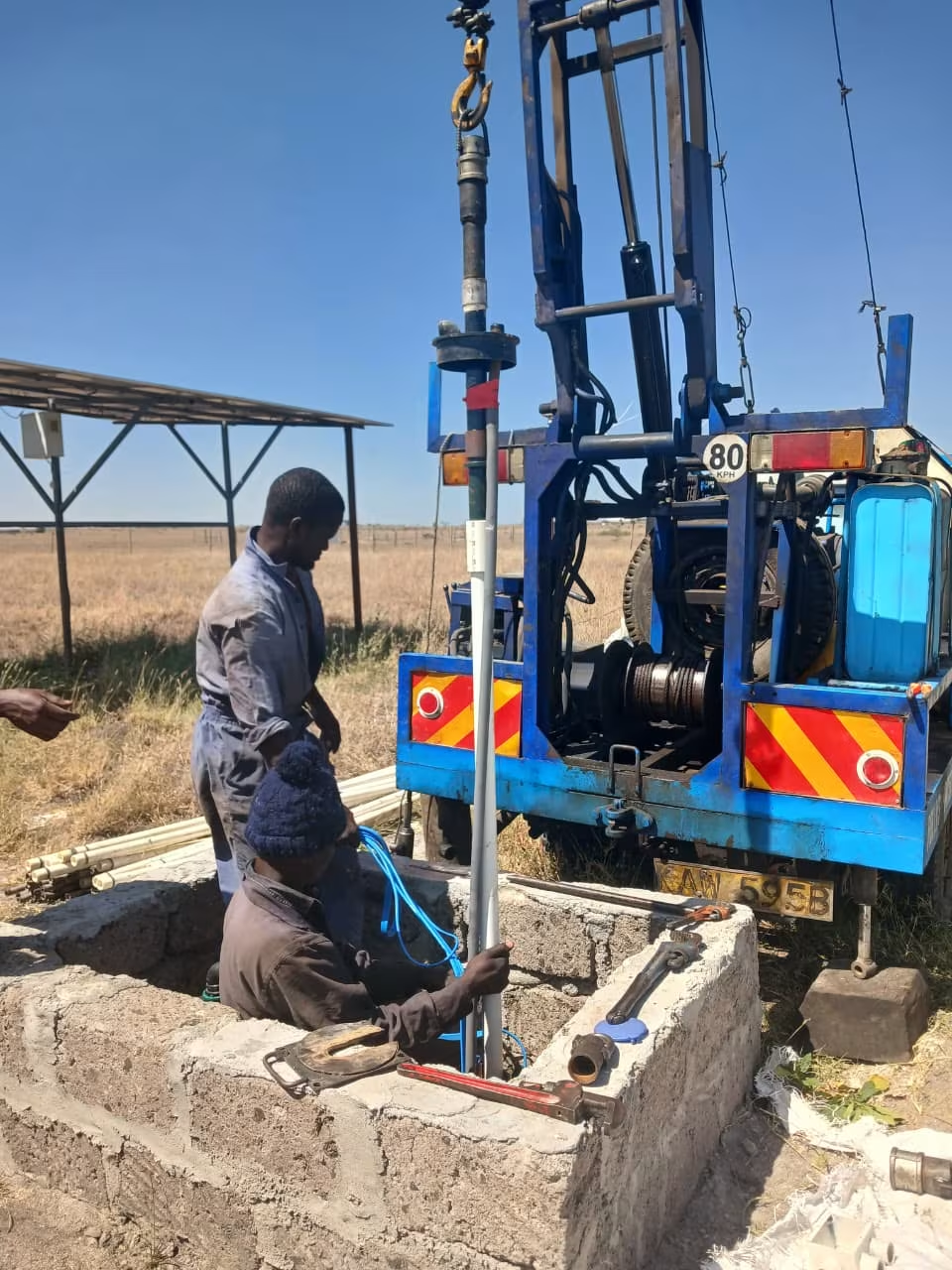
Three phase borehole pumps need assessment against both the water duty and the actual electrical supply. A site may have substantial power infrastructure while still leaving important questions about the proposed pumping arrangement. First, define the water service. Then ask qualified personnel to verify supply, equipment compatibility and the responsibilities between the electrical and water-project teams.
Explore Masterpiece Hydro-Solutions borehole equipping and request a supply-and-duty assessment. This guide helps owners review a proposal and its interfaces. It gives no wiring, connection or protection-setting instructions; qualified personnel should assess and perform all electrical work.
Assess three phase borehole pumps from the water requirement
List daily demand, important busy periods and the destination served. Also, distinguish ordinary use from future expansion. A power arrangement cannot establish how much water the site needs or how much groundwater the source supports. The equipment discussion should begin with that water brief rather than an assumption that a particular motor category solves every capacity problem.
Next, gather test-pumping and completion records. Ask the assessor how the proposed abstraction rate relates to the available source evidence. Installed pump capacity, source yield and user demand remain separate. If demand exceeds assessed supply, the owner needs a response to the deficit rather than a larger electrical package.
Verify the supply at the proposed installation boundary
Tell the provider what supply records the site holds and which professionals manage the electrical infrastructure. Qualified personnel should confirm the relevant conditions for the proposed equipment. Also, identify where the pumping installation connects with the wider site system. Electricity elsewhere on the property does not establish suitability at that boundary.
A large switchboard or an existing motor cannot replace that assessment. Ask who verifies the supply and who receives the findings. Three phase borehole pumps should form part of a documented equipment arrangement, with the designer aware of actual site conditions. The owner should not infer compatibility from a sales label or attempt electrical checks personally.
Keep phase choice separate from the selected duty
The pump still needs selection for required flow and total dynamic head. The Grundfos pump-selection resource explains this relationship. A three phase label does not state the flow delivered at your destination, and a motor rating alone cannot prove a suitable hydraulic selection.
Total dynamic head includes pumping lift, delivery elevation, pipe losses and required outlet pressure. It differs from drilled and pump setting depths. Also, ask which operating water level supports the assessment. A change in storage destination can change the duty even when the power supply and proposed motor category remain the same.
Compare three phase borehole pumps through complete scope
Request an equipment-and-responsibility schedule rather than an isolated motor price. It should identify the pump, controls and qualified work proposed for the site. Also, make any separate supply work visible. Use the table to check that necessary tasks have an accountable owner before comparing the final quotations.
| Interface | Evidence to request | Responsibility to confirm |
|---|---|---|
| Water duty | Source assessment and selected flow/head | Who defines the operating requirement? |
| Available supply | Qualified site-specific confirmation | Who assesses conditions at the installation boundary? |
| Equipment combination | Named compatible pump and controls | Who accepts responsibility for the complete arrangement? |
| Separate electrical work | Explicit inclusions and exclusions | Which contractor delivers and records each task? |
| Backup arrangement | Assessed compatibility and operating limits | Who verifies the intended alternative supply? |
| Acceptance | Measured water delivery and technical test records | Who combines the evidence for owner handover? |
Identify controls and protection as professional design tasks
Describe the operating behaviour the site needs, including storage filling and fault reporting. Qualified personnel should select and test suitable controls for the assessed equipment. Also, ask them to explain how the arrangement responds to relevant supply or source problems. Owners need an understandable explanation rather than a list of components with no functional purpose.
Ask for relevant current professional credentials and verify them with the appropriate authority. Do not assume that a provider’s sales role identifies the person responsible for electrical design. The written scope should name that responsibility. Operators should not change protection settings or bypass a control to restore water during a busy period.
Work through an illustrative shared-site requirement
Consider an educational site with an assumed daily requirement of 24 cubic metres, equivalent to 24,000 litres. If assessed average delivery reaches four cubic metres per hour, producing that amount requires six operating hours. The numbers illustrate a water balance; they do not identify a motor, source yield or suitable electrical supply.
Now suppose another activity requires eight additional cubic metres daily. The combined demand becomes 32 cubic metres, requiring eight hours at the same assumed flow. Before buying equipment for that case, the assessor must consider the source evidence, actual duty and operating opportunities. A power-category label cannot settle those questions.
Three phase borehole pumps may appear in an assessed proposal, but the reasoning should remain visible. Ask why the complete equipment arrangement suits the stated requirement. If several site activities share infrastructure, ensure the responsible electrical team understands that wider operating context without asking the owner to calculate or alter connections.
Check backup compatibility rather than assume it
If the owner expects another power source during interruptions, state that requirement early. Ask qualified personnel to assess compatibility and explain the operating limits. Not every controller or equipment combination accepts every intended source. Also, identify any additional work and who takes responsibility for the interface.
Backup power cannot remove a groundwater limit. It may create operating opportunities within a suitable assessed arrangement, but the source must still support abstraction. Three phase borehole pumps need a continuity plan that includes usable storage, essential demand and recovery after interruptions rather than a blanket promise that alternative power guarantees water.
Coordinate electrical and mechanical work before arrival
Ask the teams to agree what must be ready before equipment installation. The owner should know which task depends on another contractor’s assessment or completion record. Also, nominate one project contact for scheduling and access. This prevents an installation visit from discovering that an assumed supply interface remains outside everyone’s agreed scope.
Qualified personnel should handle equipment retrieval, installation and electrical testing. The owner coordinates access and keeps others outside the work area. If existing components may remain, request a clear assessment of their condition and compatibility. The borehole inspection service provides a separate discussion route where source-condition investigation may be relevant.
Accept three phase borehole pumps with joined-up evidence
The handover package should connect the water-duty assessment with supplied equipment identities and relevant qualified test records. Ask for measured delivery at the agreed destination, with operating conditions clear. Next, compare the findings with the proposed basis. A successful motor start does not establish the complete water service.
Also, request a demonstration of normal controls and an explanation of fault indicators. Technical teams should conduct the tests and clarify any outstanding issue. The owner needs a usable baseline and support route. Keep separate contractor records together so future assessment does not depend on reconstructing the original interfaces.
Give the operator clear limits and reporting duties
Nominate an operator and a second responsible contact. Agree which ordinary observations belong in the operating log, such as delivery, tank recovery and interruptions. Also, retain equipment manuals and warranty boundaries. A changed indicator should trigger reporting through the support route, not improvised electrical work.
Source and quality decisions remain independent of power choice. A new motor does not guarantee yield or water suitability for drinking. Arrange appropriate analysis and advice for intended uses where necessary. Three phase borehole pumps should serve a defined assessed arrangement whose limits the operator can understand and communicate.
Questions owners ask about phase and capacity
Does three phase automatically mean more water?
No. Water delivery depends on the selected duty, equipment arrangement, source limits and operating conditions. Ask for the proposed flow at the required head. A power category cannot replace those facts or establish enough sustainable water for an expanded demand brief.
Can we select equipment because the property already has three phase?
The existing infrastructure provides context, but qualified personnel must assess suitability for the proposed installation. Also, define the water duty first. Three phase borehole pumps need a compatible complete arrangement, not an assumption based only on supply available somewhere else on the property.
Will a backup generator work with the proposed pump?
Ask the responsible qualified team to assess the exact intended combination. The provider should explain compatibility, operating limits and any separate work. Do not assume that a generator label establishes suitability. Keep the assessment in the installation record before relying on the backup plan.
What if the electrical contractor and pump supplier differ?
Agree the interface and who confirms the complete arrangement. Each party should identify its work and evidence. Also, nominate the person who combines the records at handover. Clear responsibility helps avoid a gap where both contractors assume the other completed an essential check.
What should accompany an equipment enquiry?
Send source reports, demand, storage destination and existing equipment information. Add available supply records and the electrical project contact. Finally, describe backup expectations and known constraints. Mark unknowns clearly so the provider can define the necessary qualified assessment.
Request one coordinated supply-and-duty brief
Bring the water requirement and available supply evidence into the same discussion. Ask for named responsibilities, equipment identities and measurable acceptance records. Finally, define operating limits. These steps help owners assess three phase borehole pumps through the actual service rather than a broad power label.
Request a borehole equipping assessment from Masterpiece Hydro-Solutions. Explain demand, source records and supply arrangements before equipment confirmation. A useful proposal connects the selected duty with a qualified assessment of the complete installation and its interfaces.