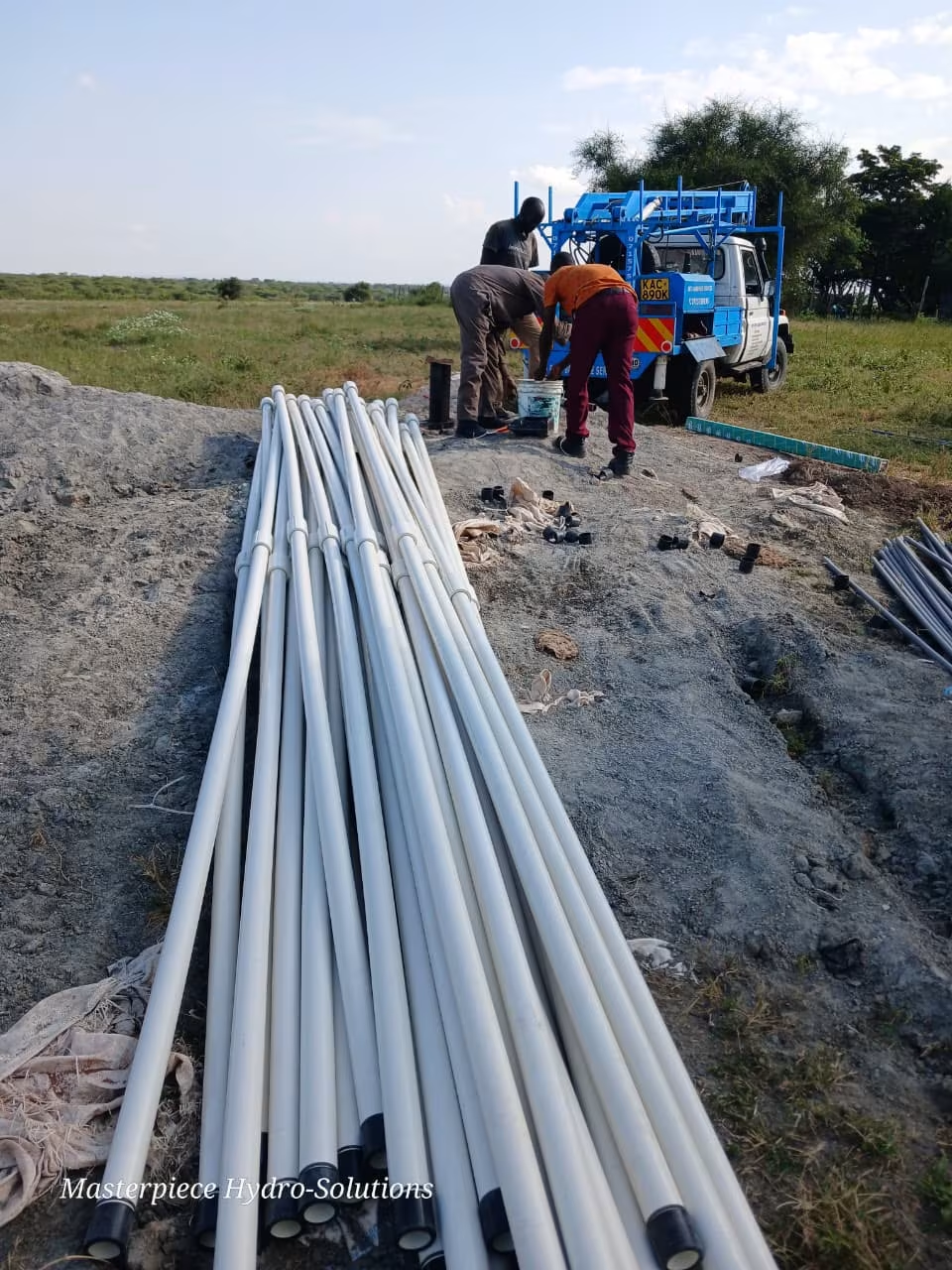
Borehole completion photography records should help a future reader identify the site, visible work stage and supporting document. Attractive images alone cannot prove hidden construction or water performance. Plan the record before work begins so the photographs answer useful owner questions without requiring unsafe access or exposing unnecessary private information.
Explore Masterpiece Hydro-Solutions borehole drilling and request a quotation with photographic records defined. Explain which project decisions the images should support. Confirm what documentation the available scope includes rather than assuming a marketing gallery constitutes the owner’s completion evidence.
Decide what each image needs to explain
Begin with the documents and decisions the owner expects to review. An image might support a pre-start condition record, product identification or a visible construction stage. Give each purpose a place within the reporting plan. This is more useful than requesting many photographs without specifying what they should show.
Distinguish an overall context image from a detail image. The first can locate an activity within the property, while the second may make a label or feature legible. Keep the relationship clear through filenames or an index. A close-up without context can become difficult to attribute later.
Ask who is authorised to obtain the photographs safely. Owners and visitors should not approach a rig, lifting operation or electrical equipment to secure a better angle. The agreed provider should work within the site’s assessed access arrangements and identify any stage that cannot reasonably be photographed.
Build borehole completion photography records around identity
Link the image set to the correct borehole and property using the project’s agreed identifier. An owner managing several sites needs a reliable distinction between them. Avoid relying on a generic folder called borehole photos when similar equipment and surfaces appear across several projects.
Record the activity date separately from the date someone sends the file. A photograph forwarded later may depict an earlier stage. Where the date or origin remains uncertain, state that limitation rather than inventing precision. A clear caption should describe the evidence available, not conceal its gaps.
Also identify the source of the file where appropriate. An original contractor image, a forwarded copy and a later annotated version have different roles. Keep the original supporting file where agreed, and label annotations so future readers can distinguish visible features from someone else’s interpretation.
Plan evidence for work that becomes hidden
Ask the responsible professional which visible stages can usefully support the construction record. Photography may help document an accessible moment before later work obscures it. Agree the timing and responsibility in advance. A request made after completion cannot recreate a stage that nobody recorded.
Keep photographs linked to the relevant log, drawing or installation record. A picture of material near the borehole does not establish its entire final location. Ask the contractor to explain what the image supports and which additional record describes the installed arrangement.
Do not caption an image as proof of every hidden detail. Even a clear photograph has a boundary: it records what was visible from that viewpoint at that moment. Professional review and attributable construction information answer broader questions that an image alone may not resolve.
Use an image-purpose comparison
| Image purpose | Useful context | Limit to preserve |
|---|---|---|
| Pre-start condition | Location, viewpoint and existing features | Does not diagnose hidden defects |
| Material identification | Legible marking linked to delivery information | Does not prove complete installation |
| Construction stage | Date and related log or design reference | Shows only the visible stage |
| Final condition | Accepted scope boundary and outstanding snags | Does not certify water performance |
| Later change | Previous reference and qualified assessment link | Appearance alone may not identify cause |
Use this table to brief the reporting provider. Ask for an understandable index rather than placing every claim inside a filename. The owner should be able to find the relevant image and then follow its link to the document that carries the wider explanation.
Capture product identity without overstating it
Where accessible within the authorised work, images of product markings can help link material to its documentation. Ask for readable identification and relevant context. A blurred label copied into a presentation adds little value if nobody can connect it with the accepted specification.
For equipment included at a later stage, distinguish model and serial identification from an assessment of condition or suitability. The Grundfos warranty information illustrates that manufacturer terms and claim arrangements have their own context. A serial-number photograph is supporting identity evidence, not a warranty entitlement or coverage conclusion.
Keep purchasing and installation records alongside the images. A visible product on site may still be unused, returned or replaced. The final accepted schedule should identify what the contractor records as installed. Photography supports that reconciliation rather than replacing it.
Consider a disconnected-photo example
Imagine a hypothetical owner receiving many images through several message groups. One shows casing markings, another shows a temporary protected opening and a third shows the final surface. None identifies its date or related record. The owner cannot confidently tell which configuration appears in the final construction schedule.
A useful reconciliation asks the provider to identify the original files, relevant stages and document references. It distinguishes temporary protection from the final arrangement and labels any uncertain dates. The owner then retains an indexed evidence set rather than choosing the most reassuring image as the definitive record.
If a stage remains undocumented, record that gap. Do not attach an unrelated photograph from another site to make the pack look complete. Any further assessment should have its own purpose and honest limits, without suggesting that a later visit can recover every missing historical detail.
Keep privacy and access decisions explicit
Agree how the provider will avoid including unnecessary faces, vehicle identifiers, neighbouring interiors and unrelated private documents. Where an image needs sensitive context for the project record, restrict access appropriately. Ask relevant advisers about actual obligations rather than assuming every project image can be published.
Keep public marketing permission separate from the owner’s evidence requirements. A contractor may need to provide an image for documentation without receiving permission to publish it widely. The parties should agree the actual use and sharing arrangements instead of treating one purpose as automatic consent for another.
Access details deserve particular care. Keys, security arrangements and sensitive location information should reach only the appropriate recipients. The handover index can describe where authorised records are held without exposing them in a public-facing image collection.
Store borehole completion photography records for future use
Agree the file formats, delivery method and owner access within the actual scope. Keep a usable owner copy outside a single messaging account. If the contractor hosts files temporarily, ask how long access remains available and who is responsible for transferring the agreed record before that arrangement ends.
Use a simple index with site identity, activity date, image reference and related document. Mark revised captions and annotated copies clearly. An orderly record helps a future manager locate evidence without relying on the memory of someone who attended the original project.
Also retain the limitations statement. A missing viewpoint or inaccessible feature should remain visible in the index. Editing away a gap may make a report appear cleaner but leaves later readers with a misleading impression of what the original documentation actually established.
Link images with the wider completion pack
The WRA permitting information distinguishes construction authorisation from later water permitting. Ask project advisers which applicable completion records or submissions are required. A collection of photographs does not replace those documents or establish that every project condition has been fulfilled.
Keep source-performance and water-quality evidence separate from construction images. Water appearing abundant in a photograph does not establish sustainable yield. Clear appearance does not determine drinking-water suitability. Appropriate testing and competent interpretation remain distinct parts of the owner’s evidence review.
At handover, ask the responsible team to reconcile images with the final accepted scope and outstanding snags. A photograph showing an earlier condition should not quietly become the current record. The index should identify which images describe the final arrangement and which preserve the construction history.
Questions owners commonly ask
How many photographs should the contractor provide?
Agree coverage around the actual evidence purposes rather than a universal number. Ask which stages, identities and final conditions need documentation. A smaller well-indexed set may be more useful than a large collection that lacks dates and references.
Can photographs verify the complete drilled depth?
Ask the responsible professional which records support depth information and their references. A progress photograph alone cannot establish the entire hidden construction. Keep any photographed indication linked to the relevant attributable record and its stated limits.
Should I accept images from a similar project?
They may illustrate a proposal if clearly labelled as examples. They cannot serve as evidence of work on your borehole. The final record should distinguish illustrative material from attributable project images so later readers do not confuse the two.
Can the contractor use my images in advertising?
Agree the actual use, permissions and sharing arrangements separately from project documentation. Ask appropriate advisers about applicable obligations where needed. Do not assume that providing images for handover settles every later publication or privacy question.
Request a purposeful photographic record
Good borehole completion photography records preserve identity, context and evidence limits. Define their purpose before work begins and ask how they will connect with the final documents. This supports future owner decisions without requiring hazardous access or pretending images can certify the entire project.
Request a drilling quotation with photographic handover requirements. Confirm the available documentation scope, sharing arrangements and owner access. Agree what will be recorded, who will provide it and how unresolved gaps will appear in the final pack.