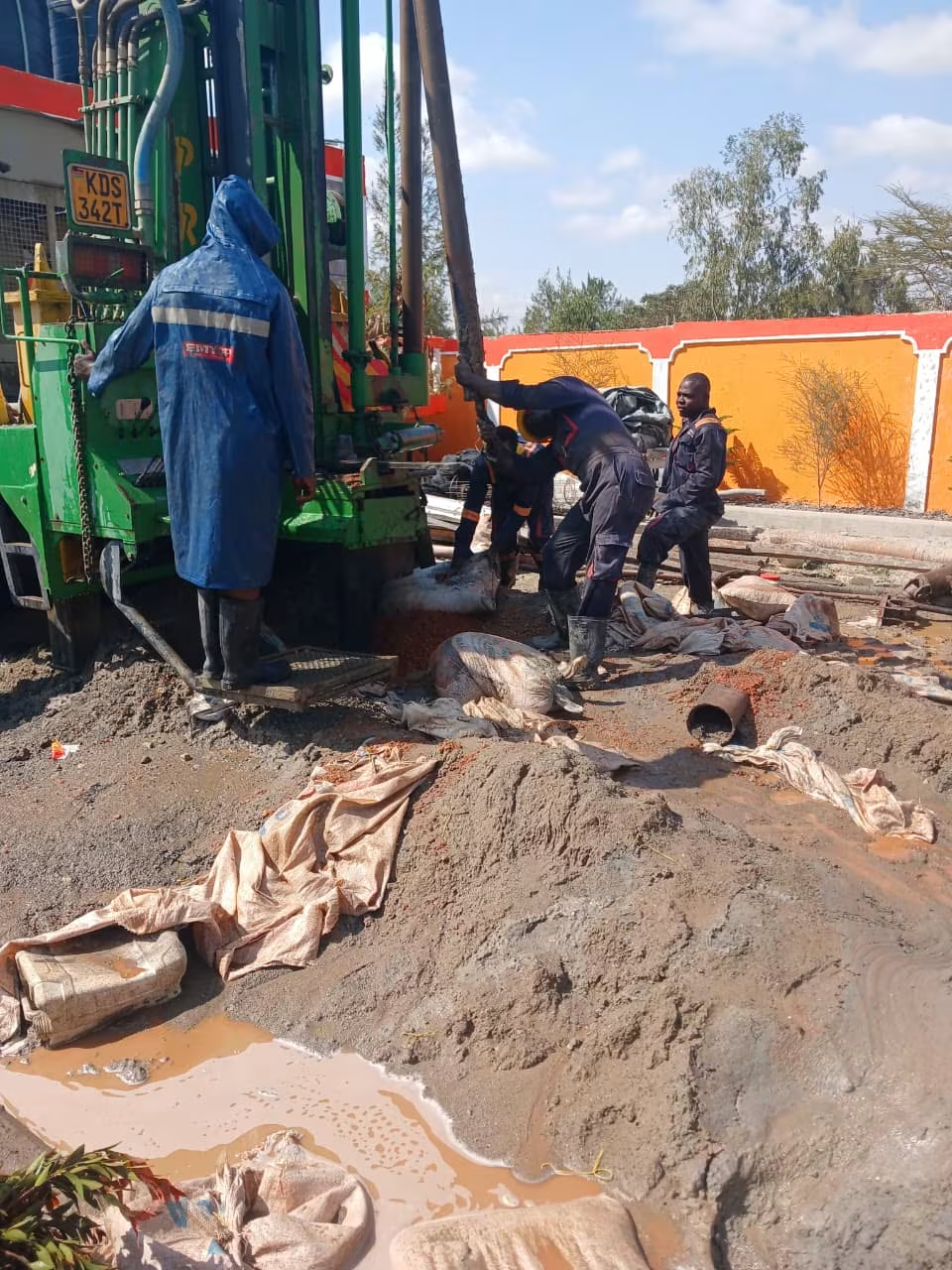
A borehole contractor meeting agenda should turn an accepted proposal into clear site responsibilities before work starts. The meeting needs to resolve practical interfaces, not repeat a sales conversation. Bring the relevant documents, identify authorised decision-makers and leave with a written account of agreed actions and unresolved questions.
Explore Masterpiece Hydro-Solutions borehole drilling and request a quotation and pre-start coordination discussion. Explain the project stage, available access and existing professional inputs. Confirm which meeting and assessment tasks the proposed scope includes.
Prepare the meeting around the actual site
Circulate the accepted scope, relevant drawings and known constraints before the discussion. Identify which documents remain provisional. A meeting can quickly lose value when participants use different quotations or assume an illustrative drawing represents the agreed construction. The organiser should identify the current references clearly.
Provide known information about entrances, shared routes, nearby uses and planned future work. Include existing project advice where relevant. Owners should distinguish verified facts from estimates or recollections. An approximate access sketch can help frame questions, but should not become an unqualified design or safety assessment.
Ask participants to identify decisions they can make and those requiring another person’s input. A useful meeting may reveal that a specialist assessment remains necessary. Record that finding openly rather than allowing people present to make a technical decision outside their professional or contractual role.
Assign roles within the borehole contractor meeting agenda
Identify the owner representative, contractor contact and responsible professional advisers. Clarify who receives routine information, who issues instructions and who authorises expenditure. These functions may involve different people. A caretaker should not accidentally become the decision-maker because they are the easiest person to reach.
Also identify who can confirm readiness for the planned activities. Readiness may depend on access, documents or work by another party. The meeting should state what evidence resolves each dependency and who supplies it. A general statement that the site is ready can otherwise conceal several different assumptions.
Agree an alternative contact for important communications. An unanswered telephone call should not force the team to guess who may authorise a change. The actual authority arrangements belong in a written responsibility list, with personal details shared only within the appropriate project group.
Review scope boundaries before discussing the programme
Ask the contractor to explain included work, exclusions and provisional assumptions in plain language. Give particular attention to interfaces with surveys, approvals support, testing, equipping and protective completion where relevant. A broad package label cannot tell the owner which party supplies each necessary task.
Discuss what the available information supports and what remains uncertain. The contractor should distinguish proposed work from guaranteed source results. Groundwater performance, demand, equipment capacity and water quality require separate evidence. The meeting should preserve these boundaries rather than convert expectations into informal promises.
Where an exclusion affects the proposed sequence, assign it to a named party and review point. A task outside the quotation may still be necessary before another task proceeds. Recording the interface prevents the exclusion from disappearing between the commercial and site discussions.
Use an agenda with decision outputs
| Agenda item | Question to resolve | Meeting output |
|---|---|---|
| Document baseline | Which scope and revisions govern the discussion? | Current reference list |
| Access and layout | What needs professional assessment or coordination? | Assigned actions and readiness evidence |
| Programme | Which dependencies and assumptions affect sequence? | Current plan with stated uncertainty |
| Changes | Who reviews and authorises proposed variations? | Instruction and escalation route |
| Records and handover | What information will the owner receive? | Deliverable and responsibility schedule |
Allocate time according to unresolved decisions rather than reading every document aloud. If an item needs further evidence, record the specific question and responsible party. The purpose is a usable action plan, not a long minute that leaves the same assumptions unexamined.
Discuss access and safety coordination
Ask the contractor what site information it needs to assess the proposed access and working arrangement. Tell it about shared entrances, known restrictions and nearby activities. Owners should not judge machinery clearances or ground suitability themselves. Relevant competent parties need to assess those technical questions.
Agree how authorised visitors and deliveries reach the project contact. The meeting should identify the responsible person for explaining site controls. A neighbour or owner wishing to ask a question should not need to approach operating machinery or cross a controlled work area.
Keep public communication separate from technical safety approval. Issuing a notice does not establish that the working arrangement is safe or compliant. The NEMA noise information page provides an official starting point for relevant noise questions. Ask qualified advisers about applicability to the actual activities and site.
Agree the programme and its update route
Request a programme that distinguishes mobilisation, principal activities, testing and demobilisation. Identify assumptions and external dependencies. A calendar date alone cannot explain the sequence or show what happens if an outstanding input arrives late. Keep uncertain items labelled instead of presenting an early estimate as certainty.
Ask who communicates material programme changes to the owner and other agreed recipients. A useful update states the change, current implication and next review point. Avoid promising neighbours a fixed completion time when the contractor has identified unresolved conditions that may affect the work.
Also discuss the decision process when changed information affects an activity. The meeting should identify the authorised route for review or instruction. It should not invent a universal response to every unexpected condition. Technical and contractual questions need the appropriate people and actual project evidence.
Consider a meeting that reveals an unresolved entrance
Imagine a hypothetical site where the owner believes a shared entrance is available throughout the project. The contractor’s proposal assumes exclusive use during deliveries. Without a pre-start discussion, both parties may arrive with different expectations and no agreed contact for the neighbouring users.
The meeting can identify the conflict, request the necessary assessment and assign coordination responsibility. The programme remains conditional until the relevant parties resolve the arrangement. Nobody needs to pretend that a verbal assurance about access has answered machinery safety or property-rights questions.
This example illustrates a decision process, not a recommended access method. The appropriate arrangement depends on the actual setting and qualified advice. A useful minute records the outstanding question and required evidence rather than merely stating that access was discussed.
Include project conditions in the discussion
The WRA permitting page distinguishes construction authorisation from later water permitting. Ask responsible advisers to explain the applicable stage and conditions for your project. A contractor meeting is not an authority approval and should not be recorded as one.
Identify any documents or professional inputs still awaiting confirmation. Assign responsibility for obtaining them and explain which activity depends on the answer. Avoid copying another project’s forms, fees or timing assumptions into the meeting record without current verification and appropriate advice.
If applicability remains uncertain, preserve the question. The meeting can establish who will seek clarification without making an unsupported legal conclusion. This keeps practical planning moving while recognising that some decisions require input beyond the people present.
Make the borehole contractor meeting agenda produce usable minutes
Separate decisions, actions and information in the written record. A decision identifies what the authorised parties agreed. An action identifies a task and responsible person. Information records an update without necessarily approving it. These distinctions reduce later confusion over whether a topic was merely discussed.
Circulate the record through the agreed project route and address corrections clearly. Keep revisions identifiable. A silent change can create competing versions, while an unresolved objection should not disappear from the final file. The owner needs a reliable account of the current position.
Use the minutes during later progress reviews. Close actions with the evidence required, not only a verbal statement that they are done. Carry unresolved items forward with their owners. This makes the pre-start meeting part of continuing project control rather than an isolated appointment.
Questions before the meeting
Who should attend?
Invite the people needed for the actual decisions and identify any adviser whose input is still required. Attendance alone does not confer technical competence or authority. Ask each participant to state the decisions they can make and the information they will provide.
Can the meeting approve every technical issue?
No. Some questions need further evidence or specialist assessment. Record the gap and responsible party instead of seeking a convenient answer from whoever is present. A useful meeting distinguishes resolved matters from those still requiring qualified review.
Should the owner agree all possible extras in advance?
Ask for a clear baseline and change process within the actual contract. Define how proposed variations will be supported, reviewed and authorised. An open-ended instruction is different from agreeing a practical route for informed decisions when new information arises.
What if nobody can resolve an important item?
Identify the missing input, appropriate decision-maker and affected activity. Ask the team to explain the programme implications. Do not describe the item as agreed simply to finish the meeting or maintain an unqualified mobilisation promise.
Request a meeting with clear decision purposes
A useful borehole contractor meeting agenda connects scope, site conditions and named responsibilities. Prepare current documents and known constraints before the discussion. Ask for written decisions and a manageable action list that makes unresolved professional or authority questions visible.
Request a drilling quotation and pre-start scope discussion. Confirm the available coordination tasks and required inputs. Agree the meeting’s decision boundaries before treating attendance or a general minute as proof that every part of the project is ready.