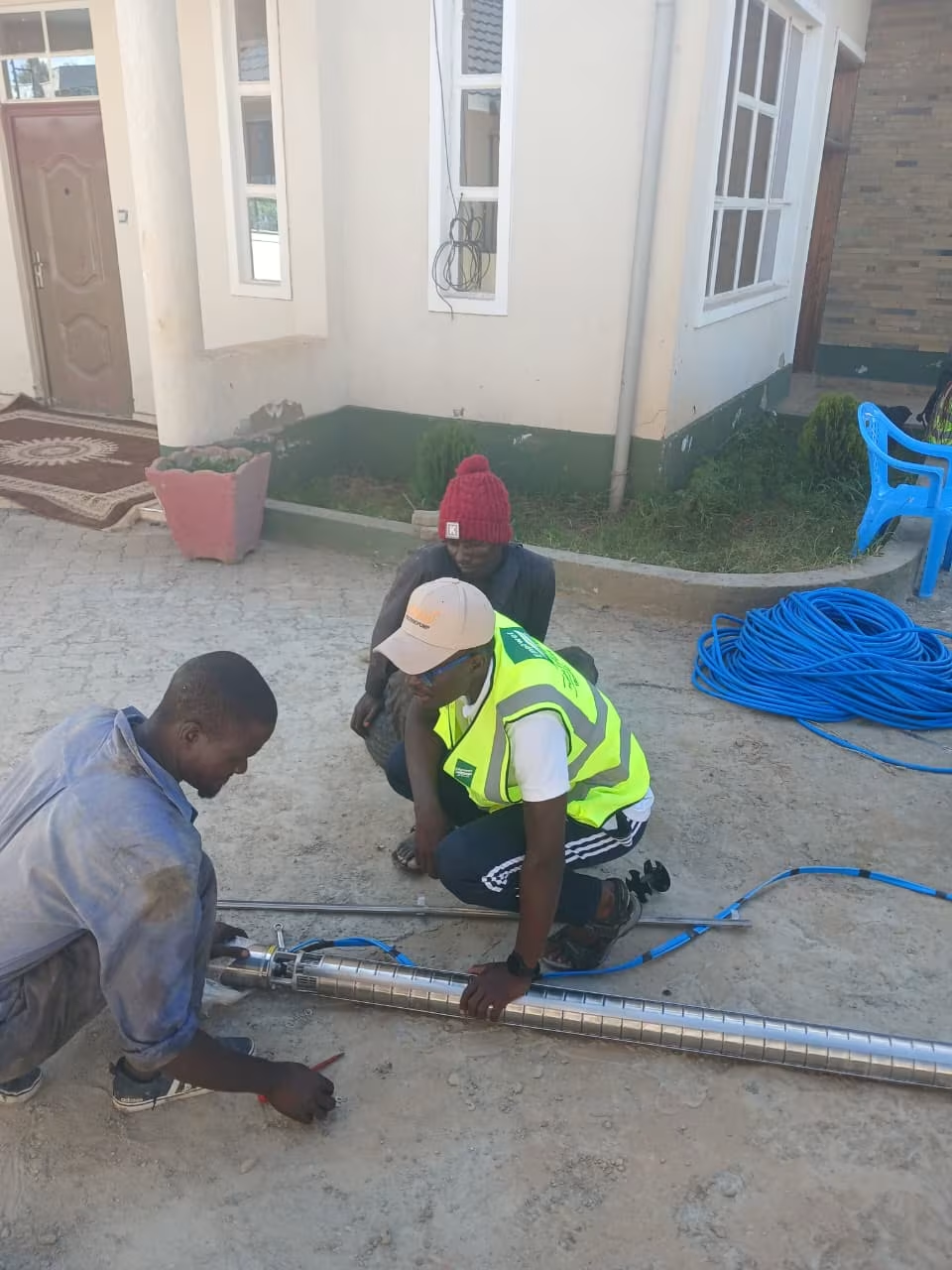
Borehole energy audit evidence should connect measured energy with water delivered over the same period and a clearly defined service. A motor rating or monthly bill alone cannot show pumping performance. Owners need identified measurement boundaries, operating context and qualified interpretation before accepting a saving claim or equipment-change proposal.
Explore Masterpiece Hydro-Solutions borehole equipping and enquire about energy and delivery assessment requirements. Share available meter, equipment and operating records. Confirm which professional work may be available and whether a separate appropriately qualified energy-assessment scope is required.
Define the purpose and professional scope
State whether you want to understand a changed bill, compare operating periods or assess a proposed improvement. These questions overlap but need different evidence. The provider should explain what it will examine and which conclusions the available information can reasonably support.
Keep an informal performance review distinct from any formal audit requirements applicable to the project. The EPRA renewable-energy and energy-efficiency resources provide official starting points, including relevant audit-related information. Ask appropriate advisers about current applicability and credentials rather than assume every review satisfies every regulatory purpose.
This guide does not claim that Masterpiece holds an energy-audit licence or offers every specialist task. The enquiry should establish availability and responsibility before the owner relies on a promised scope. A practical evidence brief can help the appropriate professionals identify what is needed.
Set boundaries for borehole energy audit evidence
Ask which energy reading represents the pumping arrangement. A shared electricity bill may also include lighting, offices or other equipment. Unless those boundaries are understood, a change in total consumption cannot automatically be attributed to the borehole pump.
Identify where water is measured too. Pump discharge, tank delivery and downstream consumption are different boundaries. The assessment should explain what service the chosen quantity represents and which losses or uses remain outside it.
Keep both quantities linked to the same reporting period. Energy from one month and water from a different period cannot provide a direct operating comparison without an appropriate professional explanation. Missing readings should remain gaps rather than be filled with invented production figures.
Distinguish power, energy and water quantity
A power rating describes a different quantity from energy used over time. Ask the reviewer which actual measurements support the assessment. Multiplying a label by guessed running hours may create a scenario, but it should not be presented as measured consumption.
Likewise, a flow rate differs from cumulative volume. A single spot observation may not describe every operating period. The qualified assessor should explain what the meter evidence supports and whether the conditions justify any estimate.
Ask about measurement confidence where records appear inconsistent. Instrument identity, relevant comparison evidence and uncertainty may matter. A meter displaying a number is not by itself proof that the complete dataset is adequate for a significant performance or expenditure decision.
Read a labelled energy-per-volume example
Consider hypothetical records showing 120 kilowatt-hours and 200 cubic metres over the same defined period and service boundary. The simple division gives 0.6 kilowatt-hours per cubic metre. These figures are an arithmetic illustration only, not a site result, target or equipment recommendation.
| Illustrative input | Hypothetical value | Real evidence needed |
|---|---|---|
| Energy within the defined boundary | 120 kWh | Attributable readings for the relevant period |
| Water delivered within the defined boundary | 200 m³ | Appropriate volume records for the same period |
| Simple energy divided by volume | 0.6 kWh per m³ | Qualified interpretation of duty and conditions |
| Operating context | Not specified by the arithmetic | Source level, destination, schedule and relevant changes |
| Financial meaning | Not established | Actual billing information and stated assumptions |
The result helps frame a comparison only when its boundaries and context are appropriate. It does not show whether the hypothetical arrangement is efficient or inefficient. Different hydraulic duties can require different energy, so the qualified reviewer must interpret the actual service rather than rank the number alone.
Explain the duty behind the figures
Ask which pumping water level, destination and relevant route information describe the assessment period. A changed delivery arrangement can affect the comparison. Drilled depth and pump setting should not substitute for the operating-level basis of the hydraulic duty.
The Grundfos selection resource connects pump assessment with flow and head. Ask the professional to explain how the actual duty informs the energy review. A smaller consumption figure does not establish improvement if the arrangement simply delivered less useful service.
Also identify changes in operating time and demand. A holiday closure or new user group may alter total volume without indicating equipment deterioration. The report should distinguish those influences rather than attribute every bill change to pump efficiency.
Consider a shared-bill example
Imagine a hypothetical owner noticing a higher electricity bill after adding both accommodation and pumping hours. The bill covers several uses, and no separate pumping-energy record exists. The owner concludes that the pump must have become inefficient and requests an immediate replacement.
A qualified review should identify the measurement boundaries and what can be concluded from existing information. Additional evidence may be needed before attributing the increase. The owner should not invent a pump-only consumption figure by assigning an arbitrary share of the total bill.
This example does not establish that replacement is unnecessary or that increased demand explains every change. It shows why the proposed response needs evidence. A clear assessment can identify a justified next measurement or investigation without promising a guaranteed saving.
Make borehole energy audit evidence comparable over time
Record relevant equipment, route and control changes between periods. The same site can provide a different service after modifications. Ask the qualified reviewer whether the records support a like-for-like comparison or require a more cautious interpretation.
Keep missing periods and estimated quantities visible. A continuous-looking chart can mislead if it silently combines measured and assumed values. The owner should request clear labels and the reasoning behind any estimate used in the professional analysis.
Also distinguish a short observation from an annual forecast. A limited assessment can support a defined conclusion without representing every future operating condition. Ask the provider which extrapolations are justified and which uncertainties materially affect them.
Use actual billing information carefully
If the scope includes cost analysis, provide the relevant actual bills and dates through an appropriate sharing route. Ask the adviser to explain which charges and assumptions enter the calculation. This article supplies no tariff, equipment price or payback period.
Keep energy performance separate from changes in billed rates or other charges. A higher bill can require explanation beyond physical consumption alone. The qualified reviewer should distinguish the relevant factors rather than turn one total into an unsupported efficiency conclusion.
Any future-cost projection should identify its baseline and uncertainty. Do not describe a scenario as a guaranteed bill reduction or investment return. Appropriate financial advice may be needed for significant funding decisions beyond the technical assessment.
Assess proposed improvements through a complete scope
Ask which findings support the recommendation and whether alternatives have been considered. Equipment replacement, route review and operating changes involve different responsibilities. The owner should understand their purpose without choosing electrical settings, pipe dimensions or other technical details personally.
Request an explanation of source constraints alongside the proposed operating arrangement. Efficient equipment cannot create groundwater or justify abstraction beyond the assessed source evidence. Demand and actual useful delivery should remain central to the comparison.
Also ask which commissioning or later records would assess the result. A proposal should define how the claim will be reviewed without promising a fixed saving regardless of conditions. Relevant professional verification belongs within the actual agreement.
Retain findings and safe owner guidance
Keep the final report, input records and important assumptions together. A future manager should understand whether a figure is measured, estimated or projected. Preserve the relevant revisions so later comparisons do not silently use a superseded baseline.
Ask the provider what routine owner observations are useful within safe authorised operation. Users should not open electrical equipment, alter controls or manipulate valves to investigate energy use. Any specialist measurement requires competent parties and assessed arrangements.
Water quality remains separate from energy performance. An efficient-looking pumping record does not establish drinking-water suitability, and a higher energy figure does not diagnose contamination. Appropriate analysis and intended-use advice should address those questions through their own evidence.
Questions about energy reviews
Can the motor rating show the monthly pumping bill?
Not by itself. Ask for appropriate energy and operating evidence within a defined boundary. A scenario using assumed hours should remain labelled as an estimate, while actual cost analysis needs the relevant billing information and stated assumptions.
Is lower energy per cubic metre always better?
Ask whether the service and hydraulic duty are comparable. A lower number cannot establish improvement if delivery conditions or useful volume differ. Qualified interpretation should explain the context rather than rank isolated ratios.
Does a higher shared bill prove pump inefficiency?
No. Identify other uses, quantity changes and relevant billing factors. Ask the reviewer what existing evidence can support and what remains unknown. Do not assign an arbitrary part of the bill to the pump to create a precise-looking result.
Can an audit guarantee a saving?
No general guarantee follows from the assessment label. Ask for the recommendation’s evidence, assumptions and verification scope. Any projection should preserve uncertainty and avoid promising a particular future bill or financial return.
Request a measurement-led review
Useful borehole energy audit evidence links measured inputs with the actual service and honest assumptions. Gather available energy, volume and operating records before the enquiry. Ask qualified parties to explain the assessment boundaries and any formal requirements relevant to your project.
Enquire about borehole energy and delivered-water assessment. Confirm which scope may be available and any separate specialist needs. A clear evidence plan supports informed improvement decisions without invented tariffs, unsafe measurement instructions or savings guarantees.