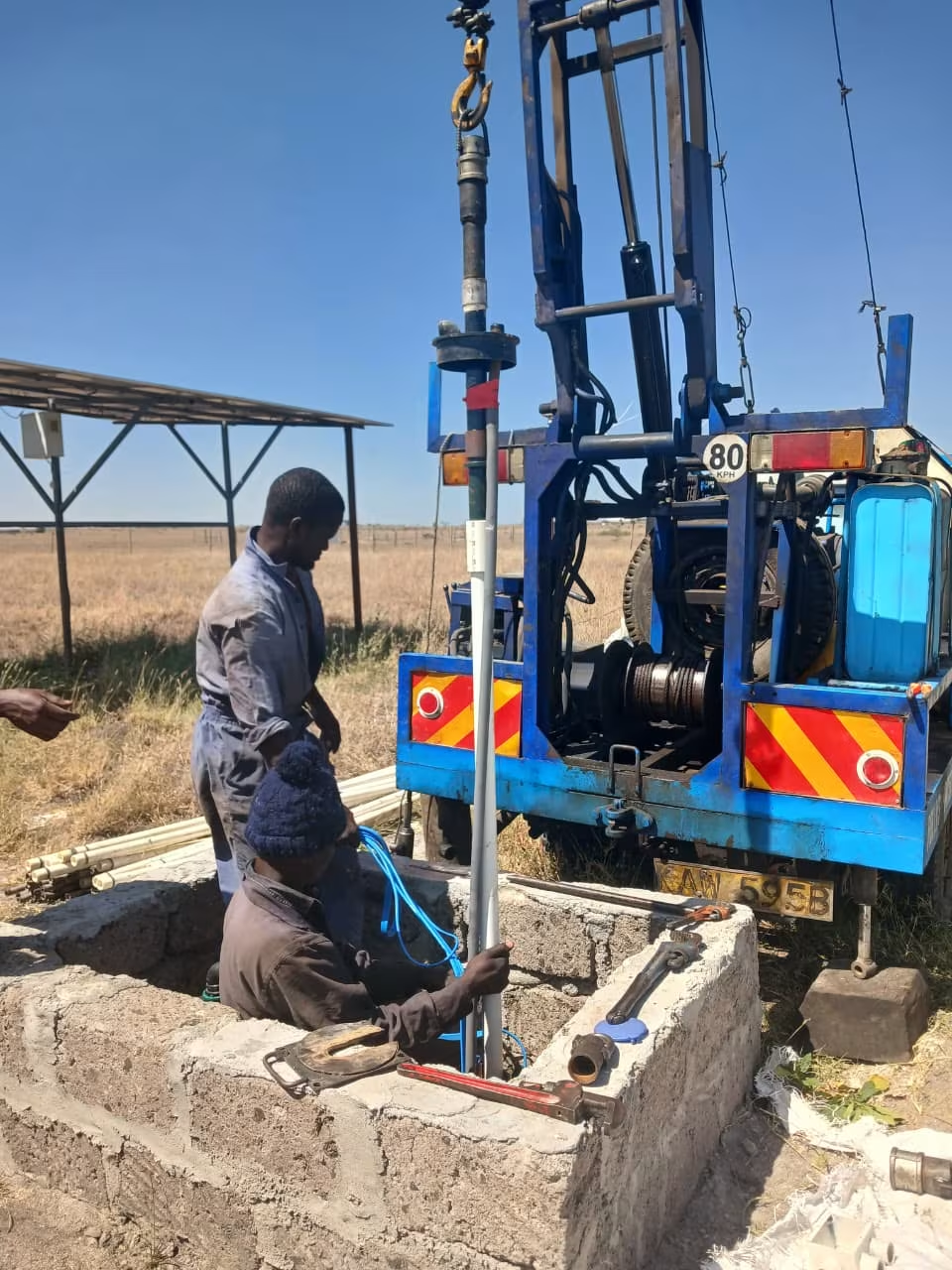
Borehole pump spares planning should establish how the exact equipment can be supported before a breakdown makes the question urgent. A familiar brand name or a parts catalogue does not prove local availability. Owners need identifiable components, current written enquiries and a clear route for professional compatibility review.
Explore Masterpiece Hydro-Solutions borehole equipping and enquire about equipment support and spares requirements. Share available product records and the intended service need. Confirm which support-related scope may be available rather than assume stock, delivery or specialist repair capability that has not been verified.
Start with the equipment actually proposed
Ask the quotation to identify the exact pump, motor and control arrangement. Product families can include different configurations, and the relevant service information may differ. A broad power rating does not give a future provider enough information to identify every suitable component.
Where equipment is already installed, gather original identities and relevant replacement history. Mark missing information honestly. A purchasing record may describe the initial item without reflecting later changes. The support enquiry should distinguish confirmed current information from an unverified historical description.
The Grundfos spare-parts guidance links parts information with the identified pump and relevant production context. It illustrates a manufacturer-specific approach. It does not confirm Kenyan stock, availability through Masterpiece or suitability of a part for another product.
Define borehole pump spares planning before purchase
Ask how the proposed equipment can be supported and who will answer later enquiries. The response should identify the actual supply and professional service boundaries. A statement that parts are available should explain whether it concerns catalogue identification, an unconfirmed order route or verified current stock.
Distinguish a component from a complete service kit or replacement assembly. Ask which contents a quoted item includes and which related tasks remain separate. An owner should not assume that buying a named kit automatically supplies every material or professional service needed to return the arrangement to use.
Also ask which information a future supplier will require. A useful handover retains part references and source documents without treating them as permanent guarantees of support. Product ranges and supply conditions can change, so later enquiries still need current confirmation.
Separate catalogue listing from delivery evidence
A listed item may be identifiable without being available for immediate delivery to the site. Ask the actual supplier to confirm current status, applicable conditions and the meaning of any estimate. Keep the date of that response so a later reader does not treat an old enquiry as today’s stock statement.
Where a lead-time estimate is offered, ask what it depends on. An owner should understand whether identification, order acceptance, transport or another stage remains unresolved. The provider should not be credited with a firm response commitment it has not actually made.
Keep any service appointment separate from component availability. A part reaching the site does not establish that qualified installation, relevant checks and return-to-service decisions are ready. Ask who coordinates those dependencies within the actual agreement.
Use a support-evidence comparison table
| Planning question | Evidence to request | Assumption to avoid |
|---|---|---|
| Which component fits? | Exact product and part identification with qualified review | Similar appearance proves compatibility |
| What is available now? | Dated written supplier confirmation | A catalogue entry proves local stock |
| What does the supplied item include? | Identifiable kit or component contents | A kit includes every related service |
| Who performs the work? | Confirmed qualified scope and responsibilities | Product supply automatically includes installation |
| What if the original is unavailable? | Documented alternative assessment and approval route | A substitute is suitable because its label is similar |
Compare proposals through these evidence layers. A lower equipment price may describe a different support boundary. The owner should understand that difference before purchase, while avoiding claims that a particular brand or provider guarantees future availability.
Ask how substitutes receive professional review
If an original component becomes unavailable, request a clear explanation of the proposed alternative. The qualified reviewer should assess the exact assembly and relevant requirements. Matching a nominal dimension or broad rating does not automatically resolve compatibility.
Ask which related records or checks the change affects. A replacement may alter the accepted configuration, manufacturer documentation or future service route. The owner should not approve the item commercially while the technical implications remain unassigned.
Keep technical approval and purchasing authority distinct. A provider can explain suitability while the authorised owner representative accepts price and scope. The change record should identify both decisions instead of implying that an invoice proves the alternative was professionally assessed.
Consider an urgent-substitute example
Imagine a hypothetical owner facing interrupted supply and receiving an offer for a part described as almost the same. The original product record is incomplete, and the seller can confirm only a similar label. Urgency makes the offer attractive but does not establish that it suits the installed arrangement.
The owner should supply available identities and ask a qualified provider what must be verified. If the original component cannot be confirmed, record that limitation and the proposed assessment route. A support decision should not rely solely on the hope that the item will fit.
This example does not reject every substitute or recommend replacing the complete pump. It demonstrates the evidence needed for an informed decision. The appropriate response depends on the actual equipment, requirements and confirmed professional scope.
Connect borehole pump spares planning with continuity
Identify essential water uses and the owner responsibilities during an interruption. Ask which supply dependencies remain outside the equipment provider’s control. A spares plan can support preparedness without promising that every incident can be resolved within a fixed unverified time.
Keep alternative water volume and suitability separate. A substitute source or stored reserve needs appropriate intended-use consideration. This guide does not declare an untested alternative safe for drinking simply because the normal pumping arrangement is unavailable.
Agree how users receive factual updates. A part ordered, a part delivered and a system returned to service are different milestones. Avoid presenting the first as proof of the last. The owner should communicate the current position and next review point without inventing a restoration guarantee.
Consider whether owner-held spares have a purpose
Ask qualified advisers which, if any, items justify an owner-held reserve for the actual arrangement. A universal shopping list may create unnecessary expenditure or leave critical compatibility questions unresolved. The decision should consider the real service need and professional support route.
Where the owner purchases reserve items, ask about identification, storage and inspection requirements from the relevant supplier information. The owner should not assume a sealed box remains suitable indefinitely. Keep the purchase date and applicable conditions with the asset record.
Holding a component does not authorise untrained installation. Any electrical, lifting, pressure-related or other specialist intervention needs competent parties and an appropriate assessed scope. A reserve item supports availability planning; it does not replace professional service.
Keep warranties and service responsibilities explicit
Ask what terms apply to supplied items and associated workmanship. The Grundfos warranty page illustrates that manufacturer arrangements have particular conditions and routes. It does not establish entitlement for another product or confirm that a future claim will be accepted.
Retain relevant purchase evidence and component identities. If a replacement is installed, record the actual change and its associated documents. Do not assume every item in the complete pumping arrangement shares the same terms or purchasing history.
Also distinguish warranty enquiry, routine service and emergency support. The owner should know which agreement addresses each question. A manufacturer document should not become an implied promise that a local contractor will provide a particular response, stockholding or coverage.
Update the support record after intervention
Request the accepted component identities, qualified findings and relevant verification records after the agreed work. A record saying parts replaced may omit what a future specialist needs. Ask the provider to identify retained components and any remaining limitations too.
Keep source-performance and water-quality questions separate from the repair record. An installed part does not establish sustainable groundwater output or drinking-water suitability. Appropriate evidence and professional interpretation should support any wider return-to-service conclusion.
At periodic ownership review, check whether contacts and equipment information remain usable. Do not treat an old supplier quotation as a standing availability commitment. A current enquiry should begin from clear identities and the actual work needed.
Questions about future support
Does an international brand guarantee local parts?
No general conclusion follows from the brand alone. Request current written confirmation from the actual supplier and identify its conditions. Catalogue support, local stock and a complete professional repair service are different questions.
Can I buy a similar part if the original is unavailable?
Ask a qualified provider to assess the exact alternative against the installed arrangement and relevant requirements. Do not rely on appearance or a broad rating. Record the technical decision separately from commercial approval before an authorised change.
Should every owner keep a spare pump?
Seek a proportionate assessment of the actual continuity need, equipment and support route. This guide does not prescribe a universal reserve purchase. A stored replacement may still require compatibility review, competent installation and appropriate verification.
Does having the part mean water can return immediately?
No. Qualified work, access, condition findings and return-to-service evidence may remain necessary. Ask the provider to explain dependencies and uncertainty. Communicate actual milestones rather than convert delivery into a guaranteed restoration time.
Request support information with the equipment proposal
Useful borehole pump spares planning connects identifiable products with current enquiries and professional service responsibilities. Ask those questions before purchase and retain the answers with the handover. The record should preserve availability limits instead of presenting a catalogue as a permanent support guarantee.
Enquire about borehole equipment support and spares requirements. Confirm which scope may be available and which supplier or specialist inputs remain necessary. A clear plan supports informed decisions without inventing stock, response commitments or universal replacement advice.