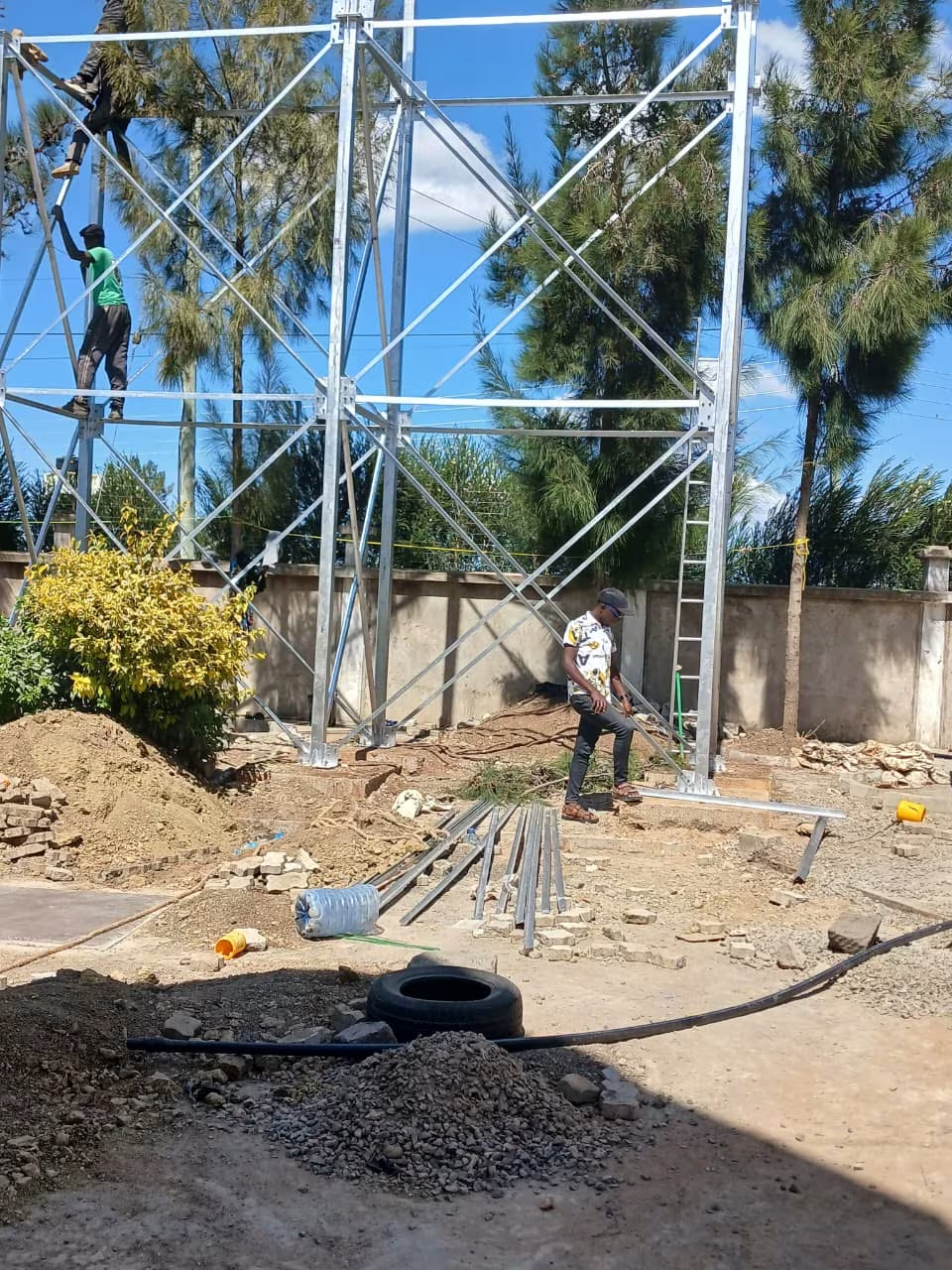
Borehole pump vibration observations should describe a changed condition without turning it into an unsupported diagnosis. Owners may notice a new sound, movement or delivery pattern, but those reports need context and qualified interpretation. Record what can be observed safely and use the agreed professional contact rather than approach equipment to investigate.
Explore Masterpiece Hydro-Solutions borehole equipping and enquire about an operating-condition assessment. Supply available equipment identities and service records. Confirm whether the required professional scope may be available before assuming a particular fault or repair has already been established.
Describe what changed and where it was noticed
Start with the date, location and nature of the observation. A sound heard at a building differs from movement reported near an accessible pipe. The owner should describe the experience without declaring which hidden component caused it or where beneath the ground a problem sits.
Distinguish a newly noticed condition from a newly developed one. A manager visiting after a long absence may hear something unfamiliar without knowing its history. State that limitation. A caretaker’s recollection may add context, but it should not become a measured baseline unless appropriate records exist.
Also identify how the report was obtained. A direct safe observation, a message from another person and an edited recording have different limits. Keep their attribution clear rather than combine them into one apparently verified account.
Collect borehole pump vibration observations with operating context
Ask the qualified provider which safe information helps its initial review. Relevant context may include whether the arrangement was reported as starting, running or stopping, together with available authorised display information. The owner should not create a test by repeatedly operating equipment to reproduce the symptom.
Include known changes in delivery or storage where safely observable. A noise report and a lower flow reading may both matter, but their timing does not prove one caused the other. The professional should explain what further evidence is needed before drawing a connection.
Keep the observation period clear. A brief sound during one visit differs from a recurring report across several dates. Avoid translating a short recording into a claim that the condition occurs continuously throughout every operating period.
Use recordings without overstating them
A safely obtained recording can help communicate what someone noticed. Ask the provider how it can use the file and which limitations apply. Device position, background activity and editing may affect interpretation. A recording should not be described as a professional vibration measurement unless an appropriate assessment supports that claim.
Do not move closer to machinery, open enclosures or touch components to obtain clearer evidence. The owner should remain within authorised access. Any specialist measurement belongs within a competent team’s assessed scope, using the method and equipment it determines appropriate.
Retain the original file where relevant and identify any shortened copy. A caption should describe the visible or audible observation rather than attach a cause. For example, a report can state when a sound was noticed without labelling it as a confirmed bearing fault or pressure event.
Use a symptom-context table
| Observation field | Useful detail | Conclusion to avoid |
|---|---|---|
| Location | Where the person safely noticed the condition | The sound identifies the hidden fault location |
| Timing | Date, observation period and available operating status | One event describes all operation |
| Related changes | Known delivery, service or site changes | Timing alone establishes the cause |
| Recording | Original file and relevant context | A phone file is a specialist measurement |
| Response | Contact informed and authorised guidance received | Reporting permits technical intervention |
Use the table to prepare an enquiry or caretaker report. The qualified assessor should determine the investigation and interpret the evidence. A useful log reduces ambiguity without asking an untrained owner to distinguish mechanical, hydraulic or electrical causes personally.
Provide the installed configuration and history
Supply the available pump, motor, controller and pipe records. The provider needs to understand the arrangement before interpreting a symptom. A general power label may omit much of the configuration relevant to a professional investigation.
List recent repairs, replacements or changes with their dates and sources. Where the details are incomplete, say so. An unexplained service entry should not become proof that every related component was inspected or that the current configuration matches the original handover.
The Grundfos SP instructions illustrate the need for equipment-specific technical information. They do not identify the cause of your observation or authorise owner maintenance. Ask the qualified provider which manufacturer documents apply to the actual arrangement.
Consider a sound-after-repair example
Imagine a hypothetical owner hearing an unfamiliar sound after a recent service visit. The owner concludes that the replacement part must be defective. The chronology is relevant, but the available record does not establish what changed, whether the sound existed earlier or which component produces it.
A stronger enquiry provides the service documents, observation context and any safely available original recording. The qualified assessor can identify the investigation needed. The owner should preserve the timing without presenting it as a settled cause or publicly attributing fault before appropriate review.
This example does not defend or criticise a particular repair. It shows how a fair evidence record supports technical investigation. If a new intervention is proposed, ask what findings support it and what the agreed work can establish.
Use borehole pump vibration observations to define professional scope
Ask whether the proposed service begins with record review, a site assessment or another qualified task. The provider should identify the question it will address and the access information required. Confirm availability of the necessary scope rather than assume every equipping enquiry includes specialist vibration analysis.
Keep an initial opinion separate from a confirmed diagnosis. A professional may identify possibilities while explaining the need for further evidence. The quotation should preserve that status instead of describing a speculative replacement as the guaranteed solution.
Also ask which findings would require another specialist or a revised scope. A clear referral boundary is more useful than a promise to resolve every possible cause in one visit. The owner should understand who will explain the next decision and any commercial implications.
Maintain safe access and response boundaries
Follow the installed arrangement’s actual authorised guidance and relevant professional advice. Owners should not touch vibrating parts, tighten connections, operate valves experimentally or access electrical equipment. A symptom report is a reason for appropriate review, not permission to perform technical work.
Ask the project team to define an escalation route for urgent concerns. This guide does not provide an emergency shutdown or isolation procedure. The qualified provider should explain the instructions and responsibility appropriate to the installation and authorised user role.
Where essential supply is affected, use the agreed continuity plan and factual communication. Do not invent a restoration time or encourage repeated operation to keep water moving. The need for supply does not establish that an unassessed action is suitable.
Review proposed corrections through findings
Ask the professional to explain the evidence supporting its recommendation. A component repair, configuration review and separate specialist assessment are different scopes. The owner should understand why the proposed work addresses the investigated issue without choosing technical settings or procedures.
Request compatibility review for any replacement and an authorised change record. A similar-looking part should not automatically inherit the original arrangement’s assessed suitability. Keep product information and professional responsibility clear before accepting a commercial instruction.
Where the cause remains uncertain, retain that limitation. A proposed intervention may address a justified next step without establishing every aspect of the problem. The owner should not present an exploratory scope as a confirmed permanent cure.
Document the outcome and what remains unknown
Ask what post-work evidence supports the accepted conclusion and which conditions apply. A quieter observation at one time may be useful without proving every future operating condition. The professional should explain the scope and limitations of its assessment.
Keep the original report, findings, changes and later observations linked. Future advisers need the chronology rather than a final message saying noise fixed. If the condition recurs, that record can support a more informed enquiry without forcing the owner to reconstruct the earlier event.
Update the installed equipment information where relevant. A later manager should know whether the arrangement changed and which guidance is current. Preserve outstanding questions instead of silently overwriting them with a broad completion statement.
Keep other supply conclusions separate
A vibration assessment does not by itself establish sustainable groundwater yield. Source performance requires appropriate evidence and professional interpretation. Likewise, the proposed pump’s capacity should remain distinct from actual demand and the assessed delivery duty.
Visible movement or sound should not become an unsupported conclusion about the structural strength of casing or nearby buildings. Ask the appropriate qualified specialist what evidence is needed if those questions arise. A routine symptom review may not cover them.
Water quality remains separate again. Normal-sounding operation does not establish drinking-water suitability, and an unusual sound does not diagnose contamination. Appropriate analysis and intended-use advice should address those questions through their own evidence.
Questions owners commonly ask
Does a new sound mean the pump must be replaced?
No automatic conclusion follows. Record the observation safely and request qualified assessment. The provider should identify the evidence needed before recommending a response. An unfamiliar sound alone does not establish the component or cause.
Can a phone recording diagnose the fault?
It can help communicate an observation when safely obtained and clearly attributed. Ask the professional what it can reasonably support. It should not be treated as a specialist measurement or a substitute for the appropriate investigation.
Should I touch the pipe to judge vibration?
No. Stay within safe authorised observation boundaries and use the agreed contact route. Technical assessment and any required measurements belong to competent parties using an appropriate scope. Do not approach equipment to improve an informal diagnosis.
What if the history is incomplete?
Provide the records available and label gaps honestly. Ask the qualified provider what the missing information affects and which next evidence may help. Do not invent an earlier condition or assume that an undocumented service checked everything.
Request an observation-led assessment
Useful borehole pump vibration observations preserve facts, context and safe boundaries. Gather equipment information, relevant changes and attributable reports. Ask for a defined professional investigation before interpreting a symptom as proof that a particular component has failed.
Enquire about a borehole pump operating-condition assessment. Confirm which professional tasks may be available and what evidence the provider needs. A clear record supports informed decisions without hazardous access, unsupported diagnosis or guaranteed repair outcomes.