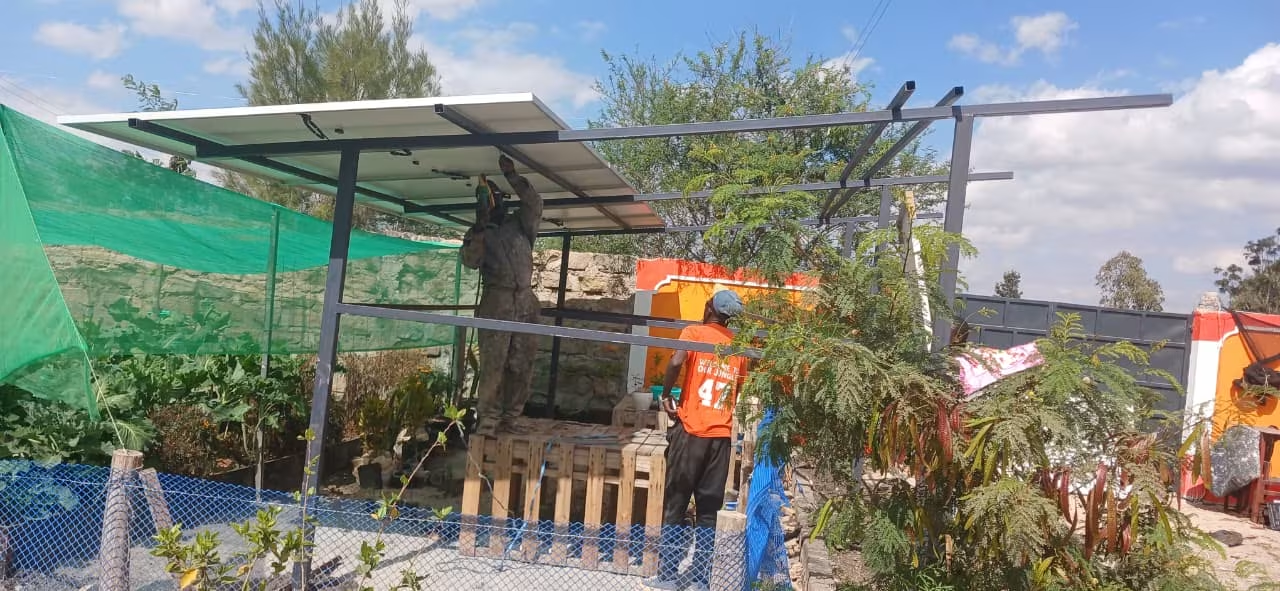
Kilifi solar array siting should begin with a current site plan and the activities sharing the proposed space. An open area does not automatically establish a suitable installation location. Therefore, ask qualified personnel to assess the actual options before preparation. Confirm whether an appropriate solar pumping service is available for the exact site and proposed scope.
Use the Kilifi county project page for the wider enquiry. See borehole solarisation and request an assessment with your possible array locations. This guide focuses on siting information without claiming local climate, corrosion conditions, universal mounting angles or confirmed installation availability.
Start Kilifi solar array siting with current land use
First, show the areas you are considering on a simple layout. Identify the borehole, tanks, buildings and normal routes through the property. Also, mark activities that need access to the same space. A proposed array should not silently displace a service route or essential working area.
Next, distinguish current features from future plans. A building extension, new access route or changed storage area may affect the siting decision. Label those proposals clearly. Qualified personnel should understand which conditions exist now and which remain uncertain.
Also, identify who controls the proposed area and may discuss permission. Practical availability differs from technical suitability. This guide does not determine ownership or access rights. Ask appropriate advisers about unresolved property questions before committing to preparation or equipment.
Compare possible areas before choosing a convenient corner
An owner may prefer the nearest open area because it appears to reduce movement or simplify the project. That preference deserves assessment rather than automatic acceptance. Ask the provider which site information affects its recommendation. The suitable option depends on more than visual convenience.
Next, identify overhead features, nearby structures and known services from safe positions. Do not enter electrical hazard areas or climb to collect photographs. The provider should decide what further investigation it needs. A missing image with a clear explanation is preferable to unsafe documentation.
Also, preserve alternatives until the relevant assessment is complete. Early earthworks or structural changes can commit the project to an unassessed assumption. Qualified personnel should explain what preparation the selected option requires. Owners should not create foundations or mounting structures from general guidance.
Organise Kilifi solar array siting questions
| Siting area | Information to provide | Professional question |
|---|---|---|
| Available space | Current layout and normal uses | What installation area does the assessed proposal need? |
| Nearby features | Safe photographs and known restrictions | Which features require further site assessment? |
| Future development | Clearly labelled planned changes | Could the proposal affect lasting suitability? |
| Access | Installation approach and maintenance routes | What safe working arrangements need design? |
| Source and delivery | Testing records and tank location | What water duty should the system support? |
| Permissions | Relevant contacts and unresolved questions | Who must confirm practical and formal arrangements? |
Use the table to frame an enquiry rather than certify a location. Qualified personnel should assess the actual site and proposed installation. A completed owner checklist cannot establish structural or electrical suitability. Ask the provider to explain its recommendation and the limits of the assessment.
Ask how current and future shading will be assessed
The US Department of Energy solar planning guide discusses assessing permanent and seasonal shade at proposed array locations. This supports asking for a professional site assessment. Its building guidance does not prescribe a Kenyan borehole layout or universal angle.
Next, identify trees, buildings and other visible features without assuming their exact output effect. Normal safe photographs can help the enquiry. The designer should assess relevant shading over time. A single clear moment does not prove the location remains unshaded throughout the required period.
Kilifi solar array siting should also consider known future changes. A new building or growing vegetation may alter the current view. Ask how the proposal records those assumptions. Do not cut trees, alter structures or move equipment yourself to test a preferred solution.
Keep mounting and electrical design with qualified personnel
Ask the provider what specialist assessment the proposed location needs. A roof, ground area or structure may raise different questions. The owner should not infer capacity from appearance. Qualified personnel must assess the actual mounting and associated works for the proposed installation.
Next, request a clear scope for any preparation and separate professional tasks. An equipment quotation may exclude civil or structural work. Identify those boundaries before assuming the installation area is ready. A gap between scopes can leave an essential task without an agreed responsible party.
Also, keep cable routing, protection and connections within qualified assessment. Owners should not select wire sizes, improvise earthing or alter electrical equipment. The useful buyer role is to provide the layout and known restrictions. The design team should explain a safe, site-specific proposal.
A scenario with a future extension beside the array
Imagine an owner requests solar pumping for a Kilifi site and proposes an open area beside an existing building. The same area also borders a possible extension. The first enquiry includes only current photographs, so the provider does not know the future plan.
First, the owner adds the proposed extension as a clearly labelled scenario. Next, qualified personnel explain how it affects the siting assessment and any remaining uncertainty. The owner can consider alternatives before preparation. The selected location receives a reasoned explanation rather than an assumption based on today’s open space.
The Kilifi solar array siting example is hypothetical and describes no completed local work. It does not recommend a particular location or structure. It shows why the current layout and foreseeable changes belong in one brief before equipment and preparation become commitments.
Connect array planning with the source and duty
Provide test-pumping results, measured water levels and the intended delivery destination. A suitable physical area alone cannot establish daily water production. Aquifer yield, pump capacity and demand remain different. More panels cannot create sustainable groundwater that the source lacks.
The Grundfos selection learning resource explains required flow, head and the duty point. Ask how the proposed equipment relates to those inputs. A convenient array position cannot replace the source and delivery assessment.
Also, keep daily volume and peak flow distinct. Solar output varies through the day and season. Ask the provider to state its operating assumptions without inventing local sunshine hours. The siting proposal should not imply a fixed production guarantee from panel count alone.
Plan lasting access rather than only installation access
Describe how people normally move around the proposed area. Also, identify gates, vehicles and working activities that may affect future professional access. Qualified personnel should explain the requirements of their proposal. An area reachable during construction may later become obstructed.
Next, ask which records should preserve the selected position and relevant route. A simple final layout can help later assessors understand the installation. It does not replace inspection after significant changes. Keep the relevant assumptions with the asset file.
Kilifi solar array siting should therefore include future management questions. Identify who reports changed nearby structures or access restrictions. A site plan should remain connected to actual conditions. Do not assume the first assessment stays equally applicable after the property changes.
Confirm scope, credentials and separate requirements
Ask Masterpiece about actual location availability and the proposed assessment scope. The county page does not promise every narrow installation task or date. Send safe photographs and current records. The provider should explain what it can assess or offer before a confirmed commitment.
Ask for appropriate current practitioner credentials and verify material claims through EPRA’s renewable-energy information. Do not infer a particular licence from a brochure. Qualified personnel must undertake relevant electrical and installation work.
Also, keep authority and quality questions separate. Ask the relevant body about current requirements for the actual project. Clear water does not establish drinking suitability. A solar siting assessment cannot replace suitable laboratory evidence or guarantee every approval.
Questions about Kilifi solar array siting
Can I choose the nearest empty area?
Use it as a proposed option for assessment rather than a confirmed location. Current use, shading, access and technical requirements may matter. Provide the layout and ask qualified personnel to explain suitability. Convenience alone cannot establish the complete installation decision.
Does one unshaded photograph prove the site is suitable?
No single observation establishes conditions across the relevant periods. Ask how the designer will assess current and seasonal shading. Also, disclose known future development. The photograph supports an enquiry without predicting the complete production effect.
Should I build the mounting area before asking?
Obtain the appropriate site-specific assessment first. Owners should not create foundations, alter structures or undertake electrical work from general advice. The provider should identify necessary preparation and responsibilities. Early work based on an unsupported assumption can create another constraint.
Can more panels resolve inadequate yield?
No array size can create sustainable groundwater the source lacks. Provide relevant testing and duty information. Qualified personnel should explain the source limitation. Keep physical siting, pump selection and demand as related but distinct questions.
What should the first enquiry include?
Send the site pin, current layout, safe photographs and possible array areas. Add the source file, delivery destination and future development plans. Label uncertainty clearly. The provider can then confirm availability and explain the appropriate assessment scope.
Request siting assessment before preparation
Useful Kilifi solar array siting connects the current property layout with a professionally assessed installation. It preserves future changes and source limitations. Gather the reliable site information before selecting an area. Then request a clear scope identifying preparation, assumptions and qualified responsibilities.
Send Masterpiece Hydro-Solutions your Kilifi solar enquiry. Include the proposed locations, source records and intended service. Ask for site availability confirmation and an assessment that explains the siting decision before any structural or electrical work.