Solar pump shading observations help owners describe visible changes without diagnosing the complete electrical system. A shadow, surface dirt and a controller indication are different pieces of evidence. Therefore, record them separately from safe positions. Qualified personnel should assess the cause of reduced delivery before anyone changes the array, controls or surrounding structures.
Masterpiece Hydro-Solutions offers borehole solarisation. To discuss a concern, request an assessment with your normal operating records. Include the equipment information and visible observations. Ask whether an appropriate scope is available rather than assuming every shade-related concern has the same remedy.
Start solar pump shading observations from a safe position
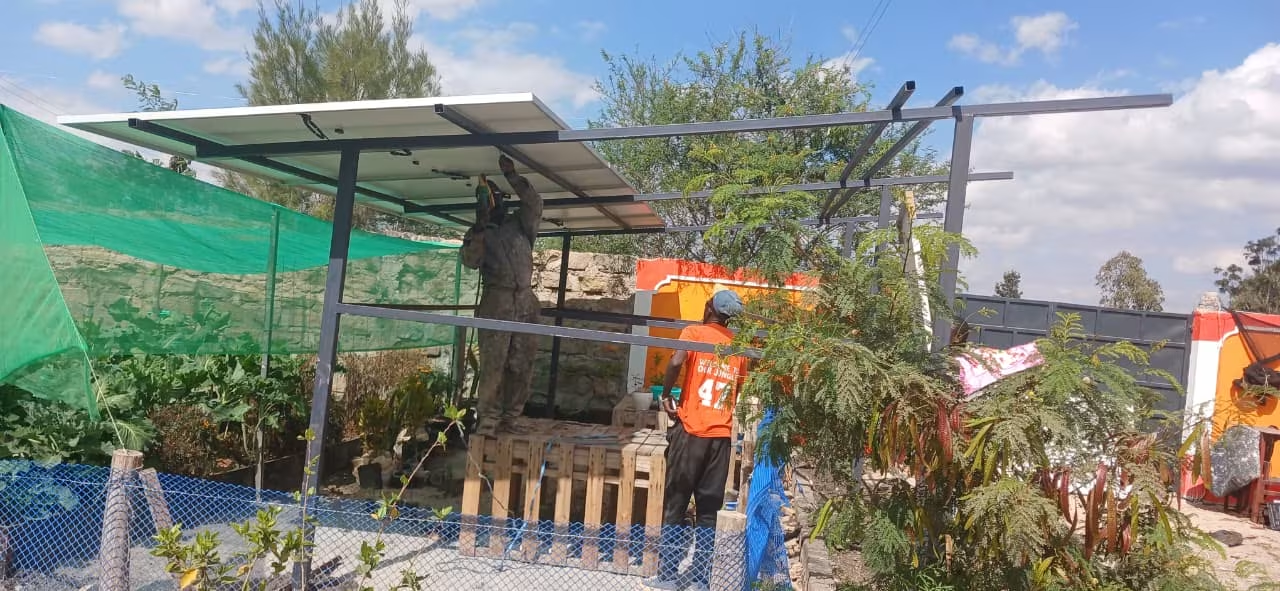
First, describe what you can see during ordinary safe access. Identify the date, approximate time and area of the array affected by a visible shadow. A simple ground-level photograph may help. Do not climb a roof, touch electrical equipment or enter a restricted work area to improve the record.
Next, identify the visible object casting the shadow where possible. It may be a building, tree or another feature. Do not assume its exact effect on output from appearance alone. Qualified personnel should assess the actual system and relevant shading conditions.
Also, state what you cannot observe safely. An inaccessible module or unclear view should remain a gap. The provider can determine an appropriate inspection method. Honest missing information is more useful than a hazardous attempt to produce a complete-looking enquiry.
Distinguish a moving shadow from a fixed surface condition
A shadow can change with time, while dirt or another surface condition may remain visible differently. Record the observation without identifying its full technical effect. The US Department of Energy photovoltaic primer identifies dirt and shade among factors affecting real-world conversion performance.
Next, avoid labelling every dark-looking area as shading. Reflections, viewpoint and surface conditions can complicate photographs. Ask the professional to interpret uncertain images. The owner should describe the evidence rather than make a firm diagnosis from a phone screen.
Also, do not attempt cleaning or access work from general guidance. The actual product information and installation conditions need professional consideration. Roof work, electrical exposure and damaged modules require qualified attention. Ask the provider what assessment or safe maintenance scope is appropriate.
Organise solar pump shading observations in a log
| Log field | What to record safely | Limit to preserve |
|---|---|---|
| Date and time | When the visible condition appeared | One observation does not represent every season |
| Array area | Simple description or safe photograph | Do not climb to obtain a precise view |
| Shadow source | Visible nearby feature where identifiable | Do not assume the exact output effect |
| Surface condition | What appears different from a safe position | Appearance does not establish composition or damage |
| Water service | Normal meter or tank observations already available | Do not equate correlation with a confirmed cause |
| System indication | Existing safely accessible display information | Do not open, reset or alter equipment to investigate |
The log supports a professional enquiry rather than provides a testing procedure. Do not adjust controls, wiring or valves to isolate a suspected cause yourself. Qualified personnel should decide which measurements are necessary. The owner can provide normal observations and clearly label their limits.
Ask about seasonal assessment rather than one clear moment
The US Department of Energy solar planning guide discusses permanent and seasonal shading assessment. This supports asking a professional to consider the site’s conditions over time. Its building guidance does not prescribe a universal Kenyan borehole array layout.
Next, tell the assessor about known future development or changed nearby features. A new structure or growing vegetation may affect the current arrangement. The owner should not calculate a precise loss from one photograph. Ask how the proposed scope will assess the relevant uncertainty.
Solar pump shading observations should therefore identify the period they cover. A clear view at one time does not prove the array remains unshaded throughout every operating period. The report should distinguish owner observations from a qualified site assessment.
Keep controller information separate from the diagnosis
A controller indication may help describe what the system reported, but its meaning depends on the actual equipment and conditions. Provide the applicable product information where available. Do not translate an unfamiliar symbol into a confirmed shading fault. Qualified personnel should interpret the indication.
Next, record normal safely accessible information without opening enclosures or touching connections. Do not reset warnings, bypass protections or alter settings to test a theory. The owner should request professional assessment of the concern. General article advice cannot establish a safe electrical investigation method.
Also, distinguish a recorded operating limit from a visible shade observation. The two may occur together without proving one cause. Ask the provider what evidence would separate the questions. A useful scope explains which assessment can support the next decision.
A scenario with a midday complaint and an afternoon shadow
Imagine an owner reports reduced tank filling and later notices a shadow across part of the array. The complaint and photograph come from different periods. The owner assumes the visible shadow explains every earlier interruption. The existing evidence does not establish that conclusion.
First, the owner records the timing of each observation and sends the available operating information. Next, qualified personnel assess the actual system, shade context and any relevant indications. The proposal can then explain what further evidence is necessary. The owner avoids changing equipment from an assumed correlation.
The solar pump shading observations example is hypothetical and diagnoses no real site. It shows why a visible condition can be relevant without proving the complete cause. A clear timeline helps the assessor understand the question before proposing a remedy.
Connect water-delivery records with the right boundary
Tank filling may change while users withdraw water or another source adds supply. Therefore, describe known movements and the observation period. A slower level rise does not automatically quantify a solar output loss. Relevant meter and runtime records may help, subject to their own limitations.
Next, separate flow, accumulated volume and elapsed time. A brief observation cannot establish the whole daily service. The owner should not change the hydraulic arrangement to recreate a comparison. Qualified personnel must decide whether further testing is necessary and how it should proceed.
Also, retain source records where available. Aquifer yield, installed capacity and demand remain different quantities. A shade concern does not remove the need to understand the source. More panels cannot create sustainable groundwater that the borehole lacks.
Ask for a reasoned response before changing the site
If the assessment identifies a siting or maintenance concern, ask which finding supports the proposed action. The response should address the actual condition and limits. Do not assume pruning, relocation or replacement automatically solves every delivery problem. Each option needs appropriate professional and permission review.
Next, identify which work the provider can offer and which belongs to another qualified party. Structural, electrical and access tasks may have different responsibilities. The quotation should show those boundaries. Owners should not undertake hazardous preparation to make an assumed remedy easier.
Solar pump shading observations should remain in the file after the decision. Retain the original log, qualified findings and accepted instruction. A later team can then understand the evidence behind the change. Do not replace the history with an unsupported statement that shade caused everything.
Preserve selection and professional checks
The Grundfos selection learning resource explains required flow, head and the duty point. A shade observation cannot establish the correct replacement pump or complete operating arrangement. Qualified assessment should retain the relevant source and delivery evidence.
Ask for appropriate current solar practitioner credentials and verify material claims through EPRA’s renewable-energy information. Do not infer a specific licence from a brochure or logo. Electrical and installation tasks require the appropriate qualified responsibilities for the actual scope.
Also, keep water quality separate from output. Clear water or improved delivery does not establish drinking suitability. Ask which laboratory analysis fits the intended use. A successful shading or maintenance intervention cannot provide every quantity and quality guarantee.
Questions about solar pump shading observations
Does one shadow prove the cause of low delivery?
No single observation establishes the complete cause. Record its timing and the relevant service information. Qualified personnel should assess the system and identify further evidence needed. A visible shadow can inform the enquiry without explaining every operating concern automatically.
Can I calculate the loss from shaded area?
Do not assume a simple area percentage establishes the system’s output change. The actual equipment and conditions matter. Ask the professional how the assessment addresses shading. This guide supplies no universal loss factor or site-specific production prediction.
Should I clean the panels before assessment?
Ask the provider what the actual installation and product information require. Do not climb, touch damaged equipment or undertake electrical access work from general guidance. Safe maintenance needs appropriate assessment. Normal observations can begin the enquiry without hazardous owner preparation.
Can a controller warning identify shading?
Its meaning depends on the actual equipment and operating conditions. Provide available product information and the safely observed indication. Qualified personnel should interpret it. Do not reset, bypass or alter equipment to test an assumed explanation.
What should the first enquiry include?
Send the location, equipment records and dated safe observations. Include normal water-delivery information and clearly labelled uncertainty. Ask whether an appropriate assessment is available. The provider can then explain the investigation and scope before recommending a change.
Request assessment from a clear observation log
Useful solar pump shading observations separate shadows, surface conditions and system indications. They preserve timing without turning correlation into diagnosis. Gather normal safe records and retain their limits. Then request qualified assessment before changing the site or equipment.
Send Masterpiece Hydro-Solutions your solar shading enquiry. Include the dated observations, source file and equipment information. Ask for an appropriate assessment scope that explains the next evidence needed before any maintenance or installation decision.