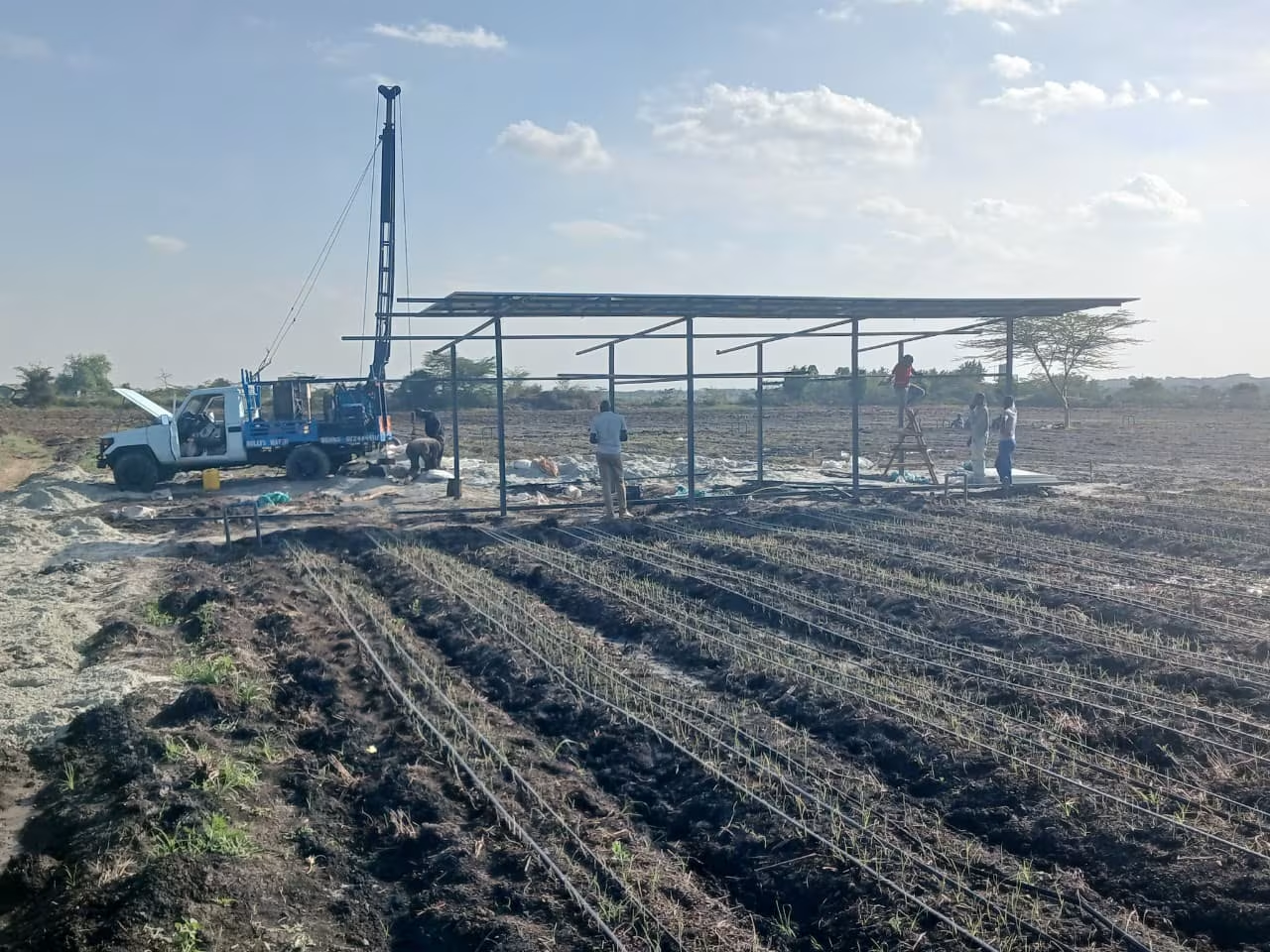
Solar pumping daily volume describes the water delivered over an operating period, rather than the highest flow observed briefly. The distinction matters when comparing supply with demand and storage. Therefore, keep rate, actual operating time and the measurement boundary together. A pump’s capacity label cannot establish the accumulated daily water service.
Masterpiece Hydro-Solutions offers borehole solarisation. To discuss expected or measured delivery, request an assessment with your source and operating records. Describe the intended use and delivery point. Ask what evidence supports the proposed volume instead of assuming fixed pumping hours or guaranteed production.
Start solar pumping daily volume with one boundary
First, identify where the water is measured. A delivery meter, tank observation and outlet reading may represent different boundaries. Also, identify other water movements between them. A daily total becomes difficult to interpret if the record combines points that do not measure the same service.
Next, retain the units and device information. Litres and cubic metres need consistent conversion, while a flow display differs from a cumulative volume reading. Ask for qualified clarification where the existing display is unclear. Do not invent a scale or multiplier to complete the calculation.
Also, state what period the record covers. A partial observation should not silently become an entire day’s result. The owner can label the available evidence honestly. Qualified personnel should decide which further measurements the project needs before presenting a production conclusion.
Keep rate, runtime and elapsed time distinct
Flow is a rate, while volume is an amount. Under an appropriately measured average flow, volume equals that rate multiplied by actual operating time. The units must match. One cubic metre equals 1,000 litres, so record conversions clearly instead of mixing scales.
Next, distinguish actual pumping time from elapsed clock time. A system may stop or operate differently during the observation period. Solar output also varies through the day and season. Do not assume the pump maintained its brief peak rate for every hour between two visits.
Where flow varies, a suitable interval-based record can help explain the total. Ask qualified personnel what evidence supports the averages. Owners should not alter controls, valves or pressure arrangements to create a test. Use normal safe records and appropriate professional measurement where needed.
Calculate solar pumping daily volume with labelled assumptions
| Hypothetical period | Assumed average measured flow | Assumed active time | Educational volume |
|---|---|---|---|
| First recorded interval | 20 litres per minute | 60 minutes | 1,200 litres |
| Second recorded interval | 35 litres per minute | 120 minutes | 4,200 litres |
| Combined example | Different averages across intervals | 180 active minutes | 5,400 litres, or 5.4 cubic metres |
Every number in the table is a hypothetical arithmetic input. None predicts a site’s flow, solar hours or recommended operation. The example shows why adding supported interval volumes differs from extending one peak rate across the day. Actual assessment needs the relevant measurement and operating context.
Do not multiply the peak across an assumed day
Using the example’s 35 litres per minute for all 180 minutes would give 6,300 litres. That differs from the combined 5,400 litres because the assumed earlier flow was lower. This illustrates an arithmetic error in extending a peak. It does not establish an expected loss percentage for real equipment.
Next, ask how a supplier derived any projected daily volume. It should identify source, duty and operating assumptions. A model may support planning while remaining conditional. Do not present a projected result as measured performance or guarantee the same volume in every season.
Solar pumping daily volume should therefore retain the underlying intervals or method. A single total without context can conceal unsupported runtime. Ask for an explanation that another assessor can follow. The owner needs a reviewable basis rather than only an attractive litres-per-day claim.
Use tank records with other movements visible
A tank level may rise while users withdraw water. Another source may also add supply. Therefore, a level change does not automatically equal borehole production. Record known movements and the relevant period. Missing information should remain a limitation rather than become a precise delivery result.
Next, ask whether the available tank indication corresponds reliably to volume. A height observation alone may not establish the amount. Do not climb, enter storage or improvise pressure testing to investigate. Qualified personnel should identify the suitable measurement approach.
Also, distinguish water delivered into storage from water available at every outlet. Distribution may have another boundary or requirement. A production total can be useful without proving the complete user service. The proposal should explain which destination its volume describes.
A scenario comparing two impressive claims
Imagine an owner receives one proposal quoting a peak flow and another quoting daily production. The figures look directly comparable but describe different quantities. Neither alone explains the same operating period and delivery point. The owner cannot decide by ranking the larger-looking number.
First, the owner asks both providers to state the source evidence, duty and volume assumptions. Next, each explains whether its figure is measured or projected. The comparison can then use a common service boundary. Any uncertainty remains visible rather than hidden inside incompatible units.
The solar pumping daily volume example does not choose a supplier or predict a project. It shows why units and time matter. A high brief rate may coexist with a different daily total. The useful question is the accumulated delivery supported by the actual evidence.
Keep source capacity in the production assessment
Provide the test-pumping report, measured water levels and construction information where available. Aquifer yield, pump capacity and demand remain different quantities. More panels cannot create sustainable groundwater the source lacks. The expected operating arrangement must respect the relevant source evidence.
Next, ask qualified personnel which water-level and performance findings support the proposed operation. Drilled depth alone cannot answer that question. Also, an installed pump’s label does not establish sustainable yield. The assessor should explain the evidence basis and any further investigation needed.
Solar pumping daily volume should not become a reason to force operation beyond assessed limits. The owner should not change controls or settings to reach a preferred total. Request an appropriate professional assessment if actual delivery differs from the accepted service brief.
Relate the volume to the required duty
The Grundfos selection learning resource explains required flow, head and the duty point. A daily total does not replace those selection inputs. The delivery destination and required pressure still need assessment alongside the source.
Total dynamic head considers pumping lift, delivery elevation, friction and required outlet pressure. A changed tank can affect the duty even when demand stays similar. Ask which reference levels and route assumptions the proposal uses. Qualified personnel should obtain and interpret the necessary information.
For a related equipment enquiry, see borehole equipping. Share the current service brief and records. A larger motor rating or familiar model cannot establish the daily delivery suitable for the actual system.
Compare production with demand and reserve honestly
Daily production and daily demand can be compared only with their periods and limits clear. Future uses should remain labelled scenarios. Also, storage can hold delivered water without creating replenishment. The owner needs an assessed arrangement rather than an assumption that tank size fixes every shortfall.
Next, identify which service matters during constrained production. Backup or another supply may require a separate qualified scope. Do not assume a larger solar array removes every source or delivery limit. Ask the provider to state remaining uncertainty and actual available options.
Also, keep quality separate. Clear water and adequate measured volume do not establish drinking suitability. Ask which laboratory evidence fits the intended use. A litres-per-day calculation cannot provide a quality guarantee or replace professional interpretation of the findings.
Questions about solar pumping daily volume
Can I multiply maximum flow by all daylight hours?
That assumes a constant rate and operating period the evidence may not support. Ask how the actual or projected volume was derived. Solar output varies, and the source and duty also matter. Keep peak flow separate from accumulated delivery.
Does a pump label establish daily production?
No label alone proves the actual source and operating arrangement. Relevant flow, head and runtime evidence are necessary. Ask whether the proposed figure is measured or projected. A capacity description cannot guarantee the same water volume at every site.
What if the pump stops during the record period?
Distinguish active operation from elapsed time and label gaps clearly. Do not assume the system delivered at the observed rate throughout the interval. Qualified personnel can identify an appropriate measurement method. The owner should not alter equipment to manufacture a complete record.
Can tank level show the total directly?
Only an appropriately understood record can support that conclusion. Other inflows, withdrawals and the relationship between level and volume may matter. Ask how those factors are assessed. Otherwise, retain the observation as useful context without claiming precise borehole production.
What should I send with the enquiry?
Provide the location, source report, delivery point and available meter or runtime records. Label units, periods and uncertainty. Also, state current demand and storage information. The provider can then explain the appropriate assessment before presenting a site-specific volume expectation.
Request the evidence behind the daily figure
Useful solar pumping daily volume records connect rate, active time and the actual measurement boundary. They distinguish projected output from measured delivery. Gather the current source and operating file before comparing claims. Then request an assessment that explains assumptions and remaining service limits.
Send Masterpiece Hydro-Solutions your solar production enquiry. Include the source information, delivery brief and available daily records. Ask for a clear assessment of expected or observed volume without a universal runtime or guaranteed-output assumption.