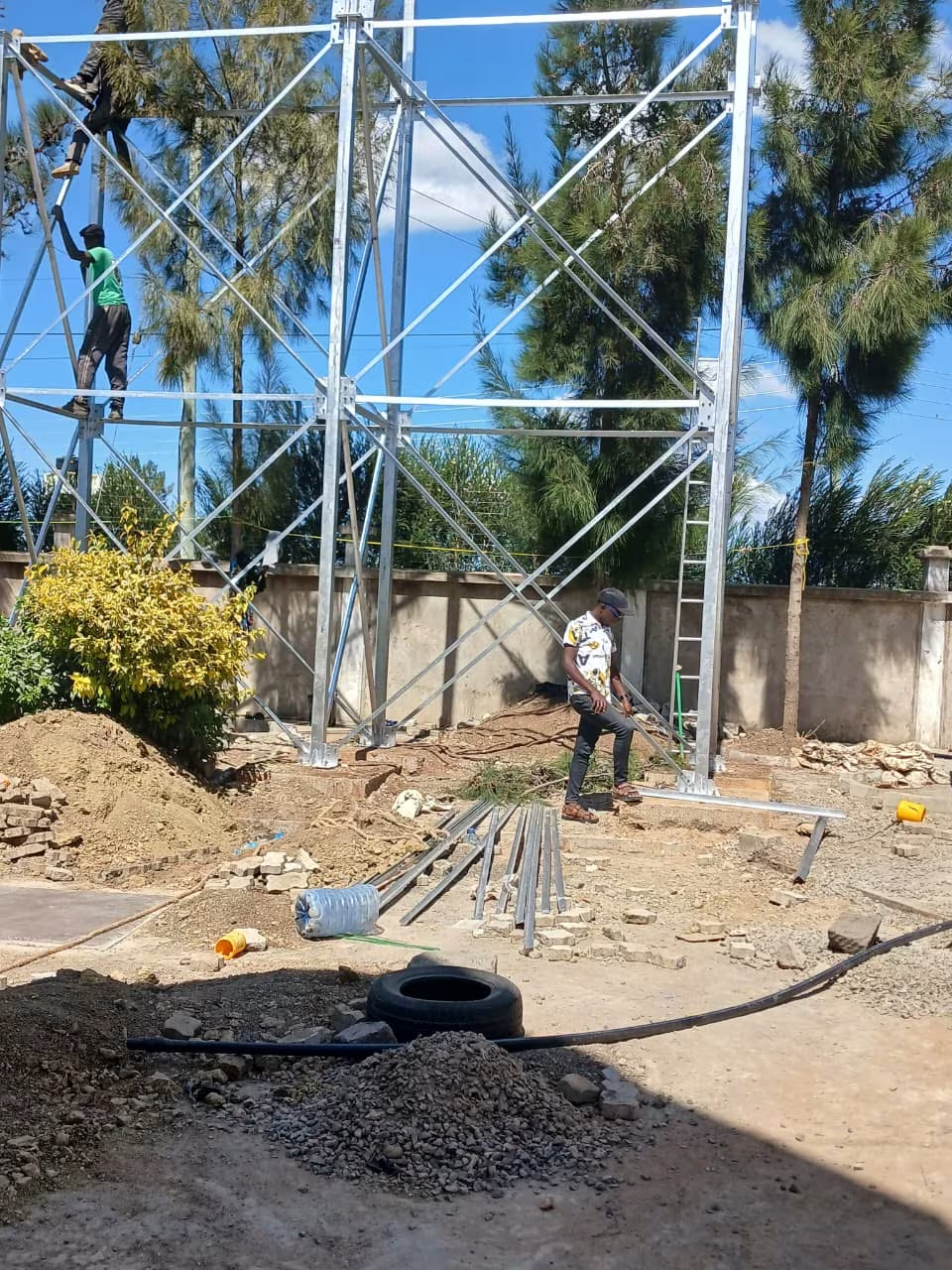
A borehole equipping service scope helps the owner turn completed drilling into a defined water-supply project. The next task involves more than buying a pump that fits the hole. First, connect source evidence with demand and the delivery destination. Then agree who selects, installs and tests the equipment before anyone treats the system as complete.
Explore Masterpiece Hydro-Solutions borehole equipping and request a new-borehole assessment. Send the drilling and test records you already hold. This guide explains the service boundaries and owner decisions needed between drilling handover and an operating equipment arrangement.
For a document-by-document decision before equipment selection, use the new-borehole evidence readiness checklist. This service guide focuses on who owns assessment, supply, installation and acceptance, and which interfaces the quotation must define.
Start the borehole equipping service scope with source records
Collect the completion record, test-pumping report and relevant water-quality information. Also, confirm that each document identifies the same borehole. A report from an earlier installation or neighbouring property cannot silently replace records for the new source. Ask the responsible professional to explain missing information and what further assessment may establish.
Next, identify construction details and measured water levels clearly. Drilled depth, static water level and pumping water level mean different things. The equipment assessor needs to understand the completed source and its tested behaviour. A single figure labelled depth leaves too much uncertainty for an accountable selection discussion.
Describe the water service the owner expects
List intended users and daily demand, with the basis for any estimate. A new home, farm and occupied institution may need different operating arrangements. Also, identify busy periods and essential uses during an interruption. Daily volume matters, but the time when users need that volume can change storage and continuity decisions.
Keep future demand separate from today’s requirement. For example, an owner may plan another building but lack a confirmed start date. Present that expansion as another scenario rather than an unexplained extra allowance. This gives the assessor a clear brief and helps avoid spending on capacity that the source or project does not support.
Assign responsibilities within the borehole equipping service scope
Equipping can involve equipment assessment, supply, installation and commissioning, but the quotation must state its actual scope. Ask which tasks the provider proposes for your site. Also, separate borehole-to-tank delivery from distribution beyond storage. A successful tank fill does not prove that every distant outlet receives the service its user expects.
| Project stage | Owner information | Evidence or decision needed |
|---|---|---|
| Source assessment | Completion and test records | Available supply and unresolved gaps |
| Duty definition | Demand and storage destination | Required flow and total dynamic head |
| Equipment selection | Available supply and operating needs | Named compatible pump and control arrangement |
| Installation planning | Access and site responsibilities | Defined qualified work and exclusions |
| Commissioning | Agreed acceptance brief | Measured delivery and operating records |
| Handover | Named operator and backup contact | Normal indicators, support route and records |
Ask for the selected flow and head together
The pump selection should address the actual delivery duty. Ask the assessor to identify flow and total dynamic head together. The Grundfos learning resource on pump selection explains their relationship. A power rating or maximum catalogue flow alone does not describe the water service proposed for your site.
Total dynamic head accounts for pumping lift, delivery elevation, pipe losses and any required outlet pressure. It differs from pump setting depth. Also, ask which measurement reference the designer uses. If the tank location changes, request reassessment rather than assume the original selection still meets the revised route and destination.
Check source limits in the borehole equipping service scope
Available groundwater, installed pump capacity and user demand remain distinct. Ask how the proposed operating rate respects the source assessment. A bigger motor cannot create more groundwater. Likewise, a large storage tank cannot cure a continuing shortfall between daily production and use. Any such gap needs an explicit project decision.
The borehole equipping service scope should therefore include the abstraction basis and proposed operating schedule. If uncertainty remains, identify the evidence needed before final selection. An early equipment allowance can support budgeting, but it should not become a confirmed model recommendation simply because the owner wants to purchase quickly.
Review controls as an operating requirement
Describe how you expect the system to operate. For example, ask how it responds to the storage tank reaching its intended level or the source becoming insufficient. The designer should explain suitable controls and protection for the assessed equipment. Owners need to understand normal behaviour without choosing electrical components from generic online advice.
Also, identify who assesses the available power supply and who takes responsibility for electrical installation. Qualified personnel should handle technical checks, wiring and protection testing. Ask for their relevant current credentials and verify them appropriately. The owner’s role is to agree responsibilities and receive the resulting evidence, rather than bypass controls or alter settings.
Work through an illustrative first-equipment brief
Consider an educational owner brief requiring ten cubic metres daily, equal to 10,000 litres. Assume an assessor proposes average delivery of two cubic metres per hour under stated conditions. That volume would require five operating hours. These figures illustrate planning arithmetic; they do not establish source yield, a suitable duty or available operating time for a real site.
Now suppose the owner expects another four cubic metres for future use. The expanded daily requirement becomes 14 cubic metres. At the same assumed flow, production would require seven operating hours. Therefore, the future stage needs its own assessment, including source limits, power arrangements and storage recovery.
A borehole equipping service scope keeps both cases visible. It asks what the first stage supports and what expansion would require. This prevents the owner from confusing unused tank capacity or an attractive pump rating with confirmed water availability for a future project.
Prepare access without managing technical methods
Tell the contractor about entry restrictions, active site uses and known changes since drilling. Also, identify the working area and the person who can coordinate access. Qualified personnel should assess installation and lifting requirements. The owner should not attempt to reproduce another site’s equipment-handling method.
Discuss how future maintenance teams will reach the installation. A new fence, building or storage layout may affect that access. The borehole drilling service provides the relevant wider context when the drilling team still needs to clarify completion information. Keep those clarifications linked to the equipment brief.
Make acceptance measurable before installation
Agree what the commissioning record will show. Useful evidence includes equipment identities, measured delivery, operating conditions and the destination served. Also, ask how the team will demonstrate the agreed controls and explain protection behaviour. A brief appearance of water at an outlet does not establish the whole daily supply arrangement.
Record any difference between the design assumptions and actual site findings. The team should explain the effect and identify outstanding work. A borehole equipping service scope makes that discussion part of acceptance rather than a complaint after the contractor leaves. Keep actions, responsibilities and revised records together.
Give the operator a durable handover file
Nominate the person who manages ordinary operation and a second contact. Both need normal indicators, support details and a clear fault-reporting route. Also, retain manuals, equipment identities, commissioning results and warranty terms. Ask what the warranty covers and excludes rather than infer support from a sales description.
Water quality remains a separate decision for the intended use. A new pump does not establish drinking-water suitability. Arrange appropriate laboratory analysis and advice where needed. Also, clarify which remaining approval or documentation tasks belong to the wider project, so installation handover does not quietly erase them from the owner’s list.
Questions owners ask after drilling
Does equipping always include everything up to the taps?
No universal boundary applies. Ask the provider to identify the proposed destination and included work. Storage and internal distribution may need separate tasks. The borehole equipping service scope should show those interfaces clearly so the owner knows who handles each part of the water-supply arrangement.
Can the contractor choose a pump from drilled depth?
Depth alone cannot establish the required duty. The assessor needs relevant source evidence, pumping water level, intended flow and delivery requirements. Also, clarify available power and control needs. An equipment recommendation should explain those inputs rather than rely on a depth-only package.
Do we need all records before making an enquiry?
No. Send what you have and identify the missing items honestly. The provider can explain what further assessment the project needs. However, avoid replacing absent information with guessed water levels or assumed yield. An explicit gap is more useful than false precision.
Can we accept the system after one tank fills?
Compare the demonstration with the agreed acceptance plan. One fill may show useful delivery evidence, but operating conditions and control behaviour also matter. Ask what the record establishes and what needs ongoing observation. Retain the result as a baseline for future performance discussions.
What should accompany the initial request?
Send location, completion records, test results, demand and tank details. Include available power information and known access constraints. Finally, name the project contact. A clearly prepared enquiry helps the assessor define missing work before proposing equipment and installation scope.
Request the next stage with a clear boundary
Use the borehole equipping service scope to organise source records, demand, duty, controls and handover. Ask who owns each decision and which task remains outside scope. Also, keep future expansion separate. These details make proposals easier to compare and the installed arrangement easier to manage.
Request a new-borehole equipping assessment from Masterpiece Hydro-Solutions. Share the available evidence and ask for the proposed duty, complete scope and acceptance records. A useful service proposal explains how the project moves from a completed source to an assessed operating system.