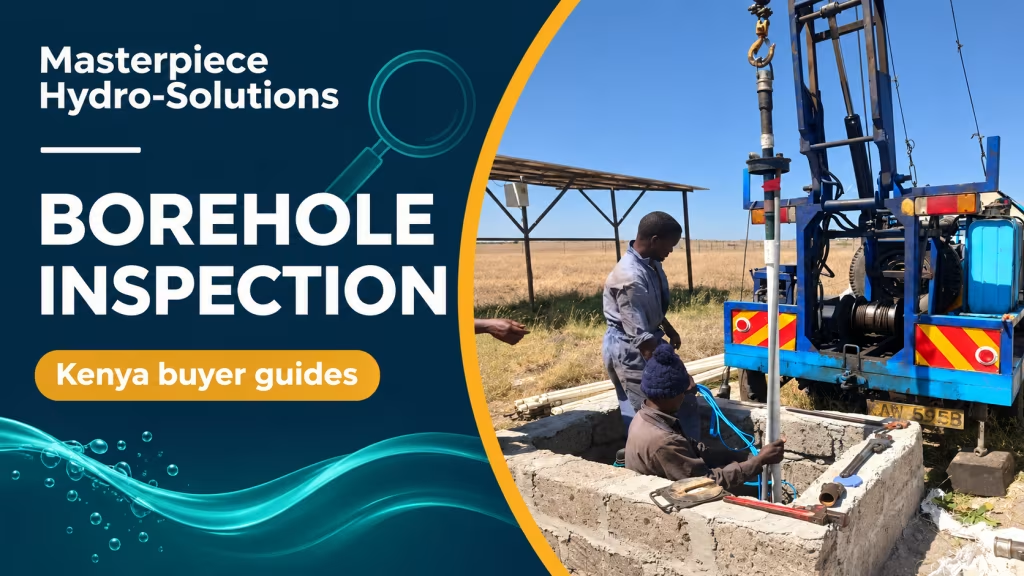
Property purchase borehole inspection should establish what evidence exists and which questions remain unanswered. A working tap, an old report and a clear video answer different questions. First, identify the source and its records. Then define the condition, performance and quality information the buyer needs before relying on the borehole for the intended use.
Explore Masterpiece Hydro-Solutions borehole inspection and request a property-specific assessment. This guide helps buyers organise a technical evidence review. The inspection should provide defined observations and limitations, while the buyer and relevant advisers make the wider property decisions.
Start property purchase borehole inspection with source identity
Confirm which borehole serves the property and which tanks or outlets receive its water. Also, identify any supplementary source. A demonstration at one tap may not show where that water originated. Ask the current operator to explain the arrangement and provide available plans or records that connect the source with the property supply.
Next, distinguish several boreholes on the same site. An older completion record should not silently become evidence for a different installation. Keep dates and location references visible. If the records conflict, request clarification rather than choose the most favourable figure. A reliable file starts with knowing which installation each document describes.
List the records before arranging fieldwork
Ask for the completion report, test-pumping evidence, equipment details and maintenance history. Include available water analysis and relevant authority records. However, missing paperwork does not justify inventing construction history. The assessor should identify which present questions further work can address and which historical details may remain uncertain.
Consult WRA’s water-use guidance about current site-specific documentation questions. Do not treat the presence of a borehole as proof that every intended use has the necessary permission. Keep that enquiry separate from camera findings. A visual report cannot replace an authority’s records or decisions.
Define property purchase borehole inspection around intended use
Describe how the buyer plans to use the property. Current occupancy may differ from a future farm, accommodation or commercial plan. Also, separate ordinary daily demand from exceptional events. The existing operator’s experience provides background, but it does not establish that the same source can support a substantially different demand.
Identify essential uses and continuity expectations. A buyer may want water at times that differ from the present pumping schedule. These questions concern the wider supply arrangement, including usable storage. Property purchase borehole inspection should keep that context visible without pretending that an internal video measures daily available water.
Ask what the camera assessment will answer
Choose a specific visual question with the responsible professional. The US EPA overview of borehole cameras describes visual examination of borehole interiors. Ask the provider which relevant areas they can reasonably assess and what access or equipment conditions may limit the proposed scope.
Also, agree the deliverables before the visit. Useful records can include footage, location references, selected images and an explanation of observations. Ask how the report will distinguish what the team could see from what it inferred. A video file without an understandable account may leave the buyer with pictures but no clear next decision.
Use a buyer’s evidence matrix
The matrix separates questions that need different evidence. It is a discussion tool rather than a certificate that the property meets a universal standard. First, list what the seller or operator supplies. Then identify the remaining assessment and the professional responsible for explaining its limits.
| Buyer question | Relevant evidence | Important limit |
|---|---|---|
| Which source serves the property? | Site records and supply arrangement | A tap demonstration may include another source |
| What can the interior inspection show? | Usable footage and interpreted observations | Unseen areas remain unknown |
| How much water can the source support? | Appropriate source-performance assessment | Visible condition does not establish sustainable yield |
| Does water suit the intended use? | Appropriate analysis and professional advice | Appearance cannot establish drinking-water suitability |
| What equipment remains with the supply? | Identities, condition and scope records | A camera report is not a complete equipment assessment |
| What remains unresolved? | Written gap and follow-up list | No single document answers the whole purchase question |
Keep property purchase borehole inspection coverage clear
Ask the inspector to identify the inspected extent and any gaps. Also, request an explanation of image quality and the reference used for reported locations. The buyer should know whether the relevant area produced usable evidence. Do not convert a general statement such as no problem observed into assurance about areas the team could not assess.
Property purchase borehole inspection should make limitations easy to find. If the footage cannot answer the original question, the report should say so and identify a reasonable follow-up discussion. An incomplete view may still be useful, but its value depends on an honest explanation rather than an implied whole-borehole clearance.
Work through a fictional buyer scenario
Consider an educational buyer reviewing a property currently used by a small household. The buyer intends a different activity and receives an old test summary, recent maintenance invoices and a video of part of the borehole. These assumptions illustrate evidence review; they do not describe a verified property or project.
First, the buyer asks which source and period the test summary concerns. Next, the inspector explains the video’s actual coverage and observations. The equipment assessor identifies a separate question about the buyer’s proposed storage destination. None of those documents alone confirms the future supply arrangement.
The buyer then records what further evidence would address the changed demand and intended water use. Property purchase borehole inspection becomes useful because it clarifies the decision file. It does not tell the buyer what price to pay or remove every uncertainty from the transaction.
Separate equipment condition from interior observations
Ask which pump, controls and other components currently form the installation. Model details and service records can support an equipment assessment. Also, identify components the current operator expects to retain or remove. The buyer should not assume that a visible working arrangement includes every item needed for future operation.
The borehole equipping service offers a relevant assessment route for equipment and duty questions. A changed tank location may require reassessment even if the source remains unchanged. Keep those findings beside the camera report so later readers can distinguish internal observations from a complete equipment decision.
Agree practical access and evidence sharing
Arrange the necessary site permissions and identify the person coordinating access. Qualified personnel should assess any technical preparation or equipment handling. The buyer’s role is to agree scope and receive records, rather than attempt access or camera deployment. Also, clarify who receives the report and can discuss it with the provider.
Ask for a readable final version that identifies the site, date and assessment question. Keep later clarifications with that version. Property purchase borehole inspection works best when the buyer can pass the evidence to relevant advisers without relying on a verbal description remembered from the visit.
Build a gap list rather than a broad pass or fail label
List unanswered questions and the type of evidence each needs. For example, an unclear construction detail and a future demand question may require different tasks. Also, distinguish an observed concern from an area that remains unknown. The inspector should explain the technical significance without stretching the findings into a complete property recommendation.
Ask what must happen before relying on the proposed water service. Keep cost estimates, authority enquiries and technical assessments distinct in the file. The purpose is a reviewable evidence trail. A simple good-borehole label may conceal more uncertainty than it resolves, especially where the intended use differs from the current one.
Questions property buyers commonly ask
Does a clear video prove the borehole supplies enough water?
No. Usable footage addresses defined visual questions, while available source supply needs appropriate performance evidence. Also, compare that supply with intended demand. Property purchase borehole inspection should identify this boundary so the buyer does not treat good-looking images as a daily-volume guarantee.
Can the report certify water as safe to drink?
Camera findings cannot establish drinking-water suitability. Arrange appropriate laboratory analysis and advice for the intended use. Also, retain the sampling and report context. Clear-looking water or a tidy installation does not replace evidence about water quality.
What if there is no completion record?
Tell the assessor and gather the documents that do exist. Ask what present assessment can establish and what may remain uncertain. A new report should not pretend to recreate unknown history. Keep the missing-record question visible in the buyer’s evidence list.
Should the buyer attend the inspection?
Attendance may help discussion if the provider and site arrangements permit it. However, stay outside technical work areas and use the agreed contact. The important deliverable is a clear record of scope, observations and limits, not an owner’s attempt to supervise specialist methods.
What should accompany an initial enquiry?
Send the location, available source records, intended use and any known concerns. Include the current supply arrangement and access contact. Finally, identify which purchase-related technical question needs an answer. This helps the provider propose a focused assessment rather than an undefined general inspection.
Request an evidence-focused property assessment
Use property purchase borehole inspection to organise records, visual questions and separate follow-up needs. Ask for coverage limits and an understandable explanation of findings. Also, preserve the final evidence file. A useful assessment makes the remaining questions clearer without claiming to decide the wider transaction.
Request a property-specific borehole assessment from Masterpiece Hydro-Solutions. Explain the intended use and records available before the visit. Ask what the proposed inspection can answer and which performance, quality or equipment questions require separate evidence.