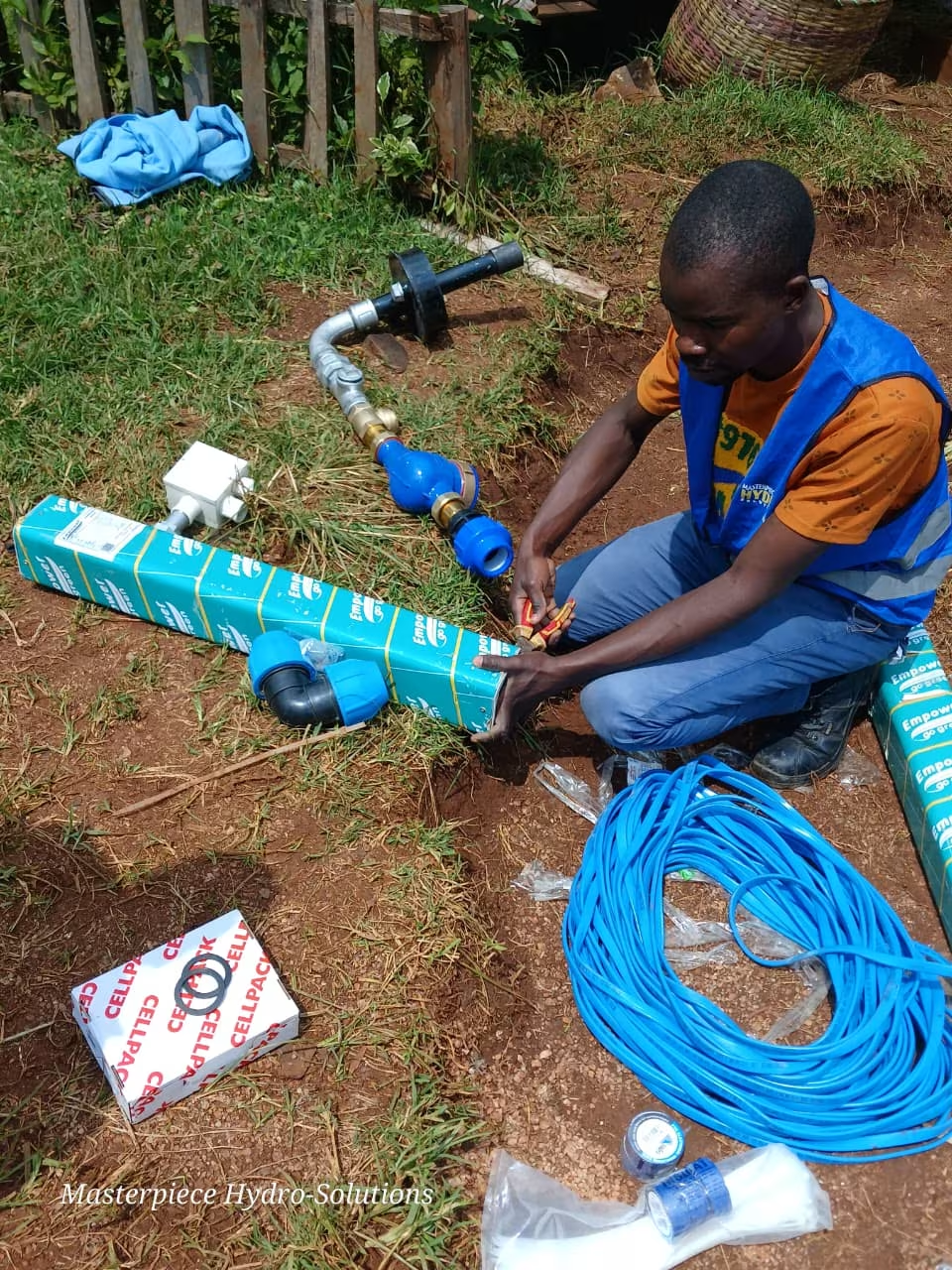
Pump diagnosis repair authorisation needs a separate decision when a paid assessment identifies possible remedial work. The diagnostic fee should have a defined output, while the repair proposal should explain what the provider now recommends. Do not assume that paying for the first visit automatically approves every replacement or that a suggested cause is already a confirmed finding.
Explore Masterpiece Hydro-Solutions borehole equipping services and request a defined enquiry about assessment and any proposed repair. Confirm the available scope for your installation. Share the symptom, equipment details and previous report so the provider can distinguish an initial investigation from already authorised remedial work.
Read what the diagnostic appointment actually covered
Check the accepted service description and promised output. A visit might address a defined symptom or a particular component rather than assess the entire water system. Ask which records the owner should receive and whether any limitations prevented the provider from reaching a conclusion.
Also identify the status of the reported finding. A confirmed fault, a suspected explanation and a symptom not reproduced under the observed conditions are different outcomes. The owner needs the provider’s actual wording rather than a shortened message that a new pump is needed.
Keep the first service’s commercial basis clear. This article creates no standard diagnostic charge or rule that every assessment fee must be credited against repair. Ask the provider what its actual offer included and how it treats any later appointment.
Start pump diagnosis repair authorisation with the evidence
Ask the qualified practitioner to explain what it observed, which evidence supports its conclusion and what remains uncertain. The owner should understand why the proposed remedy follows from the finding. It should not be expected to choose electrical or mechanical actions from a list of technical possibilities.
Where the assessment could not resolve the cause, ask what additional work would address the remaining question. A further investigation and a repair are separate scopes. Do not label exploratory work as a guaranteed remedy merely because the owner wants the interruption resolved.
Owners should not open electrical equipment, retrieve pumps, alter settings or undertake pressure or mechanical tests to confirm a diagnosis. Those activities require appropriately qualified personnel under a defined scope. A buyer can request an explained conclusion without attempting hazardous verification.
Separate findings, proposals and approvals
| Project element | Question for the provider | Owner decision |
|---|---|---|
| Diagnostic finding | What was established within the visit scope? | Whether more explanation is needed |
| Remaining uncertainty | Which cause or boundary remains unresolved? | Whether to commission defined further assessment |
| Repair recommendation | What work is proposed and why? | Whether the scope addresses the intended concern |
| Commercial offer | What actual items, charges and exclusions apply? | Whether to accept the defined commitment |
| Completion evidence | What will demonstrate the work performed? | How the owner will review the agreed output |
The table helps preserve the approval boundary. The practitioner supplies qualified reasoning and safe technical methods, while the authorised owner accepts a clear commercial scope after considering that advice.
Ask what the proposed remedy includes
Request an identified repair or replacement scope, not only a total. Ask which item is being changed, what remains retained and what assessment is included for associated interfaces. An equipment supply price should not be assumed to cover complete installation or every related fault.
If a replacement pump is proposed, ask for the actual selection basis. The Grundfos pump selection lesson considers source, flow, head, power and controls together. That context supports a qualified selection review rather than choosing solely from the failed item’s label or a larger rating.
Keep the owner’s current demand visible. A repair to restore the existing service differs from an upgrade for a larger requirement. Do not allow those decisions to blend into one proposal without explaining the changed duty and relevant source limitations.
Use pump diagnosis repair authorisation for conditional work
Some proposals may depend on findings that cannot be confirmed until another qualified task occurs. Ask the provider to identify that condition, the initial authorised scope and how it will seek approval for a further commitment. Avoid an undefined instruction to do whatever is necessary if the owner intends a limit.
Ask who can approve additional expenditure and how the decision will be recorded. A caretaker or site representative may arrange access without authority to accept new work. The provider and owner should share the same contact route before attendance.
Technical safety remains with competent practitioners even where the commercial approval is limited. The owner should not direct hazardous stopping, lifting or electrical actions. It can request a clear decision process and ask what an unresolved approval means for the provider’s proposed service.
Clarify the price and payment relationship
Use actual quoted amounts and ask whether the diagnosis charge is separate, credited or included under the provider’s stated terms. Do not assume one treatment applies to every job. The account should make the relationship understandable without hiding an earlier charge inside a new total.
Clarify tax treatment and exclusions directly where unspecified. Ask about parts, installation, reporting and other proposed services under the actual scope. Do not invent standard repair prices or a percentage allowance for unforeseen work.
If the owner declines the proposed repair, ask what diagnostic output it is still entitled to receive under the original appointment. Preserve that finding and limitation for another qualified provider where authorised. Paying for assessment should be understood against the actual agreed deliverable rather than an assumed obligation to buy the remedy.
A suspected controller issue becomes a replacement proposal
Consider a hypothetical owner reporting intermittent failure to fill a tank. The first service note lists a possible controller-related explanation but says further assessment is needed. A later quotation proposes replacement, and the owner believes the diagnostic visit already proved that the part is faulty.
The useful clarification is what changed between the first note and the proposed remedy. Ask for the evidence supporting the recommendation and whether the offer includes further investigation or an identified confirmed repair. Do not turn a suspected cause into a fact through repeated shorthand.
Then approve a defined scope, if appropriate, with its limitations and completion output. The provider should explain what happens if the observed symptom remains. Do not assume a repair guarantee or invent a refund arrangement the actual offer has not supplied.
Keep manufacturer support separate from the service order
The Grundfos global warranty information illustrates that applicable terms and claim routes need confirmation. It does not establish warranty cover for your item or any other brand. Ask the actual seller and relevant manufacturer contact what process and evidence apply.
A service provider may diagnose a concern without being authorised to decide a manufacturer’s claim. Confirm its role before describing a paid repair as warranty work. A suspected defect, an accepted claim and an owner-approved commercial repair are different statuses.
Keep product records and any claim response with the assessment and repair file. Do not alter purchase evidence or hide operating information to make a claim appear stronger. The relevant parties should evaluate the actual records through their authorised process.
Close pump diagnosis repair authorisation with relevant evidence
At completion, ask for the record promised under the accepted scope. It should identify the work performed, relevant equipment and findings or limitations. A parts invoice alone may not explain what was assessed or observed after the change.
Compare the result with the original symptom and agreed review purpose. A short observation concerns its stated conditions; it does not establish long-term source yield or water quality. If the concern remains, record it accurately and request the next defined assessment rather than declare every task successful because equipment now runs.
Questions before approving a repair after diagnosis
Does paying for diagnosis authorise the repair?
Read the actual accepted scope and approval arrangements. An assessment and remedial work can be separate commitments. Ask the provider to identify what it proposes and obtain the relevant owner approval rather than assume payment for the first visit covered every next action.
Should a diagnostic fee always be credited?
Use the provider’s actual offer and terms. This guide establishes no universal credit rule or standard fee. Ask for a clear account relationship so the owner understands the complete proposed commitment.
Can a suspected cause justify replacing a part?
Ask the qualified practitioner to explain the recommendation, remaining uncertainty and available scope options. The owner should understand whether the proposal is a confirmed remedy, an investigative step or another qualified choice. Do not remove uncertainty from the record merely to simplify approval.
What if the repair also upgrades capacity?
Ask for the changed operating brief and selection basis separately. More demand does not establish more sustainable source water. A restoration task and an expanded-duty proposal need clear technical reasoning and commercial scope.
Who can approve additional work during attendance?
Identify the authorised owner representative in the project arrangements. Access coordination does not automatically include spending authority. Ask the provider how it will present a new finding and proposed commitment before relying on an informal site discussion.
Does completion guarantee every supply problem is resolved?
Only the actual scope and evidence explain what was addressed. Keep source behaviour, pump duty, storage, distribution and quality distinct. A completed repair can leave another issue requiring its own qualified assessment.
For pump diagnosis repair authorisation, understand the finding before accepting the remedy. Request a defined equipping assessment or repair enquiry and confirm the actual scope, approval boundary and completion evidence before work is authorised.