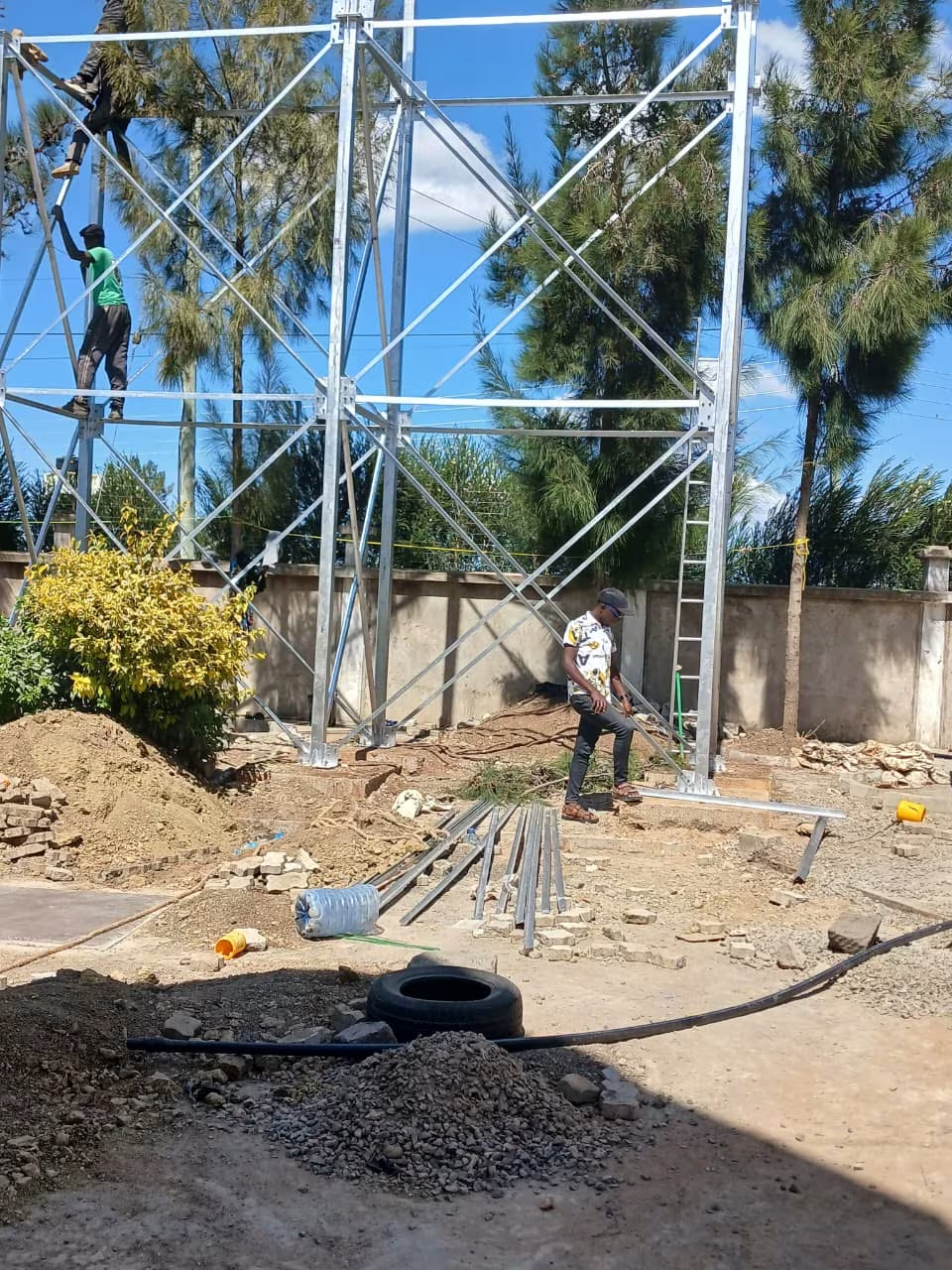
A school contractor water brief should identify when construction work is asking for a service the occupied campus has not agreed to provide. A contractor’s need for water does not establish spare groundwater or usable reserve. Therefore, describe the proposed activity and its timing before treating the school tank as an available site input.
Masterpiece Hydro-Solutions offers borehole equipping. For a shared existing arrangement, enquire about assessment of the changed service requirement. Include the school’s ordinary uses and the contractor’s actual request. Ask what scope may be available rather than assume a temporary construction supply or emergency attendance is offered.
Start the school contractor water brief with the requested change
First, ask whether the contractor originally planned to obtain water elsewhere. A later request to use the school’s arrangement may change an important project assumption. Record what the contractor now proposes. Do not let a casual conversation become an unexplained commitment to supply every activity.
Next, identify the use, intended destination and relevant period. A broad request for work water may omit when it is needed or which campus facility it would rely on. Appropriate construction advisers should explain their actual requirement. The school should not invent a technical quantity on their behalf.
Also, distinguish an enquiry from permission. A caretaker may know where the tank sits without being authorised to change the school’s commitments. Management needs a clear instruction route. Actual contractual implications require the relevant documents and appropriate advice, not a universal assumption about owner-supplied inputs.
Keep the occupied school’s service separate
List the school activities that continue while the contractor works. Kitchens, staff housing, boarding and ordinary facilities may share the source. The proposed work should not appear as the only demand merely because its request is new. Therefore, the school needs a combined view of the dependency.
Next, identify whether the work period overlaps activities the school already considers important. That question belongs in the current brief. It does not require the article to rank users or prescribe legal priority. Responsible school leaders and advisers must make their own decisions from the actual information.
For the wider permanent service, see the boarding-school supply guide. This article addresses a contractor’s additional request. It should not become a general construction-site design, an assumed water allowance or a claim that the school must provide supply.
Prepare a school contractor water brief table
| Question | Who supplies the information? | Why the school needs it |
|---|---|---|
| What changed from the original work assumption? | Contractor and relevant project adviser | To identify the new commitment being requested |
| What activity needs water? | Responsible construction professional | To avoid approving an undefined category |
| When and where is service expected? | Contractor with school coordination | To expose campus overlap and destination limits |
| Which ordinary uses continue? | School management and relevant staff | To keep existing dependencies visible |
| What does the source evidence support? | Qualified water practitioner | To distinguish preferred demand from capacity |
| Who can approve a changed arrangement? | Appropriate parties and advisers | To avoid relying on informal authority |
The table organises a decision rather than establishes an obligation. For example, a construction quotation, school policy and supply assessment may address different matters. Ask appropriate advisers about the actual documents. Do not assume one price line or a verbal request settles entitlement, suitability or available volume.
Check whether the request fits existing evidence
Provide available source-testing, construction and equipment records to the proposed assessor. Explain what ordinary use they accompanied. A school tank filling during a quiet period cannot automatically prove capacity for additional work during occupied hours. Qualified personnel should interpret the relevant evidence.
Next, label gaps in the contractor’s requirement and the school’s records. An incomplete request can still begin a discussion. It should not become a precise supply promise without further review. Ask what information is necessary before an assessment can address the actual service question.
Also, distinguish a source limitation from a delivery limitation. Water may be present without the agreed arrangement serving the proposed destination. The school should not improvise temporary pipework or operating changes to bridge that gap. Qualified personnel must assess any technical extension.
A hypothetical request after work begins
Imagine a contractor starts work at an occupied school using a separately arranged supply. That arrangement later becomes uncertain, and a site worker asks the caretaker to use the school tank instead. The worker describes the request as a small temporary favour without defining its activities or period.
First, the caretaker routes the request to the appropriate school contact rather than inventing technical approval. Management asks for the changed requirement and identifies continuing school uses. Next, relevant professionals explain what assessment and permission questions remain. Any commitment can then reflect an understood scope.
This school contractor water brief example is hypothetical. The scenario determines no legal duty and reports no actual project. Instead, it shows why the changed input needs a reviewable decision. School leaders still make their own commitment using the actual evidence.
Avoid making a temporary request a permanent equipment decision
However, an additional work activity does not itself prove the existing pump is undersized. Aquifer yield, pump capacity and demand are different quantities. A larger pump cannot create sustainable groundwater. Qualified assessment should identify the actual concern before the owner considers equipment changes.
The Grundfos selection learning resource explains required flow, head and the duty point. A temporary request cannot replace those inputs. If selection becomes necessary, the practitioner needs the current source and delivery evidence.
Next, separate assessment from a proposed remedy. A provider may identify missing information before offering further work. Ask what its initial scope delivers and which tasks remain excluded. Do not assume an enquiry confirms a particular installation, equipment availability or a visit date.
Keep reserve use and physical work distinct
Different parties may each assume the same tank is available to them. Identify those expectations explicitly. Also, a nominal capacity does not prove reserve accessible to every destination. The school needs qualified clarification of the actual arrangement rather than another unsupported total.
Also, ask whether the contractor’s proposed use would require a technical connection or another activity outside the existing scope. The answer belongs with appropriate professionals. Owners and staff should not alter valves, perform pressure tests or move equipment to investigate the request themselves.
The school contractor water brief should preserve this separation. Agreement about an activity does not provide an installation method. Likewise, a technically possible connection does not decide the school’s commercial or institutional commitment. Each issue needs the right responsible person.
Ask about intended use and relevant requirements
The contractor’s intended use should receive appropriate professional interpretation. However, the school should not certify suitability simply because its own users receive the water. Clear appearance does not establish every use requirement. Ask which evidence the actual construction activity needs.
Also, keep the school’s drinking suitability question separate. Relevant laboratory findings and qualified advice remain important. A successful delivery observation cannot replace them. This guide supplies no treatment method, chemical dose or construction material standard.
The WRA permitting guidance distinguishes construction authorisation from a subsequent water permit. Ask WRA and the appropriate advisers about current requirements where a changed project use raises questions. A private request cannot replace authority confirmation or guarantee approval.
Record the boundary before another request arrives
If the parties establish an arrangement, record what it addresses and when it ends. Identify which changed activity or period needs another review. The contractor’s next task should not inherit the same assumption automatically. Keep continuing school use visible in the record.
Next, identify who receives normal observations or concerns during the agreed period. The school should not require unqualified staff to diagnose faults or enforce technical settings. Qualified personnel should assess equipment issues. Management needs a clear route for reviewing the activity commitment.
A school contractor water brief should also identify what remains unconfirmed. Another possible supply or professional visit is not an established contribution until separately confirmed. Do not promise restoration timing or emergency support on another party’s behalf. Preserve uncertainty instead of filling it with reassuring assumptions.
Questions about a school contractor water brief
Must the school provide water because work is on its site?
This guide does not determine that obligation. Review the actual agreements and circumstances with appropriate advice. The contractor should state the request clearly. Technical possibility, institutional approval and contractual responsibility are different questions that should not be settled through an informal site conversation.
Can the caretaker agree to the request?
Clarify the actual role and authority rather than assume it from site access. A caretaker can provide useful observations without approving every commitment. The relevant school contact and advisers should understand the proposed activity. Do not turn practical assistance into an unexplained commercial instruction.
Does a full tank prove the work can proceed?
No single observation establishes the complete service. Other users may depend on the reserve, and replenishment or delivery may remain uncertain. Ask qualified personnel what the evidence supports. A nominal tank label cannot establish a universal surplus for the contractor.
Should the school install a larger pump?
Do not assume that response before assessment. Source capacity, equipment duty and temporary demand need separate interpretation. A larger pump cannot create sustainable groundwater. The owner should understand the actual constraint before considering a permanent equipment commitment.
What should an enquiry contain?
Send the changed work request, timing, destination and ordinary school uses. Include available source records and clearly labelled gaps. Ask whether an appropriate assessment is available. The provider can explain the scope needed before the school makes its own commitment.
Request review of the added site input
A useful school contractor water brief separates a temporary work request from the occupied campus’s ordinary service. It identifies activities, authority questions and evidence limits before assumptions become commitments. Gather the actual proposal. Then request the appropriate assessment and advice for the school’s decision.
Send Masterpiece Hydro-Solutions your shared school-supply enquiry. Include the contractor’s requirement and existing service file. Ask what assessment may be available and which assumptions need clarification before any additional use or technical work.