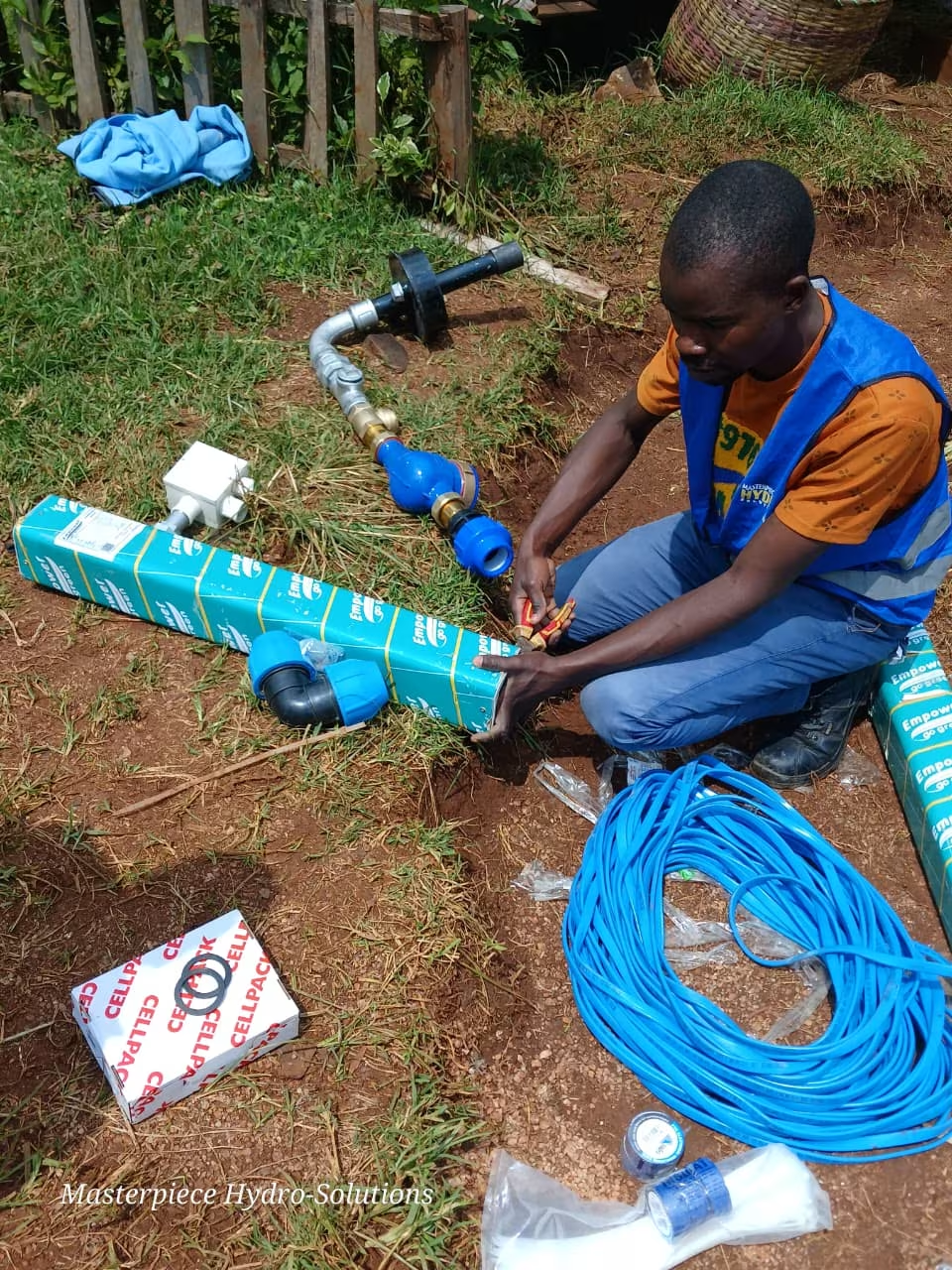
School tournament water dependencies should show where visiting teams and ordinary campus activities overlap. A tournament can change concurrency without simply adding one uniform group of users. Therefore, define the actual activities before making service promises. The school needs a clear decision brief rather than an equipment recommendation based only on team numbers.
Masterpiece Hydro-Solutions offers borehole equipping. To discuss a shared campus arrangement, enquire about assessment of the proposed water service. Explain the tournament and continuing school uses. Ask whether an appropriate scope is available without assuming event capacity, emergency attendance or a guaranteed delivery result.
Identify school tournament water dependencies by activity
First, list what the school has actually agreed to provide. Visiting teams may use facilities at particular periods, while kitchens and resident pupils continue their own routines. Record the proposed services separately. A headline attendance figure cannot show all those relationships.
Next, distinguish an organiser’s preference from a confirmed school arrangement. A request for another activity should not appear in the brief as already approved. Management needs to understand which commitments it is considering. The relevant advisers should see the same current proposal.
Also, identify destinations rather than assuming the whole campus has identical service. A facility near the playing area may depend on a different delivery boundary from the boarding section. Qualified personnel should assess the actual arrangement. Site ownership does not prove uniform accessibility to stored water.
Look for overlap rather than count every use as equal
Concurrent activities can create a different service question from the total over a full day. Describe when the proposed uses occur and which ordinary activities remain. The school should not invent technical flow values or change operating settings to test a preferred schedule.
Next, ask which timing information organisers can reliably provide. A provisional match programme may change, while a kitchen routine may have different constraints. Label uncertainty honestly. Do not make the water brief appear fixed when important activity periods remain unsettled.
For the permanent campus context, see the boarding-school supply guide. The narrower question here is whether a temporary combination of activities has received appropriate review. It is not another full-campus design or a universal sports-event standard.
Map school tournament water dependencies in a table
| Activity interface | Question to clarify | Why the decision changes |
|---|---|---|
| Visitors and resident pupils | Which services remain shared? | Visitors cannot be assessed as the only users |
| Team timetable and kitchen use | Which periods may overlap? | Daily totals may hide concurrency |
| Playing area and accommodation | Do they rely on the same assessed delivery boundary? | One successful observation may not cover both |
| Optional activities | What has the school actually agreed? | A request is not an established commitment |
| Stored reserve | Which users already depend on it? | Nominal capacity cannot be promised repeatedly |
| Programme changes | Who sends revised information for review? | Earlier advice may address another combination |
Use the map to identify questions for responsible leaders and professionals. This guide does not rank users, prescribe a legal allocation or set an acceptable minimum service. The school must make its own activity decisions using appropriate advice and the actual evidence.
Gather evidence that matches the proposed combination
Available source tests, operating records and normal safe observations may help. Identify their period and destination. A quiet-day demonstration does not automatically represent tournament use alongside an occupied campus. Qualified personnel should explain which conclusions the records support.
Next, distinguish an observation from a verified rate or volume. A tank level may change while other users draw water or another source contributes. Those limits matter. Do not create a precise combined demand figure from incomplete records merely to make the event plan look settled.
Also, retain the source documents rather than selected figures alone. Conditions and limitations can disappear when numbers move into an event spreadsheet. The assessor needs the relevant context. A summary should identify gaps instead of hiding them behind a confident total.
A hypothetical overlap at an occupied school
Imagine a school plans a tournament while some boarders remain. The organiser initially describes daytime use around the playing area. Later, additional facilities are requested during an ordinary kitchen period. Different staff members approve parts of the discussion without seeing the combined service question.
First, management consolidates the actual requested activities and identifies what remains provisional. Next, responsible advisers and the water practitioner receive the current brief. They can explain which dependencies need assessment. The school then considers its commitment using one coherent proposal.
This school tournament water dependencies example is hypothetical. It describes no actual event or Masterpiece result. It does not decide which activities should proceed. Its purpose is to show how several individually plausible requests can form a different combined requirement.
Keep reserve promises from being counted twice
Different organisers may each assume the same stored water is available for their activity. Identify those assumptions explicitly. A tank label cannot establish the reserve accessible to every user or destination. Ask qualified personnel to explain the relevant usable-service boundary.
Also, distinguish reserve from replenishment. Storage holds water already delivered; it does not create sustainable source capacity. The school needs to know which evidence supports the expected arrangement. Do not promise that a larger tank or additional pumping will automatically cover every overlap.
Owners should not enter tanks, alter valves or undertake pressure tests to investigate the issue. Their useful role is to provide normal safe observations and the current activity plan. Qualified personnel must assess technical questions and any necessary work.
Separate the event decision from equipment size
Aquifer yield, installed pump capacity and user demand are different quantities. More pump capacity cannot create sustainable groundwater that the source lacks. Provide the relevant testing and measured water levels where available. Ask the assessor to explain the actual constraint before considering a permanent change.
The Grundfos selection learning resource explains required flow, head and the duty point. If equipment assessment becomes relevant, those inputs need a current source and delivery brief. Team numbers cannot replace the technical evidence.
School tournament water dependencies may therefore justify clarification rather than an immediate purchase. Ask what the proposed assessment addresses and what remains outside it. An enquiry does not automatically confirm a replacement package, site attendance or a complete event water service.
Keep intended-use advice with responsible professionals
Quantity and suitability need separate evidence. Clear water does not establish drinking suitability or every facility use. Ask qualified advisers which laboratory findings and interpretation are appropriate. A fuller tank cannot replace that decision.
WHO’s school water, sanitation and hygiene guidance provides an institutional planning context. It does not certify this tournament or establish a universal allowance. Responsible school leaders and advisers should consider the actual site and activities.
Also, keep preparation safe. Staff should not adjust electrical controls, bypass protections or apply chemicals to accommodate a programme change. Qualified personnel must assess technical work. The school can organise evidence without taking over the professional role.
Agree how changed requests return for review
Identify who receives additions to the programme and who can approve the school’s commitment. These responsibilities may differ from escorting visitors or managing a playing area. A clear route helps stop separate informal promises from becoming an unreviewed combined arrangement.
Include the ordinary campus representatives in that discussion.
Next, record which assumptions require another discussion. A new destination, longer stay or additional activity may change the question. Do not assume successful preparation for the earlier programme proves the revised one. Ask whether the existing evidence still addresses the actual proposal.
Keep school tournament water dependencies in the final event record. Afterward, retain relevant observations with their limits. They may inform another enquiry without guaranteeing recurring capacity. A later tournament should not inherit every assumption from a favourable memory of this one.
Questions about school tournament water dependencies
Can the school assess visitors separately from boarders?
Identify any genuinely separate service boundary with qualified advice. Do not assume separation merely because the groups have different timetables. Shared storage or delivery can connect their needs. The assessment should describe the actual arrangement rather than an administrative division alone.
Do daily totals show the full problem?
Not always. The timing of different activities may create another question. Provide reliable programme information and ordinary school routines. Qualified personnel should interpret the service requirement. This guide supplies no technical peak-flow value or operating schedule.
Should the school promise all stored water to the event?
Ask which users already depend on the reserve and what service it actually supports. The school and responsible advisers must make their own decision. A nominal tank capacity does not establish an available event allocation or a universal surplus.
Does a larger pump solve concurrency?
No equipment label can answer without the source and duty assessment. A larger pump cannot create sustainable groundwater. Ask what the evidence supports and which constraint remains. A temporary event decision should not become an unsupported permanent equipment instruction.
What should the enquiry include?
Send the proposed activities, timing, destinations and continuing school uses. Add available source and service records, with uncertainty labelled. Ask whether an appropriate assessment is available. The provider can then explain the scope needed for the actual combined question.
Request assessment of the combined activity brief
Useful school tournament water dependencies show the interactions hidden by a simple visitor count. They preserve ordinary users and changed requests in one current record. Gather those details before promising extra service. Then request the qualified assessment needed for the school’s own decision.
Send Masterpiece Hydro-Solutions your tournament service enquiry. Include the current programme and available water records. Ask what assessment may be available and which dependencies need confirmation before management finalises its activity commitments.