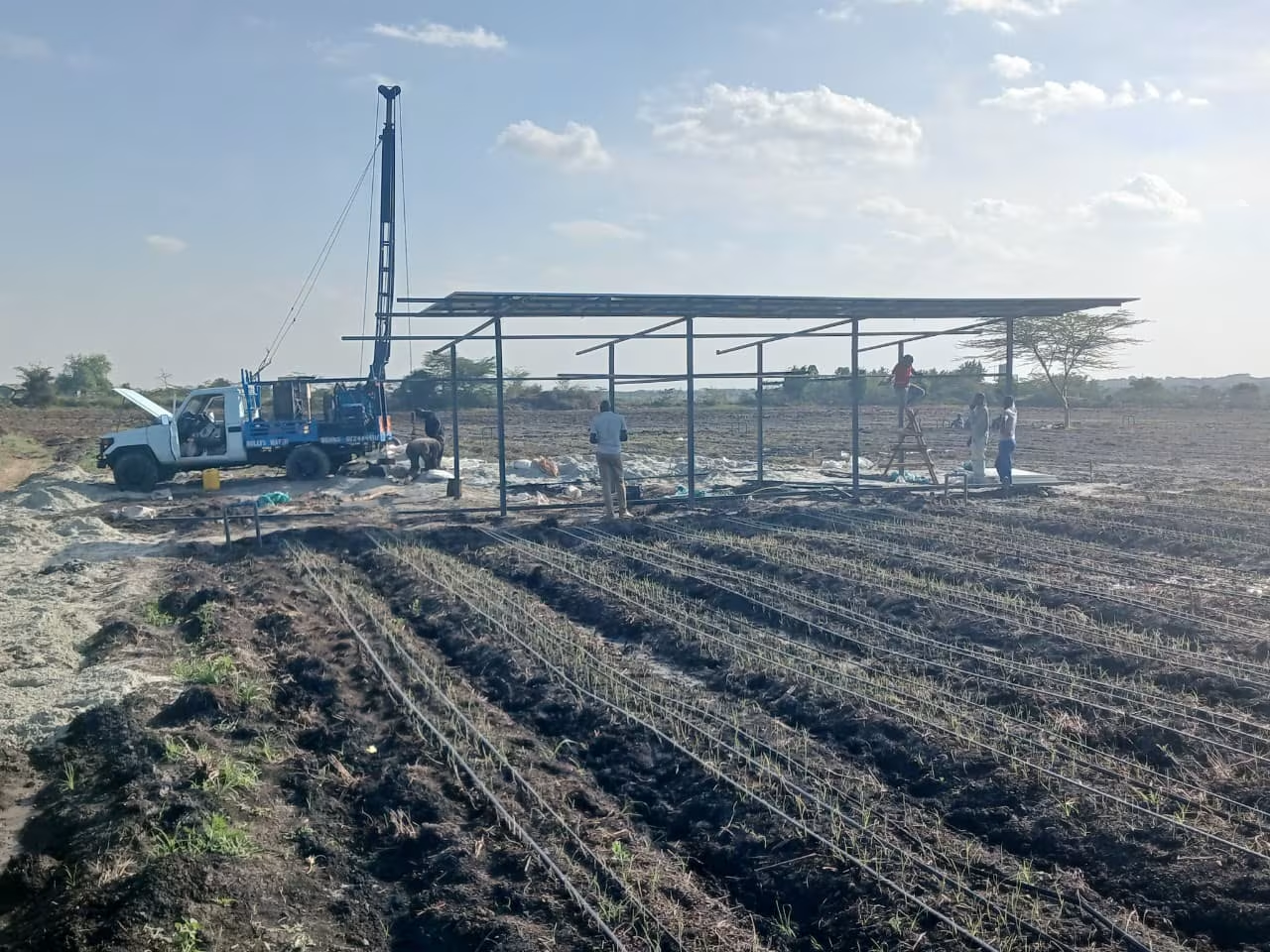
Solar pump array orientation needs a site-specific design explanation rather than a direction copied from another installation. The useful layout must connect available exposure with the pumping duty and water-service brief. First, define what the proposal assumes. Then ask qualified professionals how they assessed the location, operating period and installation constraints.
Explore Masterpiece Hydro-Solutions borehole solarisation and request a site-specific layout assessment. Provide the available source and demand records. This guide helps buyers compare layout evidence without prescribing a universal tilt, compass direction or installation method for every Kenyan site.
Define the water service before discussing the array
Start with intended daily demand and the destination receiving water. Identify essential uses and when storage needs replenishment. These details help the assessor understand the required service. A large panel area does not by itself establish sufficient water delivery at the actual pumping duty.
Also, separate present use from future expansion. An owner may want another tank or production area later. Present that possibility as a separate scenario rather than an unexplained allowance. The professional should identify which layout and equipment assumptions belong to each stage.
Keep available groundwater, pump capacity and user demand distinct. Layout discussion cannot replace the source evidence needed for an appropriate operating plan. Request a clear explanation of how the proposed energy arrangement relates to the assessed supply and delivery requirement.
Review solar pump array orientation with the site evidence
Ask what information the designer used about the actual location. Relevant enquiries include available space, exposure and nearby features that could affect the layout. Also, identify what the professional still needs to assess. A photograph taken during one visit cannot explain every operating condition.
The manufacturer’s Grundfos SQFlex service instructions illustrate that module positioning and mounting depend on the identified equipment and location. Their guidance is not a universal Kenyan layout specification. Ask the assessor to identify the correct current product information and site assumptions behind its proposal.
Solar pump array orientation should therefore appear as an explained design choice. Request the relevant plan and the reasons for the selected arrangement. Avoid treating a general north-facing or south-facing slogan as sufficient evidence for a particular project, especially when other constraints remain unassessed.
Separate facing direction from other layout choices
Facing direction, inclination, spacing and the mounting location are related but different decisions. Ask the designer to describe the proposed arrangement in understandable terms. The owner should know what the drawing represents without attempting to set these details through generic internet rules.
Also, clarify whether a comparison changes only one feature or several. Moving modules to another area may affect access, cable routing and the structural scope as well as exposure. A price comparison becomes less useful when these consequences disappear behind one simple direction label.
Request a revised assessment when the proposed location materially changes. The team should explain whether its earlier assumptions still apply. Keep the approved version visible so that installation follows the assessed arrangement rather than a convenient alternative chosen without review.
Compare solar pump array orientation proposals fairly
Use the table to ask what evidence supports each proposal. The questions do not select a technical layout. They help buyers compare the basis of the decision and identify where another professional assessment or clarification remains necessary.
| Comparison point | Evidence to request | Boundary to preserve |
|---|---|---|
| Water-service brief | Demand, delivery duty and storage assumptions | Panel rating alone does not establish useful water supply. |
| Site position | Identified location and assessed exposure | A single photograph does not represent every condition. |
| Layout choice | Drawing and design explanation | No universal direction or tilt is specified here. |
| Associated work | Mounting, routing and access responsibilities | A relocated array may change more than its facing direction. |
| Acceptance | Approved plan and agreed installation checks | One operating observation does not prove annual performance. |
Keep the same service brief when comparing suppliers. If one assumes a different demand period or storage arrangement, ask it to identify that difference. A lower quotation may represent another proposed service rather than a more effective version of the same layout.
Describe shade and changing surroundings honestly
Tell the assessor about nearby buildings, vegetation and planned development. Describe what you know without estimating an unsupported percentage loss. Qualified personnel should assess the relevant exposure and explain how the proposal addresses the actual conditions.
Also, separate existing features from future possibilities. An approved building plan and an informal idea do not have the same status. Record both appropriately. The designer can then explain what would need review if the surrounding site changes after installation.
Do not move modules, climb structures or remove vegetation simply to test a proposed improvement yourself. Site access and any associated work require appropriate planning and permissions. The owner’s useful contribution is reliable information and coordination, rather than an unassessed physical alteration.
Keep an illustrative relocation decision traceable
Imagine an owner initially proposes an open area beside the borehole. Later, another site activity makes that position inconvenient, so the owner suggests a different corner near the tank. The panel count remains unchanged, and the owner assumes the earlier design automatically remains suitable.
A better decision records the revised location and asks the qualified team to assess its effects. Exposure, mounting requirements, cable routes and maintenance access may need reconsideration. The proposal should identify which assumptions remain valid and which associated tasks require a revised scope.
This imaginary example does not establish that either location is technically suitable. It shows why solar pump array orientation belongs within a documented layout decision. Keeping the equipment quantity unchanged cannot prove that a materially different site position produces an equivalent result.
Ask how structural and electrical responsibilities connect
The layout needs a clear boundary between design, mounting and electrical installation. Ask who assesses each area and how the parties coordinate changes. A panel arrangement that looks orderly in a drawing does not automatically establish structural suitability or correct electrical installation.
Also, request appropriate current practitioner credentials for the relevant solar work. Verify material claims through EPRA’s renewable-energy information and the applicable official channels. Do not infer a particular licence or competence from a logo on a quotation.
Qualified personnel should handle structural and electrical assessment, installation and testing within their appropriate scopes. Owners need the resulting records and an understandable operating brief. This article supplies no connection details, design loads or instructions for altering an installed array.
Record the installed arrangement at handover
Ask for the approved layout and a clear record of any accepted changes. The file should identify the actual module location and relevant equipment information. Also, request the commissioning evidence agreed for the supplied water service and the stated conditions of the demonstration.
Keep design assumptions alongside the installation record. If a drawing describes an earlier location, ask for clarification before treating it as the final arrangement. A usable file should help a future qualified assessor understand what was intended, what was installed and what remained unresolved.
Solar pump array orientation records should also identify who reviews later changes. A new structure or revised pumping requirement may raise another assessment question. Do not assume that the initial handover permanently establishes suitability for every future use of the site.
Keep estimates and observations separate
If a proposal includes predicted production, ask for the period, input assumptions and water-delivery boundary behind it. An estimate may support comparison without being a measured result. Keep the original explanation so that later readers do not mistake a planning figure for a guaranteed annual output.
Also, agree what observations the operator can safely retain after commissioning. Useful records connect delivered water with its stated destination and operating period. A single successful tank fill cannot confirm every condition represented in a longer estimate. The assessor should explain what the available evidence can reasonably support.
When results differ from an expectation, request a review of both the original assumptions and current site conditions. Do not assume the direction alone caused the difference. Source behaviour, demand, equipment and the delivery arrangement may require separate assessment. A useful comparison preserves those boundaries instead of selecting a cause from one photograph.
Frequently asked questions about layout choices
Is one tilt angle suitable everywhere in Kenya?
This guide does not prescribe one. Ask the designer to explain the site-specific arrangement and its evidence. Location, equipment information and project constraints need appropriate consideration. A number copied from another system does not establish a justified layout for yours.
Does more panel capacity remove orientation questions?
No. Ask the assessor how the complete proposed arrangement supports the water-service brief. Additional equipment needs an assessed purpose. It should not be treated as a substitute for understanding location, compatibility, source limits and the required delivery duty.
Can the array be moved after approval?
Ask the qualified team to assess the proposed change before work proceeds. A move may affect several parts of the installation. Request updated assumptions, scope and records where needed. Do not treat unchanged panel quantity as proof that the original design remains valid.
What information should an owner send first?
Send the county, available source records, water-demand brief and intended tank position. Include site photographs from ordinary safe positions and explain known development plans. Identify missing information honestly so the provider can define a useful assessment rather than rely on guessed conditions.
Request an explained layout assessment
Useful solar pump array orientation advice connects exposure, demand timing and documented project responsibilities. Compare evidence rather than universal slogans. Keep approved assumptions and changes together so that the installed arrangement can be understood and reviewed later.
Request a solar layout assessment from Masterpiece Hydro-Solutions. Share the available source and site information, then ask for a clear design basis, associated scope and acceptance records. An assessed proposal should explain the arrangement it recommends.