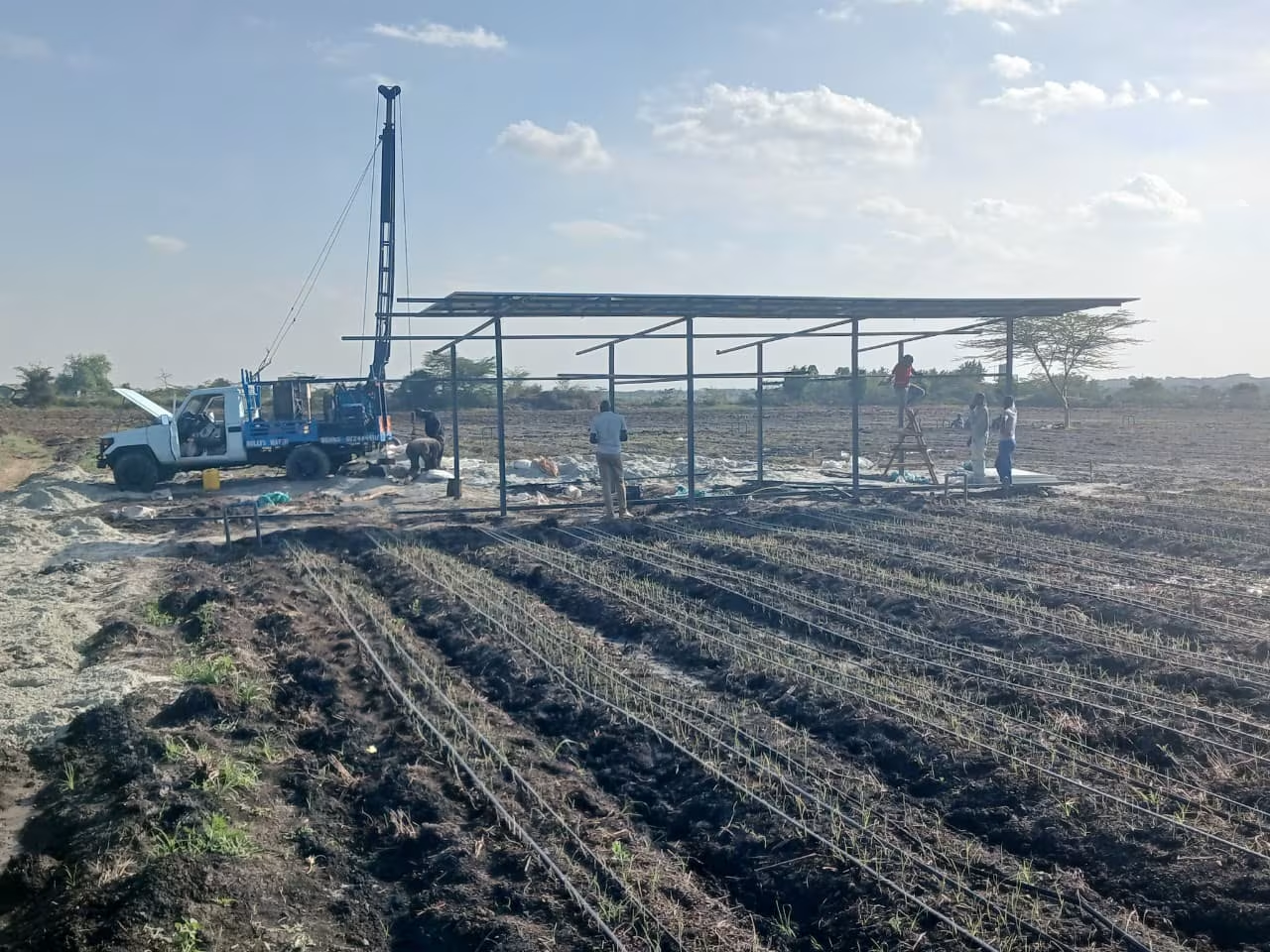
A solar pump delivery route should be assessed from the operating water level to the actual destination. Distance or tank height alone cannot identify the complete duty. First, clarify the route and reference levels. Then compare keeping storage in place, relocating it or revising the equipment arrangement through a qualified assessment rather than a depth-only package rule.
Explore Masterpiece Hydro-Solutions borehole solarisation and request a delivery-duty assessment enquiry. Ask which professional scope may be available. This guide frames buyer decisions about water delivery; it does not calculate a site design, choose pipe dimensions or provide pressure-testing and installation instructions.
Describe where the water must actually arrive
Identify the tank or other agreed delivery point and which users it serves. Also, distinguish borehole-to-storage work from downstream distribution. A full tank does not establish the intended pressure at every outlet. The assessor should understand the proposed service boundary before comparing equipment or alternative storage positions.
Provide a current site plan or understandable route description with known constraints. Mark uncertain distances and elevations as estimates. The qualified designer should explain which measurements it needs to confirm. An owner should not turn an approximate sketch into an apparently exact hydraulic design.
Separate the levels behind a solar pump delivery route
Drilled depth, static water level, pumping water level and pump setting depth describe different things. Ask which reference point and conditions apply to the operating level used in the proposal. A pump placed deep in the source does not make setting depth interchangeable with the water lift the designer assesses.
Total dynamic head also considers delivery elevation, pipe losses and required outlet pressure. The Grundfos selection resource explains why required flow and head belong together. An isolated maximum-flow figure cannot identify delivery at the site’s actual assessed duty.
Ask how route uncertainty affects the proposal
A revised route can change assumptions about losses and practical installation work. Ask the provider to identify confirmed inputs and items still requiring assessment. Also, describe planned future structures, access restrictions and other relevant site changes. These facts should influence a professional proposal before the owner orders equipment.
Do not assume the shortest-looking path is automatically suitable or that a familiar pipe choice fits every route. Qualified professionals should assess the complete arrangement and relevant materials. The owner needs purpose, scope and evidence, rather than construction instructions copied from another property’s installation.
Compare solar pump delivery route options through evidence
The table frames possible discussions without choosing an option for the site. Ask qualified professionals which routes the evidence supports and what other design responsibility each creates. A proposed tank relocation can affect more than pumping, so include the appropriate separate advisers rather than treat storage as a movable symbol on a drawing.
| Option to assess | Question to resolve | Commitment or uncertainty to retain |
|---|---|---|
| Keep the existing destination | Does the present route fit the required duty? | Current assessment and retained-component suitability |
| Relocate storage | What changes in delivery and downstream service? | Separate site, tank and distribution design responsibilities |
| Change the route | Which confirmed inputs alter head and installation scope? | Qualified measurements and revised work boundary |
| Reassess pumping equipment | What supported flow and head suit the destination? | Source limits, compatibility and complete equipment scope |
| Serve several destinations | How do duties and priorities differ? | Assessed controls, operating sequence and acceptance evidence |
Work through an illustrative head statement
Consider an educational assumption of a pumping water level 70 metres below a consistent site reference. Suppose the delivery point sits ten metres above that same reference. The assumed vertical difference is 80 metres. These numbers illustrate reference levels, not actual site measurements or a recommended storage arrangement.
That difference is not automatically the full total dynamic head. The qualified designer still needs to assess route losses and any required outlet pressure at the chosen flow. The example does not establish available source water, operating time or a suitable pump. A complete duty needs those questions explained separately.
A solar pump delivery route proposal becomes clearer when it shows which values come from observations and which come from route assessment. The owner can then ask what changes if a tank moves, rather than assume that a simple height figure identifies the whole equipment requirement.
Evaluate storage relocation beyond pumping lift
Ask what a different storage position would mean for access, users and supply beyond the tank. A lower source-to-tank requirement may create another downstream question. The appropriate professionals should assess the whole proposed service. This guide gives no structural tank advice or universal recommendation to place storage higher or lower.
Also, identify land-use and construction dependencies. A proposed position may conflict with another planned activity or maintenance access. Keep those constraints visible before comparing final totals. A tank-relocation option needs an explicit work boundary, rather than a promise that moving it will always reduce overall project cost.
Keep source limits outside an equipment-capacity claim
A revised route or larger pump cannot create groundwater. Ask how the proposed abstraction arrangement relates to the source evidence. Source yield, installed capacity and demand remain distinct. If a daily shortfall persists, the owner needs a water-balance decision rather than assuming hydraulic changes alone establish more sustainable supply.
The borehole equipping service provides a separate assessment enquiry route where the existing pump arrangement needs review. Ask what professional scope may be available. A solarisation enquiry does not confirm every narrower equipment, route-design or storage service discussed during early planning.
Make the proposed duty reviewable in each quotation
Give providers the same confirmed destination and current source information. Ask them to identify assumptions and explain deviations from the brief. Two totals may concern different duties, retained equipment or route boundaries. A lower headline amount is not directly comparable until those differences are visible.
Request relevant equipment identities, included work, exclusions and tax treatment. Also, agree how a changed destination or unexpected route finding requires approval. This guide supplies no invented price or universal cheapest option. The owner needs a defined comparison and an understandable basis for any additional task.
Agree acceptance at the assessed destination
Before installation, specify what qualified personnel will document during commissioning. Useful evidence includes supplied identities, measured delivery, destination and relevant operating conditions. Ask how the observations relate to the assessed duty. A brief flow demonstration elsewhere on the property should not silently become proof of the intended route.
Record any final change and its explanation. Solar pump delivery route decisions should remain traceable after handover. A successful observation at one time cannot guarantee every later solar, source or demand condition. The report should explain actual results and limits rather than present an unlimited performance statement.
Retain route changes in the operating file
Keep the current plan, duty basis, commissioning evidence and approved modifications together. If the owner later adds another tank or use, request assessment before assuming unchanged performance. The new requirement may alter the route, duty and controls even where the borehole and panel array remain physically the same.
Water quality needs appropriate analysis and advice for intended use. Clear appearance or successful delivery does not establish drinking-water suitability. Preserve those quality records separately from hydraulic evidence. A well-documented route describes part of the water service without certifying every source or user requirement.
Questions owners ask about delivery routes
Can tank height alone determine the pump?
No. Ask the qualified designer to assess the complete required flow and head, including the relevant source level and route. A solar pump delivery route needs consistent references and supported inputs. Height is one part of the question rather than a complete model recommendation.
Will relocating storage always improve the whole supply?
No universal conclusion applies. A different destination may change pumping, downstream service, construction and access needs. Ask appropriate professionals to compare the complete scope. A lower lift alone cannot establish the preferred overall arrangement or guarantee lower total cost.
Does a longer route always need a larger motor?
Length alone cannot establish the complete duty or equipment choice. Ask the designer to assess actual route requirements at the intended flow. Source limits and compatibility also matter. Owners should not select equipment or pipe dimensions from a simple distance-only rule.
What if the owner adds another tank later?
Request assessment of the revised destination, priorities and duty before expecting the original arrangement to serve it. Keep the approved change and relevant records. A current installation does not establish unlimited capacity or compatible control behaviour for every later route.
What information helps an initial enquiry?
Send source records, current demand, destination details and the known route. Include existing equipment and site constraints. Finally, mark estimates and planned changes. This helps the provider identify necessary measurements before proposing equipment or a route alternative.
Request a destination-led duty comparison
Assess a solar pump delivery route through measured references, required service and qualified design. Compare storage relocation with complete alternative scopes rather than one isolated dimension. Finally, agree destination-specific acceptance evidence. A useful proposal keeps source, equipment and downstream responsibilities clear.
Request a delivery-duty assessment enquiry from Masterpiece Hydro-Solutions. Share the route, destination and source evidence. Ask which professional scope may be available and which measurements or separate tank-design questions the proposed comparison requires.