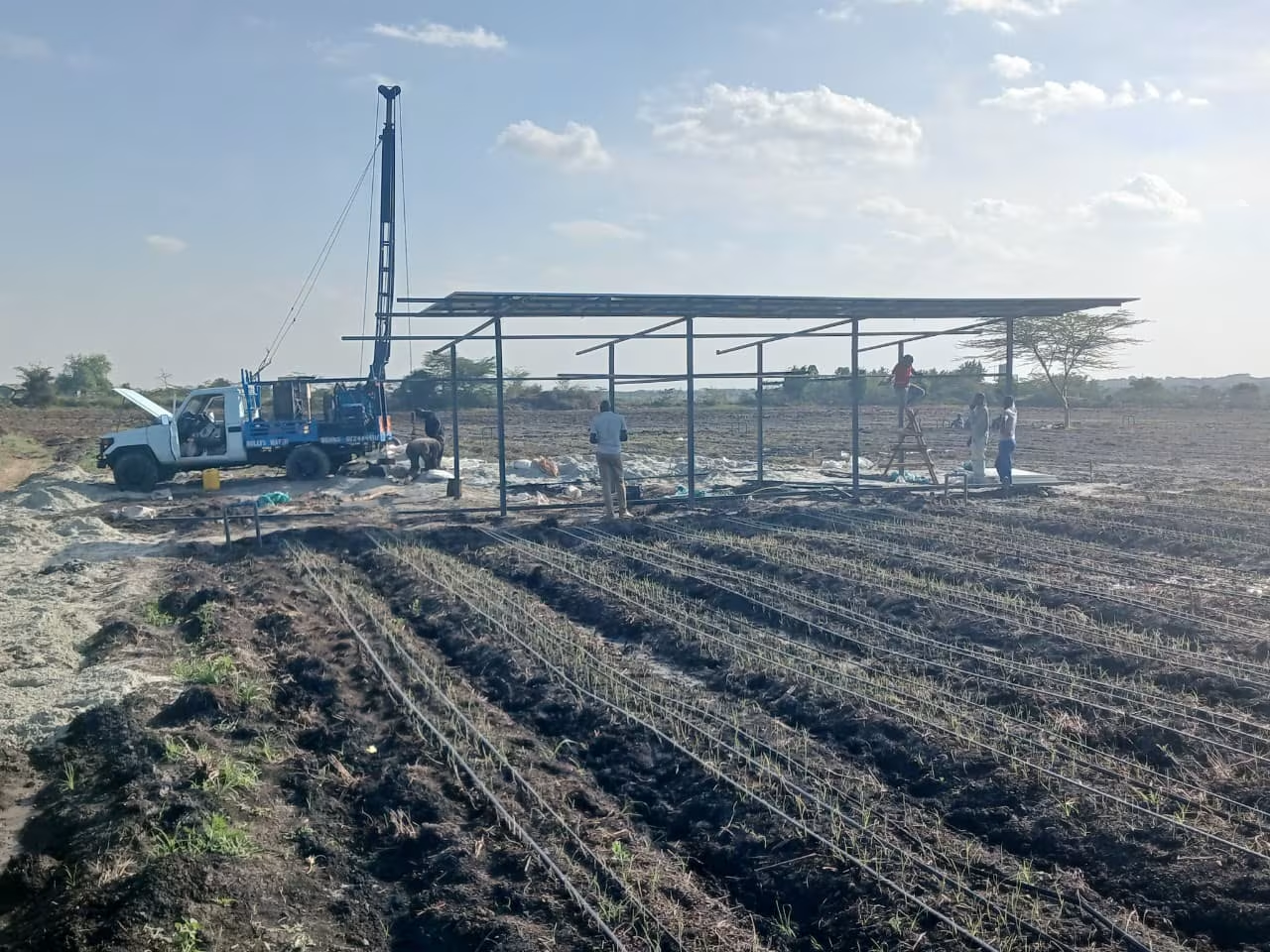
Solar pump maintenance records should separate ordinary observation, professional service and technical interpretation. A log can preserve useful evidence without asking an owner to perform electrical or mechanical checks. First, agree which fields suit the actual equipment and site. Then record water delivery, operating context and events consistently so later assessment has more than a recollection that performance changed.
Explore Masterpiece Hydro-Solutions borehole solarisation and request a maintenance-record assessment enquiry. Ask which professional scope may be available. This guide gives an owner-level record structure, not a universal maintenance interval, technical service schedule or confirmed continuing support offer.
Decide what the owner’s log should support
Define the practical questions before creating many fields. The owner may need to understand delivery changes, preserve a service history or provide context with a reported fault. Also, identify who reads the entries and who maintains the file. A complicated log that nobody updates may provide less useful evidence than a small consistent record.
Ask the responsible qualified provider which ordinary observations matter for the supplied arrangement. Keep professional measurements and specialist work separately identified. The caretaker should not open equipment, introduce tools into the borehole or test electrical values to complete an owner’s checklist. Missing technical information belongs with the appropriate assessment task.
Identify the asset behind solar pump maintenance records
Record the source, current pump and controller references, and the destination served. Also, preserve supplied component identities in a linked inventory rather than rewrite every serial number in each daily entry. Several installations on one property should have clear separate references so a later reader knows which event concerns which system.
Keep changes in demand, route and storage with the operating history. A new tank or additional activity may affect later comparisons. Solar pump maintenance records should not present the whole period as one unchanged arrangement when relevant work occurred. Retain dates and professional explanations for material modifications.
Design daily and periodic observation fields with the provider
An agreed ordinary observation round may include relevant indicators, tank information and available delivery readings. A periodic review can consolidate events and identify missing records. These are owner-management choices to discuss, not a claim that every site or manufacturer requires one daily or weekly schedule.
The actual equipment documentation and qualified advice should determine technical maintenance and appropriate review arrangements. Grundfos’s published warranty policy illustrates why applicable operating and maintenance terms deserve attention. It does not establish a universal schedule or the commitments applying to another brand or purchase.
Use a solar pump maintenance records table
The table provides fields to discuss and adapt through professional advice. It is not a technical checklist to execute personally. Identify the source and meaning of each available value, retain its units and mark missing information. A blank or estimated entry should not silently look like a measured zero.
| Record field | What the owner preserves | Question for later review |
|---|---|---|
| Date and observation time | When the ordinary observation occurred | Does the timing support comparison? |
| Asset and destination | Relevant source, controller and tank reference | Does this concern the same arrangement? |
| Water delivery | Available reading with units and location | What does the value actually measure? |
| Operating context | Recorded runtime or other supported information | Was equipment operating or merely available? |
| Tank observation | Factual condition from authorised observation | Did demand or another source affect storage? |
| Event or indicator | Exact wording, time and factual circumstances | What needs qualified interpretation? |
| Action and follow-up | Who received the concern and what was agreed | Which question remains outstanding? |
Keep water and power evidence distinguishable
A controller can provide useful operating information without proving delivered volume at the intended tank. Ask which fields are actually supported by the installed system. LORENTZ’s data-export guidance illustrates manufacturer-specific operating records. Do not infer identical features, storage or export functions in another model.
Retain original records where the owner is authorised to receive them. Also, identify whether a value is measured, estimated or entered manually. A favourable power indication cannot establish sufficient source water. The log should support a comparison of evidence rather than turn one screen into a complete service or efficiency conclusion.
Work through an illustrative delivery entry
Consider an educational log entry with an assumed cumulative delivery reading of 40 cubic metres at the start of an observation period and 46 at the end. The difference is six cubic metres, or 6,000 litres, at that identified observation point. These figures illustrate record arithmetic, not actual project production.
The entry should preserve dates, units and the point the reading concerns. It does not by itself establish water used by every customer, sustainable source yield or the cause of another tank change. Ask the qualified provider how the actual record relates to storage, demand and any separate sources.
Solar pump maintenance records now quantify one observation without pretending to diagnose the system. The same log can retain an interruption or missing field honestly. A smooth sequence created by guessed entries would provide a weaker basis for professional assessment than clearly labelled gaps.
Record events without assigning a technical cause
Preserve exact indicators and relevant circumstances when a concern appears. Note whether it affected one destination or the wider arrangement. Also, identify changes in use, weather observations or attendance that the operator can describe factually. These notes may help the professional ask better questions without proving one explanation.
Do not reset repeatedly, bypass protection or change settings to clear the event for the log. Qualified personnel should define technical assessment and any response. The owner can report the available facts and preserve the time sequence. An alert is evidence to interpret, not an instruction for improvised repair.
Link professional service to the operating history
After an authorised service visit, retain the report, completed scope and changed equipment identities. Ask the provider to explain findings and remaining limitations. Also, distinguish completed work from a recommendation for another task. A new invoice should not become an assumed record that every reported concern received a confirmed diagnosis.
The borehole equipping service offers a separate assessment enquiry route for relevant equipment questions. Ask what scope may be available. Solar pump maintenance records should connect such work with the actual installation without claiming specialist attendance or a continuing service is automatically included.
Use periodic review to find questions, not manufacture conclusions
At the agreed owner review, compare comparable entries and identify gaps or repeated concerns. Ask whether the arrangement, destination and demand remained similar. A change in delivery may require further assessment, but the log should not automatically label it as source deterioration, an electrical failure or insufficient solar equipment.
Source yield, pump capacity and demand remain distinct. More panels cannot create groundwater, and storage cannot fix a persistent daily deficit. The professional should explain the relevant constraint. A well-kept record supports that process without replacing it with an owner’s unsupported diagnosis.
Preserve current files and handover responsibilities
Nominate the role that keeps the log and original supporting records. Provide a clear transfer when operators or managers change. Also, preserve corrected entries traceably rather than overwrite history silently. Future readers should understand whether a change reflects new information, a factual correction or a different installed arrangement.
Water quality needs separate evidence and advice for intended use. Clear appearance or steady delivery cannot establish drinking-water suitability. Keep laboratory records linked but distinguishable. Solar pump maintenance records should not turn an ordinary observation round into certification of every source, service or quality requirement.
Questions owners ask about maintenance logs
Does every solar pump need the same daily checklist?
No universal owner schedule applies here. Discuss the actual equipment, site and responsibilities with qualified providers. Solar pump maintenance records should preserve relevant observations without inviting technical tasks. Manufacturer documentation and suitable advice should govern professional maintenance requirements and appropriate review arrangements.
Can the caretaker test electrical values for the log?
Leave technical measurements and electrical access to qualified personnel. The operator can retain authorised display information and ordinary observations where appropriate. Missing technical information should become an assessment question, not a reason to open equipment or improvise a measuring procedure.
Should gaps be filled using the previous day’s value?
Mark missing information honestly. A copied or estimated entry should not look measured. Ask the responsible provider how the gap affects interpretation. An accurate record of uncertainty is more useful than a complete-looking history that may mislead later service decisions.
Does a lower volume reading identify the fault?
No. Compare the measurement basis, actual operating conditions and relevant changes before seeking qualified interpretation. Demand and storage observations may describe different quantities. The log can clarify a reported change while leaving its cause and appropriate remedy unresolved.
What should accompany an assessment enquiry?
Send equipment identities, the relevant log period, service reports and the specific concern. Include destination and demand changes and identify missing information. Finally, name the operator contact. This helps the provider define a useful assessment rather than infer the whole history from one selected entry.
Request a practical owner-record plan
Build solar pump maintenance records around clear units, actual observations and explained responsibilities. Keep technical work and interpretation with qualified personnel. Finally, preserve events, gaps and changes. A useful log supports later decisions without becoming a substitute for assessment or a promise that faults will never occur.
Request a maintenance-record assessment enquiry from Masterpiece Hydro-Solutions. Explain the installed arrangement and owner reporting needs. Ask which professional scope may be available and what observation, review and handover plan the actual site requires.