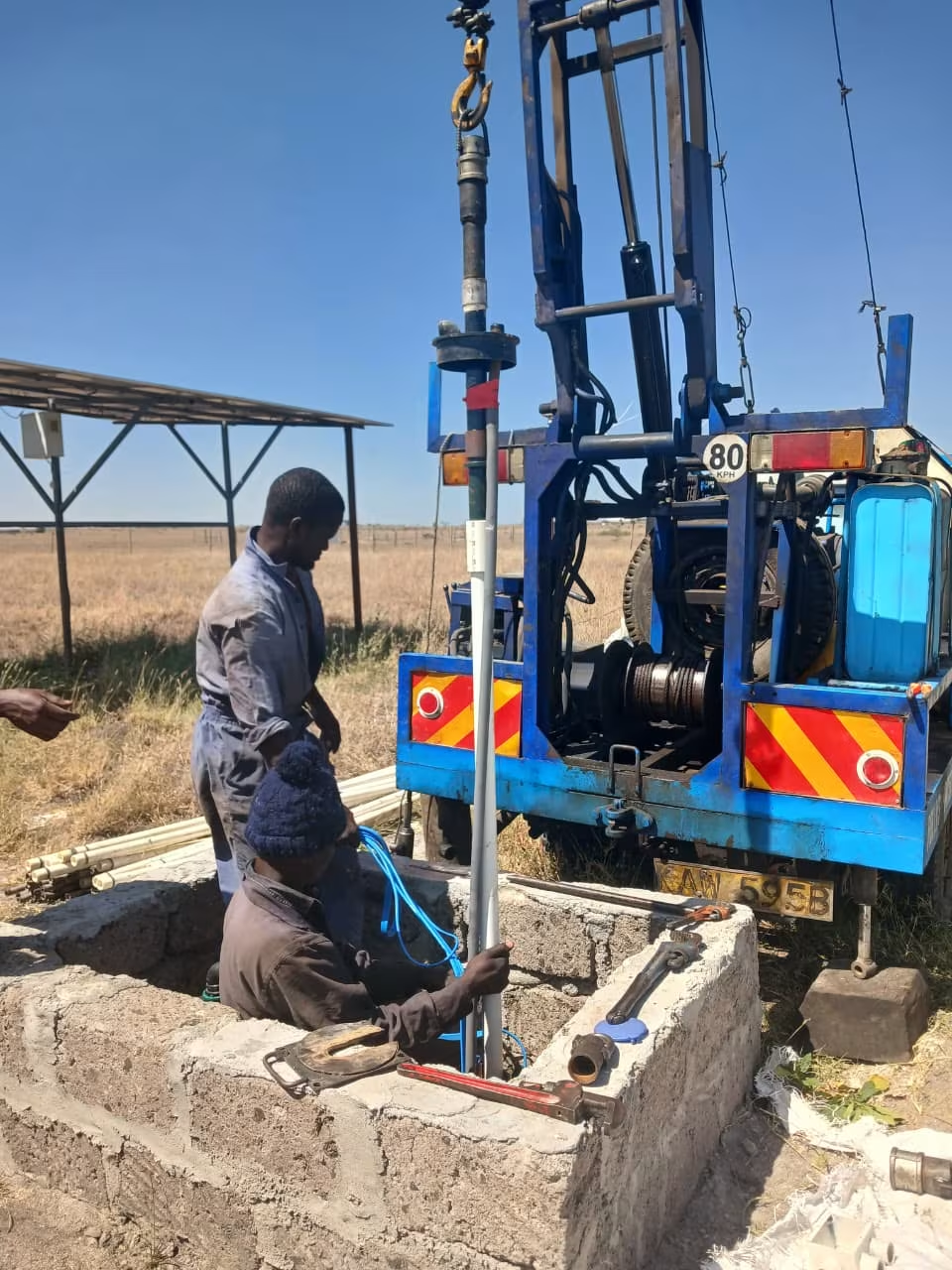
Whole borehole proposal comparison should reveal whether bidders cover the same project responsibilities and support their technical claims with evidence. Headline totals can describe very different boundaries. Owners need a consistent brief, qualified review and a clear account of uncertainty before treating one proposal as better value.
Explore Masterpiece Hydro-Solutions borehole equipping and request a proposal against your documented scope. Identify the actual stages and intended use. Confirm which services may be available rather than assume a broad project label or county page proves every narrower task can be supplied.
Map the complete required scope
List the relevant assessment, project conditions, drilling, testing, equipping and handover responsibilities for discussion with qualified advisers. Not every project or quotation covers the same stages. The owner should understand which tasks are necessary, included, excluded or still unconfirmed.
Keep each service boundary explicit. Delivering water to storage differs from serving every user outlet. A survey recommendation differs from construction, and a product supply differs from qualified installation. One turnkey description cannot explain those distinctions without a written scope.
Also identify owner inputs and separate specialist roles. An excluded task may still affect the complete programme and budget. The comparison should show who arranges it rather than make it disappear because no bidder priced it.
Set criteria for whole borehole proposal comparison
Ask the responsible team to define the decision criteria before reviewing competing submissions. Technical evidence, completeness, verification and commercial clarity may all matter. The criteria should reflect the actual need rather than a preference for whichever proposal looks most impressive.
Where formal procurement applies, qualified procurement and legal advisers should establish the appropriate process. The PPRA standard tender documents provide an official starting point for relevant public-procurement materials. This article does not determine mandatory criteria, eligibility or an award rule.
Keep the owner’s private planning exercise separate from an active tender’s approved requirements. An illustrative matrix should not be used to change formal evaluation arrangements retrospectively. The responsible team should explain what is permitted for the actual project.
Use a labelled whole-project matrix
The following weights are hypothetical planning examples only. They total 100% but do not prescribe how a particular owner or procuring entity should evaluate proposals. Appropriate advisers should determine the actual criteria and evidence needed.
| Illustrative category | Example weight | Evidence question |
|---|---|---|
| Technical decision basis | 30% | Do actual site evidence and qualified reasoning support the proposal? |
| Complete scope and interfaces | 25% | Are stages, exclusions and separate responsibilities clear? |
| Verification and handover | 20% | What results and owner records support acceptance? |
| Relevant support evidence | 15% | What competence and aftercare claims can be verified? |
| Commercial and lifecycle clarity | 10% | Are current costs, assumptions and future obligations intelligible? |
The table organises discussion; it does not establish the best bidder automatically. A numerical score needs a defined basis and proposal reference. Without that explanation, a weighted total can disguise subjective impressions behind precise-looking arithmetic.
Ask what technical claims rely on
Request the evidence supporting source recommendations, equipment choices and relevant construction assumptions. A proposal should distinguish verified information from estimates and provisional decisions. The owner should not award confidence points merely because a bidder promises guaranteed water.
Source yield, pump capacity and demand are different. Ask qualified reviewers to examine whether the proposal respects those boundaries. A larger pump or deeper package label cannot establish sustainable groundwater availability.
Water quality remains separate again. Clear appearance, location predictions and equipment ratings cannot certify drinking-water suitability. Appropriate analysis and competent intended-use advice should be identified where relevant to the project.
Compare evidence quality instead of document volume
A long proposal may contain general information without answering the specific site questions. Ask reviewers to identify the relevant pages and supporting records. The owner needs a clear relationship between each material claim and its basis.
Also distinguish product literature from professional assessment. A manufacturer document can identify a component’s requirements without proving the proposed installation is suitable. Qualified parties should explain applicability to the actual arrangement.
Keep limitations visible. A bidder explaining a missing record or site constraint may provide a more honest proposal than one ignoring it. The comparison should assess how the gap affects the decision and what further evidence is proposed.
Consider two incomplete-looking totals
Imagine a hypothetical owner comparing one quotation ending at drilling and another including later equipment and defined handover. The first total is lower, but the proposals do not describe the same project. Ranking them by price alone leaves essential responsibilities unexamined.
A stronger review maps each stage and asks for clarification through the appropriate process. The owner can then understand the complete relevant scope and identify separately required work. Technical advisers should assess suitability before the commercial comparison is treated as final.
This example does not favour a broad package over separate appointments. Either approach needs clear interfaces and accountability. The appropriate choice depends on the actual project and evidence, not the convenience of a single headline amount.
Keep whole borehole proposal comparison honest about lifecycle costs
Ask which future operating and support assumptions a proposal uses. Energy, consumables, professional service and replacement considerations may affect the owner’s planning. Current written information and clear scenarios are more useful than an unsupported universal running-cost claim.
This guide supplies no prices, tariffs, life expectancy or payback period. A projection should distinguish measured inputs, dated quotations and assumptions. Appropriate financial advice may be needed where the decision involves significant funding commitments.
Do not treat the lowest forecast as established value without examining its basis. A projection promising less service or excluding necessary work may not be comparable. The owner should understand what the figures actually describe and what could change.
Verify competence and support claims
Ask appropriate advisers which credentials and professional responsibilities matter to the proposed scope. Verify current claims through relevant official sources. A logo, client list or equipment photograph should not automatically establish every specialised capability.
Where references are offered, request consent-based evidence of comparable work. Another owner’s satisfaction can inform a bounded question without guaranteeing this site’s outcome. This article invents no company projects, credentials or endorsements.
Also request actual support terms. Catalogue parts, an enquiry contact and an emergency commitment are different. Do not infer local stock, response time or coverage from a familiar brand or a provider’s earlier attendance elsewhere.
Review stage dependencies and project conditions
The WRA permitting information distinguishes construction authorisation from later water permitting. Ask qualified advisers which applicable conditions and evidence affect the actual programme. A commercial package should not imply that every authority decision is automatic.
Keep tasks awaiting confirmation visible in the comparison. Access, relevant records or separate assessments may affect more than one bidder. A consistent brief helps reviewers understand those dependencies without assuming uncertainty has vanished.
Ask how changes become a revised recommendation and authorised commercial instruction. The owner should understand the process before unforeseen findings arise. A low initial amount should not conceal undefined additions or an assumption that all extras are already approved.
Define verification and handover responsibilities
Ask what evidence supports acceptance of the actual scope. An installation record, commissioning result and owner demonstration answer different questions. The proposal should identify each relevant deliverable and responsible party.
Keep evidence limitations clear. A working pump does not certify every hidden detail, source outcome or water-quality question. Qualified reviewers should explain what the proposed checks establish and what remains outside their method.
Owners should not conduct hazardous technical checks to complete a comparison. Relevant electrical, lifting, pressure-related and chemical work requires competent parties and assessed procedures. The buyer’s role is to request reviewable evidence and make authorised decisions.
Record reasoning and unresolved questions
Ask reviewers to explain material findings with proposal references. A score alone may not show why a bidder was considered suitable or incomplete. Keep technical, commercial and authority roles distinct within the decision record.
Where information conflicts or remains missing, follow the appropriate clarification route. Do not invent a favourable answer or automatically treat silence as proof of inability. The responsible procurement team and advisers should guide the actual process.
Preserve the accepted basis and relevant limitations when reporting to managers. A short recommendation should not remove caveats that materially affect the commitment. Clear records support accountability without guaranteeing that the preferred proposal will achieve every hoped-for outcome.
Questions about complete-proposal evaluation
Should one low total decide the appointment?
Ask what scope and evidence the amount includes, and follow the actual applicable process. Unlike responsibilities cannot fairly be treated as equivalent merely because they share a project label. Qualified review should explain the material differences.
Does a weighted matrix prove the best bidder?
No. It organises defined criteria and evidence. The result depends on clear ratings, reliable information and appropriate judgement. A precise number cannot compensate for an incomplete brief or unsupported technical claim.
Can future savings be accepted from a brochure?
Request a relevant baseline and stated assumptions for any projection. General manufacturer information does not establish site-specific costs. This guide offers no price, saving or return recommendation for a particular project.
Does a complete package guarantee permissions and water?
No. Applicable authority decisions, source evidence and intended-use suitability retain separate requirements. Ask the proposal to define responsibilities and limitations rather than treat a broad commercial label as a guaranteed outcome.
Request comparable, evidence-led proposals
Useful whole borehole proposal comparison connects scope, qualified reasoning and current commercial information. Prepare the actual brief and known uncertainties before inviting responses. Ask appropriate advisers to define the comparison process and preserve meaningful limitations.
Request a borehole equipping proposal against your complete scope brief. Confirm which professional services may be available and identify separate inputs. A transparent comparison supports informed appointment without invented prices, credentials or water-supply guarantees.