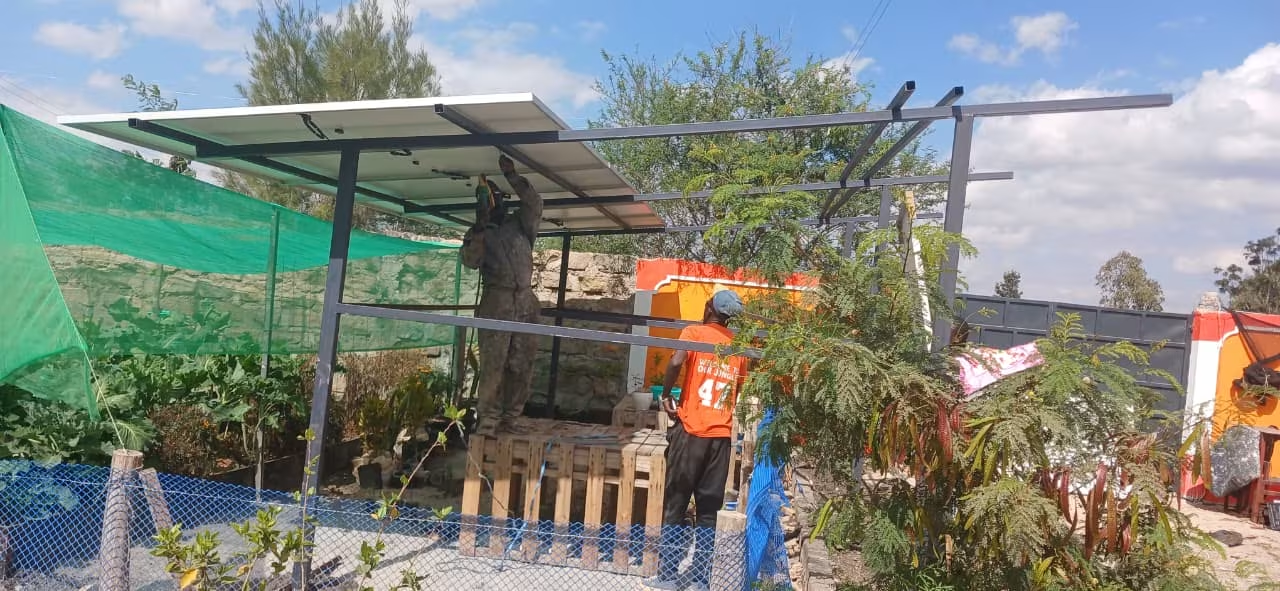
Apartment solar borehole pumping needs a clear boundary between source production and service inside the building. Residents experience water at their taps, while the borehole may only fill shared storage. First, establish demand, tank recovery and distribution responsibilities. Those distinctions help managers assess proposals fairly and explain the project to residents.
Explore Masterpiece Hydro-Solutions borehole solarisation and request a building-specific assessment. Send occupancy information, available consumption records and borehole reports. This guide focuses on shared-building demand, filling schedules and practical acceptance records rather than a universal package per apartment.
Define apartment solar borehole pumping from occupancy
Record occupied units, current vacancies and planned occupancy changes. Also, identify shared uses such as cleaning, landscaping and staff facilities. Unit count alone cannot establish daily water demand. Two buildings with similar layouts may have different occupancy, use patterns and existing losses. Give the assessor actual records where available.
Next, separate present consumption from the fully occupied scenario. Explain whether additional units will open soon or remain uncertain. An estimate can support early planning, but mark it clearly. This lets the management committee compare a current arrangement with future demand without treating an unverified allowance as a measured fact.
Map the building’s tanks and supply routes
Prepare a simple diagram showing the borehole, storage destinations and downstream supply arrangements. Identify which tanks serve which blocks. Also, note other sources that can enter the system. The assessor needs to understand the destination and duty, while the building manager needs to know which supply boundary each contractor accepts.
Distinguish nominal tank capacity from usable water and any management reserve. A large combined capacity may still hide a poorly connected tank or a block with limited access. Therefore, ask which volume actually supports each group of users. Storage planning should reflect the real building arrangement rather than a total copied from tank labels.
Read tank recovery alongside busy periods
Morning and evening use may draw heavily on shared storage. However, avoid assuming every building follows the same timetable. Compare available readings across representative days. Record when tanks fall, when pumping occurs and when levels recover. Also, note events that change demand, such as a large occupancy increase or interrupted alternative supply.
Where records are missing, ask the assessor how to establish a useful baseline. A single photograph of a low tank cannot identify the cause. The problem may involve production, losses, storage controls or downstream distribution. Apartment solar borehole pumping proposals should explain the evidence behind the proposed remedy.
Check source limits before promising residents more water
Provide the borehole completion record and test-pumping report. Ask how the assessed available supply supports the proposed abstraction rate and schedule. Also, distinguish source yield from installed pump capacity. A stronger pump or larger solar array cannot establish more groundwater than the source can sustainably provide under the assessed conditions.
Tell residents what the assessment can resolve and which uncertainty remains. Do not announce a guaranteed uninterrupted service from an early quote. If the source cannot meet the building’s daily requirement, the proposal needs an explicit supplementary supply or demand plan. Clear expectations help the committee make an informed purchasing decision.
Compare apartment solar borehole pumping scopes
Ask each bidder to respond to the same building brief. Then compare source-to-tank work separately from any downstream assessment. However, keep the interfaces visible so no necessary task disappears between contractors. The table provides a useful committee discussion record before members compare final totals.
| Scope boundary | Evidence to request | Management question |
|---|---|---|
| Borehole capacity | Source assessment and abstraction assumptions | What daily volume does the evidence support? |
| Tank filling | Selected flow, head and destination | Which tanks does the proposal actually serve? |
| Storage management | Usable volume and refill plan | Will storage recover after busy periods? |
| Internal distribution | Explicit included or excluded assessment | Who handles complaints beyond the storage tank? |
| Handover | Measured results and operating instructions | Can the next manager understand the arrangement? |
Test the filling schedule with an illustrative balance
Consider an educational example where a building uses 20 cubic metres daily, equivalent to 20,000 litres. Assume the busy morning period uses six cubic metres before meaningful daytime production. Storage must bridge that demand. These values are arbitrary assumptions, not allowances per unit or expected figures for any actual apartment block.
Assume average measured borehole delivery reaches four cubic metres per hour. Producing the ordinary daily requirement would need five operating hours at that average. However, this calculation does not establish local solar hours, sustainable yield or the selected equipment’s performance. The designer must support those parts of the proposal separately.
Now suppose an interruption consumes eight additional cubic metres from the reserve. Restoring that reserve alongside ordinary use requires 28 cubic metres. Therefore, reserve recovery needs more than a normal-day calculation. Ask how the proposed apartment solar borehole pumping arrangement replenishes storage after an incident without another sustained shortage.
Ask for the duty at the correct tank
A roof tank creates a different delivery requirement from a lower storage destination. Total dynamic head includes pumping lift, destination elevation, pipe losses and required outlet pressure. Drilled depth alone cannot establish that duty. The Grundfos resource on pump selection explains why required flow and head belong together.
Also, state whether the system fills destinations sequentially or serves another assessed arrangement. The installer should explain the selected duty and controls without relying on a maximum catalogue flow. If a later building extension changes the route, request reassessment before expecting the original equipment to meet the new duty.
Give the caretaker a useful operating record
The caretaker needs normal indicators, reporting contacts and a clear description of responsibilities. Ask the installer to explain tank-level control and protection behaviour. Also, agree what observations should accompany a fault report. Qualified personnel should handle electrical checks; residents or staff should not bypass a control to restore supply.
Keep a short record of delivered water, storage recovery and notable interruptions. Include changes in occupancy and alternative supply availability. Those facts help distinguish rising demand from reduced production. Apartment solar borehole pumping benefits from consistent records because management changes can otherwise erase the history behind recurring complaints.
Make commissioning reviewable by the committee
Agree the acceptance plan before installation. It should identify the tank destination, measured delivery, operating conditions and relevant water-level observations. Next, require equipment identities and a demonstration of agreed controls. Record outstanding work and any differences from the design basis, including who will resolve them.
A committee representative should receive the same handover information as the caretaker. Also, retain electronic copies in the building’s records. A successful demonstration on one day cannot establish every future condition. Ask what operational observations will help verify the water balance once normal building use resumes.
Clarify quality, permissions and resident communication
Water that looks clear is not necessarily suitable for drinking. Arrange appropriate laboratory analysis and seek advice for the intended use. Also, consult WRA’s water use allocation guidance about current site-specific requirements. Existing infrastructure does not automatically settle every permission question for an altered project.
Before works start, tell residents the agreed schedule, expected access arrangements and contact for service notices. Avoid promising outcomes beyond the assessed scope. If the existing pump needs investigation, ask about borehole equipping assessment. Equipment retention should follow condition, duty and compatibility evidence rather than convenience.
Questions building managers often ask
Can a contractor quote from the number of flats?
That number helps describe the property but cannot establish the full duty. Include occupancy, actual consumption, storage and source records. Also, identify shared uses and expansion plans. Apartment solar borehole pumping needs the building’s water balance, rather than a fixed package multiplied by unit count.
Will solarisation fix low pressure on upper floors?
First, establish the source-to-tank boundary and downstream arrangement. A full storage tank does not prove adequate distribution to every outlet. Ask for an assessment of the actual complaint. The remedy may concern internal supply rather than the borehole power source or pump.
Can the existing pump remain?
Possibly, if its condition, required duty and compatibility support the proposed arrangement. Send its model details and service history. However, ask what inspection the contractor needs before confirming retention. A pump that runs still needs assessment against the new supply brief.
How should the committee compare savings claims?
Ask for the assumptions, existing operating records and complete proposed scope. A useful comparison also considers water continuity and maintenance responsibilities. Avoid accepting unsupported percentages or payback promises. Apartment solar borehole pumping should first demonstrate a credible supply arrangement for the assessed building demand.
What happens when a new manager takes over?
The handover file should identify equipment, tank destinations, normal operation and support contacts. Include commissioning records and current demand assumptions. Also, record later modifications. This allows the next manager to report changes accurately without relying entirely on the previous caretaker’s memory.
Prepare a committee-ready enquiry
Compile occupancy, consumption, tank information and available borehole records in one brief. Include the morning demand pattern, reserve recovery concern and known distribution complaints. Finally, name the person who can arrange access. These details make apartment solar borehole pumping proposals easier for the committee to compare.
Request a building-specific assessment from Masterpiece Hydro-Solutions. Ask for a defined delivery boundary, source basis and written acceptance plan. Retain the proposal and operating records together so the building can evaluate performance against the same agreed brief.