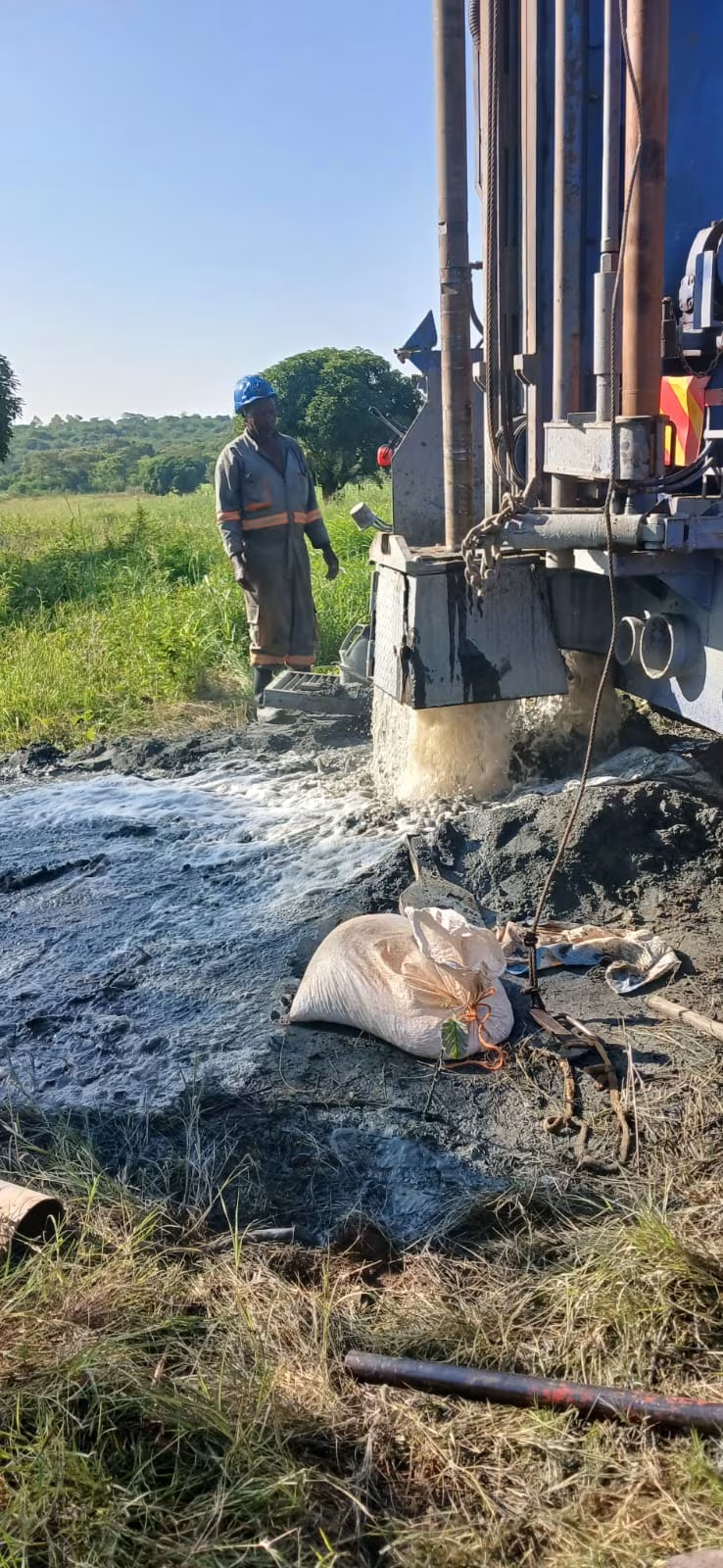
Borehole diameter selection evidence should explain how the proposed construction accommodates the assessed equipment and relevant servicing needs. A larger quoted dimension does not automatically provide more groundwater. Before choosing between proposals, ask qualified parties to distinguish hole dimensions, casing clearance and the actual operating arrangement.
Explore Masterpiece Hydro-Solutions borehole drilling and request a drilling quotation with diameter decisions explained. Provide available source information, intended water use and any proposed equipment records. Confirm which professional design tasks the scope includes before treating a dimension as a complete specification.
Ask which diameter each figure describes
A proposal may mention the drilled hole, casing or installed equipment. These figures answer different questions. Ask the bidder to label internal, external and nominal dimensions clearly where relevant. A bare number can look comparable across quotations while referring to different parts of the construction.
The designer should explain the relationship between the proposed hole and completion arrangement. Owners should not calculate construction clearances or specify drilling tools from a general guide. Instead, request a coherent design basis and a clear statement of which information remains provisional before site observations become available.
Also ask which dimensions apply along the relevant intervals. A single headline description may not explain the whole arrangement. The final construction record should preserve any assessed changes in configuration so a later equipment provider does not infer uninterrupted clearance from an early quotation.
Connect borehole diameter selection evidence with actual equipment
Ask the qualified designer to consider the actual equipment arrangement rather than only a pump’s marketing label. Relevant manufacturer documents should identify the proposed model and its applicable requirements. A nominal casing size alone cannot confirm that every part of an installation is suitable.
The Grundfos pump selection resource explains the importance of assessing required flow and head together. Physical fit addresses a different question. An arrangement must be evaluated for its actual duty and source constraints as well as the relevant installation requirements.
Do not choose a larger pump merely because a proposed casing could accommodate it. Installed capacity does not establish sustainable source output or user demand. Ask the responsible professional to explain those limits separately so a physical clearance decision does not become an unsupported production claim.
Distinguish confirmed needs from future possibilities
Describe the intended demand and any credible future change to the project team. Label future plans as scenarios where they remain uncertain. An owner considering additional accommodation has a different evidence base from an owner holding an approved expansion plan with assessed demand.
Ask what the proposed diameter preserves and what it does not. Additional physical space cannot guarantee that the groundwater resource will support future demand. Nor does it establish that later equipment will be compatible. The designer should explain the option’s limits rather than advertise undefined expansion potential.
Compare the implications of providing for a future scenario now against addressing it later. That comparison needs a qualified scope and stated assumptions. Owners should avoid treating speculative capacity as free benefit or assuming that every future problem can be solved by replacing the pump.
Use a decision-focused comparison table
| Decision layer | Evidence to request | Assumption to avoid |
|---|---|---|
| Construction dimensions | Clearly labelled hole and completion schedule | Every quoted diameter describes the same component |
| Equipment compatibility | Model-specific documents and qualified assessment | Nominal size alone proves suitable clearance |
| Operating duty | Assessed flow, head and source constraints | A physically larger pump creates more groundwater |
| Future options | Labelled demand scenario and stated limits | Extra space guarantees future supply |
| Servicing | Access and retrieval assessment responsibilities | Initial fit proves every later task is feasible |
Ask bidders to identify the same decision layers before comparing totals. A proposal with a larger headline diameter may include a different completion arrangement or reporting scope. A meaningful comparison explains those differences and lets qualified reviewers assess the technical implications.
Make future servicing an explicit question
Ask how the assessed arrangement considers future professional inspection, equipment replacement and other anticipated work. This is a planning question, not a request for retrieval instructions. The relevant specialist should identify the access and record information it needs before confirming a later intervention.
Surface access also matters to future service planning. A construction dimension below ground does not resolve a narrow entrance, overhead obstruction or crowded work area. Tell the team about planned buildings or landscaping that may change access. Ask who assesses those interfaces within the actual project scope.
Do not request a guarantee that any future equipment can be removed. Condition, modifications and missing records may affect later decisions. A credible design explanation addresses foreseeable requirements and limits without promising every eventual intervention will be straightforward.
Consider a hypothetical expansion comparison
Imagine an owner planning a small development while considering additional buildings later. One quotation promotes a larger diameter as future-proof. Another asks for the intended demand scenario, available source evidence and proposed equipment requirements. The owner should request the reasoning behind both arrangements before ranking them.
The larger construction might preserve some assessed physical options, but the groundwater remains a separate constraint. The project team should explain which option is justified by current information and what future evidence would still be needed. The owner can then compare defined benefits rather than an undefined promise.
This example does not recommend a particular diameter or predict expansion success. It shows how a scenario becomes reviewable when physical compatibility, source behaviour and demand are separated. The resulting decision should state the assumptions accepted today and the questions left for later assessment.
Record uncertainty before drilling starts
Some construction decisions may depend on conditions encountered during drilling. Ask the contract to identify provisional assumptions and who can recommend changes. The owner needs to understand when a technical review and a separate commercial instruction will be required.
Request an explanation of the evidence supporting a proposed change. It should connect observations with the revised arrangement and its implications. A general statement that conditions require a bigger hole is insufficient for an informed owner decision without the responsible professional’s reasoning.
Keep the approval route clear. The owner may authorise scope or expenditure while relying on qualified design advice. Those roles should appear separately in the record. A message acknowledging a progress update should not become an accidental instruction to proceed with additional work.
Preserve borehole diameter selection evidence at handover
The final record should identify the accepted constructed arrangement and relevant dimensional references. Reconcile it with approved changes rather than leaving the original quotation as the only apparent specification. Ask the responsible parties to explain any unresolved discrepancy or limitation.
Retain manufacturer information for the installed equipment with the construction records. A later replacement enquiry should identify both the actual source arrangement and the equipment history. Missing information can change the scope of professional assessment; it should not be replaced with an assumption that the original label remains accurate.
Where records are reconstructed later, state their basis honestly. A drawing based on incomplete recollection differs from an attributable construction record. A future specialist needs to know that distinction before relying on the information for equipment or intervention decisions.
Separate project approvals from product dimensions
The WRA permitting information describes construction authorisation and later water permitting as distinct stages. Ask qualified advisers which applicable project conditions affect the proposed works. A manufacturer’s minimum installation requirement does not replace an authority decision or establish compliance with every condition.
Likewise, dimension records do not certify drinking-water suitability. Appropriate water-quality evidence needs competent interpretation for the intended use. Owners should retain the construction, source-test and water-analysis records together while recognising that they answer different questions.
This separation improves procurement too. Ask the quotation to identify design, approvals support, construction, testing and equipment boundaries where relevant. A diameter-based price description cannot show whether all these responsibilities are included. Clarify exclusions before treating a headline drilling amount as the complete project scope.
Common diameter questions
Will a larger diameter guarantee more water?
No. Source performance needs appropriate site evidence and professional interpretation. Diameter may form part of an assessed construction arrangement, but it cannot create groundwater or prove sustainable yield. Demand and pump capacity remain separate decisions.
Can I choose the diameter from a pump brochure?
A brochure can inform a qualified compatibility assessment. It cannot resolve the complete construction design by itself. Ask the responsible professional to connect the exact model requirements with actual internal dimensions, operating conditions and relevant site constraints.
Should future equipment always determine today’s construction?
Ask for a comparison based on realistic, labelled scenarios. Future plans may justify preserving specific options, but their limits should be explicit. Do not assume extra physical space guarantees future source capacity or compatibility with unidentified equipment.
What if the final dimension differs from the quotation?
Request the observation, technical review and authorised change record explaining the difference. Reconcile the final schedule with those documents. Keep any remaining uncertainty visible instead of silently changing the original figure or assuming the difference is immaterial.
Prepare a compatibility-led enquiry
Useful borehole diameter selection evidence links construction, actual equipment and foreseeable servicing questions. Share intended demand, credible future scenarios and existing site records. Ask for qualified reasoning and a documented change route, rather than selecting a size from a package label or neighbouring borehole.
Request a borehole drilling quotation with diameter reasoning. Confirm the available design scope, compatibility review and final records. A clear decision basis helps the owner compare proposals without confusing physical dimensions with guaranteed water-supply performance.