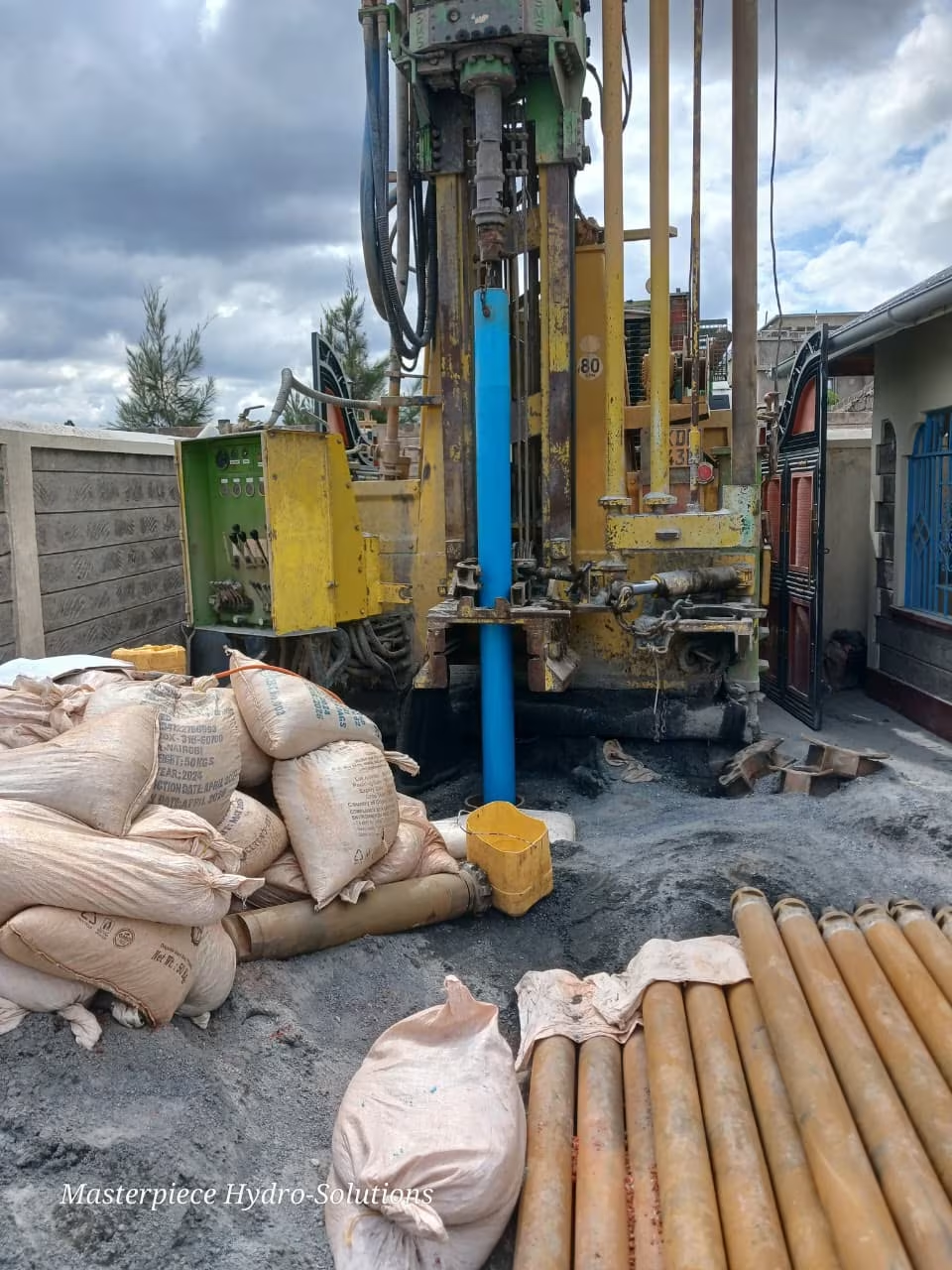
Choosing a borehole drilling company in Kenya requires more than comparing a headline rate. You need a contractor that explains its scope, records and limits clearly. First, define the water project you actually need. Then compare providers against the same brief, using evidence that you can check before committing.
Explore Masterpiece Hydro-Solutions borehole drilling services or request an assessed drilling proposal. Send the site location, available survey information and intended water use. Ask for a written scope that identifies assumptions and exclusions, rather than relying on an unsupported claim to be the best.
Define what a good contractor must explain
A useful comparison starts with observable behaviour. Does the contractor ask about access and available site evidence? Does it distinguish drilling from testing and equipping? Also, does it explain who will provide the final records? These questions reveal whether the proposal addresses your project rather than an unspecified drilling job.
Next, consider how the provider handles uncertainty. Ground conditions and groundwater results cannot become guarantees merely because a quotation sounds confident. Ask the contractor to explain its assumptions and the decisions that may arise during work. Clear limits make a proposal more accountable.
Finally, compare responsiveness to substantive questions. A prompt reply is useful, but a detailed answer about scope matters more than a quick promise. Keep written clarifications with the quotation so your eventual contract reflects the information used to select the contractor.
Compare each borehole drilling company fairly
Send every bidder the same site brief and available records. Otherwise, one provider may price drilling alone while another includes development or testing. The lower total would then reflect a different scope. Therefore, reconcile the work descriptions before using price to rank the proposals.
Ask each borehole drilling company to mark uncertain items explicitly. For example, provisional quantities and owner-supplied work should not disappear inside a broad package label. A comparison sheet can show confirmed scope, assumptions, exclusions and information still needed. This makes unresolved differences visible.
Also, distinguish the legal contracting entity from a trading name or intermediary. Ask who will sign the contract, receive payments and carry responsibility for site work. Those details help you understand the commercial relationship before evaluating equipment photographs or promotional claims.
Verify credentials without assuming them
Ask the provider for credentials relevant to the proposed work and check them with the appropriate issuing body. Do not infer current status from an old certificate image. Also, ask who will carry out specialist activities and whether subcontractors form part of the proposed delivery arrangement.
For site permissions and abstraction questions, use the Water Resources Authority’s water-use allocation guidance as an official starting point. Confirm current project-specific requirements directly with WRA. Avoid accepting a contractor’s informal summary as a substitute for the authority’s position on your site.
The written proposal should identify who coordinates the relevant submissions and records. However, a promise to assist does not guarantee approval. Ask what assistance includes, which information the owner must provide and what remains outside the contractor’s scope.
Review survey understanding before rig selection
A borehole drilling company should engage with available survey information rather than treating it as an administrative attachment. Ask what the report recommends, what uncertainties remain and what additional information the contractor needs. The answer should connect the proposed work to the site’s evidence.
If you need survey work, explore hydrogeological survey services as a separate defined scope. A survey informs decisions, but it does not guarantee a particular depth, yield or water quality. Therefore, keep interpretations distinct from drilling outcomes.
Also, ask whether the provider has reviewed physical access. Rig suitability involves the site as well as the drilling proposal. Owners can supply photographs and access descriptions, while the contractor must assess practical requirements. Do not rely on an assumed entrance width or unverified ground condition.
Use a borehole drilling company scorecard
Apply the same evidence questions to every shortlisted provider. The following scorecard supports judgement without inventing a universal ranking. Mark each answer as clear, incomplete or unverified, and retain the supporting document.
| Selection area | Evidence to request | Question that remains |
|---|---|---|
| Written scope | Itemised work and exclusions | Does it cover the same project brief? |
| Relevant experience | References you may contact with permission | What did the provider actually deliver? |
| Site planning | Access review and mobilisation assumptions | Which owner preparations remain? |
| Change control | Written approval and measurement process | Who can authorise additional work? |
| Completion records | Named deliverables and responsible person | When does the owner receive them? |
| Commercial clarity | Payment stages and tax explanation | What triggers each payment? |
Next, resolve incomplete answers before choosing a favourite. A strong presentation should not outweigh missing evidence about responsibilities or contract boundaries.
Ask references questions that reveal scope
Request references that the provider has permission to share. Then ask what work the contractor performed and which other suppliers the owner used. A completed water project may involve several parties. Therefore, distinguish the provider’s contribution from the whole outcome.
Useful questions cover communication, changes and handover. For example, did the final invoice explain variations? Did the owner receive the agreed records? Also, ask how the contractor handled questions after completion. These observations can inform your comparison without treating one reference as a guarantee.
Keep the reference relevant to your decision. An owner’s account of a straightforward site may not answer questions about difficult access at your property. Instead, use the conversation to identify what you should clarify in your own contract and assessment.
Compare two hypothetical proposals
Consider an educational comparison with no actual companies or prices. Provider A offers a short drilling-only description. Provider B lists drilling, agreed completion records and a defined testing scope. Neither proposal automatically wins. First, the owner must establish whether both bidders understood the same request.
Next, the owner asks Provider A to identify omitted work and asks Provider B to clarify exclusions. Both then price an aligned scope. The owner also checks references, responsibilities and change terms. As a result, the final decision reflects comparable commitments rather than unequal package descriptions.
This process helps you choose a borehole drilling company on evidence. It also prevents a detailed proposal from appearing expensive simply because it makes more work visible. Equally, extra items deserve scrutiny if they do not serve the agreed project.
Examine how the contractor handles changes
Ask how the team records actual progress and communicates an emerging decision. Ground conditions may require professional judgement, but additional commercial commitments need a clear approval route. Identify your authorised representative before work starts. Also, agree how the contractor reaches that person during the project.
The contract should explain how the parties measure chargeable work and document variations. Ask what happens if the owner cannot respond immediately. A clear pause or escalation arrangement reduces ambiguity. Avoid relying on informal statements about “sorting it out later”.
Also, discuss outcomes that may disappoint the owner. Ask how the contract addresses an unsuccessful or inadequate water result, without assuming that any contractor guarantees groundwater. Understanding the commercial allocation of uncertainty is part of choosing the provider, not a question to leave until the rig arrives.
Review borehole drilling company handover duties
A borehole drilling company should identify its completion deliverables in advance. Ask about the drilling record, installed construction information and any included development or testing reports. Also, ask which records another specialist will provide. The final pack should not depend on assumptions about who holds the information.
Next, separate drilling completion from a commissioned water supply. Pump selection, equipping, power, storage and treatment may require further assessed work. A contractor can offer several services, but the quotation must state which ones you are purchasing. A broad service list does not define your contract.
Finally, establish a contact route for questions about the completed scope. Request any offered warranty or defect terms in writing. Do not assume unlimited aftercare or a particular response time. Clear responsibilities help the owner plan maintenance and future procurement.
Questions when selecting a drilling contractor
How do I decide which company is best?
Define the evidence your project needs, then compare aligned proposals. Assess scope clarity, relevant references, site planning and record commitments. Also, verify relevant credentials independently. The best fit for your brief emerges from those checks; a promotional ranking or the smallest headline number cannot make that decision alone.
Should I choose the lowest per-metre rate?
Compare the rate only after confirming its basis and included work. One proposal may leave significant items elsewhere. Therefore, reconcile quantities, exclusions and payment terms first. Ask each bidder to explain its tax treatment and variation process. A comparable total needs a comparable scope.
Can a reference guarantee the same result on my land?
No. A reference can describe another owner’s experience with communication and delivery. However, your site’s conditions and project brief remain separate. Use references to test the contractor’s process and credibility. Then obtain a site-specific assessment rather than assuming that another borehole’s depth or yield will repeat.
Is drilling permission the same as permission to abstract?
Do not treat the two as interchangeable. Check the relevant steps and current requirements directly with WRA using its official guidance. Also, ask the contractor which submissions and completion records its scope covers. Written responsibilities help you identify what the owner still needs to arrange.
What should I request before paying a deposit?
Obtain an agreed written scope, contracting-party details and payment terms. Also, resolve major exclusions, approval responsibilities and the treatment of changes. Check the proposal’s validity and site assumptions. These records create a clear basis for commitment without pretending that every underground condition is already known.
Request a proposal you can evaluate
Prepare a common brief and your key comparison questions. Then request a site-specific drilling proposal from Masterpiece Hydro-Solutions. Ask for evidence against the scorecard, including scope, records and change responsibilities. Choosing a borehole drilling company becomes easier when each commitment answers a defined project need.