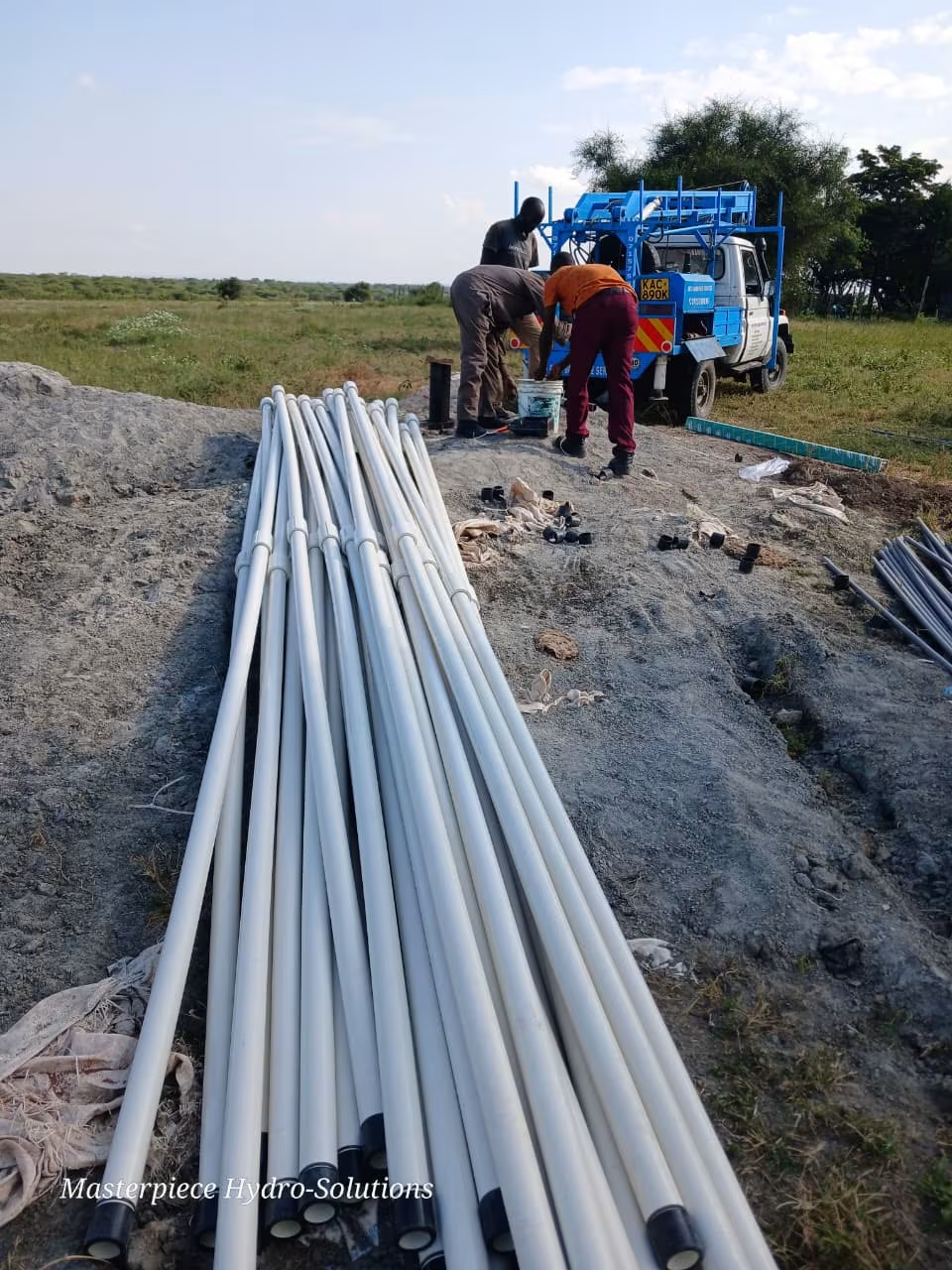
Borehole drilling drainage planning examines where surface water may travel before, during and after the work. The owner needs a coordinated assessment of the working area, access routes and nearby property. A dry patch on the inspection day does not establish how the site behaves during rain or when drilling activities introduce additional water.
Read about Masterpiece Hydro-Solutions borehole drilling and request a site planning quotation. Share known flooding, access and drainage information. Confirm which assessment tasks the proposed drilling scope includes and which require separate qualified input before mobilisation.
Describe existing drainage without assuming a design
Begin with information you already hold about the property. Identify visible drains, low areas, buildings, shared entrances and neighbouring boundaries on a simple plan. Mark uncertain features clearly. The sketch helps the contractor understand your questions; it does not replace measured information or an appropriate drainage assessment.
Tell the assessor about previous ponding or water crossing the entrance. Include dated photographs where available, noting the location and circumstances. A remembered event can identify an issue worth investigating. It cannot establish the capacity of a drain or predict the next storm.
Also distinguish drainage features you control from those serving several properties. A channel near the boundary may have responsibilities or restrictions that require clarification. Ask appropriate advisers to confirm the position. Do not assume that proximity gives the project permission to divert water into it or alter its route.
Set the boundaries of borehole drilling drainage planning
The plan should distinguish the rig working area, material storage, vehicle access and the future completed borehole surroundings. Different parties may control these areas at different stages. Ask who assesses each interface and how the findings enter the drilling programme and quotation.
Identify water associated with different activities separately. Rainfall, drilling operations and later testing may raise different handling questions. The NEMA environmental regulations summary identifies water quality and waste management frameworks. Ask qualified advisers about their application to the actual proposed arrangements rather than assuming one outlet suits every stream.
Keep drainage review connected to the wider project documents. The WRA permitting information distinguishes construction authorisation from later water permitting. Ask the responsible professionals which conditions affect the site works. A drainage arrangement should not rely on an assumption that every project approval has the same scope.
Ask how the working area will be assessed
The contractor needs a suitable basis for deciding whether its proposed equipment and layout fit the site. Ask what site information it requires and which ground or access questions need additional assessment. Owners should not specify a working platform from a generic drawing or informal advice.
Clarify the relationship between drainage and machinery access. Water accumulating along a route may affect the plan for reaching or leaving the working area. The competent parties should determine appropriate precautions and review arrangements. An owner can report changing conditions without attempting to judge ground-bearing suitability.
Ask how temporary arrangements will remain compatible with safe access. A proposed channel, material area or barrier should not quietly occupy an essential entrance. The site plan should show the intended arrangement and identify remaining conflicts. Resolve those conflicts before describing access as agreed.
Compare the responsibilities before mobilisation
| Area | Buyer question | Evidence to retain |
|---|---|---|
| Existing runoff | What features and past events inform the assessment? | Site plan, dated observations and stated gaps |
| Working area | Who assesses suitability for the proposed activity? | Named responsibility and relevant recommendations |
| Temporary handling | How are different water streams addressed? | Assessed arrangements and applicable advice |
| Changing conditions | Who reviews the plan when conditions change? | Escalation route and authorised decisions |
| Restoration | Which drainage and surface tasks remain at handover? | Agreed completion boundary and snag record |
Use this comparison to expose gaps between quotations. One bidder may assume the owner supplies a suitable access area, while another includes an assessment or preparatory task. Ask each to state assumptions in writing. The lowest apparent total may describe a different division of responsibilities.
Separate temporary works from permanent protection
An arrangement used while drilling does not automatically suit the completed borehole. Ask who assesses the final surroundings, surface drainage and interfaces with later headworks or equipping. The handover should identify any unfinished permanent work instead of allowing temporary measures to become an undocumented long-term arrangement.
Also ask who removes or restores temporary features after use. A contractor may need a working arrangement that changes the surface condition. The quotation should explain the restoration boundary and any exclusions. Avoid assuming that general demobilisation language includes every drainage improvement the owner would like.
Keep contamination questions separate from appearance. A tidy surface or water flowing away does not establish groundwater protection or drinking-water suitability. Relevant construction details and appropriate water analysis answer different questions. Qualified advisers should explain which evidence the completed project needs for its intended use.
Consider a shared-entrance scenario
Imagine a hypothetical drilling site reached through a sloping shared entrance. The owner knows that rain sometimes collects near the gate, but the contractor visits during dry weather. If the quotation simply assumes unrestricted access, the known issue may remain absent from both the programme and the division of responsibilities.
The owner can improve the enquiry by marking the affected location and supplying dated observations. The contractor then identifies what further assessment is needed for the proposed mobilisation. Relevant parties review temporary arrangements and access coordination. Nobody treats the owner’s sketch as a certified drainage or platform design.
If conditions change before arrival, the named representative updates the contractor. The authorised parties review the plan and document any implications. This sequence does not guarantee uninterrupted access. It provides a clear decision route before changing conditions become a rushed instruction beside operating machinery.
Keep borehole drilling drainage planning responsive
Ask the contractor to identify conditions that require professional review of the agreed arrangements. The owner should understand who receives a report and who can make the relevant decision. A useful plan names responsibilities and communication routes rather than relying on whoever happens to be on site.
Keep a dated record when a material condition changes. State what was observed, where it occurred and which activity was affected. Avoid diagnosing the cause without evidence. For example, water at an entrance may warrant assessment, but the observation alone does not identify whether a drain is undersized or obstructed.
Owners and caretakers should remain outside controlled work areas. They should not excavate channels, redirect uncertain liquids or approach moving equipment to solve a drainage problem. Use the agreed site contact and qualified assessment route. Technical changes belong within the authorised work plan.
Agree the evidence for restoration
Before work begins, record the condition of surfaces and visible drainage features within the agreed boundary. Include existing damage or unrelated defects. At handover, compare the completed work against that baseline and the written scope. This makes the discussion more specific than asking whether the property looks normal.
Ask the responsible party to explain the final arrangement and remaining tasks. Record who owns each snag and what review will close it. If later construction or equipping will affect drainage again, identify that dependency. The drilling contractor’s departure does not mean every future interface has already been resolved.
Retain relevant plans, decisions and condition photographs with the borehole records. A later owner or maintenance provider may need to understand why the layout changed. Clear records help them ask informed questions without reconstructing a design from a few undated photographs.
Questions owners commonly raise
Can the contractor use the nearest existing drain?
Ask qualified parties to assess the proposed stream, destination and applicable requirements. The nearest route is not automatically appropriate or authorised. Confirm responsibility and any necessary advice before treating it as part of the agreed plan.
Does a dry site visit remove the need for review?
No. Provide known information about wet conditions and previous events. The assessor should explain the information needed for the proposed work. A single visit shows conditions at that time rather than proving how the site behaves throughout changing weather.
Should drainage costs appear in the drilling price?
Ask which assessment, temporary arrangements and restoration tasks the quotation includes. Some decisions may need separate professional input. Identify exclusions and unresolved work so the owner can compare the complete required scope rather than an isolated drilling total.
Will better drainage make the borehole water safe?
Drainage and protective construction can form part of a broader assessment, but appearance does not establish water suitability. Ask about appropriate analysis and intended-use advice. Neither a drainage photograph nor a completed borehole alone certifies drinking-water safety.
Prepare a site-based enquiry
Gather the location, access plan, known runoff issues and relevant existing documents before requesting a proposal. Good borehole drilling drainage planning assigns assessment and restoration responsibilities while preserving uncertainty where information is missing. It helps the project make informed decisions without turning the owner into a temporary-works designer.
Request a drilling site planning quotation with those details. Ask which professional scope may be available and which inputs remain outstanding. Agree the responsibility record, change route and handover evidence before committing the site to mobilisation.