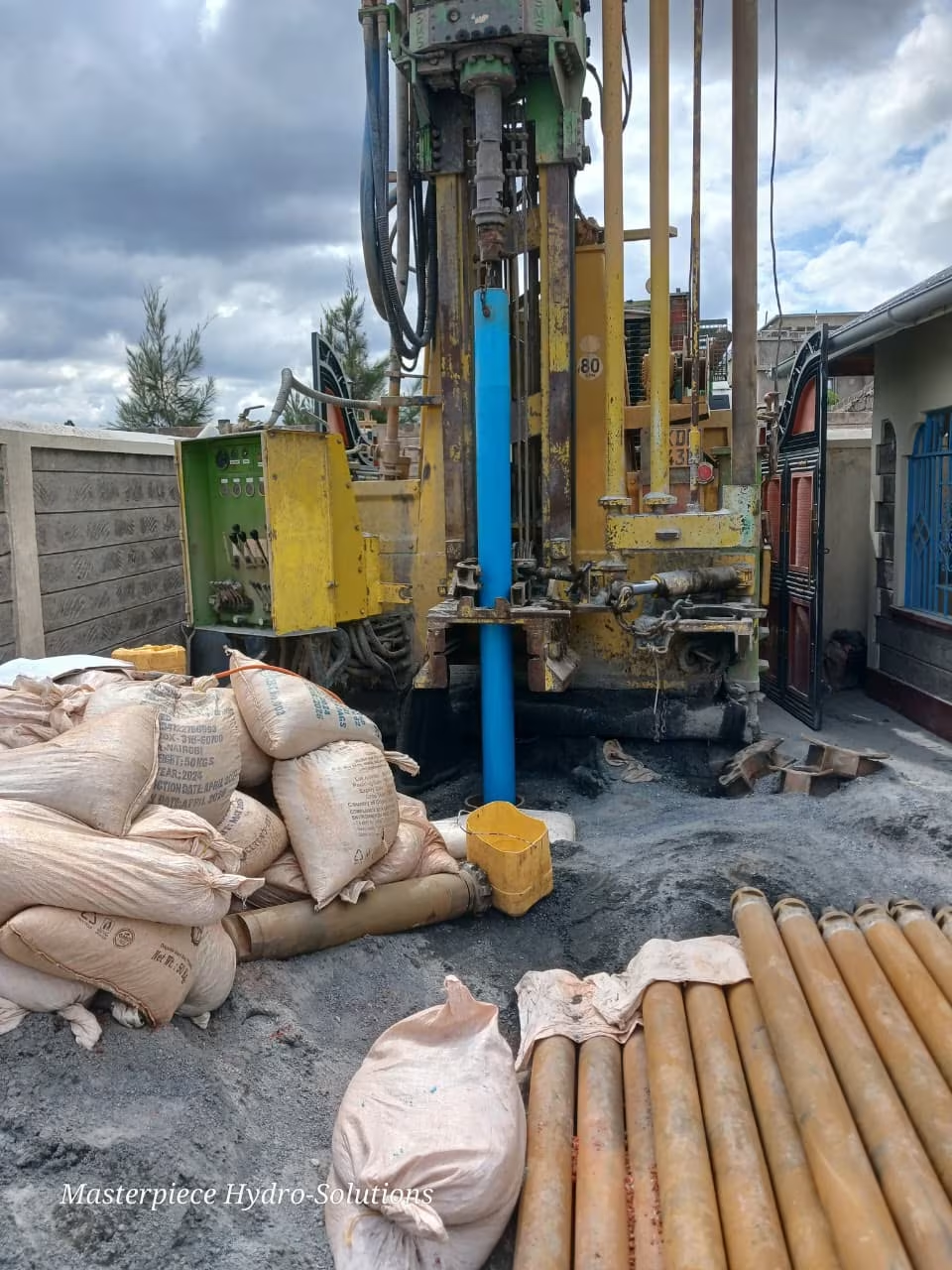
Borehole drilling noise coordination starts before the rig arrives. Owners need a practical agreement about affected people, expected activities and who handles concerns. A courteous notice helps people plan, but it cannot establish regulatory compliance. Build communication around the actual proposed work, and ask qualified advisers to confirm the requirements relevant to the site.
Explore Masterpiece Hydro-Solutions borehole drilling and request a site coordination quotation. Explain the surrounding uses, available access and known sensitivities. Ask which assessment and coordination tasks the proposed scope includes, rather than assuming every specialist service comes within a drilling quotation.
Describe the people and activities around the site
Start with a simple surroundings register. Identify occupied homes, offices, classrooms, treatment rooms, livestock areas and other relevant uses. Record where people normally enter and leave. The purpose is to identify questions for the contractor and advisers, rather than declare which neighbouring activity has legal priority.
Discuss predictable sensitive periods with the relevant occupants. A neighbouring business might have scheduled consultations, while a residential manager may know when shared access becomes busiest. Keep these conversations factual. An owner should avoid promising silence or an exact completion date before the contractor has assessed the work.
Also identify the person entitled to approve communication for the property. A caretaker may distribute information but lack authority to change the programme. Establish a named owner representative and an alternative contact. This prevents several people issuing conflicting instructions when a concern arises.
Check requirements within borehole drilling noise coordination
The NEMA noise regulations information page describes controls addressing noise and excessive vibration. It also identifies the relevance of different activities and zones. Use that official starting point when asking qualified advisers and the relevant authorities about your proposed site and programme.
Ask who will establish the applicable requirements, document that advice and obtain any necessary permissions. Confirm whether proposed working arrangements remain consistent with the project’s other approvals. Do not infer an exemption from a neighbour’s agreement, a contractor’s previous job or a notice placed on the gate.
Keep authority requirements separate from preferences agreed with occupants. The project may choose additional communication or coordination measures even where nobody has raised a complaint. Conversely, a friendly discussion does not replace any necessary professional assessment or authority decision. Record which question each document actually answers.
Request an activity programme with honest uncertainty
A single arrival date gives neighbours little useful information. Ask the contractor to distinguish mobilisation, active drilling, material deliveries, testing and demobilisation. These activities can affect people differently. The programme should show the current expectation and explain who will communicate material changes.
Agree a method for updating the programme when site findings alter the work. Ground conditions and authorised changes can affect progress. A useful update states what changed, what remains uncertain and when another update is expected. Avoid presenting an early estimate as a binding prediction unless the contract expressly supports it.
Discuss coordination around access separately from noise. A delivery may obstruct a shared entrance even when drilling has paused. Record arrangements for residents, visitors and essential deliveries. The contractor should assess safe vehicle movements and working areas; owners should not improvise traffic control around operating equipment.
Put responsibilities into a coordination table
| Question | Evidence to request | Responsibility to clarify |
|---|---|---|
| Which neighbours may be affected? | Surroundings register and contact route | Owner representative confirms local information |
| What activities are currently planned? | Programme with assumptions and updates | Contractor explains the proposed sequence |
| Which requirements apply? | Relevant advice and authority correspondence | Named party obtains and retains evidence |
| How are concerns handled? | Contact details and dated issue record | Named coordinator acknowledges and escalates |
| What happens after a material change? | Revised plan and recorded instruction | Authorised parties review the implications |
Use the table during the pre-start meeting. An empty responsibility cell is a decision still required. Adding a person’s name does not establish professional competence or contractual authority. Confirm both before relying on that person to make technical decisions or commit the project to additional work.
Ask about controls without designing them yourself
Ask the contractor how the assessed equipment, layout and working methods address the surrounding conditions. Request a clear explanation of proposed controls and their limits. Where specialist assessment is necessary, identify who provides it and how recommendations enter the agreed work plan.
Owners should avoid prescribing improvised screens, equipment enclosures or machinery alterations. A measure that appears helpful could create access, ventilation or other hazards. Ask competent parties to assess suitability instead. The buyer’s decision is whether the proposal addresses the identified issue with credible evidence and assigned responsibility.
Keep noise and vibration questions distinct. A description of sound reduction does not resolve concerns about vibration near sensitive assets. Where an issue needs specialist investigation, request an appropriate scope and baseline information. Do not turn a casual observation into an engineering conclusion about structural condition.
Use a realistic shared-access example
Consider a hypothetical property with a shared entrance and a neighbouring appointment-based office. The owner initially proposes one general notice saying that drilling will start shortly. That notice leaves deliveries, changing activities and the office’s contact route unresolved. It also gives the contractor no verified record of the sensitive use.
A stronger arrangement identifies the office manager, records the known access conflict and asks the contractor to assess practical coordination. The resulting programme distinguishes deliveries from active work. The owner representative sends updates through an agreed channel. Relevant professional and authority questions remain assigned rather than assumed to be settled.
This example does not demonstrate that any particular hours or control will be acceptable. It shows how better information supports an informed decision. If the contractor cannot reconcile a proposed activity with the assessed constraints, the authorised parties should review the programme before treating it as agreed.
Keep borehole drilling noise coordination records useful
Retain the approved programme, issued notices, contact list and relevant correspondence together. Date each version so people can identify the current arrangement. Keep personal contact details within the appropriate project group. A public notice should give the agreed contact route without exposing unrelated personal information.
Record concerns with the reported time, activity and location. Distinguish the person’s description from any later assessment. For example, a report of disturbance is evidence that a concern was raised; it is not a professional measurement. Avoid dismissing the report or claiming that a phone recording proves compliance.
Close issues with a documented response and any agreed follow-up. If the programme changes, update the relevant people and records. A growing message thread becomes difficult to manage when nobody states the current decision. A short issue register can preserve that decision without rewriting every conversation.
Separate safety coordination from public communication
A neighbour notice does not define a safe working boundary. Ask the contractor to establish the required site controls and explain how authorised access works. Visitors should use the agreed contact route rather than approaching machinery to discuss a complaint. Keep children and other unauthorised people outside controlled areas.
Agree how a concern reaches the person responsible for site safety. The owner representative should understand the escalation route without attempting to assess machinery or enter restricted areas. Where conditions require an urgent professional response, follow the project’s agreed arrangements and relevant emergency guidance.
Also clarify the decision process for pausing, reviewing or changing affected work. The contract should identify authorised instructions and how consequences are recorded. A clear process protects communication quality; it does not promise that a pause will be unnecessary or that every dispute can be resolved immediately.
Questions owners commonly ask
Does a notice to neighbours give permission to drill?
No. A notice communicates planned work. Ask qualified advisers and the relevant authorities about applicable approvals and conditions. Keep the communication record alongside those documents, while recognising that they serve different purposes.
Can the contractor promise that nobody will be disturbed?
A credible proposal should explain assessed activities, controls and remaining uncertainty. An absolute promise about every person’s experience is not useful evidence. Ask how concerns will be recorded, investigated and addressed through the agreed project responsibilities.
Should owners measure noise themselves?
Owners can record when and where concerns arise from a safe location. Ask the appropriate qualified parties about any formal measurement or interpretation required. A consumer device reading should not become an unsupported compliance conclusion.
What belongs in the quotation?
Request clear assumptions about access, programme, coordination responsibilities and any separately assessed specialist work. Ask how changes will be approved. The quotation should identify exclusions so the owner can arrange unresolved tasks before mobilisation.
Prepare the enquiry before agreeing the programme
Send the proposed site identity, surrounding uses, access information and known concerns with your enquiry. Include existing relevant project documents and identify missing advice. Ask for a programme and responsibility discussion that reflects the actual setting. This makes borehole drilling noise coordination a reviewable part of planning rather than an informal promise.
Request a borehole drilling coordination quotation with those details. Confirm the available scope, assigned contacts, necessary professional inputs and change process in writing. The aim is a workable, evidenced arrangement that supports responsible project decisions throughout the drilling programme.