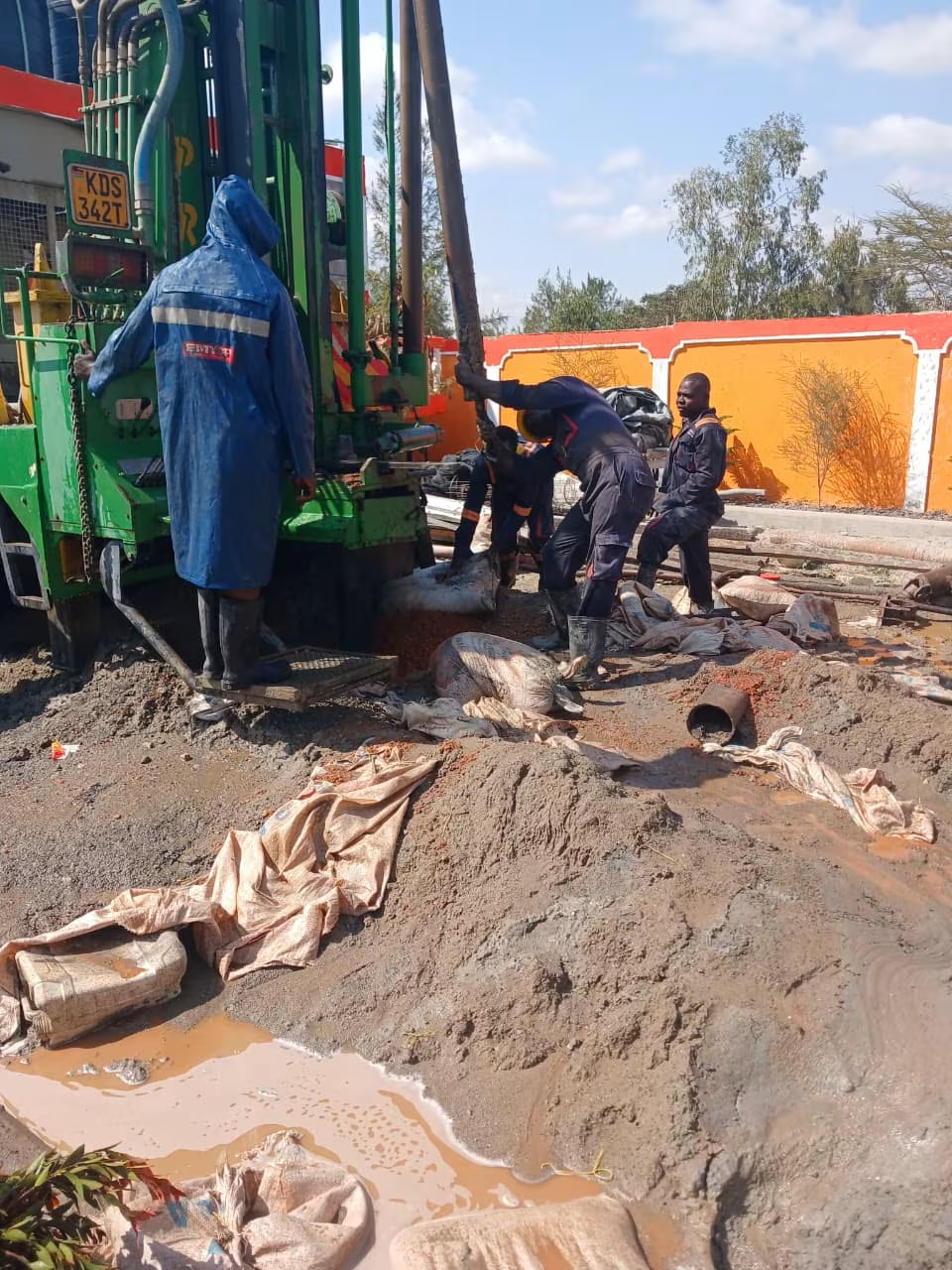
Borehole drilling progress evidence should show what happened, when it happened and which decision followed. A message saying the rig reached a particular depth answers only one question. Owners also need attributable records of observations, materials and authorised changes, while recognising that progress information cannot guarantee groundwater yield or water quality.
Explore Masterpiece Hydro-Solutions borehole drilling and request a quotation with progress reporting defined. Explain who will review updates and which existing project records are available. Confirm the reporting tasks included in the proposed scope before agreeing mobilisation.
Agree what each update must identify
Every useful update needs the correct site identity, reporting period and responsible author. A project name alone can become ambiguous when an owner manages several properties. Ask how the contractor links daily information to the borehole location and the current approved work scope.
Distinguish the time an activity occurred from the time someone sent the report. A photograph forwarded the following morning may depict yesterday’s work. Both dates can matter when reviewing sequence. Ask for clear attribution rather than interpreting a message timestamp as proof of when the underlying activity happened.
Keep progress, technical interpretation and commercial decisions separate. An observation might prompt a specialist review, while a proposed variation needs an authorised instruction. A combined update should label these sections clearly. Otherwise, a reader may mistake a suggestion or unresolved question for an approved change.
Make depth references part of borehole drilling progress evidence
Ask which reference point applies to reported depths and how the records identify it. Consistency matters when later comparing the drilling log, completion information and installed equipment. An unexplained figure can look precise while referring to a different point from another document.
Also distinguish drilled depth, water observations and later operating levels. Reaching a depth does not establish sustainable abstraction. A reported water entry is not a complete pumping test. Ask the responsible professional to explain what each observation supports and what evidence is still required before choosing equipment.
Owners should not attempt independent depth checks around an active rig. The buyer’s role is to request a traceable record and appropriate professional interpretation. If two figures conflict, record the discrepancy and ask the responsible parties to reconcile it with the underlying evidence.
Request observations with their limits
The drilling record should distinguish observed formation information from later interpretation. Ask how samples or observations are labelled and linked to the relevant depth interval. The responsible professional should explain the information needed for design decisions rather than relying on an owner’s visual description of a sample.
A short update can identify a change in conditions without claiming a final geological conclusion. For example, the contractor may report that the encountered material differs from an earlier interval. The next question is how that observation affects assessment, design or the need for further information.
Do not treat coloured cuttings, clear-looking water or a confident voice message as proof of water suitability. Source productivity and water quality need their own appropriate evidence. Good reporting preserves these boundaries so an early encouraging observation does not become a promise repeated throughout the project.
Use a record-to-decision comparison
| Record | What it can help establish | What it does not establish alone |
|---|---|---|
| Dated drilling log | Reported sequence, depth references and observations | Guaranteed source output |
| Material delivery evidence | Product identity and quantities delivered | Complete installed configuration |
| Installation record | Recorded location and use of materials | Every hidden condition independently verified |
| Variation instruction | Authorised scope and commercial decision | Successful technical outcome |
| Photograph | Visible condition at an attributable moment | Depth, quality or compliance certification |
Use the table to design a reporting package that answers real owner questions. More photographs do not compensate for an absent installation schedule. Similarly, a signed delivery note cannot explain where materials were installed. Ask for linked records rather than treating any one document as universal proof.
Track materials beyond arrival at the gate
Agree which material information the owner will receive before installation. Relevant fields can include the specified product, manufacturer documentation, dimensions and traceable identification where available. Qualified parties should confirm suitability. The owner needs enough information to compare the supplied product with the agreed specification.
Separate delivered, used, returned and remaining quantities. Their difference may have an ordinary explanation, but the record should show it. A photograph of stacked casing demonstrates a visible delivery condition; it does not alone establish the lengths or intervals ultimately installed below ground.
Ask how substitutions enter the approval process. A product described as equivalent still needs an appropriate compatibility and design review. Record the reason, supporting documentation and authorised decision. Do not allow an informal update to overwrite the specification without an identifiable approval trail.
Consider a mid-project reporting example
Imagine a hypothetical owner receiving a photograph and the message that drilling has progressed further than expected. The same message mentions different casing and an additional charge. Without separate records, the owner cannot tell whether the new material is a recommendation, an order already placed or an installed variation.
A clearer update supplies the dated progress information, explains the observation behind the proposal and identifies the technical review required. A separate variation request describes scope and pricing basis. The authorised owner representative can then consider that request without assuming the photograph proves the proposed solution is necessary.
The example concerns evidence quality rather than a recommended drilling response. Actual conditions require the responsible professionals’ assessment. The reporting agreement should make that assessment visible and preserve unresolved questions instead of replacing them with a reassuring progress percentage.
Link borehole drilling progress evidence to approvals
The WRA permitting page describes construction authorisation as a stage distinct from later water permitting. Ask the responsible advisers which project conditions and submission requirements affect the records. A progress report does not replace an authority decision or establish that every condition has been met.
Keep relevant approved documents accessible to the authorised project reviewers. If work encounters circumstances that may affect the agreed scope, ask who assesses the implications before an instruction is issued. Record the reference to the governing document so later readers can understand the decision.
Do not invent a reporting form or frequency from another project’s experience. The appropriate requirements depend on the actual approvals, contract and professional scope. Ask for a consolidated list of required records, their authors and their intended recipients before work starts.
Choose a manageable review rhythm
Agree reporting around activities and decisions rather than a stream of unstructured messages. The owner may need routine summaries plus specific notice before important changes or hidden work. Confirm what the contractor can provide and which events require a separate professional or commercial review.
Identify who can acknowledge information and who can approve expenditure or scope changes. These are different roles. A caretaker confirming receipt of a photograph should not accidentally appear to authorise an additional charge. Use a clear written instruction route for decisions that require approval.
Keep the master record outside a single person’s messaging account. Save relevant updates with understandable filenames and retain the original supporting files where agreed. Access should respect privacy and commercial confidentiality. The owner should know who will supply a complete project record at handover.
Resolve gaps before the final pack
Maintain a short list of missing, disputed or provisional information during the work. Assign each item to the person who can address it. A question about an unclear depth reference is easier to investigate while the relevant people and original records remain available.
At completion, reconcile the progress records with the final construction information. Explain superseded figures and retain the reason for corrections. Silently replacing an earlier value can obscure the history. A clear revision note preserves both the final accepted information and the route used to establish it.
Also identify evidence not yet available, such as later testing or separate equipping records. Handover should not imply that every project stage is complete merely because the drilling rig has left. Record the remaining dependency and the party responsible for resolving it.
Frequently asked owner questions
Does a depth update prove that enough water is available?
No. Depth and source performance describe different things. Ask about appropriate test evidence, operating conditions and professional interpretation. Demand, proposed pump capacity and water quality also need separate assessment before the owner accepts a complete supply arrangement.
Are photographs enough for material verification?
Photographs can support traceability when they show attributable labels or visible stages. They should link to specification, delivery and installation records. Ask qualified parties to review suitability instead of treating an image as complete evidence of hidden construction.
How often should the contractor report?
Agree a practical rhythm within the actual scope and project requirements. Identify routine updates and events needing a specific decision. The important issue is receiving usable information before a relevant approval point, rather than collecting messages after the decision has passed.
What should happen when records disagree?
List the conflicting values, their sources and dates. Ask the responsible parties to examine the underlying evidence and issue a documented clarification. Preserve the distinction between confirmed information and an unresolved gap rather than choosing whichever figure appears more favourable.
Request evidence before agreeing the work
Prepare your reporting expectations alongside the drilling enquiry. Useful borehole drilling progress evidence links activities, observations, materials and decisions without promising an outcome. Ask for named responsibilities, clear references and a final reconciliation process that fits the proposed professional scope.
Request a borehole drilling quotation with reporting requirements. Include available project documents and identify the decisions your representatives must review. Confirm deliverables and exclusions in writing before treating the reporting arrangement as agreed.