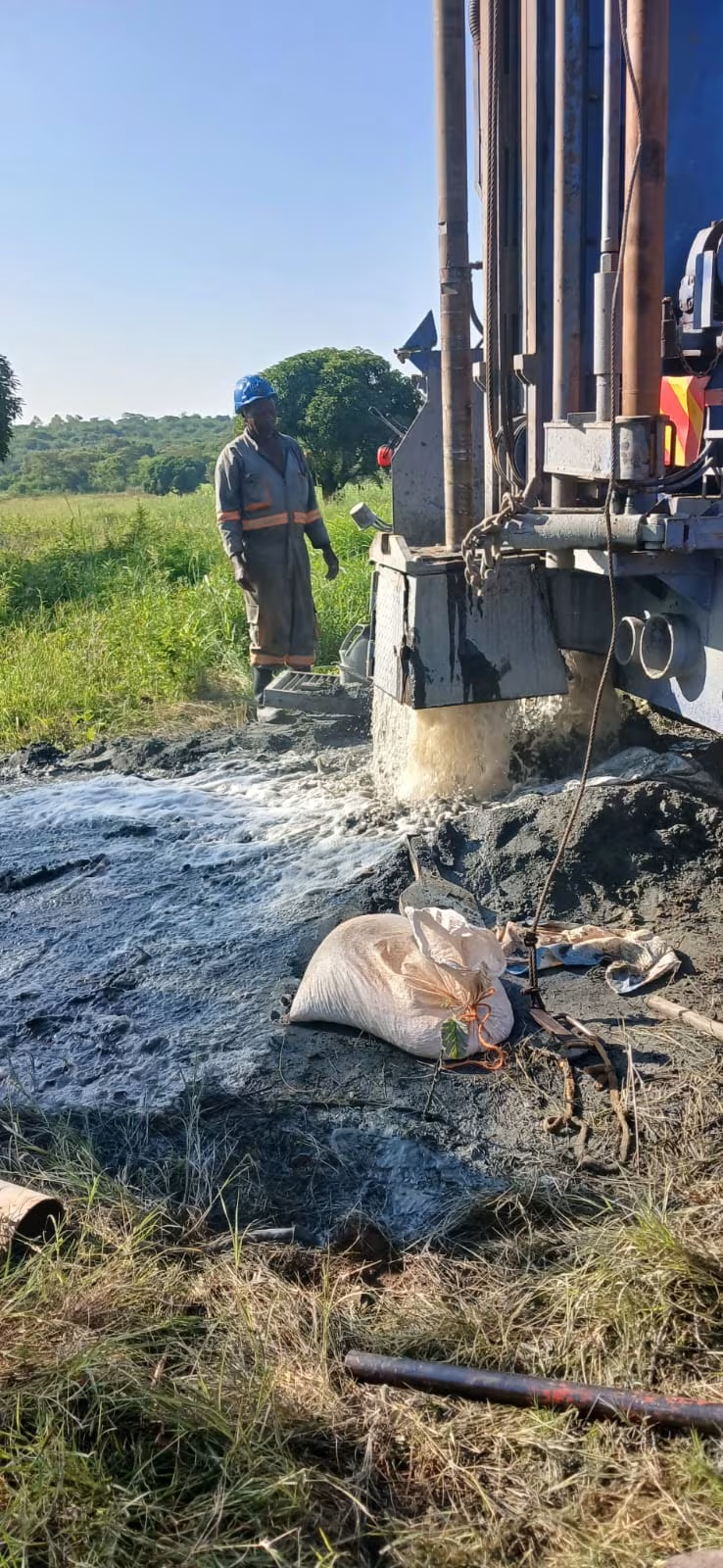
Borehole drilling quote inclusions determine what your payment actually buys. A proposal may list a depth and total while leaving important work undefined. First, read every line as a commitment with a boundary. Then identify the quantities, deliverables and exclusions needed to compare it with another offer.
See Masterpiece Hydro-Solutions borehole drilling services and request an itemised drilling proposal. Ask the provider to distinguish included work from provisional items and owner responsibilities. This guide helps you read the reply rather than assume that one total covers the complete water project.
Read the description before the total
The project description should identify the site and the work the contractor proposes. Check that it refers to your current brief. Also, verify the date and quotation validity. A detailed proposal for an earlier location or different scope does not become suitable because its price appears attractive.
Next, look for a clear distinction between estimated quantities and fixed commitments. An estimated drilling quantity describes an assumption, not necessarily the final measured work. Ask how the contractor will record actual quantities and obtain approval for changes.
Finally, check whether the quotation refers to other documents. A report, schedule or set of terms may define important boundaries. Request those documents before accepting. You cannot evaluate an inclusion properly if its specification or exclusion sits in an attachment that nobody has supplied.
Mark borehole drilling quote inclusions by status
Use four plain labels: included, provisional, excluded and unclear. Apply one to every significant work category. This simple review prevents an owner from treating silence as inclusion. It also gives the contractor a focused list of questions to answer.
An included item still needs a description and completion basis. A provisional item needs its adjustment method. Meanwhile, an excluded item needs an identified next step if your project requires it. Ask the contractor to resolve unclear items in writing before you rely on the total.
Borehole drilling quote inclusions become easier to compare when the labels remain visible. Do not hide unresolved differences inside a homemade total. First, align the scope and ask bidders to clarify their commitments. Then compare the commercial effect of the same work.
Check mobilisation and site readiness
Ask whether the quotation includes moving the required equipment to and from the site. Also, identify any assumptions about access and readiness. A mobilisation line does not automatically include improving a road, removing an obstruction or preparing every working surface.
Next, ask who confirms that the site meets the contractor’s requirements. The provider should assess machinery access and safe working needs. The owner can supply information and coordinate access, but should not guess that a route or working area will suit the proposed equipment.
Also, clarify the treatment of waiting or repeat visits if these appear in the terms. Ask what triggers them and how the parties record responsibility. These are contract questions, so resolve them before work begins rather than after an interruption creates an unexpected invoice.
Review the drilling and construction description
Identify what the drilling line covers and how the contractor measures it. Then examine the casing and completion description. Material labels alone may omit dimensions, quantities and other construction details. Ask the qualified team to provide an appropriate specification and explain the assumptions behind it.
Also, ask how the contractor documents the actual completed construction. The final record should help later specialists understand the borehole. A commercial description that simply says “complete borehole” leaves too much uncertainty about both physical work and the information the owner will receive.
Do not prescribe a casing arrangement from a price comparison. Instead, ask which design decisions require professional assessment and which quantities remain provisional. Borehole drilling quote inclusions should show enough detail to review the commitment without turning the owner into the designer.
Audit borehole drilling quote inclusions with a table
Copy this structure into your comparison notes and ask the contractor to complete unresolved answers. The table names categories to check; it does not claim that every drilling quotation must include all of them.
| Category | Inclusion question | Evidence or boundary to request |
|---|---|---|
| Mobilisation | What equipment movement forms part of the price? | Site assumptions and separate owner preparations |
| Drilling | What is the rate and measurement basis? | Estimated quantities and variation process |
| Casing and completion | Which construction scope does the proposal cover? | Specification and quantity basis |
| Development and testing | Which activities and reports are included? | Defined scope and deliverable schedule |
| Permission support | What assistance does the contractor provide? | Owner responsibilities and authority interface |
| Equipping and delivery | Does the contract extend beyond the drilled source? | Separate equipment and installation boundaries |
Next, add a status label and document reference beside each answer. This turns a broad discussion into a traceable review of the proposed commitments.
Identify exactly what testing includes
A line called “testing” needs explanation. Ask what activity the contractor proposes, which question it answers and which report you will receive. Source assessment, equipment commissioning and laboratory water analysis address different issues. Do not assume that one generic label covers all three.
Next, identify who performs the work and who interprets the findings for the project. Qualified personnel should determine the appropriate methods and scope. The owner needs to understand the purpose, resulting evidence and any limitations, rather than direct technical procedures.
Also, clarify whether further work may follow the results. For example, laboratory analysis can inform suitability for the intended use, but it does not automatically include treatment design or installation. Clear water alone does not establish potability. Ask how any additional assessment would enter a later scope.
Check reports and permission responsibilities
Ask for a list of the records the contractor will hand over. These may relate to drilling, construction or included testing. Each deliverable needs a responsible party and an agreed delivery stage. Do not leave the owner to discover missing reports when a later specialist asks for them.
The Water Resources Authority’s water-use allocation guidance provides an official starting point for permission questions. Confirm current site-specific requirements with WRA. Also, ask the contractor which support and completion information its proposal includes. Avoid assuming that administrative assistance guarantees a permit.
Keep construction authorisation and the subsequent abstraction position distinct. The relevant authority should clarify the applicable steps. Borehole drilling quote inclusions need to show who coordinates the agreed work, while the owner retains a clear view of any remaining responsibilities.
Compare two proposals without inventing prices
Consider an educational example with no actual contractors or quotations. Proposal A includes drilling and a construction record but says nothing about testing. Proposal B includes a defined testing scope and its report. Their totals cannot support a fair comparison until the owner resolves that difference.
First, the owner asks Proposal A’s provider whether testing is excluded or merely omitted from the description. Next, the owner asks Proposal B’s provider to confirm the exact deliverable. Both replies then identify the same required work, allowing the owner to compare aligned commercial commitments.
This process demonstrates why borehole drilling quote inclusions matter more than a quick glance at the total. It also avoids assuming that a longer quotation is automatically better. Every item still needs to serve the agreed project and carry a clear boundary.
Separate a drilled source from a water system
A drilling quotation may end before pump selection and installation. Also, power, storage and distribution may sit outside the contract. Ask whether the proposed endpoint matches your expectation. A borehole can reach a defined construction stage without providing the final service you need.
If the project requires those later stages, request an assessed sequence. Explore Masterpiece borehole equipping services for the equipment stage. The selection should use source evidence and the required duty. Do not infer a suitable pump from drilling depth alone.
Finally, identify who coordinates the interfaces if several suppliers participate. The drilling provider may owe records that another specialist needs. Make that handover explicit. A list of individual inclusions works best when the parties also understand how the project progresses between them.
Clarify borehole drilling quote inclusions and exclusions
Ask whether VAT forms part of each quoted amount and the stated total. Also, request a clear summary of exclusions. A broad phrase such as “other works excluded” gives little help when the project depends on those works. Ask the contractor to identify the material boundaries.
Next, review the change process and payment triggers. Confirm how the parties approve additional work and reconcile measured quantities. An estimate should not become an unexplained final amount. The agreed records need to connect scope, quantities and authorised adjustments.
Retain the revised quotation and clarifications together. If the contractor answers a question by email, ask whether the answer forms part of the proposed agreement. This keeps the commercial basis consistent when different people later review the work or authorise payment.
Questions about drilling quote contents
Does “complete drilling” mean everything is included?
The phrase needs a written definition. Ask where the contract ends and which records support completion. It may refer to a drilled source rather than a commissioned water system. Also, identify excluded testing, equipment or distribution work that your wider project still requires.
What does a provisional item mean?
It signals an assumption or allowance that needs a stated confirmation process. Ask what evidence will finalise it and how the price may change. Also, confirm who can approve the adjustment. Do not treat a provisional item as either a fixed commitment or unlimited authority for extra work.
Should casing always appear as a separate price?
A contractor may structure its quotation differently. The important point is whether the scope and pricing basis remain clear. Ask what the drilling rate already covers before adding another casing line. This helps avoid both missing work and counting the same scope twice.
Can laboratory analysis sit inside the testing line?
It can if the quotation expressly defines that scope. However, do not assume inclusion from the word “testing”. Ask which analysis and report the proposal covers, with qualified advice on suitability. Also, clarify whether interpretation and any further treatment assessment form part of the same commitment.
How should I resolve unclear exclusions?
Send specific written questions and ask for a revised scope or clarification schedule. Then check that the total and payment terms reflect the answer. Borehole drilling quote inclusions become reliable comparison material when unresolved boundaries are visible and the provider confirms its commitments.
Request a quotation you can audit
List your required work and mark the unanswered categories. Then request an itemised proposal from Masterpiece Hydro-Solutions. Ask for clear inclusions, exclusions, quantity assumptions and deliverables. A readable scope gives you a stronger basis for comparing offers and understanding what the agreed payment will buy.