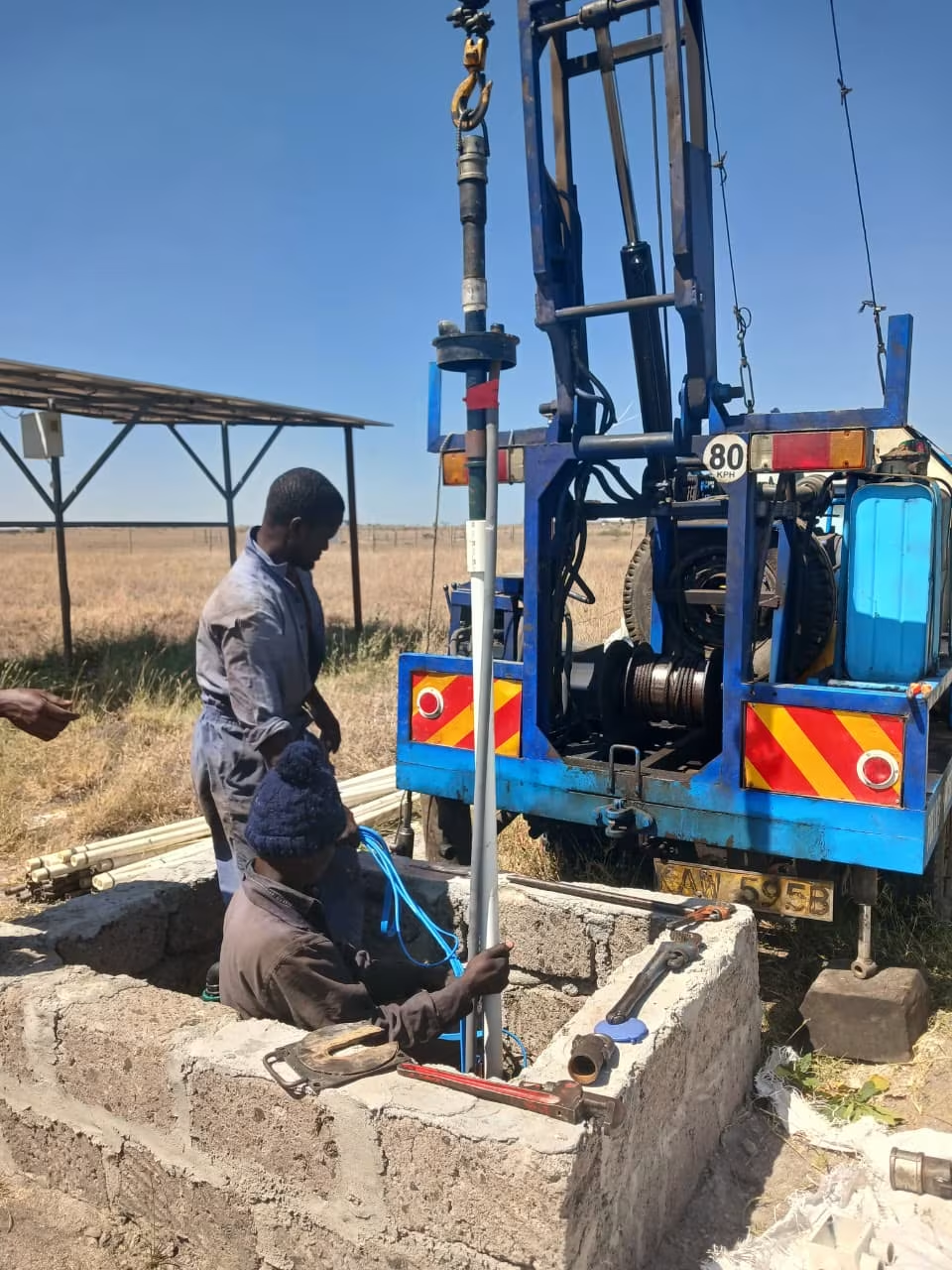
County water borehole upgrades should begin with an asset baseline and a defined service gap. A portfolio target does not establish the condition or production of every borehole. First, identify what each installation currently does. Then ask qualified practitioners to assess the evidence, proposed work and outcome measures before equipment becomes the answer.
Explore Masterpiece Hydro-Solutions borehole equipping services and enquire about an assessed public-water upgrade scope. Confirm the proposed role and service availability for the project. Share the asset schedule and relevant records without implying that a general service page confirms participation in a particular county programme.
Assess county water borehole upgrades asset by asset
Create a clear identifier for each source and its installed equipment. Also, record the evidence behind its stated operating status. An entry labelled non-functional may hide several different questions: source condition, electrical supply, missing components or an unresolved management issue.
Next, distinguish confirmed findings from reports that still need verification. A caretaker’s observation can inform assessment without becoming a complete diagnosis. Keep dates and sources visible so the qualified team understands what the asset schedule actually establishes.
County water borehole upgrades need that distinction before the project groups installations into work packages. Similar symptoms do not automatically require identical equipment. A useful schedule identifies known condition, relevant service objective and the next assessment needed for each asset.
Define the service gap behind the upgrade request
Describe what users currently receive and what the project intends to change. The issue may concern interrupted operation, insufficient delivery at a destination or another specific requirement. Also, identify whether demand has changed since the installation’s earlier assessment.
Next, separate the source’s capability from pump capacity and user demand. A larger motor cannot establish sustainable groundwater production. An upgrade target should not turn a desired volume into an assumed source result without relevant evidence.
Also, distinguish an activity objective from a service outcome. Replacing equipment or adding controls is work the contractor can document. The project still needs to identify what evidence would establish the agreed improvement in useful service.
Review the source and existing installation evidence
Gather available construction records, test-pumping reports and water-level information. Also, identify equipment references and earlier interventions. Missing records should remain explicit so the assessment can explain uncertainty rather than recreate a precise history from memory.
WRA’s groundwater assessment and monitoring information emphasises professional groundwater development and responsible management. Use that principle to keep the source assessment visible alongside equipment decisions. The page does not diagnose an individual county asset or guarantee that an upgrade will increase production.
Next, ask which further investigation would materially improve the decision. A camera inspection, equipment assessment and performance test address different questions. The qualified provider should explain the appropriate scope rather than apply one default intervention across the portfolio.
Specify county water borehole upgrades by service gap
For each installation, identify the intended delivery destination and relevant operating arrangement. Also, state which components the project proposes to retain. A new item should suit the actual installation, not merely match a broad equipment category.
The Grundfos pump-selection resource explains why flow and head matter together. Ask the practitioner to assess pumping lift, delivery elevation, route losses and any required outlet service. Drilled depth alone cannot define every replacement duty.
County water borehole upgrades should therefore have a selection basis for the actual work. If the findings require a different approach, the provider should explain the evidence and proposed scope change before the project approves additional commitments.
Compare assessment findings before packaging work
The table below helps distinguish possible decisions. It does not diagnose an asset or prescribe a procurement method. The project team and qualified practitioners must confirm the applicable scope and approval process.
| Asset finding | Decision to discuss | Evidence needed |
|---|---|---|
| Confirmed equipment fault | Defined repair or replacement scope | Finding record and compatibility basis |
| Unclear source condition | Targeted further assessment | Specific investigation question and deliverable |
| Changed delivery requirement | Revised duty and operating review | Current destination and demand brief |
| Demand exceeds the source basis | Review the service plan | Relevant production evidence and demand assumptions |
| Management or record gap | Define operating ownership and information needs | Responsible contacts and usable asset record |
Next, group work only after understanding those differences. A portfolio can share coordination while retaining asset-specific evidence and acceptance boundaries.
Identify the operator who receives the upgrade
Name the organisation and people responsible for ordinary operation after the work. Also, clarify how responsibilities relate to project delivery staff. An installation can receive new equipment without gaining a practical long-term reporting or service arrangement.
Next, ask what instruction the receiving operator needs. Normal indications, reserve assumptions and escalation contacts should remain understandable. Technical changes and specialist maintenance belong with qualified personnel, not an operator improvising a repair to satisfy an immediate service request.
County water borehole upgrades need records that survive staff changes. Keep the asset identifier, source information and installed equipment together. A new manager should be able to understand what the project assessed and changed without reconstructing old conversations.
Keep quality and permission questions separate
Successful equipment operation does not establish water suitability. Appropriate laboratory analysis and qualified interpretation for intended use guide that decision. Ask which quality-related services the proposal includes and who arranges any further assessment.
For authority matters, consult the Water Resources Authority’s permitting guidance and confirm current asset-specific requirements directly. Identify the relevant information and responsible coordinator. An upgrade quotation does not automatically settle the abstraction position or other authority decisions.
Next, ask the project’s responsible team to identify its actual procurement and approval requirements. This guide does not define public-contract rules or establish eligibility. The provider should confirm the role and commitments it can accept within the proposed project.
Plan interruption and continuity for each site
Identify which users depend on the source and what reserve or alternative arrangement exists. The work may affect operation differently at each installation. Ask the contractor to explain the expected sequence and uncertainties rather than assume one restoration period applies to every asset.
Next, distinguish power backup from alternative water. A second power source may address an outage without solving a source shortfall or equipment repair. The project should define the interruption each proposed feature addresses and what remains unresolved.
Also, assign the contact who approves additional work if findings change. The provider should communicate evidence and commercial implications through that route. Site access assistance should not be treated as automatic authority for an undefined variation.
Use a mixed-portfolio scenario
Consider an educational example where a project lists several boreholes under the same low-delivery label. No actual county programme or result is implied. The initial information does not establish whether every installation has the same cause.
First, qualified practitioners review asset records and observed symptoms. Next, the project distinguishes confirmed equipment faults from source questions and changed duties. It then defines suitable scopes and outcome checks. A common coordination plan remains possible without treating every asset as an identical repair.
This example shows why county water borehole upgrades need evidence before standardisation. A repeated equipment list may simplify presentation while missing the actual service gap. The project should retain individual findings and selection reasons within the wider delivery programme.
Review county water borehole upgrades against outcomes
Agree the baseline and acceptance evidence for each supplied scope. The contractor should identify installed items, observed service and relevant conditions. Qualified personnel must choose and perform technical checks. The project team should receive understandable results and an outstanding-item schedule.
Next, distinguish completed activity from measured improvement. A delivered pump and a commissioning record answer related but different questions. A favourable result under stated conditions does not guarantee every future operating period or source condition.
Finally, clarify exclusions, tax treatment, offered warranty terms and variation arrangements. Keep the final asset record linked to approved changes. The commercial commitment should describe actual work and evidence without promising universal recovery, continuous service or unlimited future support.
Questions about public-water asset upgrades
Can every low-output borehole receive the same pump?
Not without relevant assessment. Similar symptoms can have different causes, and required duties may differ. Ask qualified practitioners to establish source evidence, equipment condition and the service brief. A portfolio can share coordination without assuming identical technical solutions.
Does replacing equipment prove the upgrade outcome?
It documents one activity when supported by the relevant record. The project still needs agreed evidence about useful service. Ask how commissioning and outcome review connect to the baseline. Source, quality and operating questions should remain distinct.
Who should hold the final records?
The project must identify the asset owner and receiving operator’s information needs. Retain source evidence, installed equipment and approved changes with a clear identifier. Also, provide normal-use instructions and service contacts so the installation does not depend on one staff member’s memory.
Does the service page confirm participation in a county project?
No. Enquire about the actual role, scope and availability. The responsible project team must confirm its requirements and process. Do not infer a particular contract, eligibility or service commitment from a general description of equipping services.
Enquire with the asset and outcome schedule
Gather source records, the asset list and clearly defined service gaps. Then enquire about an upgrade assessment with Masterpiece Hydro-Solutions. Confirm the proposed role and scope. Ask for asset-specific evidence, accountable interfaces and a handover the receiving operator can use.