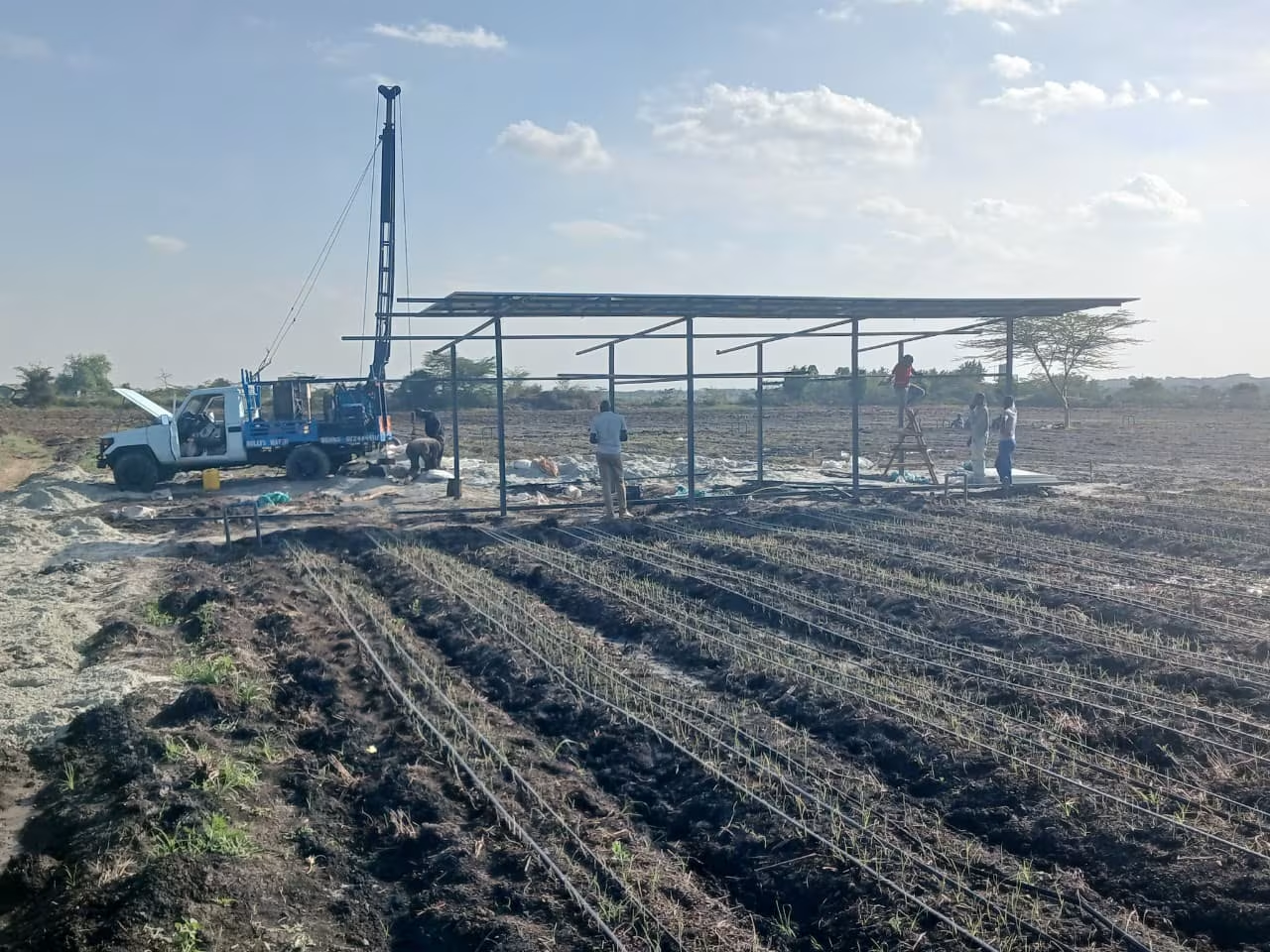
Deep well solar pumping needs a clear explanation of lift, flow and source limits. A borehole’s drilled depth alone cannot identify the right equipment. First, establish where water stands during pumping and where the water must go. Those measurements help an installer assess the real duty rather than choose a package from depth alone.
For a project enquiry, explore Masterpiece Hydro-Solutions borehole solarisation. You can also request an assessed installation quote with your borehole records and storage details. This guide explains the questions a buyer should resolve before accepting a deep well proposal.
Why deep well solar pumping starts with records
Gather the drilling completion record, test-pumping report and previous equipment details. However, distinguish original measurements from current operating information. An old report remains useful background, but its date and conditions matter. Tell the assessor about later changes in flow, operating hours or tank location. Missing records should become an assessment task, rather than an invitation to guess.
Next, identify who owns each measurement and which reference point it uses. A ground-level measurement cannot simply replace an elevation measured from another point. Ask the installer to present the relevant levels together on a simple site sketch. This makes the design basis easier to discuss and reduces confusion between total hole depth and actual pumping lift.
Separate the five depth and head terms
Drilled depth describes the completed hole. Static water level describes water at rest under stated conditions. Pumping water level describes its position during abstraction. Pump setting depth concerns the equipment’s installed position. Finally, total dynamic head combines the pumping lift with delivery requirements, pipe losses and any required outlet pressure.
These terms answer different questions. For example, a deeper tank destination can increase the required head without changing the borehole. A changed pumping water level can also alter the duty. Therefore, ask for the proposed flow and head together. The Grundfos learning guide on pump selection explains why a duty point matters when selecting equipment.
Match deep well solar pumping to available water
A capable pump does not establish a sustainable water supply. The source must support the proposed abstraction under the assessed conditions. Also, a panel array cannot correct an inadequate borehole yield. Ask the designer to explain the source evidence, planned operating rate and controls that protect the installation when water availability falls.
Compare that proposed abstraction with your daily requirement. A farm may accept a longer filling window, while occupied accommodation may need a dependable reserve. However, neither requirement changes the source’s physical limits. If the assessed source cannot meet demand, discuss demand management, a supplementary source or a revised project brief before buying equipment.
Turn a depth-based quote into a duty-based comparison
Give each bidder the same site information. Then ask each one to identify assumptions that need confirmation. A useful comparison shows how the proposed system delivers water at your destination. Equipment power ratings can support that discussion, but they cannot replace the stated flow and head.
| Proposal item | Evidence to request | Buyer decision |
|---|---|---|
| Pumping level | Dated measurement and test conditions | Does the design use a credible operating level? |
| Delivery duty | Flow, destination elevation and losses | Does the selected pump address the actual route? |
| Source limit | Assessment of available abstraction | Can the source support the proposed schedule? |
| Solar package | Named pump, panels and compatible controller | Does the proposal explain the equipment combination? |
| Future access | Inspection and retrieval arrangements | Can qualified personnel service the installation? |
Use a daily-volume example carefully
Consider an educational assumption: a property needs 15 cubic metres daily, equivalent to 15,000 litres. If measured average delivery reaches 2.5 cubic metres per hour, producing that volume requires six operating hours. However, that calculation establishes neither local solar availability nor sustainable yield. It only connects an assumed flow with an assumed daily requirement.
Now suppose actual operation delivers that average flow for four hours. Production becomes ten cubic metres, leaving five cubic metres to cover elsewhere. A reserve tank may bridge a temporary gap, but repeated deficits will drain it. Therefore, deep well solar pumping proposals should explain expected daily production and the conditions behind that estimate.
Ask what changes when the pumping water level falls or the delivery route changes. The designer should reassess the duty where necessary. Do not treat one attractive flow figure as a promise for every month, water level or tank arrangement.
Plan deep well solar pumping around storage
Storage links variable daytime production with the times people need water. First, list essential uses and their busiest periods. Next, distinguish total tank capacity from usable volume and any protected reserve. The intake and outlet arrangement may affect how much stored water the site can actually use.
Also, consider where the tank sits. An elevated destination can change the pumping requirement, while downstream distribution may need separate assessment. Ask whether the quote covers only borehole-to-tank delivery or also the supply beyond that tank. A complete boundary prevents the source pump from carrying responsibility for an undefined distribution problem.
Make access and equipment assessment part of scope
Deep installations make future access an important purchasing question. Ask how the contractor will assess existing equipment, confirm compatibility and plan any necessary retrieval work. The borehole equipping service provides a relevant enquiry route when the current pump arrangement needs assessment. Avoid assuming that an existing pump can stay simply because it still runs.
However, replacement also needs a reason. Ask which finding supports retaining or replacing each major component. Compare both options against the same water duty, controls and commissioning requirements. Qualified personnel should handle lifting and electrical work; the owner’s role is to agree the scope, provide access and retain the resulting records.
Agree commissioning before the installation begins
Set out the evidence you expect at handover. Useful records include equipment identities, measured delivery, relevant water levels, operating conditions and the destination served. Also, ask how the team will demonstrate normal tank control and protection behaviour. The installer should explain what the observations show and what a short commissioning visit cannot establish.
Record any difference between the design assumptions and site findings. For example, a revised tank route may require an updated assessment before acceptance. Keep outstanding work on a written list with an owner and completion date. A successful first flow does not remove the need for clear operating instructions and support contacts.
Check responsibilities and future changes
Ask who takes responsibility for design, electrical installation and commissioning. Check appropriate current solar credentials through EPRA’s renewable energy information. Also, agree who receives fault reports and which warranty exclusions apply. Credentials and support promises require verification; a general sales statement should not stand in for written terms.
Water approvals require their own review. Consult WRA’s water use allocation guidance and ask about your site’s current requirements. Do not assume that construction authorisation settles abstraction permission. If your intended use or operating requirement changes, raise that change with the relevant qualified adviser and authority before expanding the system.
Keep a useful baseline for later maintenance
Ask for a simple baseline sheet alongside the formal commissioning report. It can identify the destination tank, normal indicators, observed delivery and the date of acceptance. Also, include the equipment model references and the contractor’s support contact. Store a copy where the person managing water supply can find it.
When performance changes, compare like conditions before drawing conclusions. For example, record whether the tank destination or daily use has changed since handover. An altered pipe route may matter as much as the age of the pump. Therefore, report the change and the baseline together when requesting help. This gives the assessor a stronger starting point without asking the owner to diagnose the system.
Questions owners ask before ordering
Does a deeper borehole always need a larger pump?
No. Selection depends on required flow and total dynamic head, alongside source and equipment limits. Drilled depth alone does not show the operating water level or delivery requirement. Therefore, ask for a documented duty assessment rather than a depth-only equipment rule.
Can extra panels solve weak water production?
They cannot create groundwater or remove a hydraulic constraint. First, distinguish limited solar input from source limits, equipment condition and an unsuitable duty. A qualified assessment should identify the constraint. Deep well solar pumping works best when the design addresses that actual constraint.
Should we keep an existing submersible pump?
Possibly, if its condition, duty and compatibility support the assessed arrangement. Send available model details and service records before requesting a retrofit proposal. However, ask the contractor what needs inspection before they can confirm retention. A working motor alone does not prove suitability.
Does clear borehole water need testing?
Appearance cannot establish suitability for drinking or another intended use. Arrange appropriate laboratory analysis and seek guidance on the results. Also, remember that a new pump or storage tank does not guarantee water quality. Include testing responsibilities in the wider water-supply plan.
What should we send with an enquiry?
Send your location, intended use, daily demand, available borehole reports and tank information. Include existing equipment details and known operating problems. Finally, note any access constraints. These facts help deep well solar pumping discussions move towards a site-specific assessment rather than an unsupported package recommendation.
Prepare a clear installation brief
Before requesting proposals, write down the destination, essential daily volume and records you can supply. Mark every unknown clearly. Also, nominate the person who can explain operating history and arrange site access. This helps the assessor identify the measurements needed before equipment selection.
For deep well solar pumping in Kenya, request a Masterpiece Hydro-Solutions assessment and quote. Ask for a written duty basis, complete scope and agreed acceptance evidence. Keep those documents together so future maintenance decisions can refer to the same installation record.