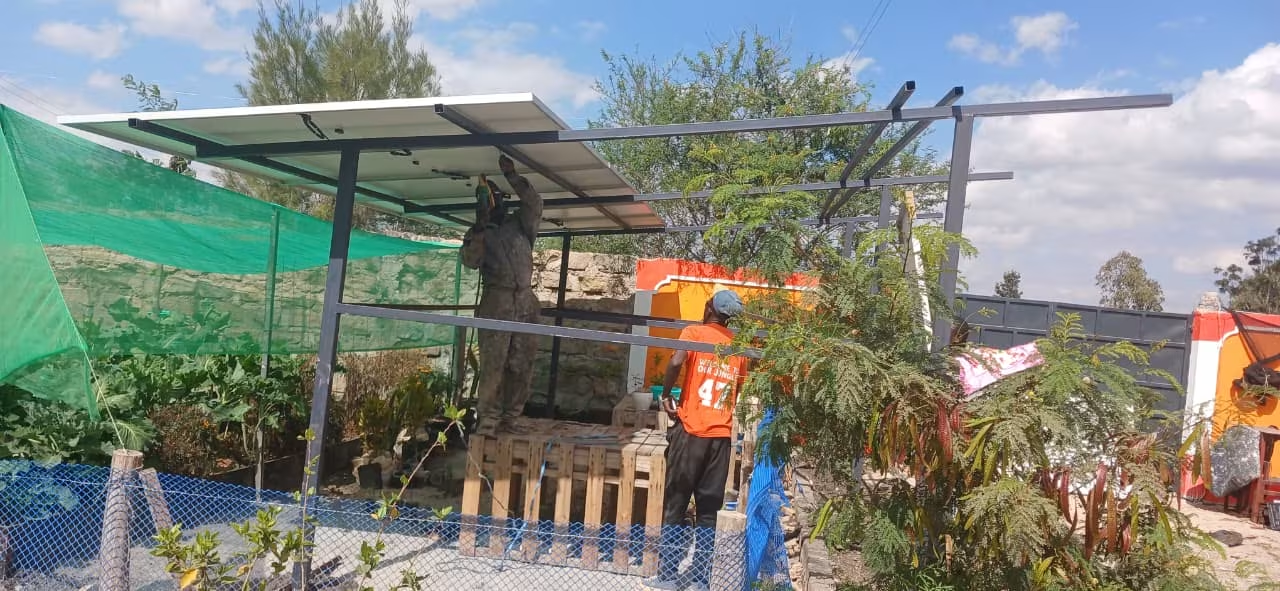
Farm solar water pumping should begin with the dry-season crop plan and available source evidence. A system that suits occasional watering may not support a larger irrigated area. First, connect the planting schedule, water requirement and usable storage. Then ask an assessor to check whether the borehole and delivery arrangement can support that brief.
Explore Masterpiece Hydro-Solutions borehole solarisation and request a farm-specific assessment. Send the borehole reports, crop calendar and tank information you already hold. This guide helps buyers define an irrigation supply project without prescribing crop requirements or promising a particular yield.
Build farm solar water pumping around the crop calendar
List the blocks you intend to irrigate and when each block will need water. Also, identify changes between establishment, ordinary growth and harvest activities. Obtain suitable agronomic guidance for crop water requirements under your conditions. A pumping contractor needs that demand brief; the pump model cannot establish the crop’s needs.
Next, separate the present planted area from possible expansion. A plan to double planting later should appear as a second scenario. However, do not quietly combine both areas in an unexplained allowance. Clear stages let you compare the source requirement, storage and equipment implications before committing land or ordering a larger system.
Plan farm solar water pumping for the difficult season
Ask when water availability matters most to the farm. Dry-season irrigation may coincide with high demand and uncertain source conditions. However, do not assume a universal Kenyan solar window or local groundwater pattern. The assessor should identify which site records and seasonal assumptions support the proposal, including any limits to the available evidence.
Also, describe the consequence of missing an irrigation period. Some work may move within the day, while another activity may need a reserve. Discuss those operational needs with the relevant farm advisers. The aim is a realistic supply timetable, rather than an optimistic daily total that ignores when the fields need water.
Check the borehole before increasing irrigated area
Provide the test-pumping report and completion records. Next, ask how the assessed available supply relates to the proposed abstraction rate and schedule. Pump capacity, aquifer yield and crop demand remain separate quantities. More panels do not remove a source limit, and an attractive pump rating does not prove sustainable abstraction.
For farm solar water pumping, make any source shortfall explicit before planting expands. Options may include a smaller irrigated area, changed timing or an assessed supplementary supply. Those choices need proper farm planning. Buying a stronger pump first can leave the owner with equipment that still cannot support the intended daily requirement.
Start with storage, then define field delivery
Storage can separate daytime water production from the preferred irrigation timetable. First, identify usable capacity and the destination of each tank. Next, consider how the farm will refill storage while meeting continuing demand. A nominal tank size alone does not show the volume available for irrigation or the reserve held for other essential uses.
Also, distinguish borehole-to-tank pumping from tank-to-field distribution. Field pressure requirements, changing block elevations and irrigation methods may need separate assessment. Ask who designs each part and where one contractor’s scope ends. This prevents a source pump quote from silently taking responsibility for an undefined irrigation network.
Compare farm solar water pumping arrangements
Different arrangements can suit different operating plans. However, each option needs a duty assessment and an honest source balance. Use the table to organise questions rather than select a design without a site visit. Ask the assessor to explain the practical trade-offs for the farm’s actual blocks and timetable.
| Arrangement | Useful planning question | Evidence needed |
|---|---|---|
| Pump into central storage | Can stored water support the irrigation timetable? | Usable tank volume and refill balance |
| Several storage destinations | Does each destination create a different duty? | Elevations, routes and operating sequence |
| Direct field delivery proposal | How will variable production match field needs? | Assessed flow, pressure and operating conditions |
| Phased planting expansion | Which stage can the source support? | Separate demand scenarios and source evidence |
| Supplementary supply | What specific shortfall will it cover? | Volume, timing, quality and management plan |
Work through an illustrative irrigation balance
Consider an educational scenario in which a farm’s irrigation adviser identifies a daily requirement of 24 cubic metres. That equals 24,000 litres. Assume measured average borehole delivery reaches four cubic metres per hour. Producing the assumed requirement would need six operating hours. These numbers do not recommend a crop allowance, abstraction rate or solar operating window.
Now assume the farm also needs three cubic metres daily for other uses. The combined requirement becomes 27 cubic metres. Therefore, an irrigation-only calculation would understate the total by 3,000 litres. List domestic, livestock and cleaning requirements separately, then include them in the shared source balance where applicable.
If actual daily production reaches only 22 cubic metres, the assumed shortfall becomes five cubic metres. Storage may bridge a brief interruption, but repeated deficits will exhaust it. Farm solar water pumping decisions should therefore consider the whole farm and reserve recovery, rather than focus on one attractive irrigation flow figure.
Ask for the duty at each important destination
Total dynamic head includes pumping lift, delivery elevation, pipe losses and required outlet pressure. It differs from drilled depth and pump setting depth. Therefore, ask the designer to state the selected flow and head together. The Grundfos guide to pump selection explains why the duty point matters.
If the farm alternates between a nearby tank and an elevated distant block, describe both destinations. Also, report later changes to pipe routes or irrigation arrangements before assuming the same performance. Equipment selection needs the real destination and delivery requirement, rather than a general promise to pump water anywhere on the property.
Keep farm access and daily operation practical
Discuss where panels, controls and access routes can sit without disrupting farm activities. The assessor should consider shade and the suitability of the proposed location. Also, identify seasonal access difficulties and vehicle movements. These details help define a practical installation scope without asking the owner to design mounts or electrical connections.
Assign someone to record delivered water and report interruptions. Provide a backup contact for holidays and busy harvest periods. Operators need clear indicators, safe observation and escalation instructions. Qualified personnel should handle electrical work and protection testing; farm staff should not bypass controls to recover a missed watering period.
Agree commissioning around the farm’s actual brief
Specify which destination the installer will use during commissioning and which conditions the report will record. Useful evidence includes measured delivery, equipment identities and relevant water levels. Also, ask how the team will demonstrate tank-level controls and explain protection behaviour. Record any unresolved difference from the agreed duty before acceptance.
Keep irrigation performance outside the contractor’s scope clearly identified. For example, successful tank filling does not prove even application across every field block. If the project includes downstream irrigation work, agree separate acceptance responsibilities. This gives farm managers a fair way to assess each part without confusing source delivery with crop outcomes.
Check permissions, quality and ongoing records
Consult WRA’s water use allocation guidance and ask about the current site-specific requirements for your intended abstraction. Do not infer permission from the presence of an old borehole. Also, confirm appropriate water analysis for the planned uses with the relevant advisers. Clear appearance alone does not establish suitability.
After handover, keep the crop calendar alongside pumping and tank records. When planting changes, the water brief changes too. The borehole equipping service offers an enquiry route if existing equipment needs reassessment. Share changes early rather than wait until a new block creates a sustained deficit.
Farm owner questions before ordering
Can we select a pump from the number of acres?
Area alone is insufficient. Crop needs, irrigation method, timetable, source capacity and delivery duty all affect the brief. First, obtain a suitable water-demand assessment. Then ask the pumping assessor to connect that demand with the borehole evidence and intended storage arrangement.
Will a larger panel array support more planted land?
Only an assessed design can explain the useful effect. Extra panels cannot overcome inadequate source yield or an unsuitable delivery arrangement. Therefore, compare the proposed daily production with the expanded farm requirement. Keep any remaining shortfall visible before committing to additional planting.
Can irrigation run after sunset?
Suitable storage and downstream delivery may help separate pumping time from irrigation time. However, capacity and field pressure still need assessment. Farm solar water pumping should state how water moves from the source to storage and then reaches each intended irrigation destination.
What should the farm send for a quotation?
Send location, borehole reports, daily water requirements and the crop calendar. Add storage details, field destinations and existing pump information. Also, explain other uses sharing the source. Clearly mark estimates so the assessor can identify the measurements and adviser input still needed.
Prepare the next dry-season brief
Agree the planted area, essential water uses and irrigation timetable before requesting equipment options. Include the storage reserve and how you expect to replenish it. Finally, identify who manages water records and approves changes. These decisions make farm solar water pumping a practical operational project.
Request a farm-specific assessment from Masterpiece Hydro-Solutions with those details. Ask for the source basis, duty point, complete scope and acceptance plan. A clear proposal should explain what the assessed arrangement can support and which planned changes need further review.