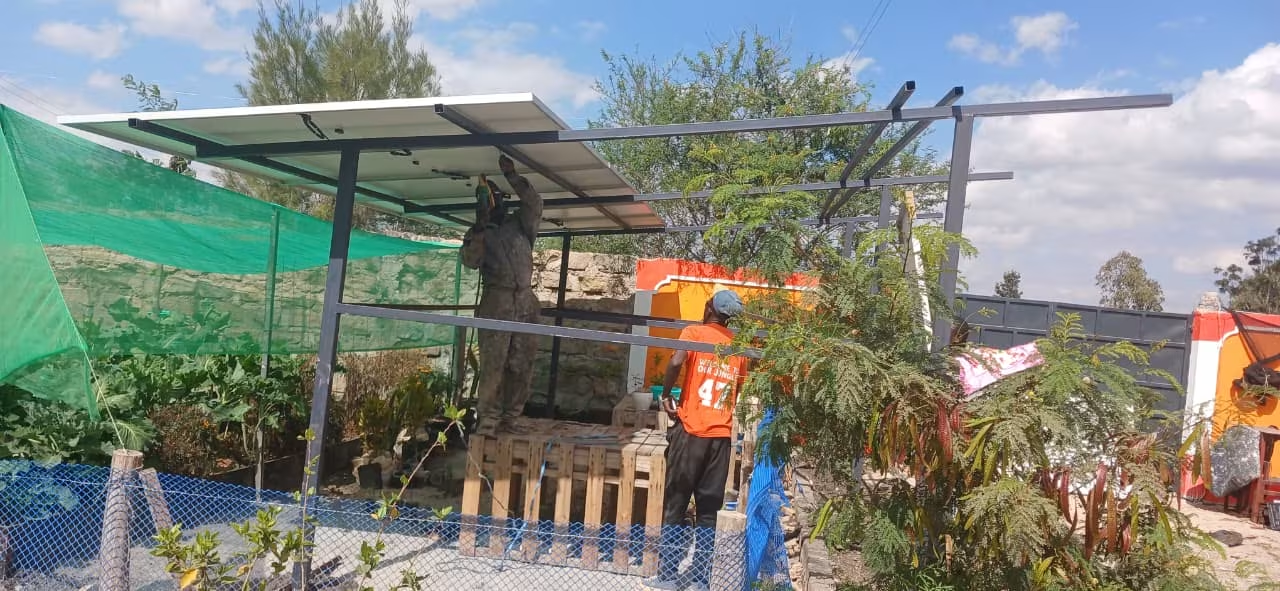
Kajiado solar demand priorities should describe which water uses matter most before equipment selection begins. A preferred total may combine essential supply with flexible activities. Therefore, separate those needs and record their timing honestly. Ask Masterpiece Hydro-Solutions whether an appropriate solar pumping assessment is available for the exact site and proposed service.
Use the Kajiado county project page for the wider location enquiry. See borehole solarisation and request an assessment using your demand records. This guide concerns priority setting, without claiming local sunshine, groundwater capacity or guaranteed service availability.
Start Kajiado solar demand priorities with actual uses
First, list the uses the proposed source should support. A household, cleaning activity and garden can have different timing and consequences during a shortfall. Record them separately. Do not assume the busiest possible combination represents normal daily consumption.
Next, distinguish essential service from activities the owner considers flexible. The owner should explain those priorities rather than ask the equipment supplier to guess them. Qualified personnel can then assess the water arrangement against a clearer brief. A priority list does not establish source capacity.
Also, identify users who are not yet present. A future building or new activity should appear as a labelled scenario. The assessor needs to know which demand is current and which remains conditional. Combining both without explanation creates false certainty.
Gather volume and timing evidence
Existing meter records, tank information and reliable use records can help describe demand. State what period and activity each record represents. Also, identify interruptions or unusual events. A single busy day may not provide a suitable basis for every planning decision.
Next, keep daily volume separate from peak flow. A short period of heavy use does not describe the total daily requirement. Storage may affect how demand reaches the source. Ask the designer to explain those relationships rather than choose a pump only from the busiest outlet moment.
Where records remain unavailable, label assumptions clearly. Do not adopt a universal allowance as a final site design. The provider should explain what further information would improve the assessment. Honest uncertainty is more useful than a precise-looking total without a reliable basis.
When occupancy or an activity changes, note the date beside the demand record. That context helps the assessor distinguish new use from an apparent supply change.
Organise Kajiado solar demand priorities by service
| Demand question | Owner information | Assessment question |
|---|---|---|
| Essential supply | Uses and consequences of interruption | What evidence supports the required service? |
| Flexible use | Activities the owner can reconsider | How does the proposal treat those demands? |
| Timing | Observed use periods and storage behaviour | What supply and reserve arrangement needs assessment? |
| Future expansion | Clearly labelled possible requirements | What later review would the change need? |
| Source limits | Relevant testing and water-level records | What operating assumptions are justified? |
| Delivery | Tank and outlet destinations | Where does the assessed duty end? |
Use the table to clarify decisions rather than invent an operating schedule. Qualified personnel should assess the actual arrangement. The owner should not alter controls or pressure conditions to test a demand theory. Provide normal safe records and ask which further evidence is necessary.
Keep sustainable source capacity separate
Provide the test-pumping report, measured water levels and construction information where available. Drilled depth cannot replace those records. Aquifer yield, pump capacity and preferred demand are different quantities. More panels or a larger pump cannot create sustainable groundwater that the source lacks.
Next, ask how the proposal handles a requirement the source evidence does not support. A useful response may identify further assessment or a revised brief. Do not ask the supplier to guarantee the preferred total simply because the demand is important. Importance does not remove technical uncertainty.
Kajiado solar demand priorities should therefore remain visible when the project reviews source findings. A favourable early report does not establish every later water result. The owner needs to understand the remaining limitation before committing to equipment or additional uses.
Relate priorities to the delivery duty
The Grundfos selection learning resource explains required flow, head and the duty point. Ask the provider how the proposed pump relates to your actual service boundary. A catalogue capacity cannot establish suitability by itself.
Also, identify the tank location and any further distribution stage. Total dynamic head includes pumping lift, delivery elevation, friction and required pressure. Filling storage differs from serving every outlet directly. The proposal should explain which part of the service its scope addresses.
Next, label optional destinations separately. A future tank can change the delivery assessment even when daily demand appears similar. Qualified personnel should review the current plan. Do not assume one early package will serve every later layout without reassessment.
A scenario with household and garden demand
Imagine an owner requests solar pumping for domestic use and a substantial garden at a Kajiado site. The first enquiry combines both as one preferred total. Source records and actual daily use remain incomplete. The owner assumes a larger pump package will satisfy the whole list.
First, the owner separates essential household needs from flexible garden demand. Next, the provider identifies the source and delivery evidence required for assessment. The proposal can then explain what remains supported, provisional or unresolved. It does not promise that priority setting itself increases water production.
The Kajiado solar demand priorities have clarified the decision without describing a real local project. The example is hypothetical. A clearer brief allows the owner to consider limitations honestly. It cannot guarantee groundwater, a particular runtime or a fixed daily solar volume.
Assess storage through usable service
Storage can hold water already delivered, but its existence does not prove an adequate reserve. Ask how the proposed arrangement relates usable capacity to the actual demand pattern. The tank’s nominal label may not describe every operational limitation. Qualified personnel should explain the assessment.
Next, distinguish having stored water from delivering it at the required outlet pressure. Another stage may need assessment. Also, storage does not establish drinking suitability. The owner should not treat a full tank as evidence that every quantity and quality question is resolved.
If existing storage is retained, provide its location and available records. Ask what inspection the proposal needs. Do not climb, enter or alter tanks to collect information. The owner can gather normal safe observations while professionals assess technical suitability.
Describe limited-solar periods without predicting weather
Solar output varies through the day and season. Therefore, ask how the proposal addresses uncertainty in water delivery. This guide does not supply local sunshine hours or promise production under particular weather. The assessment should state its actual assumptions and remaining service limits.
Next, identify whether backup or another supply forms part of the owner brief. Qualified personnel should assess compatibility and scope. Do not improvise electrical switching or connections. A backup power arrangement also cannot remove the source’s assessed capacity limit.
Kajiado solar demand priorities should help explain which needs remain most important during a constraint. The provider can then assess an appropriate arrangement without guessing the owner’s preferences. Keep that brief in the project file rather than relying on a verbal discussion.
Confirm availability and professional responsibilities
Ask the provider about the exact location, intended uses and available assessment scope. The county page does not confirm every resource, date or narrow task. Send safe access photographs where useful. The actual response should identify what the company can assess or offer.
Ask for appropriate current practitioner credentials and verify material claims through EPRA’s renewable-energy information. Qualified personnel must assess electrical compatibility and installation. The owner’s priority list does not provide technical authority to alter the system.
Also, keep water quality separate. Clear water is not necessarily potable. Ask which laboratory analysis fits the intended uses and what professional interpretation follows. A pumping proposal should not imply a drinking-quality guarantee from volume or appearance alone.
Questions about Kajiado solar demand priorities
Can priority setting increase groundwater yield?
No demand list creates additional sustainable source capacity. It helps the assessor understand which service matters most. Provide relevant source records and ask what the evidence supports. A larger equipment package cannot replace the need to understand the available groundwater.
Should I use the busiest day as normal demand?
Record the context and ask how it should inform planning. An unusual day may matter without representing normal use. Separate measured periods and labelled scenarios. Qualified personnel can then assess the service brief without mistaking one event for a verified everyday requirement.
Does storage guarantee supply outside pumping periods?
Storage needs assessment against usable capacity, demand and replenishment. A tank can run short or require another delivery stage. Do not assume its presence guarantees every service condition. Also, storing water does not establish drinking suitability.
Can backup cover every shortfall?
Backup may address part of the power or operating arrangement, subject to qualified assessment. It cannot create groundwater the source lacks. Explain your required service and ask about remaining limits. Do not treat retained power as a universal supply guarantee.
What should the first enquiry include?
Send the location, uses, priorities and available demand records. Add source-testing information and tank destinations where available. Label unknown details clearly. The provider can then confirm availability and explain the assessment needed before equipment selection.
Request an assessment based on stated priorities
Useful Kajiado solar demand priorities connect the owner’s needs with source and delivery evidence. They distinguish essential use, flexible activities and future scenarios. Prepare those details before comparing packages. Then request a clear scope that explains assumptions and the service limits that remain.
Send Masterpiece Hydro-Solutions your Kajiado solar enquiry. Include the demand brief, source records and intended delivery point. Ask for site availability confirmation and an assessment that keeps priorities, capacity and operating assumptions distinct.