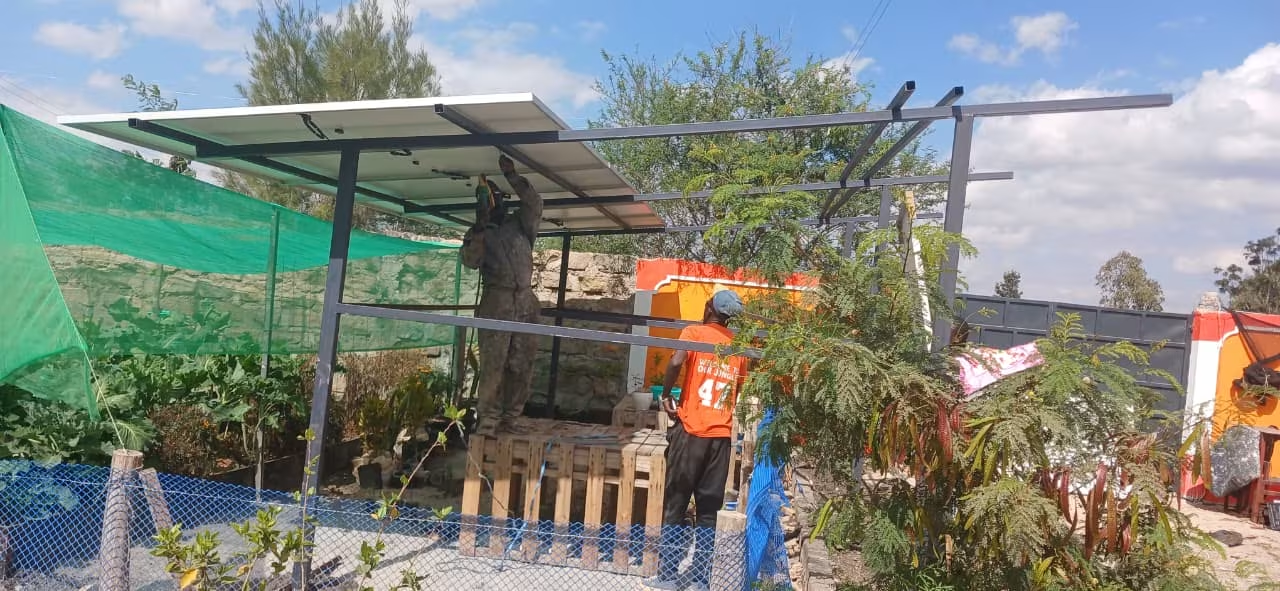
A Kiambu solar retrofit brief should explain the existing pump arrangement before proposing new equipment. An installed electric pump may need compatibility assessment rather than automatic replacement. Therefore, gather the available records and define the intended change first. Ask Masterpiece Hydro-Solutions whether an appropriate assessment is available for your actual site and proposed scope.
Use the Kiambu county project page for the location enquiry. For the technical service, see borehole solarisation and request a retrofit assessment. This guide focuses on retaining or replacing existing equipment without claiming local results, universal compatibility or guaranteed savings.
Start the Kiambu solar retrofit brief with the current system
First, identify the pump, available installation information and the known power arrangement. Also, include commissioning records where available. The provider needs to understand the installed system rather than infer it from a photograph of a control box. Missing records should remain clearly labelled.
Next, describe the current water service and any concern you want the change to address. Reducing grid use differs from correcting inadequate delivery. A solar proposal should not quietly become an assumed repair for every symptom. Qualified personnel should assess those questions separately where necessary.
Also, state whether the pump has operated normally under the existing brief. The owner may not know every technical condition, but normal safe observations can help. Do not open electrical equipment or attempt downhole measurements to complete the file. Professionals should identify the appropriate investigation.
Define what retention would mean
Retaining a pump does not mean every associated item remains unchanged. Ask which interfaces and equipment the proposed assessment considers. Controls, power supply and the intended operating arrangement need clear boundaries. The owner should understand what the supplier proposes without choosing wiring methods.
Next, distinguish technical suitability from a preference to avoid replacement. An existing asset may have value without fitting the proposed duty. Conversely, replacement should have an explained reason. Ask the provider to connect each recommendation to the relevant evidence rather than default to a complete new package.
If records remain inadequate, request an assessment stage with defined outputs. A provisional estimate can support planning if it states assumptions. Do not treat it as final confirmation of compatibility. The supplier should explain which evidence must arrive before installation becomes an accepted instruction.
Compare the Kiambu solar retrofit brief options
| Option question | Retention route | Replacement route |
|---|---|---|
| Existing evidence | Assess actual equipment identity and condition | Explain why current equipment does not suit the proposal |
| Required duty | Check against source and delivery requirements | Select from the same current service brief |
| Compatibility | Identify interfaces needing qualified review | Define the complete proposed arrangement |
| Included work | State retained assets and excluded tasks | State removal, supply and installation boundaries |
| Acceptance | Document the assessed operating arrangement | Document the revised installation and commissioning |
| Uncertainty | Keep incomplete condition evidence visible | Do not imply new equipment guarantees source capacity |
Use the comparison to understand the decision rather than select a universal route. Ask for itemised proposals based on equivalent service assumptions. Also, clarify whether VAT applies and whether each amount includes it. Lower equipment expenditure alone cannot establish the better complete arrangement.
Bring source records into the assessment
Provide test-pumping results and relevant measured water levels where available. Drilled depth, pumping level and pump setting are different quantities. Ask the assessor which evidence it uses. An existing pump’s capacity label cannot replace a source-performance assessment.
Next, distinguish aquifer yield, installed capacity and user demand. More panels cannot create sustainable groundwater that the source lacks. A retrofit must respect the source evidence while addressing the required service. The provider should explain remaining limitations rather than promise unlimited production.
The Kiambu solar retrofit brief should also state which source records may no longer address the current question. An old test can provide context without proving present performance. Qualified personnel should decide whether further assessment is necessary. Do not infer a fixed retesting interval from a general guide.
Keep the delivery duty current
The Grundfos selection learning resource explains required flow, head and the duty point. Ask the provider how the current pump and any replacement relate to those inputs. A familiar model cannot establish suitability for a changed destination.
Also, show the tank location and intended route. Total dynamic head considers pumping lift, delivery elevation, friction and required outlet pressure. A moved tank can change the duty even when the borehole remains unchanged. The assessment should identify consistent reference levels and assumptions.
Next, describe actual demand and timing. Daily volume differs from peak flow, while storage has a separate role. Do not select equipment only from the busiest moment or a preferred runtime. Qualified assessment should connect the delivery requirement with source and power conditions.
A scenario with a healthy pump and a changed objective
Imagine an owner of a Kiambu property wants to reduce grid dependence while the existing pump still fills storage. One quotation assumes replacement, while another assumes retention. Neither clearly states which installation records or operating requirements informed the choice. The owner cannot compare the routes fairly.
First, the owner provides the available pump information and current service brief. Next, qualified personnel identify compatibility and condition questions. Each supplier explains the reason for its proposal and the work included. The owner can then compare equivalent objectives rather than unexplained packages.
The Kiambu solar retrofit brief has supported a clearer decision without guaranteeing retention or replacement. The example is hypothetical and describes no completed local work. The correct route depends on the actual evidence. A preference to keep an asset cannot replace technical assessment.
State backup expectations without designing switching
Tell the provider whether grid or another supply should remain part of the arrangement. Also, describe the water service needed during periods of limited solar production. Backup expectations should appear in the brief. They should not remain an informal assumption outside the quoted scope.
Next, ask qualified personnel to explain the proposed operating arrangement and responsibilities. Owners should not improvise connections, switchgear or protection settings. Compatibility and electrical safety require appropriate professional assessment. The buyer needs an understandable system description and clear installation boundaries.
Also, avoid equating backup with unlimited water availability. The source still has its assessed limitations. Storage and operating time may matter alongside retained power. Ask the provider to explain the remaining service limits rather than promise uninterrupted output under every condition.
Request commissioning evidence for the chosen route
Agree which checks and records form part of the installation scope. The qualified team should relate them to the accepted duty and operating arrangement. A brief demonstration cannot answer every seasonal output question. The handover should state what the checks establish and what they do not.
Next, retain the actual equipment list and any approved substitutions. A retained pump should remain clearly identified alongside newly supplied items. Also, request the applicable warranty and support documents. Do not assume one product term covers every installation component or future visit.
The Kiambu solar retrofit brief should become part of that final file. A future assessor can then trace why the project retained or replaced equipment. Clear records help explain later concerns without guaranteeing performance. They also reduce dependence on memory of the sales discussion.
Confirm availability, competence and separate requirements
Ask Masterpiece to review the exact location and proposed scope before confirming availability. The county page does not promise every narrow retrofit task or date. Provide safe access photographs where relevant. The actual response should identify the assessment or service the provider can offer.
Ask for appropriate current practitioner credentials and verify material claims through EPRA’s renewable-energy information. A quotation logo does not establish a specific licence. Qualified personnel must assess and perform the electrical and installation tasks relevant to the actual proposal.
Also, keep authority and water-quality matters separate. Ask the relevant body about current project requirements. Clear water is not necessarily potable, so suitable laboratory evidence remains important for the intended use. An equipment retrofit cannot provide every approval or quality guarantee.
Questions about a Kiambu solar retrofit brief
Must an existing pump always be replaced?
Do not assume either route before assessment. Existing equipment needs relevant identity, condition and duty review. Ask why the provider recommends retention or replacement. The decision should follow the actual source and delivery evidence rather than a generic retrofit package.
Can I send only the motor power rating?
The rating provides limited context without the complete required duty and installed arrangement. Send the available records and label gaps. Qualified personnel should identify further information needed. Do not treat one label as confirmation of compatibility or current source performance.
Will solarisation repair low yield?
More solar equipment cannot create sustainable groundwater the source lacks. Describe reduced delivery separately and request appropriate assessment. The retrofit brief should distinguish an energy objective from a source-performance concern. Each question needs relevant evidence before a remedy decision.
Can backup be added informally later?
Ask qualified personnel to assess the actual proposed arrangement before any change. Compatibility, protection and installation boundaries matter. Do not improvise wiring or switching. State backup expectations in the enquiry so the provider can explain whether an appropriate scope is available.
What should the final quotation show?
Request the assessed duty, retained assets, new equipment and work boundaries. Also, identify assumptions, exclusions and commissioning records. Clarify VAT treatment and support terms. The proposal should explain why its route suits the evidence without promising universal savings or output.
Request a retrofit assessment from the actual records
A useful Kiambu solar retrofit brief separates the existing asset from the proposed change. It keeps compatibility, source evidence and the current duty visible. Gather the available file before comparing routes. Then request an assessed proposal and clear confirmation of site-specific availability.
Send Masterpiece Hydro-Solutions your Kiambu solar retrofit enquiry. Include the pump information, source records and intended service. Ask what assessment is available and which evidence it needs before retention or replacement becomes a final commitment.