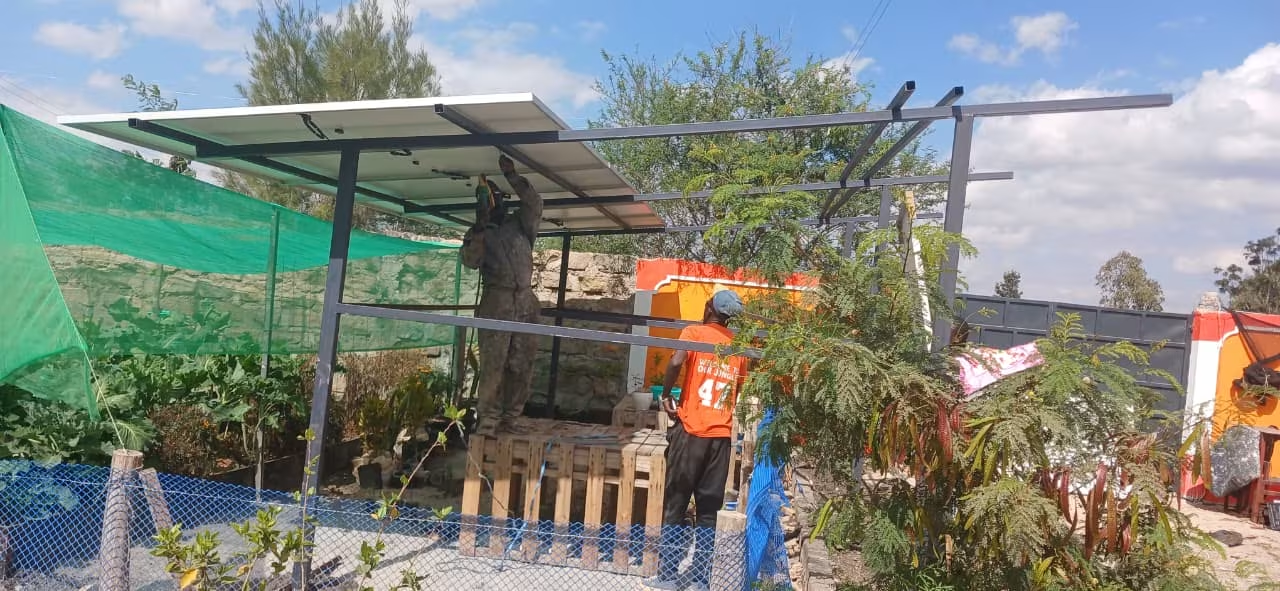
Kitui solar storage planning should explain how delivered water, usable reserve and household or business demand fit together. A large tank alone cannot guarantee supply. Therefore, record when water enters and leaves storage before selecting an arrangement. Ask Masterpiece Hydro-Solutions whether an appropriate solar pumping assessment is available for the exact site and proposed use.
Use the Kitui county project page for the wider enquiry. See borehole solarisation and request an assessment with source and storage information. This guide addresses the storage decision without claiming local sunshine, standard tank sizes or guaranteed installation availability.
Start Kitui solar storage planning with the service period
First, describe when users need water and which activities matter most. Demand before or after pumping periods raises a storage question. However, the owner’s preferred timing does not establish production. The assessor needs both the demand pattern and source evidence.
Next, distinguish current records from estimates. Meter readings, normal tank observations and reliable use information may help. State the period and circumstances they represent. An unusual event can matter without becoming the assumed everyday requirement for the entire system.
Also, identify flexible uses separately from essential needs. This allows the owner to review constraints honestly. A tank should not hide an unsupported demand total. Qualified personnel should explain which service the available production and storage arrangement can support.
Distinguish nominal capacity from usable reserve
A tank label describes one piece of information about the asset. It does not automatically establish the reserve available to the user under the actual arrangement. Ask the assessor what evidence it needs about condition, connections and operation. Do not assume the whole nominal figure is always usable.
Next, identify whether water must reach another outlet or elevated destination after storage. A full ground-level tank may still require a separate delivery stage. The proposal should explain its endpoint clearly. Storage and outlet pressure answer different questions.
Also, do not climb or enter tanks to collect missing information. Provide available records and normal safe observations. Qualified personnel should assess technical details and any necessary inspection. The owner’s role is to describe the service, not perform hazardous investigation.
Organise Kitui solar storage planning evidence
| Storage question | Information to provide | Assessment boundary |
|---|---|---|
| Demand timing | Normal use periods and priority activities | Separate current use from future scenarios |
| Existing storage | Location and available asset records | Do not assume condition or usable capacity |
| Replenishment | Relevant delivered-volume observations | Keep actual pumping time identifiable |
| Other movements | Known withdrawals and additional sources | Do not equate level rise with borehole flow automatically |
| Final delivery | Outlets and intended service boundary | Identify any further distribution stage |
| Reserve expectation | Service the owner wants during a constraint | Ask what the evidence can support |
The table supports an enquiry rather than supplies a tank-sizing rule. Actual storage assessment needs the relevant demand and production evidence. Ask the provider to explain assumptions and limits. A familiar tank size from another project cannot establish suitability for your own arrangement.
Use tank observations without overstating precision
A level change can reflect both inflow and withdrawal. Users may consume water while the borehole replenishes storage. Another source may also contribute. Therefore, record known movements before interpreting a filling period as direct borehole output. Missing movements should remain clearly labelled.
Next, ask whether the available level indication relates reliably to volume. A visible height change may not answer that question. Qualified personnel can identify the appropriate measurement approach. Do not improvise equipment, alter pipework or undertake pressure tests to create a comparison.
If another supply sometimes fills the tank, keep that contribution visible in the record. Otherwise, a successful refill can appear to prove borehole production that the observation never measured. Ask the assessor how that uncertainty affects the comparison.
Kitui solar storage planning should preserve the distinction between an observation and a measured production result. A manager can report that a tank filled slowly during occupied use. That remains useful context. It should not become an exact source yield without supporting evidence.
Relate replenishment to source capacity
Provide test-pumping results, measured water levels and construction information where available. Aquifer yield, pump capacity and user demand remain different quantities. A larger tank cannot create groundwater. Likewise, more panels cannot correct insufficient sustainable source capacity.
Next, ask how the proposed operation respects the source evidence. The provider should explain any limitation before presenting a daily volume assumption. Do not request a guaranteed replenishment figure merely because the storage plan requires it. The actual source and duty need qualified assessment.
The Grundfos selection learning resource explains required flow, head and the duty point. The storage arrangement should connect with those assessed inputs. A catalogue pump capacity cannot establish the whole daily supply.
A scenario with a full tank and a later shortfall
Imagine an owner considers a larger tank for a Kitui site after running short outside pumping periods. The existing tank sometimes fills, but use and replenishment records remain incomplete. The owner assumes doubling storage will resolve the concern permanently.
First, the owner records the actual demand pattern and available production information. Next, qualified personnel assess usable storage and the delivery boundary. The findings can then explain whether the shortfall relates to reserve, replenishment or another unresolved service question. A tank purchase should follow that assessment.
The Kitui solar storage planning example is hypothetical and describes no completed local project. It shows why storage cannot be assessed in isolation. A larger vessel may hold more delivered water without guaranteeing that the source can replenish it under the required conditions.
Describe limited-solar periods without weather promises
Solar output varies through the day and season. Ask how the proposed storage arrangement deals with uncertainty in delivered volume. This guide does not assign local sunshine hours or a guaranteed production period. The provider should state the assumptions behind its actual proposal.
Next, identify essential service expectations during a constrained period. Backup power or another supply can form part of a separate assessed scope. Do not assume either exists automatically. Qualified personnel must review compatibility and boundaries before any electrical change.
Also, keep the source limitation visible under backup operation. More operating time cannot create sustainable yield beyond what the evidence supports. The owner needs an explanation of the remaining service limits. A continuity brief should not become an unconditional promise of water.
Check quality and condition separately
Storage is not a drinking-water guarantee. Clear water does not establish suitable laboratory findings for the intended use. Ask which analysis and professional interpretation are appropriate. A full tank cannot replace that evidence or prove every quality concern is resolved.
Next, provide existing tank and installation records where available. Ask what condition assessment the proposal requires before retaining the asset. Owners should not enter confined spaces or perform chemical treatment from general advice. Qualified personnel must assess and undertake relevant work.
Kitui solar storage planning should also identify custody of quality and equipment records. Future managers need to know what the project assessed and what remains limited. Keep the original findings with the current service brief rather than retain only a general note that the water system works.
Confirm scope, credentials and site availability
Ask Masterpiece about the exact location, proposed service and available assessment scope. The county page is an enquiry starting point without promising every task or date. Provide safe access information. The actual response should identify what the provider can assess or offer.
Ask for appropriate current practitioner credentials and verify material claims through EPRA’s renewable-energy information. Qualified personnel must assess electrical and installation tasks. A storage plan does not authorise the owner to alter controls or connections.
Also, ask the relevant authority about current project requirements. The WRA permitting guidance distinguishes construction authorisation from a later water permit. A storage or equipment quotation cannot replace that confirmation or guarantee approval.
Questions about Kitui solar storage planning
Does a larger tank guarantee fewer shortages?
Not without understanding replenishment, usable reserve and actual demand. A larger vessel stores water that the system has already delivered. It cannot create source capacity or guarantee future production. Ask qualified personnel which evidence supports the proposed service.
Can filling time establish borehole flow?
Only an appropriately understood observation can support that conclusion. Other inflows and withdrawals may affect the level change. Ask how the measurement boundary and volume are established. Otherwise, label the record as a tank observation rather than precise source performance.
Does ground-level storage provide outlet pressure?
That depends on the assessed distribution arrangement. A further stage may be necessary. Explain the intended outlets and service before selection. Do not assume water present in storage automatically reaches every destination at the required pressure.
Can I rely on a fixed daily solar period?
Ask for the proposal’s actual assumptions and uncertainty. Solar output varies, so a universal period cannot establish your daily supply. Source evidence and required duty also matter. Do not use an invented sunshine figure as a site-specific production guarantee.
What should the first enquiry contain?
Send the location, demand pattern, source records and available storage information. Identify known additional inflows and withdrawals. Also, label missing details. The provider can then confirm availability and explain the assessment needed before recommending the arrangement.
Request storage as part of the whole service
Useful Kitui solar storage planning connects demand, replenishment and the final delivery boundary. It keeps nominal capacity and actual reserve distinct. Gather the normal operating evidence before selecting a tank. Then request a qualified assessment with clear assumptions and limits.
Send Masterpiece Hydro-Solutions your Kitui solar enquiry. Include the source information, storage records and essential service needs. Ask for availability confirmation and an assessed scope linking daily delivery with the intended reserve arrangement.