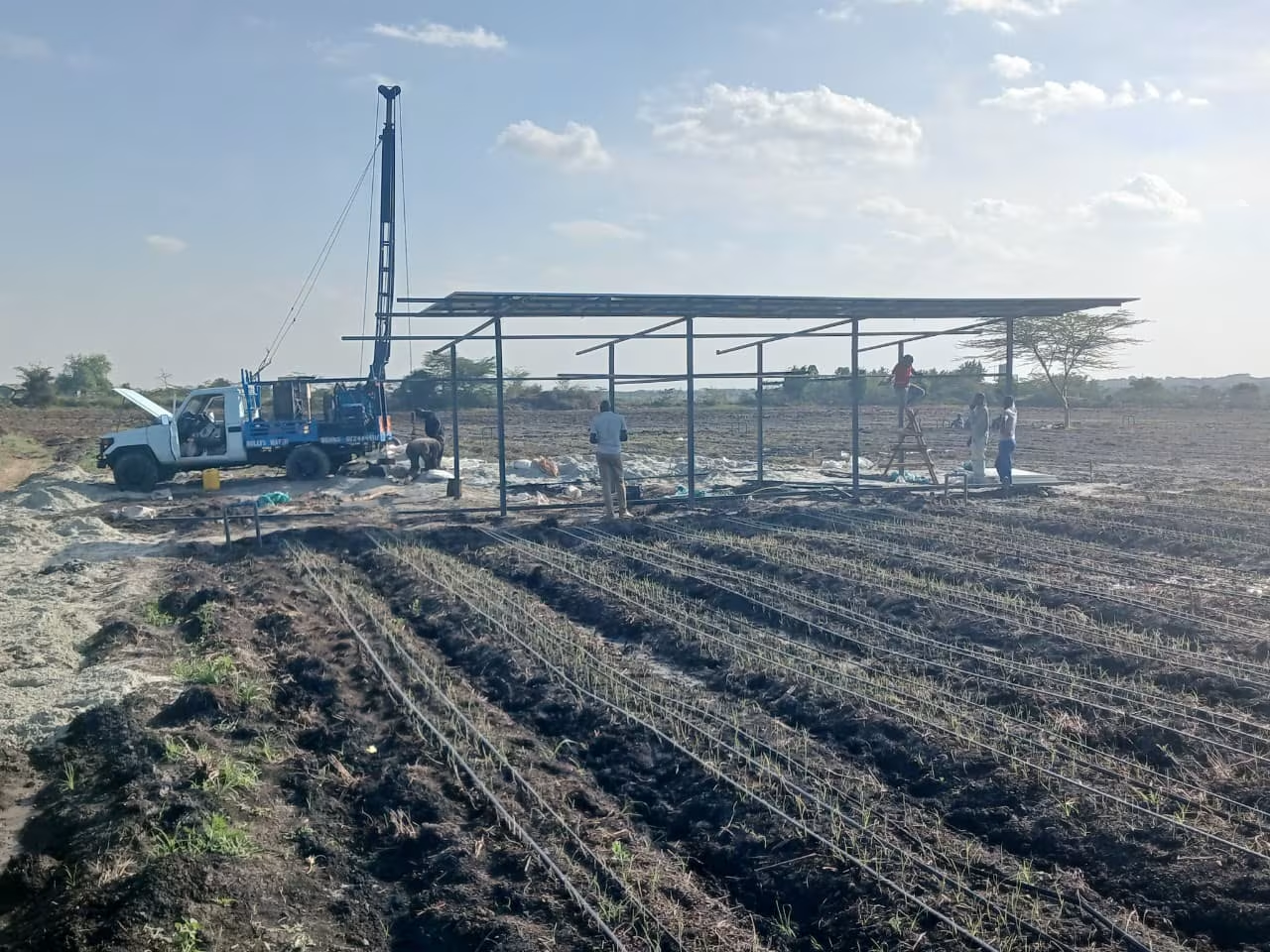
Nakuru solar quote records help connect a completed borehole with the equipment decision that follows. A location alone cannot establish a suitable solar pumping package. Therefore, send the actual source evidence and delivery brief together. Ask Masterpiece Hydro-Solutions to confirm whether an appropriate assessment is available for your specific site and proposed work.
Start with the Nakuru county project page for the wider location enquiry. For the technical service, see borehole solarisation and request a site-specific assessment. This guide focuses on transferring reliable records from the source stage into a solar equipment proposal, without claiming local results or guaranteed coverage.
Start Nakuru solar quote records with the actual source
First, identify the borehole location and whether the source is new or already operating. A construction proposal may not describe the final completed asset. Provide actual completion information where available. Also, include approved changes that affect how the assessor understands the borehole.
Next, attach the test-pumping report and measured water levels. Distinguish those records from informal observations during drilling. Some visible water does not establish sustainable production for every use. Qualified personnel should interpret the evidence and identify what further information selection needs.
Also, label anything still missing. Do not substitute the drilled depth for a pumping level or invent a yield to complete the enquiry. An honest incomplete file allows a clearer assessment step. An apparently precise but unsupported figure can distort the proposed equipment duty.
Transfer the project brief without losing its meaning
The drilling team, owner and solar assessor may each hold different parts of the information. Therefore, prepare one current brief that identifies intended uses and priorities. If the project changed after drilling, state the change. The next supplier should not have to guess which version still applies.
Next, distinguish current demand from future ideas. A planned extension or irrigation use can inform a scenario without becoming confirmed consumption. Also, describe the daily pattern where reliable records exist. The assessor needs both volume and timing context to understand the service.
Finally, identify the intended delivery point. A tank location, route and required outlet arrangement affect the assessment. A package suitable for one assumed destination may not address another. Ask the supplier to state the boundary clearly before comparing equipment lists.
Organise Nakuru solar quote records by decision
| Record group | Useful material | Question it supports |
|---|---|---|
| Source identity | Actual location and completion information | Which completed asset does the proposal address? |
| Performance | Test-pumping results and water levels | What operating assumptions need qualified review? |
| Demand | Uses, priorities and available records | What water service does the owner need? |
| Delivery | Tank, route and outlet information | Where will the proposed system deliver? |
| Existing equipment | Reliable identification and installation records | What needs compatibility assessment? |
| Document status | Dates, versions and missing items | Which assumptions remain provisional? |
Use the table to organise evidence rather than design the installation. Equipment selection and electrical work need qualified personnel. The owner can identify missing records without attempting technical measurements. Ask the proposed provider which assessment its actual resources and scope can support.
Keep depth and level labels clear
Drilled depth, static water level, pumping water level and pump setting describe different features. Ask which reference point each record uses. A number copied without its label may lose its meaning. The assessor should explain any inconsistency before carrying it into selection.
Next, check whether the quotation uses the same source information as the report. If a figure differs, request the reason rather than choose the more attractive package. The difference may need clarification or additional assessment. Do not resolve it through an owner’s guess about the correct depth.
Nakuru solar quote records should preserve the original documents alongside summaries. A short message can help the enquiry but may omit limitations. The supplier needs the complete relevant record. Keep later clarifications attached to the version they explain so the evidence remains traceable.
Ask how the source informs the solar duty
The Grundfos pump selection learning resource explains required flow, head and the duty point. Ask the assessor to connect those principles with your completed borehole. A model label or motor rating alone cannot establish a suitable operating arrangement.
Total dynamic head considers pumping lift, delivery elevation, friction and required outlet pressure. Therefore, drilled depth alone cannot select the package. Also, installed pump capacity does not equal sustainable aquifer yield. A larger pump or more panels cannot create groundwater that the source lacks.
Next, ask how the proposed solar operation relates to demand and storage. Output varies through the day and season. The proposal should explain its assumptions without promising fixed production from an unverified daily sunshine figure. This guide provides no local solar-performance prediction.
A scenario with inconsistent document versions
Imagine an owner requests a solar proposal for a Nakuru site after drilling. The first enquiry includes a preliminary report, while a later message gives a different tank location. The supplier’s estimate still uses the earlier delivery boundary. The equipment comparison now rests on mixed versions.
First, the owner identifies the current source documents and agreed delivery point. Next, the owner sends a consolidated clarification and asks the supplier to state its revised assumptions. Any further measurements remain a qualified assessment task. The quotation can then address one consistent brief.
The Nakuru solar quote records have improved the decision without proving equipment suitability by themselves. The example describes an imaginary information problem, not a completed local project. A clear document transfer helps the assessor ask the right questions. It cannot guarantee yield, approval or final output.
Describe existing equipment without assuming compatibility
If a pump is already installed, provide available model and installation information. Ask whether the proposed solar assessment can consider retention or needs more evidence. Do not assume every electric pump can use the same retrofit package. Compatibility needs appropriate professional review.
Also, identify grid or other backup expectations. The provider should explain the proposed operating boundary and any excluded work. Owners should not improvise switching, wiring or protection settings. Qualified personnel must assess and perform the relevant electrical tasks for the actual arrangement.
Next, retain the assessment explanation with the quote. A verbal statement that the equipment will work may leave important assumptions unstated. Ask what the proposal includes and what remains conditional. The final commitment should reflect the assessed system rather than a generic package.
Confirm availability and mobilisation separately
A county enquiry does not confirm that a particular date, narrow task or resource is available. Ask Masterpiece to review the exact location and proposed scope. Also, provide safe access photographs and a practical site contact. The team can then identify further information or inspection requirements.
Next, ask which movement and site-assessment items the quotation includes. Do not infer a local response time or transport cost from the county name. Actual route and resource questions need assessment. The proposal should state its assumptions without making unverified coverage promises.
Nakuru solar quote records can include that access file alongside the technical documents. However, route readiness and pump selection remain different questions. A usable approach does not establish a suitable duty. Both boundaries need to remain clear when the project reaches an installation proposal.
Keep credentials, quality and approvals visible
Ask for appropriate current solar practitioner credentials and verify material claims through EPRA’s renewable-energy information. Do not assume a particular licence from a quotation logo. The provider should identify the qualified responsibilities relevant to its actual scope.
Also, keep drinking suitability separate from equipment operation. Clear water does not establish the relevant laboratory findings. Ask which analysis fits the intended use. A solar pump delivering water to a tank cannot provide a complete quality guarantee.
Finally, confirm current authority requirements for the project with the relevant body. Construction authorisation and permission to abstract are different matters under the WRA permitting guidance. Do not treat the equipment quotation as approval for every proposed activity.
Questions about Nakuru solar quote records
Can I enquire before receiving every report?
Yes, describe what you hold and what remains unavailable. Ask whether an appropriate assessment is available and which evidence it needs. The provider should explain any provisional estimate. Do not present missing measurements as confirmed facts to obtain a complete-looking package price.
Does the county page confirm installation availability?
Confirm your specific location, scope and proposed timing through an enquiry. A county page provides a starting point without proving every narrow service is available. Send the technical brief and access information. The actual response should identify what the provider can assess or offer.
Should the report and quote use the same labels?
The supplier should explain how its assumptions relate to the source records. Ask for clarification where labels or figures differ. Different depth and water-level quantities should not become interchangeable. Qualified interpretation is necessary before the owner relies on the selection basis.
Can panel count establish daily delivery?
No panel count alone establishes a site-specific water service. Source evidence, required duty and operating conditions all matter. Ask for the proposal’s assumptions and limits. More panels cannot solve inadequate sustainable yield or replace the relevant equipment assessment.
What should the final quote identify?
Request the assessed duty, included equipment and installation boundary. Also, identify assumptions, exclusions and commissioning records. Ask whether VAT applies and whether the total includes it. The proposal should remain traceable to the current source and delivery information.
Send one current evidence pack
Useful Nakuru solar quote records preserve the connection between source evidence and equipment selection. They keep document versions, delivery assumptions and missing information visible. Gather the current file before comparing packages. Then request a clear assessment for the actual site and service.
Send Masterpiece Hydro-Solutions your Nakuru solar enquiry. Include the test report, actual construction information and intended delivery point. Ask for availability confirmation and an assessed scope with its remaining assumptions clearly stated.