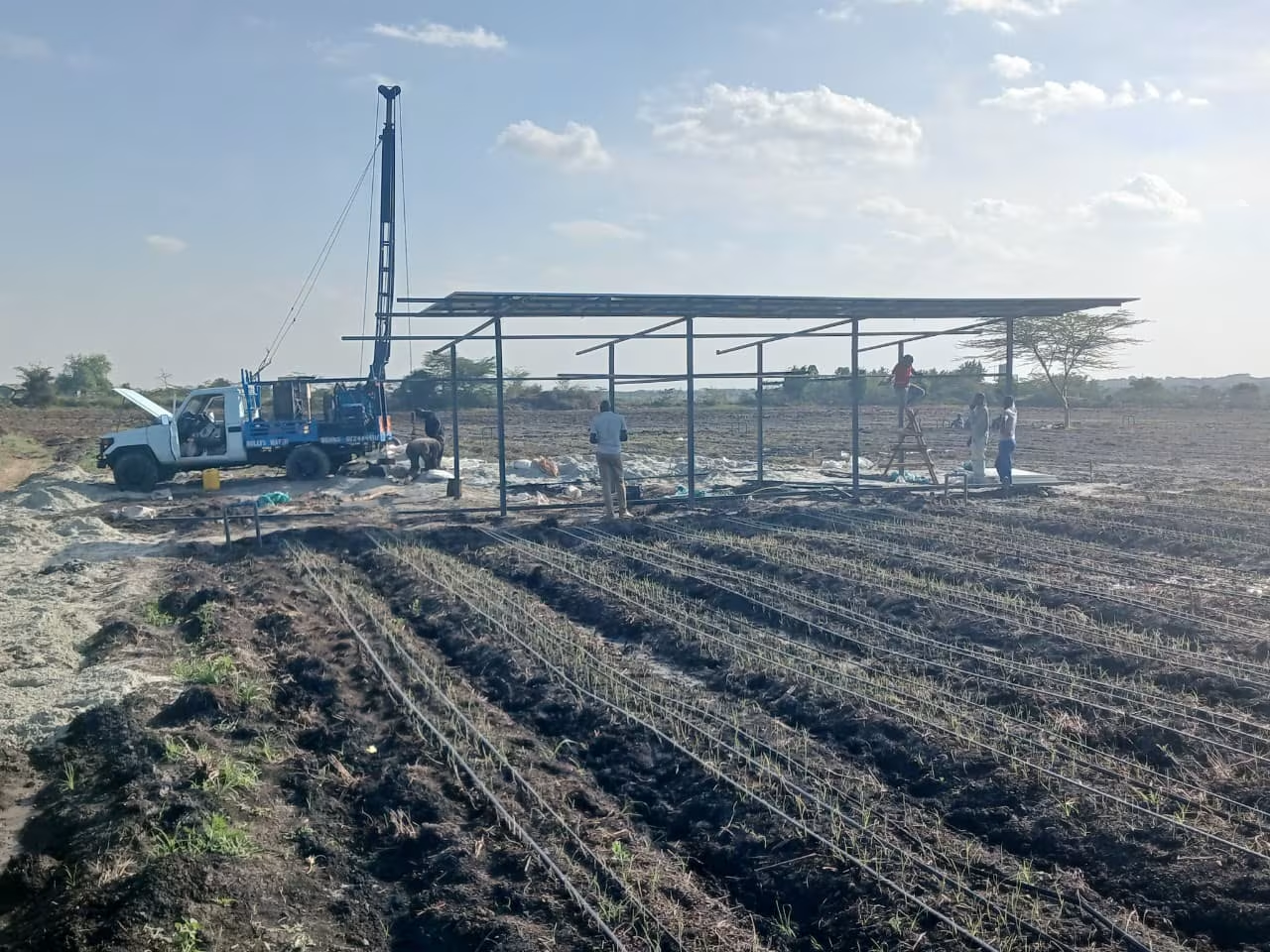
Solar pump cable routing needs a coordinated design and a record that future qualified service teams can understand. The route connects equipment across a real site, where access and other activities matter. First, identify the proposed arrangement and responsibilities. Then ask appropriately qualified personnel to assess the electrical requirements, protection and installation scope.
Explore Masterpiece Hydro-Solutions borehole solarisation and request a route and installation assessment. Share available plans and equipment information. This guide helps buyers prepare records and compare scope; it supplies no cable sizes, trench dimensions, connection details or do-it-yourself electrical methods.
Describe the equipment and route boundaries
Start with the available pump, controller and solar-array identities. Identify their proposed locations and the relevant project boundary. A general description of solar pumping leaves too much unstated for a useful route discussion. Ask the assessor which information it needs before defining the installation scope.
Also, state whether the arrangement includes another approved power source or existing equipment proposed for retention. Qualified personnel should assess the relevant interfaces and compatibility. The owner should describe the records available rather than guess how different parts are connected.
Keep current and future stages separate. If the array may move or another building may be added, present those possibilities explicitly. The professional can identify what the present route proposal addresses and which changes would require another assessment.
Plan solar pump cable routing with site information
Provide the available site plan and identify ordinary access routes, operating areas and planned work. Tell the assessor about services or restrictions shown in the records. Label uncertain information clearly. An incomplete plan should not be presented as proof that a route has no other constraints.
Next, identify who can coordinate entry and explain current site activities. Qualified personnel should determine the appropriate investigation and technical requirements. Owners should not dig, open equipment or attempt to trace electrical services themselves to complete a quotation enquiry.
Solar pump cable routing should be assessed against the actual arrangement. A shorter line drawn on a photograph is not automatically the suitable choice. Ask the team to explain the proposed route and any assumptions that need confirmation before installation begins.
Leave electrical selection to the appropriate professionals
The cable and associated installation need to suit the actual equipment and assessed conditions. Ask who takes responsibility for selection, connection and verification. A generic online table cannot establish suitability for every solar pumping arrangement or supply configuration.
The Grundfos CU202 instructions contain product-specific electrical installation requirements. This illustrates why the correct equipment documentation belongs in a qualified assessment. It is not a universal route design or an instruction for an owner to make connections.
Also, verify relevant current practitioner claims through EPRA’s renewable-energy information and appropriate official channels. Ask the supplier to identify the professional responsibilities relevant to its scope. A business logo or product brochure does not establish every required authorisation.
Compare solar pump cable routing proposals transparently
The table helps an owner ask comparable questions. It does not define electrical or civil requirements. The responsible professionals should explain which arrangements apply to the actual site and which associated tasks belong within the proposed scope.
| Comparison area | Information to request | Decision boundary |
|---|---|---|
| Route basis | Identified equipment locations and site plan | A preliminary sketch may need further assessment. |
| Electrical responsibility | Named qualified selection and verification roles | The owner does not determine cable suitability. |
| Site interfaces | Known activities, services and access constraints | Missing records remain an investigation question. |
| Associated work | Included route preparation, reinstatement and coordination | A cable-only price may cover a smaller scope. |
| Final records | Installed route information and change history | A drawing should describe what was actually completed. |
Ask each supplier to state what its quotation excludes. Another route may involve different associated work, permissions or installation arrangements. Compare the complete assessed proposal rather than use cable length alone as a measure of value or suitability.
Coordinate other work before approving a route
Tell the provider about planned building, fencing, drainage or other relevant site changes. These activities may raise coordination questions that the responsible team needs to assess. Identify confirmed plans separately from early ideas so the proposal reflects their actual status.
Also, ask who coordinates with other contractors where their work shares an area. The project needs an understandable responsibility boundary and communication route. A pumping supplier should not be assumed to manage every other service or site activity unless the written scope establishes that role.
If access or permission questions remain uncertain, identify the relevant parties and obtain suitable advice. A technical route proposal does not settle every private agreement or land-access matter. Keep those decisions visible rather than treat a convenient drawing as authority to proceed anywhere.
Discuss protection through an assessed scope
Ask the qualified designer how the proposed route addresses the relevant site conditions and equipment requirements. The explanation should be understandable without requiring the owner to select technical protective measures. A vague promise that the cable will be protected leaves the actual scope unclear.
Next, request identification of the supplied products and installation responsibilities. Where the proposal depends on another contractor’s work, ask what evidence or coordination is required. Keep those interfaces clear before treating the entire route as included in one equipment package.
This guide does not prescribe burial, enclosure, separation or fixing arrangements. Those decisions need an appropriate assessment and applicable requirements. Do not copy a visible detail from another project or assume a particular appearance establishes a suitable electrical installation.
Use an illustrative relocation scenario
Imagine an owner approves a preliminary array position, then requests a move before installation because the area will serve another activity. The new position appears closer to a building, and the owner expects a lower route price without further review.
The qualified team should assess the actual revised arrangement and its interfaces. The route, associated work and electrical assumptions may need reconsideration. Request a clear account of any scope change and retain the approved version before work proceeds.
This imaginary example shows why solar pump cable routing belongs within controlled project changes. A shorter visible distance cannot establish equivalence by itself. The final decision should follow the assessed layout and responsibilities rather than an unsupported assumption about convenience.
Agree installation evidence before work starts
Ask what appropriate records the provider will produce for the accepted scope. These may include relevant product identities, installed route information and qualified verification evidence. The responsible professional should define the requirements rather than have the owner invent a technical inspection checklist.
Also, clarify how accepted changes will be recorded during the work. A final file should distinguish the original proposal from the actual arrangement. Ask who updates it and when the completed information will be delivered so that documentation is not left as an unspecified future task.
Any photographs used for the record should be obtained through suitable site arrangements. Owners should not enter restricted work areas or approach electrical equipment to collect them. Agree who provides the evidence as part of the professional installation and handover scope.
Retain a useful record for future site decisions
Keep the final route information with equipment, commissioning and maintenance records. Identify the installation and document version clearly. A later qualified service team should understand which arrangement the drawing describes and which subsequent changes have been accepted.
Also, make relevant records available when planning other site work. A route drawing supports professional coordination; it does not instruct an owner where excavation is safe. Qualified personnel must assess current conditions and appropriate methods before work that could affect services.
Solar pump cable routing records should remain part of the site’s controlled information. If another contractor changes the arrangement, ask for an updated record and relevant verification evidence. Do not allow the original drawing to continue circulating as though nothing changed.
Review commissioning and operating explanations separately
Ask the team to identify the appropriate installation verification and commissioning records for its work. A brief appearance of water at the tank does not explain every electrical or route requirement. The provider should describe which evidence addresses each part of the accepted scope.
Also, request an ordinary operator brief and a clear support contact. The owner needs to know how to report visible concerns without attempting technical intervention. An unexplained interruption should receive appropriate professional guidance rather than repeated reset attempts or ad hoc route modifications.
Keep outstanding items and responsibility for closing them in writing. The completed pumping demonstration and unfinished documentation may have different status. A transparent handover identifies both instead of allowing one successful observation to imply that every deliverable has been received.
Frequently asked questions about route planning
Is the shortest route always the best choice?
No general conclusion follows from distance alone. Ask qualified personnel to assess the actual equipment, site interfaces and applicable requirements. A proposal should explain the route it recommends and identify any further information needed before installation.
Can an owner choose a cable from the pump rating?
Leave selection to the appropriate qualified professional using the full assessed arrangement. A single equipment rating cannot establish every installation requirement. This article supplies no sizing rule or electrical connection method.
Does a quotation include all associated site work?
Only its written scope can answer that question. Ask about route preparation, coordination, reinstatement and final records where relevant. Identify tasks assigned to another party so that the owner can compare complete proposals and arrange the necessary interfaces.
What should an enquiry include?
Send the county, available equipment schedule, site plan and proposed locations. Describe ordinary site activities and known future work. Identify missing records honestly so the provider can define an appropriate route assessment and the responsibilities needed to complete it.
Request a traceable route proposal
Useful solar pump cable routing planning connects qualified design with site coordination and reliable final records. Agree the route basis, associated work and handover evidence before installation. Keep changes traceable so future professionals can understand the actual arrangement.
Request a route and installation assessment from Masterpiece Hydro-Solutions. Share the available information and ask for a clear professional scope, relevant verification and current records. An assessed proposal should make responsibilities and remaining uncertainties understandable.