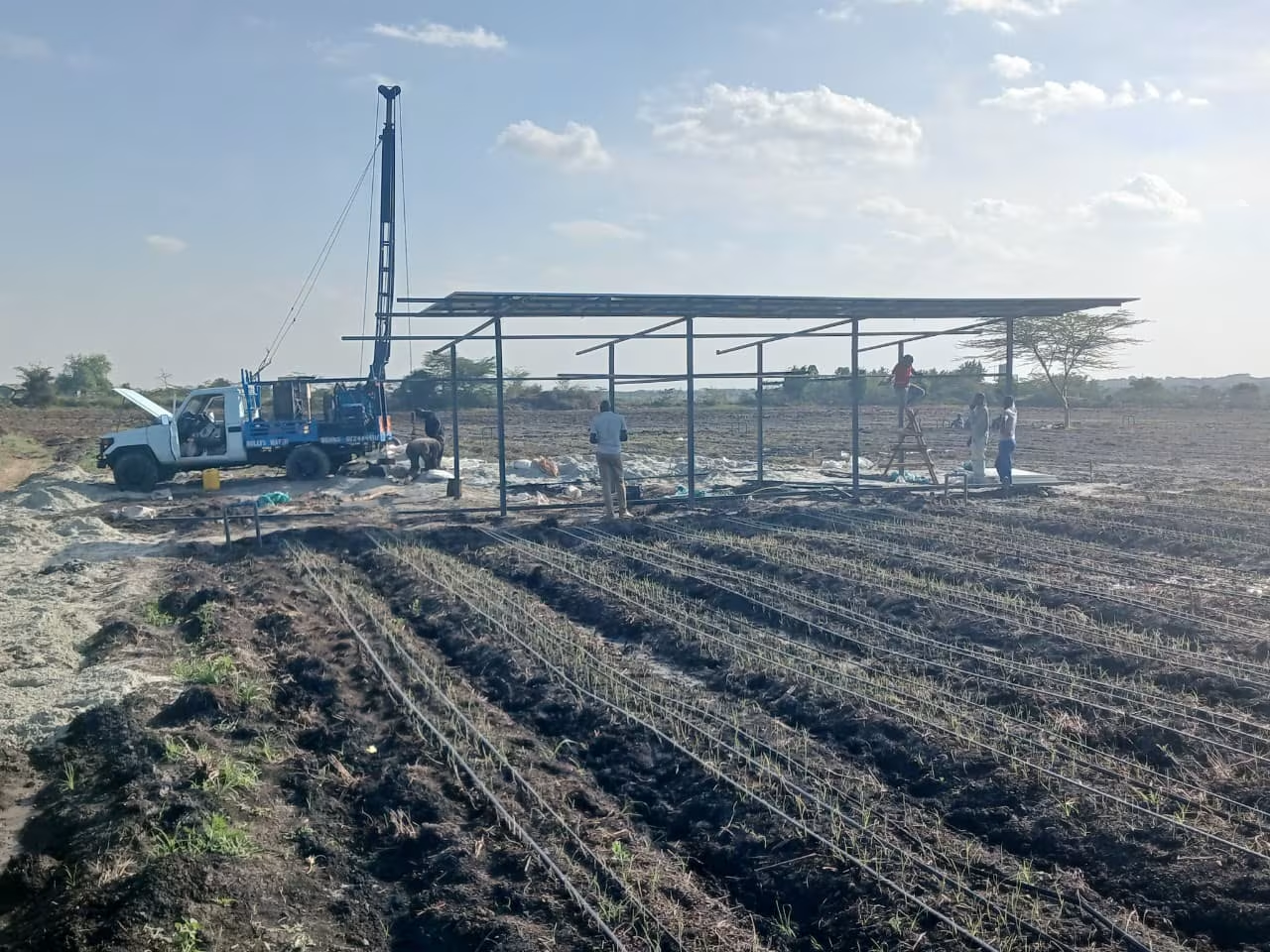
The best solar pump installers in Kenya start with your water needs and borehole evidence. They explain their proposed duty point, list the equipment, and agree how you will test the finished system. Therefore, compare those answers before comparing the total price. A larger panel array or a stronger sales promise cannot replace a sound design.
This guide helps you assess proposals for a new installation or an existing borehole retrofit. It focuses on contractor selection, quote comparison and acceptance evidence. For the service itself, see Masterpiece Hydro-Solutions borehole solarisation. You can also request a site-specific quote with the records you already have.
Start with the water supply you need
First, describe the amount of water you use each day and when you need it. An apartment block, dairy farm and school may need very different filling schedules. However, a broad description such as “a powerful pump” gives an installer little useful information. Record the intended use, current supply problems and available storage instead.
Separate daily volume from peak demand. For example, a tank may refill gradually while users draw water in short busy periods. A proposal should explain how source pumping, tank capacity and downstream demand work together. Also, ask what happens when demand rises or daytime production falls. This makes the continuity plan part of your comparison.
If demand records are missing, say so. The installer should explain how to assess demand and which assumptions remain uncertain. Do not turn an early estimate into a guaranteed delivery requirement without checking the borehole evidence.
What solar pump installers should measure
Ask for the test-pumping report, current water-level information and the tank delivery elevation. Next, check which reference point the proposal uses for each measurement. Drilled depth describes the completed hole. Pumping water level describes the water level during pumping under stated conditions. These measurements do different jobs.
Total dynamic head also includes delivery lift, pipe friction and any required outlet pressure. Therefore, a quote based only on drilled depth leaves important questions unanswered. The installer should explain the selected flow and head together. Manufacturer guidance from Grundfos on pump selection and duty points provides a useful starting point.
Keep aquifer yield, pump capacity and user demand separate. A pump can have a high rated capacity while the borehole supports less sustainable abstraction. Similarly, a larger tank helps manage timing but does not create more groundwater. Ask how the proposal respects the available water supply.
Compare proposals with a clear scorecard
Use the same questions for every contractor. First, check that each quote answers the same brief. Then record the evidence behind each answer. A simple rating can help organise your discussion: missing evidence, incomplete evidence, or a clear documented answer. However, do not let a strong total score hide a critical design gap.
| Comparison area | Evidence to request | Question before acceptance |
|---|---|---|
| Water requirement | Daily demand and filling schedule | Which uses and peak periods does the design cover? |
| Borehole performance | Test results and water-level assumptions | What limits the proposed abstraction? |
| Pump selection | Exact model and marked duty point | What flow is proposed at the required head? |
| Solar equipment | Panel, controller and compatibility details | How does the package work as one system? |
| Commissioning | Written test and handover plan | What measurements will demonstrate performance? |
| Aftercare | Written warranty scope and support terms | Who handles faults, labour and replacement parts? |
Check competence and comparable experience
Reliable solar pump installers should identify the people responsible for design, electrical work and commissioning. Ask for relevant current credentials and verify them with the issuing authority. For solar-related licensing information, consult EPRA’s renewable energy information and practitioner registers. A certificate image alone may not show current status or the permitted scope.
Also, request references for comparable work and obtain the owner’s consent before making contact. Ask about the original requirement, handover records and support after installation. However, photographs of panels or a drilling rig do not prove the promised daily water volume. Useful references connect the proposed scope with documented outcomes and actual operating conditions.
Finally, check which company will issue the invoice and warranty. The responsible party should remain clear if a subcontractor supplies equipment or carries out electrical work.
Ask whether the existing pump can stay
A retrofit does not always require a new submersible pump. However, keeping an existing unit depends on its condition, duty point and compatibility with the proposed power system. Give contractors the pump nameplate information, previous installation records and any fault history. They should explain what they can confirm from those records and what needs inspection.
Compare a retained-pump proposal with a replacement proposal on equal terms. For example, both should address the required flow, controls, retrieval work and commissioning. A cheaper conversion may become costly if essential assessment or replacement work sits outside the quote. Conversely, replacing usable equipment without a clear reason may add unnecessary spending.
For the wider equipment assessment, review borehole equipping services. Ask for a written explanation of the proposed option before agreeing to purchase equipment.
Compare solar pump installers on complete scope
Request an itemised proposal rather than a single package label. It should identify the pump, controller, panels, mounting and relevant protection equipment. Also, ask whether the quoted work includes delivery, lifting, pipework, cabling, labour and commissioning. The final scope depends on your site, so make each inclusion and exclusion explicit.
Next, check quantities and model references. Two quotes may both describe a solar borehole system while covering different duties or equipment. Ask each contractor to explain deviations from your brief. Similarly, require any proposed substitute to carry a written technical justification and your approval before delivery.
Confirm the currency, quote validity and whether VAT is included. Also, clarify payment stages, access assumptions and the procedure for extra work. A lower initial total offers little value if key tasks appear later as unpriced variations.
Use a realistic water-delivery example
Consider an educational example rather than a promised installation result. Assume an owner needs 18 cubic metres daily. That equals 18,000 litres. If a system actually averages 3 cubic metres per hour while operating, it needs six operating hours to produce that volume. The arithmetic describes an assumption; it does not establish local solar availability or sustainable borehole yield.
Now suppose actual production averages only four hours at that flow. Daily production would be 12 cubic metres, leaving a 6 cubic metre shortfall against the assumed demand. Therefore, ask how the proposal handles that gap. Options may involve revised demand, storage management, suitable backup or a different assessed design.
Do not assume storage solves a continuing daily deficit. A reserve tank can cover a temporary gap, but the system must later replenish it. Ask solar pump installers to explain the design month, variable operating conditions and evidence behind their expected daily production.
Plan storage and backup before purchase
First, compare the timing of water production with the timing of use. Daytime pumping into storage may suit a site that needs water after sunset. However, storage capacity must account for usable volume, reserve needs and refill patterns. Tank height and pipe routes also affect the required pumping duty.
Next, consider the consequence of a prolonged supply interruption. An owner may need a backup water source, compatible power arrangement or a revised operating plan. Ask whether the proposed equipment supports the intended backup and what additional work that requires. Do not assume every controller accepts every power source.
Also, discuss how tank-level and dry-run protection behave during faults. Qualified personnel should design and test these controls. Owners need a clear explanation of normal operation and fault escalation, rather than instructions to alter wiring or bypass protection.
Keep approvals separate from installation promises
Solar equipment does not remove the need to check the borehole’s water-use position. The Water Resources Authority’s permitting guidance distinguishes construction authorisation from the subsequent water permit process. Therefore, confirm the current requirements for your site and project stage directly with WRA. Existing drilling documents do not automatically settle every abstraction question.
Ask contractors which records they need and which approvals remain the owner’s responsibility. Also, check whether planned changes affect the authorised operating conditions. Do not rely on an installer promising automatic approval or a guaranteed processing period. The relevant authority must confirm the applicable requirements.
For drinking-water use, arrange suitable laboratory evidence and professional interpretation. Solar power, clear-looking water and a new pump do not establish that water is fit to drink.
Agree commissioning tests in writing
Before placing an order, agree how the contractor will demonstrate the system’s operation. Record the proposed measurements, test conditions and responsibility for witnessing the work. For example, useful evidence can include measured delivery flow, water levels, tank filling behaviour and controller fault checks. A short video of flowing water cannot explain the complete operating duty.
Also, ask how variable sunlight affects the interpretation of a test. Compare measured conditions with the written design assumptions. If conditions prevent a meaningful demonstration, record the limitation and agree the next step. Do not sign a statement claiming results that nobody measured.
At handover, collect equipment identities, warranties, available test records and operating guidance. Finally, list unresolved items with an owner, target action and acceptance condition. This keeps remaining work visible after the installation crew leaves.
Understand warranty and support responsibilities
Ask solar pump installers to separate equipment warranty from workmanship and service commitments. A manufacturer’s warranty may have different conditions from the installer’s labour cover. Therefore, ask who investigates a fault, who pays for retrieval, and which costs remain excluded. Request the actual terms rather than relying on a verbal promise.
Next, confirm how to report a fault and which records support a claim. Keep invoices, serial numbers, commissioning data and a simple operating log together. Also, check whether spare parts and qualified support are available for the proposed equipment. Any response-time commitment should appear in the written agreement.
A useful comparison considers ownership after purchase. The strongest proposal explains both normal operation and what happens when equipment needs attention.
Frequently asked questions
Does the cheapest quote give the best value?
Compare the design duty and included work first. A low total may exclude lifting, protection, storage changes or commissioning. However, a higher total also needs evidence. Ask each bidder to price a common scope and explain differences. Then compare the remaining technical and service risks.
Can solar panels increase borehole yield?
Panels supply power; they do not increase the aquifer’s sustainable yield. More available power can change pumping behaviour, so the proposal must still respect the borehole evidence. Ask for a suitable abstraction and protection plan rather than treating extra panels as a solution to low groundwater availability.
Must I buy batteries for a solar borehole?
Not every design needs batteries. Daytime pumping with water storage may meet some requirements. However, the right choice depends on demand timing, required reliability and the assessed system. Ask the installer to compare options and costs for your actual brief, including any necessary backup arrangements.
What if my borehole records are missing?
Explain which records you lack when requesting an assessment. Share any pump details, old invoices and recent operating observations. The contractor should identify evidence gaps and propose suitable checks. However, missing information should remain visible as an uncertainty rather than turning into an unsupported performance promise.
What should I send with my enquiry?
Send the county, intended use, daily demand estimate and whether the borehole is new or existing. Also, include available test results, pump details, power source and tank location. If these details are incomplete, describe the problem in plain language so the team can clarify the next step.
Request a proposal you can compare
Choose solar pump installers who connect their recommendations to measurable water needs and documented site evidence. First, agree the design brief. Next, compare itemised scope, competence, commissioning and aftercare. Finally, keep assumptions and unresolved questions visible before you commit.
To discuss your project with Masterpiece Hydro-Solutions, request a solar borehole assessment and quote. Share the information you have, even if the records are incomplete. The useful next step is a clear assessment of your site, rather than a generic package promise.