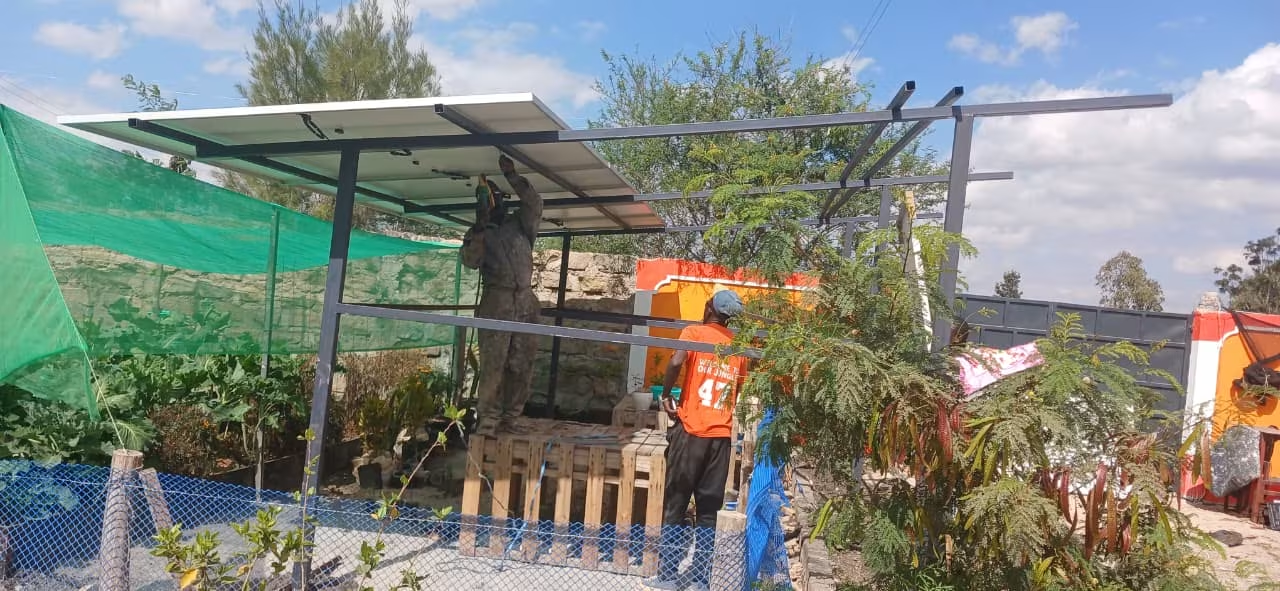
Solar pump mounting structures should be assessed as part of the complete site layout and installation scope. A photograph of another array cannot establish suitable support for your modules or location. First, gather the project information. Then ask appropriately qualified professionals to explain the design basis, installation responsibilities and records needed for acceptance.
Explore Masterpiece Hydro-Solutions borehole solarisation and request a mounting and layout assessment. Share available drawings, proposed equipment and ordinary site photographs. This guide provides buyer questions about evidence and scope, without specifying foundations, member sizes, fixings or construction methods for an unassessed installation.
Identify what the proposed structure will support
Start with the proposed module identities and equipment schedule. Ask the supplier to identify which arrangement its structural proposal actually supports. Module quantity alone leaves important information unstated. The professional needs the appropriate product information and assessed layout rather than a generic description of a solar stand.
Also, distinguish the current project from a future expansion. If more modules may be added later, present that as a separate design question. Do not assume visible spare space establishes capacity for another stage. Ask the designer what the present scope includes and what a later change would require.
Keep the approved equipment schedule linked to the structural documents. A product substitution may affect the relevant design assumptions. The responsible team should assess material changes and update records where appropriate before treating the original arrangement as suitable for the revised package.
Review solar pump mounting structures with site information
Ask which location the assessment considers and what site information the designer needs. Available ground or building records, surrounding uses and access constraints may be relevant to that enquiry. Qualified personnel should establish the requirements for the actual scope rather than ask the owner to choose a foundation from an online example.
The Grundfos SQFlex service instructions identify module support and refer to the applicable module installation information. This illustrates why product requirements belong in the assessment. It does not supply a structural design for your property or establish that a copied support arrangement is appropriate.
Solar pump mounting structures need a documented relationship with their site and supported equipment. Ask who assesses the structural and foundation questions. The quotation should identify those responsibilities and any information gaps before a construction detail is presented as the final answer.
Ask what design conditions the professional considered
Request an understandable account of the conditions relevant to the proposed design. Ask who assesses wind actions, site exposure and other applicable structural requirements. This article supplies no design loads, local environmental classification or universal safety factor for a particular location.
Also, ask which standards and product information the responsible professional used. The useful answer should connect the selected approach with the actual site and scope. A supplier’s general claim that its frames are strong cannot replace an explained design basis and appropriate verification.
If the available site information is incomplete, agree how the uncertainty will be addressed. Further assessment may be needed before final commitment. Keep provisional assumptions visible so that an early budget allowance does not silently become a fully assessed construction proposal.
Compare solar pump mounting structures by evidence
The table separates practical comparison areas from the technical decisions professionals must make. It helps owners request equivalent quotations. The actual design and acceptance requirements still need to be established for the relevant project and responsible disciplines.
| Comparison area | Record to request | Question before approval |
|---|---|---|
| Supported equipment | Current module schedule and layout | Does the proposal describe the supplied arrangement? |
| Site basis | Assessed position and relevant site information | Which assumptions remain provisional? |
| Structural scope | Named design and verification responsibilities | Who assesses support and foundation suitability? |
| Materials and exposure | Specified products and design explanation | How does the proposal address the assessed environment? |
| Access and interfaces | Installation and maintenance arrangements | Which other site activities affect the location? |
| Acceptance | Agreed checks and final records | What evidence establishes completion of the scope? |
Ask suppliers to explain differences rather than compare only steel weight or a single frame price. Two proposals may cover different design, associated work and verification responsibilities. A transparent scope makes the commercial comparison more useful.
Discuss materials and corrosion exposure appropriately
Tell the assessor what you know about the actual environment and nearby activities. Ask who determines the relevant exposure and material requirements. Avoid assigning a technical classification from the county name or assuming one protective finish suits every site.
Next, request the proposed material and finish information in the quotation. The responsible professional should explain the basis of selection and any relevant care requirements. A vague corrosion-resistant description does not tell the owner what product is supplied or which conditions its claim addresses.
Keep product substitutions subject to appropriate review. If a contractor offers another material or finish, ask how the change affects the design, intended service and documentation. The owner should receive a clear decision rather than approve an unexplained alternative because it appears visually similar.
Coordinate ordinary access and future maintenance
Describe how people and equipment use the proposed area. A mounting position may affect site movement, other work or future servicing. Ask the team to assess practical access and identify which arrangements belong within its scope. The owner can provide reliable site information and coordination contacts.
Also, ask how qualified personnel will reach relevant equipment for future work. Maintenance access needs an assessed arrangement rather than an instruction for an owner to climb the structure. Keep restricted areas and professional responsibilities clear in the handover brief.
Planned changes elsewhere on the property should be disclosed early. A later fence, building or operating area may alter access or other layout assumptions. Record confirmed plans separately from possibilities so the designer can identify what would require another review.
Keep electrical and structural interfaces coordinated
Ask who coordinates the mounting design with the electrical installation and cable route. A structurally assessed support does not automatically establish that every electrical interface is suitable. Each discipline needs appropriate responsibilities, and changes should be communicated between the relevant people.
For solar-practitioner claims, use EPRA’s renewable-energy information and the appropriate official channels to verify relevant current credentials. Do not assume a general company description proves every required authorisation. Ask the provider to identify the actual professional roles proposed for the project.
Owners should retain the resulting design and verification evidence. Leave electrical connections, technical measurements and structural installation to appropriately qualified personnel. The assessment should define those tasks rather than rely on the owner to improvise work outside an ordinary site-coordination role.
Use an illustrative layout-change discussion
Imagine a proposed array position conflicts with a new access route before installation. The owner suggests moving the structure to another area while keeping the same module quantity. The change appears commercially small because the equipment list has not changed.
The appropriate review asks whether the assessed site basis, structural arrangements, cable route and maintenance access remain suitable. The responsible professionals should identify any required changes and document the revised proposal. Equipment quantity alone cannot establish that the alternative position is equivalent.
This imaginary scenario shows why solar pump mounting structures belong in a controlled layout decision. Keep the approved location and subsequent changes traceable. A clear version history supports more accountable installation and prevents the final file from describing a position that was never built.
Define acceptance before the structure is installed
Ask the responsible team to identify the appropriate installation checks and records for its scope. Agree what the owner will receive at handover and who reviews outstanding issues. Acceptance should refer to the approved arrangement and professional requirements rather than appearance alone.
Also, request a record of approved substitutions and site changes. The final documents should identify the actual supplied products and location. If a drawing remains provisional or describes an earlier version, seek clarification before presenting it as the completed installation record.
Retain relevant operating and maintenance guidance with the wider pumping file. A later assessor should understand the design basis, actual arrangement and identified limitations. Product brochures can support that file, but they do not replace the records specific to the installed structure.
Frequently asked questions about mounting proposals
Can another site’s frame be copied?
A similar appearance does not establish suitability for your site or equipment. Ask appropriately qualified professionals to assess the actual requirements. The proposal should explain its basis and identify relevant product information, site assumptions and acceptance evidence.
Does spare space prove expansion capacity?
No. A future equipment stage needs appropriate assessment. Tell the designer what expansion is being considered and ask which decisions the current design addresses. Do not add modules or modify the structure on the basis of unused visible space.
Should quotations state foundation dimensions?
Ask the responsible professional what design information is appropriate at the current project stage. A preliminary commercial allowance differs from an assessed construction design. This guide cannot supply dimensions or establish whether a particular foundation suits the site.
What should an owner send with the first enquiry?
Send the county, proposed module information, available site records and intended layout. Describe ordinary access, nearby activities and known development plans. Label missing information clearly so the provider can propose the appropriate assessment instead of assuming the site matches another project.
Request a documented mounting assessment
Useful solar pump mounting structures planning connects the equipment schedule with site assessment and professional responsibilities. Compare design evidence, associated work and final records. Keep changes visible so that the completed arrangement can be understood and reviewed later.
Request a mounting and layout assessment from Masterpiece Hydro-Solutions. Share the information available and ask for a clearly bounded professional scope. A useful proposal explains the evidence needed before construction and the records expected at handover.