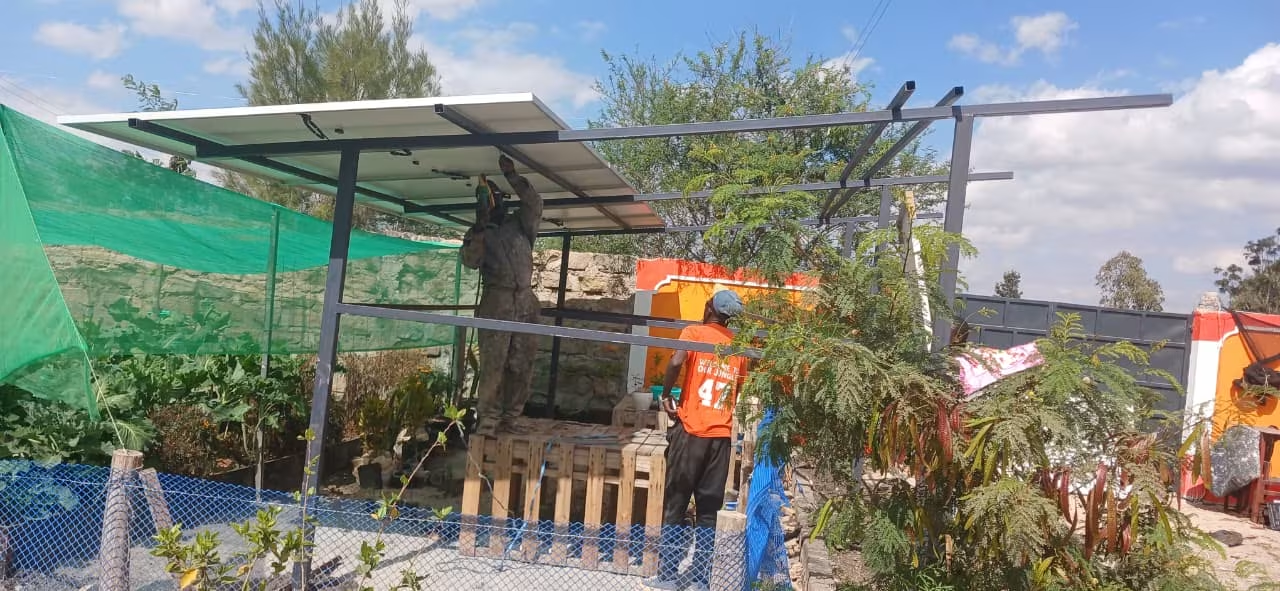
Solar pump restart behaviour needs a controller-specific explanation before an owner decides that every pause is a fault. A solar-powered arrangement may respond to changing energy availability, storage demand or a protective condition. However, a repeated interruption also deserves appropriate assessment. The useful question is what the recorded behaviour means for this installed system.
Explore Masterpiece Hydro-Solutions borehole solarisation and request an operating assessment. Share the equipment information and observations you already hold. This guide helps buyers prepare a useful enquiry and handover discussion without attempting electrical work, bypassing protection or prescribing generic reset actions.
Identify the actual equipment before interpreting a pause
First, gather the pump and controller identities from the handover file. Include the operating manual, installed equipment schedule and commissioning record where available. Different controllers can use different indications and responses. Instructions copied from another installation may therefore misdescribe the equipment serving your borehole.
Also, tell the assessor whether the arrangement uses solar power alone or includes another approved supply. State what the records show rather than guessing from a panel photograph. Supply changes, automatic functions and responsibilities should be explained for the actual configuration.
If a model label cannot be read from an ordinary safe position, leave that task to qualified personnel. An incomplete enquiry can still begin a useful assessment. It is better to identify a missing record than to open equipment or approach an unsuitable working area to obtain it.
Describe solar pump restart behaviour using observations
Record what you saw and when it occurred. Useful observations include whether delivery stopped, the visible indication and whether water later resumed. Also, state the destination being observed. A dry tap inside a building does not by itself establish that the borehole pump stopped.
Next, distinguish a witnessed event from a report received later. For example, a caretaker may have seen an indication while another user only noticed low storage. Preserve both accounts with their limits. A qualified assessor can then identify which part of the sequence needs clarification.
Solar pump restart behaviour should be described without assigning an untested cause. A pause during cloud cover is an observation about timing. It does not prove that cloud cover explains every interruption, or that the installed system has no separate equipment or source concern.
Separate an operating pause from a reported fault
Ask the supplier which states the installed controller can display and what each state means for the owner. The explanation should identify expected operating conditions and the indications that require a service enquiry. It should also state the safe limits of ordinary operator involvement.
The manufacturer’s Grundfos RSI instructions illustrate why low-power conditions and event recording need product-specific interpretation. That manual applies to its identified equipment. It is not a universal instruction set for every solar controller or a basis for an owner to change technical parameters.
Also, ask whether the available event history records the particular condition being discussed. An absence of a recorded alarm does not automatically explain every interruption. The professional should describe what the records can establish and what requires further observation or testing.
Use a comparison table when preparing the enquiry
The following table separates owner observations from questions for the assessor. It does not diagnose the system. Use the rows to organise evidence and request an explanation that fits the actual equipment and site conditions.
| Owner observation | Useful information | Question for the qualified assessor |
|---|---|---|
| Delivery pauses and later resumes | Times, visible indications and destination | Does this sequence match the documented operating logic? |
| The same indication appears repeatedly | Exact wording or a safe photograph | What assessment does the correct manual require? |
| The tank is low after an interruption | Demand, incoming supply and reserve records | Which part concerns pump operation and which concerns storage balance? |
| Behaviour changed after recent work | Work record and earlier commissioning evidence | Which configuration or condition needs to be rechecked? |
Keep the wording factual when circulating the enquiry. An unexplained indication should remain unexplained until the appropriate professional reviews it. Replacing it with a confident fault label can cause the next contractor to begin from an unsupported assumption.
Request a solar pump restart behaviour explanation at handover
Commissioning should leave the operator with an understandable description of ordinary operation. Ask how the installed arrangement responds to its relevant demand and supply states. Also, clarify which observations should prompt a service contact and which records the operator should retain.
If a demonstration is appropriate, qualified personnel should define and control it under a suitable scope. Ask what the demonstration establishes and which operating condition it represents. Do not require the owner to disconnect equipment, bypass a control or simulate a fault to witness a restart.
Solar pump restart behaviour should appear in the handover discussion alongside the normal delivery brief. A successful demonstration under one set of conditions does not guarantee every future response. The record should state what was actually observed and identify any outstanding assessment.
Avoid treating every interruption as an equipment-size problem
An owner may be tempted to request more panels or a larger pump after seeing repeated pauses. However, a capacity change needs an assessed purpose. Ask the professional to establish the relevant cause and the operating requirement before comparing replacement equipment or an expanded array.
Also, keep available groundwater separate from electrical capacity and user demand. More electrical equipment does not establish a higher sustainable abstraction rate. Likewise, a controller indication cannot alone establish whether the source can supply the daily volume users expect.
A useful proposal should explain what evidence supports any recommended change. Request its assumptions, compatibility checks and acceptance plan. The next purchase should address a demonstrated need rather than follow a general belief that every interruption requires a larger package.
Consider the effect on the water service
Describe how interruptions affect users. A brief pause may have little immediate effect where usable storage covers demand, while a different site may have little reserve. Record essential uses and the period involved. The operating assessment should understand the service consequence as well as the equipment indication.
Next, distinguish incoming delivery from water being drawn from storage. A tank level can fall while the pump still supplies some water. Without demand information, that change cannot reliably describe pump output or establish how long the system remained stopped.
Ask how the supply plan addresses the observed service gap. Storage, demand timing and an assessed backup arrangement may require separate decisions. Do not assume that a restart explanation alone establishes adequate daily production or continuity for the intended use.
Keep a short and usable observation record
Use a consistent record containing date, approximate time, visible state and reported delivery. Include known changes in use and relevant work visits. Keep the original wording of any indication so the assessor can compare it with the correct equipment documentation.
Also, identify what remains unknown. The observer may not know the exact duration or whether another supply contributed to the tank. Mark those limits clearly. A brief honest record is more useful than a detailed sequence assembled from guesses.
Do not make observation a reason to enter restricted areas or inspect live equipment. Ordinary records should rely on information safely available to the operator. Qualified personnel should obtain technical measurements and assess any conditions requiring specialist access.
Review the assessment and any proposed next work
Ask the provider to separate observations, interpretation and recommendation in its report. You should be able to identify what the event history showed, what the site assessment established and what remains uncertain. That structure makes a later repair or operational proposal easier to assess.
Also, define the boundary of the quoted work. An initial assessment may not include replacement parts, further testing or changes to the supply arrangement. Request clear deliverables and exclusions. Additional work should have its own explanation and approval rather than follow automatically from a vague restart complaint.
Retain the final explanation with the commissioning and maintenance records. If the configuration later changes, ask whether the operating guidance also needs revision. A clear version history helps future operators understand which instructions apply to the current installation.
Frequently asked questions about pauses and restarts
Should every solar pump restart after the same delay?
No universal delay should be assumed. Ask the supplier to explain the installed equipment’s documented behaviour and relevant conditions. A timing figure from another controller may be inappropriate. The handover record should make the actual operating explanation understandable.
Does a pause during cloud cover prove the equipment is faulty?
No. Timing alone does not establish the cause. Record the visible state and effect on delivery, then request an explanation for the actual arrangement. Repeated or changed behaviour should receive appropriate assessment rather than an assumed diagnosis from the weather alone.
Should an owner keep resetting a recurring indication?
Request the correct professional guidance for the equipment and reported condition. This article does not provide reset instructions. Preserve the visible information and contact the responsible provider rather than bypass protection or repeatedly attempt to override an unexplained state.
What should I send with a service enquiry?
Send the county, equipment information, commissioning records and a factual event sequence. Explain the water-service effect and any recent work. Identify missing information so the provider can define a suitable operating assessment and the evidence needed to complete it.
Request guidance for the installed arrangement
Useful solar pump restart behaviour guidance connects the correct manual, observed events and the water-service brief. Agree what the operator can observe, when professional support is needed and what a qualified demonstration will establish. Keep unresolved questions visible until evidence addresses them.
Request an operating assessment from Masterpiece Hydro-Solutions. Share the records available and ask for a controller-specific explanation, clear assessment scope and understandable next steps. The objective is a documented operating decision supported by evidence.