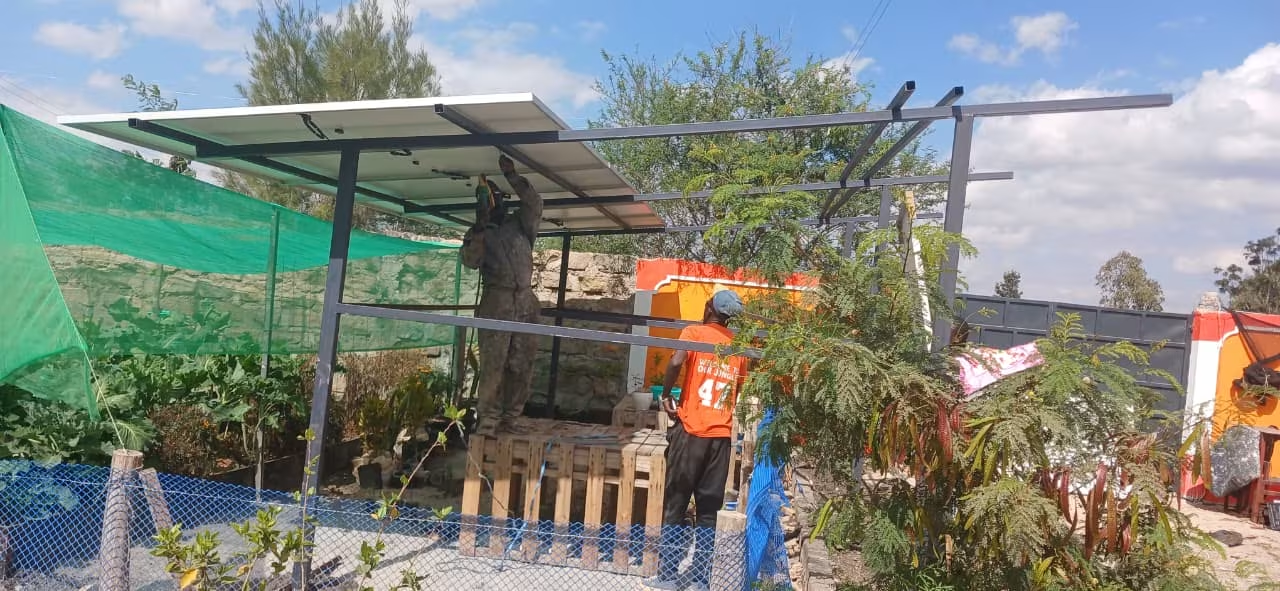
Solar pumping cost in Kenya depends on the water duty, existing equipment and installation scope. A panel count or pump power rating cannot establish the full price. First, define how much water the site needs and where it must go. Then compare itemised proposals for the same measured conditions.
This guide explains which costs belong in a solar borehole budget and how to compare them. It does not present an unverified market price range. For a site assessment, explore Masterpiece Hydro-Solutions borehole solarisation or request an itemised solar pumping quote. Share the records you have, even if some details are missing.
Why package prices can be hard to compare
Two proposals can use the same package name while delivering different amounts of water. One may cover a new pump and controller. Another may retain existing equipment and exclude retrieval work. Therefore, compare the required result and included work before considering the total. Ask each supplier to identify the exact equipment and installation assumptions.
A useful estimate also separates confirmed information from unresolved items. For example, the installer may know the tank elevation but lack a recent pumping test. That gap affects the confidence of the design. Instead of accepting a firm performance promise, ask what assessment will close the gap and how any resulting changes will be priced.
Finally, confirm the date, currency and validity period of each proposal. Equipment availability and site conditions can change. A dated written quote gives you a clear basis for discussion.
Start the solar pumping cost comparison with demand
Describe daily water use in litres or cubic metres. Also, explain when the site needs water and how much useful storage exists. A daytime irrigation schedule differs from an apartment block’s evening demand. However, both require a clear balance between production, storage and use.
Next, separate essential demand from optional demand. This helps the installer explain performance during weaker solar conditions or equipment downtime. It also makes backup options easier to compare. A lower quote may suit a flexible watering schedule but leave a continuously occupied building with an unacceptable supply gap.
If demand is uncertain, ask how it will be assessed. Meter readings and a documented use schedule provide a stronger starting point than guesswork. Increasing equipment size without checking the source does not resolve uncertainty about sustainable borehole yield.
Check the flow and head behind the pump price
The proposed pump must meet a stated flow at a stated head. Drilled depth alone does not define that duty. Pumping water level, delivery elevation, pipe friction and required outlet pressure also matter. Therefore, ask the contractor to identify the measurements used and mark the proposed duty point on the relevant pump curve.
Manufacturer learning material from Grundfos explains flow, head and pump selection. Use this principle when reading proposals: compare useful water delivery, rather than motor rating alone. A more powerful unit can still be unsuitable for the assessed source or delivery route.
Also, distinguish the borehole’s available yield from pump capacity. The cost assessment should respect both the water source and the intended operating conditions.
Break the quotation into clear cost lines
Ask for a schedule that shows what each price covers. A single total may be convenient, but it can hide important exclusions. First, separate equipment supply from installation work. Next, list any assessment, delivery, lifting or commissioning charges. Where quantities remain provisional, ask how the final quantity will be measured.
| Cost line | Details to identify | Common comparison question |
|---|---|---|
| Pump and motor | Exact model, duty and condition | Is a new pump included or is the existing unit retained? |
| Controller and protection | Compatibility and operating functions | Which controls and protection devices form part of the price? |
| Solar array | Module specification and quantity | What design assumptions support the proposed array? |
| Mounting | Structure, foundations and site work | Are installation and access provisions included? |
| Pipework and cabling | Routes, quantities and specifications | Which lengths are confirmed and which remain provisional? |
| Labour and delivery | Mobilisation, handling and installation | What extra attendance could create an additional charge? |
| Commissioning | Tests, records and owner handover | How will the completed system demonstrate its proposed duty? |
Separate a retrofit from a complete new installation
An existing borehole may already have usable equipment. However, reuse depends on condition and compatibility. Obtain the pump model, previous test records and service history before comparing retention with replacement. The installer should explain which existing items can remain and which checks are needed.
Also, ask whether the price includes removing and reinstalling equipment. A conversion quote may cover electrical changes while excluding pump retrieval, damaged pipework or unsuitable cables. These exclusions can materially change the final solar pumping cost. Record them before agreeing to the package.
For a new borehole, keep source development and equipping budgets separate. Review borehole equipping alongside the solar proposal. A drilling estimate is not a complete price for a commissioned solar water supply.
Use a scope comparison before adding totals
Consider an educational example with two hypothetical offers. Offer A covers panels, a controller and electrical installation. Offer B also includes a pump assessment, agreed pipework, delivery and documented commissioning. The difference in scope matters before either amount enters a comparison sheet.
First, give both bidders the same list of required items. Ask A to price the missing work and B to explain any optional additions. Then compare the adjusted totals, VAT treatment and remaining exclusions. This exercise avoids inventing a market price while showing how to make quotations comparable.
If an item cannot be priced yet, keep it visible as an unresolved allowance. Ask what evidence will settle it. Do not treat an unknown quantity as zero merely because it does not appear in the original total.
Explain VAT, validity and payment milestones
Every commercial comparison should state whether VAT is included, excluded or still awaiting confirmation. Also, ask which currency applies and how long the quote remains valid. These basic details help prevent a misleading comparison between an inclusive total and a tax-exclusive amount.
Next, link payments to clear deliverables. Examples include confirmed design information, delivered equipment and completed commissioning records. The appropriate schedule depends on the agreement, so avoid assuming one universal deposit or retention percentage. Instead, ask each contractor to explain its proposed milestones and what evidence supports each payment.
Finally, agree how variations will be approved. A written change should identify the reason, quantity, price and effect on the programme. This keeps additional spending reviewable.
Account for storage, backup and site conditions
Storage and backup can change solar pumping cost substantially because they change the required system. Ask whether the existing tank capacity and delivery elevation suit the brief. A design that fills a nearby low tank may differ from one that serves elevated storage through a longer pipe route.
Also, clarify mounting access, ground conditions and the proposed electrical route. The installer should assess these conditions rather than applying a generic allowance without explanation. For electrical and solar competence checks, consult EPRA’s renewable energy information and registers.
Do not assume grid or generator backup is automatically included. Ask which equipment supports the intended arrangement and whether additional controls or installation work are required. Qualified personnel should confirm compatibility.
Look beyond the initial solar pumping cost
A purchase budget should also consider operating responsibilities. Ask about routine observations, servicing, likely replacement items and available support. However, do not accept an unsupported claim that maintenance will disappear after conversion. Panels, pumps, controls and the water source still need appropriate attention.
Compare warranty terms separately from general aftercare promises. Who investigates a fault? Does the agreement cover retrieval labour, transport or replacement parts? Also, confirm which exclusions apply. A warranty label without those details gives you little basis for estimating ownership costs.
If a proposal includes an electricity-savings calculation, request the measured baseline and tariff assumptions. Keep any future savings estimate separate from the installation quote. A payback claim should never replace evidence of the required water delivery.
Set acceptance checks before paying the balance
Agree how the contractor will record delivery flow, relevant operating conditions and control behaviour. Also, ask what documents you receive at handover. Useful records include equipment identities, available test results, warranty terms and guidance for authorised operation. These deliverables belong in the written scope.
Next, clarify how to handle conditions that prevent a meaningful demonstration. Variable sunlight may affect a test, while missing water-level information may limit interpretation. Record those limits and agree the next step. Do not accept a report that turns assumptions into measured results.
Keep an outstanding-items list with a responsible person and a clear completion condition. This makes the final payment discussion about agreed evidence rather than an informal impression.
Frequently asked cost questions
Can I get a firm price from borehole depth alone?
Depth gives only part of the information. The installer also needs the required flow, pumping water level, delivery route and equipment condition. Therefore, a depth-only figure should remain an early estimate. Ask what assessment is needed before confirming the installation price and expected delivery.
Does keeping the old pump always reduce the total?
Reuse may reduce equipment spending if the pump remains suitable and compatible. However, inspection, retrieval or control changes can add costs. Compare the complete retention option with a complete replacement option. Both should meet the same assessed water requirement and include clear acceptance checks.
Should the lowest solar pumping cost decide the purchase?
Use price after checking comparable scope and technical evidence. A low price may cover less work, while a higher price still needs justification. Identify unresolved risks, exclusions and support commitments. Then decide which complete proposal best meets the written brief.
What if I have no recent test-pumping report?
Tell the contractor before requesting a final proposal. Share available historical records and describe current operation. The next step may involve assessing what evidence is missing. Avoid treating an old pump rating or a short video of flowing water as proof of sustainable production.
How do I request a useful estimate?
Send the county, intended use, daily demand estimate and whether the borehole is new or existing. Also, include available pump details, test results and tank location. Ask for itemised scope, exclusions, VAT treatment and a commissioning plan. Missing records should become questions, rather than hidden assumptions.
Request a budget built around your site
A reliable solar pumping cost comparison starts with a common brief and ends with measurable acceptance conditions. First, establish demand and source evidence. Next, compare complete equipment and installation scope. Finally, confirm tax treatment, variations, warranty responsibilities and handover records.
To discuss the next step, request a site-specific solar borehole quote from Masterpiece Hydro-Solutions. Provide the information you already have. The aim is a clear proposal for your water requirement, with unresolved items explained before purchase.